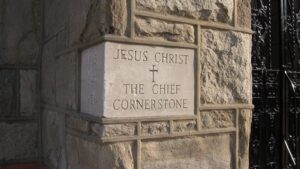
 This is the second of three Sundays during which our lessons from the Gospel according to Matthew tell the story of an encounter between Jesus and the temple authorities. Jesus has come into Jerusalem, entered the Temple and had a somewhat violent confrontation with “the money changers and … those who sold doves,”[1] gone back to Bethany, and then returned to the Temple the next day. In last week’s lesson, “the chief priests and the elders of the people” demanded that he explain himself, asking, “By what authority are you doing these things, and who gave you this authority?”[2] In good rabbinic fashion, Jesus answers their question with a question and, when they cannot answer his question, he declines to answer theirs.
But, Jesus being Jesus, he doesn’t leave it at that: he goes on to tell three parables. First, a story about two sons, one of whom refuses to do as his father instructs but later changes his mind and obeys, the other of whom agrees to do as he is told but then fails to do so. The second, today’s story about a vineyard. And the third, a story about a wedding feast where the invited guests decline attendance so passers-by are dragged in off the streets, but one man (who fails to wear an appropriate wedding garment) is tossed back out into a place of perdition. We heard the first last week; we’ll hear the third next week. Today, we have heard “the Parable of the Wicked Tenants.”
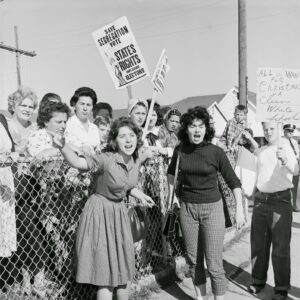
 Power and authority. These are the subjects of our lessons from Scripture this morning. Later this month they will figure as key concepts in a trial scheduled to begin in Fulton County, Georgia. That trial will focus on an alleged attempt to disrupt, even to stop, what we have come to call “the peaceful transfer of power.” Historian Maureen MacDonald wrote a few years ago:
 Heavenly Father,
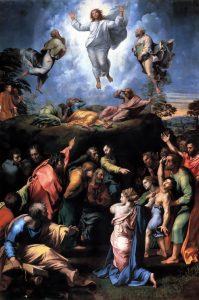 Today, in the normal course of the Lectionary, would have been the 10th Sunday after Pentecost on which, this year, we would have read the lessons known as “Proper 13” in which the gospel lesson is Matthew’s story of the feeding of the 5,000. However, since this is August 6, we don’t follow the normal course. We step away from the Lectionary to celebrate one of the feasts which, in the language of the Prayer Book, “take precedence of a Sunday,”
 When I was a sophomore in college, I lived in a dormitory suite with nine other guys: six bedrooms, two sitting rooms, and a large locker-room style bathroom. About mid-way through the first semester, one of our number, a 3rd-year biochemistry major, suggested that set up a small brewery in one of the sitting rooms. We all read up on how to make beer and thought it was a great idea; so we helped him do it. It takes three to four weeks to make a batch of beer, so over the next few months we made quite a bit of beer.
  When I was 19 years old, my parish priest, Fr. John Donaldson, died of cancer. I was privileged to be the acolyte and crucifer at his requiem and burial. It was a very formal, high-church affair. In all honesty, I remember very little of Fr. John’s funeral. I don’t remember Bishop Bloy’s homily at all, but I do remember the committal at the graveside. You see, it was my first experience of a burial using the liturgy of the Episcopal Church.
 This is an old and familiar story, a comfortable story if you will … the parable of the sower.
 A clergy colleague suggested recently that this Sunday’s epistle reading
 What are we to do with our first lesson today? The story of the testing of Abraham and the binding of Isaac, called the Akedah in Hebrew, “exudes darkness and mystery, and it brings before us a thousand questions, most of which have no answers.”
 Do any of you know the story of Tubby the Cocker Spaniel? Well . . . remember Tubby’s name. We’ll come back to him, but first let’s put today’s gospel lesson in perspective.

