 In a few minutes, when this sermon comes to an end, we will all stand together as we do every week and recite the Nicene Creed in which we will say that, among other things, we believe that Jesus Christ
. . . will come again in glory to judge the living and the dead, and his kingdom will have no end. (BCP 1979, page 359)
In the Apostle’s Creed said at Morning and Evening Prayer, and in our Baptismal Covenant, we affirm our expectation that “he will come again to judge the living and the dead.” (BCP 1979, pages 96, 120, and 304)
In the course of the Eucharistic Prayer we re-affirm this this belief by saying (as we will in Prayer C this morning), “We celebrate his death and resurrection, as we await the day of his coming.” (Pg 371) We say something very similar in Prayer A: “Christ has died. Christ is risen. Christ will come again.” (Pg 363) In Prayer B: “We remember his death. We proclaim his resurrection. We await his coming in glory.” (Pg 368) And in Prayer D, we offer our gifts “recalling Christ’s death and his descent among the dead, proclaiming his resurrection and ascension to [the Father’s] right hand, [and] awaiting his coming in glory.” (Pg 374)
Continue reading
 A couple of months ago, I was part of a conversation among several parishioners about the set-up for our celebrations of the Nativity. We looking at our plans for Christmas services, and a member of our altar guild exclaimed, “That’s the problem! Things are always changing around here!”
 Introductory Comment:
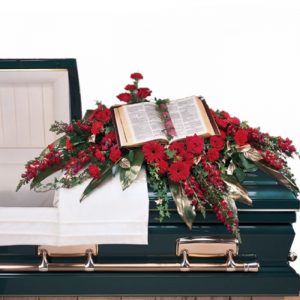
 Why do we do this? Why do we gather when a loved one dies and hold assemblies like this? Most human beings believe that death is not the end of the person who has passed away. Except for the few human beings who really strongly subscribe to an atheist philosophy, and they truly are a minority of our race, everyone on earth belongs to some faith group which teaches that we continue on, whether it is by reincarnation or in the Elysian Fields or the happy hunting grounds, as a guiding ancestral spirit or at rest in the presence of our Lord. So why do we do this?
 Christmas is now done. It ended Friday on Twelfth Night. I am sure than none of you, good Anglican traditionalists that we all are, put away any of your decorations before then, but have by now put them all away.
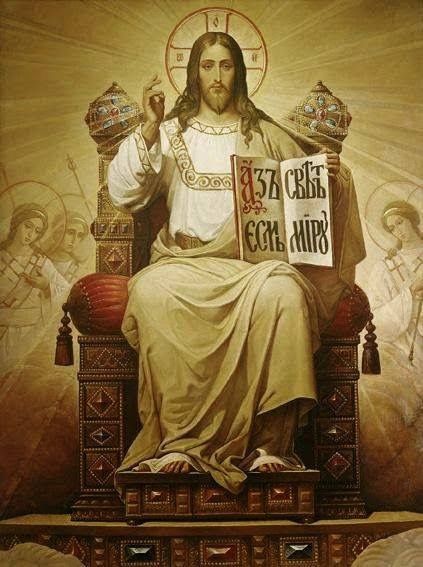
  “In the beginning was the Word . . . .” The Prologue of John’s Gospel echoes the opening words of the Bibe, “In the beginning God said . . . .” Our God is a god who communicates, who speaks, whose Word creates.
  One of the commentaries I read this week about our gospel lesson was written by a Lutheran serminary professor named Jan Schnell Rippentrop. She noted three things about John the Baptizer’s self-description in the Fourth Gospel:
 Today’s Gradual, Psalm 85, includes what may be my favorite verse in the entire collection of the Psalms: “Mercy and truth have met together; righteousness and peace have kissed each other.” (v. 10)
 In Nigerian writer Chinua Achebe’s novel of post-colonial political intrigue in Africa, Anthills of the Savannah (1987), one of the characters (echoing Karl Marx’s famous aphorism about religion) opines:

