It is said that there are forty shades of green in Ireland … there are probably more. There seem also to be at least that many shades of gray in the skies of Ireland the past couple of days. Since my arrival here, there have been clouds, wind, and rain. Irish words I learned three years ago come easily to mind: scamallach (cloudy), gaofar (windy), báisteach (rain).
Today, the wind is blowing hard enough that the trees and bushes in the front yard of my teach lóistin (boarding house) are bent far over and whipping about violently. The clouds, seeming low enough to touch, race by overhead, and throughout the day sheets of rain – some of hard, coarse droplets; some of sharp, stinging mist – have come and gone. From time to time a seagull struggles to move against the wind finding ways to travel into the blustery headwind, knowing instinctively when to rise, when to dive, when to tack.

The Windblown Skies of An Cheathrú Rua
My housemates are away today – the Acadamh has offered a bus tour to Ros Muc and the cottage in which Patrick Pearce, a hero of the founding of the modern Republic, spent his life. I have made this journey before and so I have opted not to take today’s bus ride. It has given me a chance to study grammar, review vocabulary flash-cards, and read a bit.
But the rain beats against the window and the wind blows so hard the house, though solidly built of concrete block and stone, vibrates; I am constantly distracted by this weather. “Tá an aimsir go-holc,” exclaims the bean-a-ti (literally “woman of the house”, the term – pronounced “BAN-uh-tee” – means both “housewife” and “landlady”). Yes, I think, the weather is wretched.
Olc is an interesting word: its basic meaning is “evil”, but it is used in a variety of ways which would be supplied by different words in English. (Go-holc is a form which would be translated into English by the addition of the adverb “very” to adjective.) It can be used to describe anything from simple “bad luck” to “wretched weather” to “moral evil”. Similarly, a word used to described good weather, álainn, can mean “beautiful”, “delightful”, or “perfect”.
I have been convinced for some time that a people’s spirituality is informed by their language, by its structures, by its grammar, by the alternative meanings of words.
It would, I think, be unlikely to find an English speaker describing the weather as “evil” – wretched, perhaps, and bad, certainly – but “evil” is a term we would reserve for other uses, to describe that which is morally reprehensible, something which can’t be said of the weather. Similarly, while we might describe the weather as “perfect” for some activity, we would not generally describe the weather as simply perfect in its own right.
Thinking of these descriptive terms for the weather I am reminded of a verse of scripture, Matthew 5:48, perhaps most familiar in its King James Version form: “Be ye therefore perfect, even as your Father which is in heaven is perfect.” Although álainn is not the word used in the Irish bible’s version of this admonition of Christ, I can’t help but think that the secondary meaning of the word might suggest to the Gaelic soul a link between the occasional perfection of nature and the perfection of God (or, negatively, between the “evil” of the weather and the Evil One).
Celtic Christianity views the mission of Christ less as a “redemption” of a “fallen” creation than as the “completion” of an “incomplete” creation. I believe the use of these morally and spiritually charged adjectives to describe the weather and to describe nature has contributed to the spirituality which informs this theology. There is a hymn in Dánta Dé which sings the praises of the holiness of all nature and is reflective of this Celtic spirituality.
First, the Irish:
Naomhtha cearda Mhic Mhuire;
Naomhtha ó thus A thrócaire;
Naomhtha grian is neoil nimhe,
Dhá fhiadh eoil na h-aimsire.Naomhtha a bhfuil thall n-a thigh,
Naomhtha gach dúil dá dhúilibh,
Naomhtha an ré a’s na réaltain,
Naomhtha an Té ó dtaisbéantar.Naomhtha na síona saobha,
Naomhtha an fhearthain Abraona;
Naomhtha an tsoinionn go ngné ghil,
Naomhtha doinionn Dé dúiligh.Naomhtha ceathra na cruinne,
Naomhtha cloche ‘s caomh-dhuille,
Naomhtha an teine, giodh h-í ain,
‘S gach ní eile dá n-abraim.Naomhtha an ghaoth lonn ag labhairt,
Naomhtha fairrge ‘s fíormamaint;
Naomhtha gach aon-mhaith d’ar fhégh,
Naomhtha ‘n éanlait ‘san aedhir.Naomhtha na coillte fá chnáibh,
Naomhtha an fhíneamhain abaidh,
Naomhtha gach toradh dá dtig,
Naomhtha an talamh ó a dtáinig.Naomhtha an tráigh ‘s an tuile,
Naomhtha fás na fiodhbhaidhe,
Gníomha naomhtha learg is luibh,
Naomhtha an Ceard do cruthaigh.Naomhtha fós fóghar na dtonn,
Naomhtha siúbhal na srothann,
Naomhtha an riasg fraochdha ‘s an féar
Naomhtha an t-iasg ‘san aigéan.Naomhtha A thionsgnamh ‘a A thoil,
Naomhtha oibreacha ‘n Athair,
Naomhtha A cheard ‘s A chreidiomh,
Naomhtha A fhearg ‘s A fhoighideadh.Naomhtha teaghlach A thoighe,
Naomhtha an Trionóid tóguidhe,
Naomhtha A iomrádh ag gach aon
Naomhtha ró-ghrádh A ró-naomh.
And the English translation by Úna ní Ógáin:
Holy are the works of the Son of Mary
Holy, from the beginning, His mercy,
Holy the sun and the clouds of heaven,
Two guides of knowledge of the seasons;Holy all yonder in His House,
Holy each creature of His creatures,
Holy the moon and the stars,
Holy He from Whom they are revealed.Holy the wild tempests,
Holy the rain of April,
Holy the fair-weather, with bright looks,
Holy the rough-weather of God the Creator.Holy are the quadrupeds of the Universe,
Holy the stones and the gentle leaves,
Holy the fire, though it be destructive,
And all else of which I speak.Holy the strong wind’s speech,
Holy, sea and firmament,
Holy, each good thing which was recounted,
Holy the birds in the air.Holy the woods bearing clusters,
Holy the ripe vine,
Holy each fruit that cometh,
Holy the earth whence it came.Holy are the shore and the wave,
Holy the growth of the woods;
Holy works are hillock and herb,
Holy the Artificer Who created them.Holy too the voice of the waves,
Holy the travelling of the streams,
Holy the wild moor and the grass,
Holy the fish in the ocean.Holy are His designs and His will,
Holy, the works of the Father,
Holy His workmanship and His faith,
Holy His anger and His patience.Holy the household of His house,
Holy the exalted Trinity;
Holy, for all, to converse of Him,
Holy, the great love of His great saints.






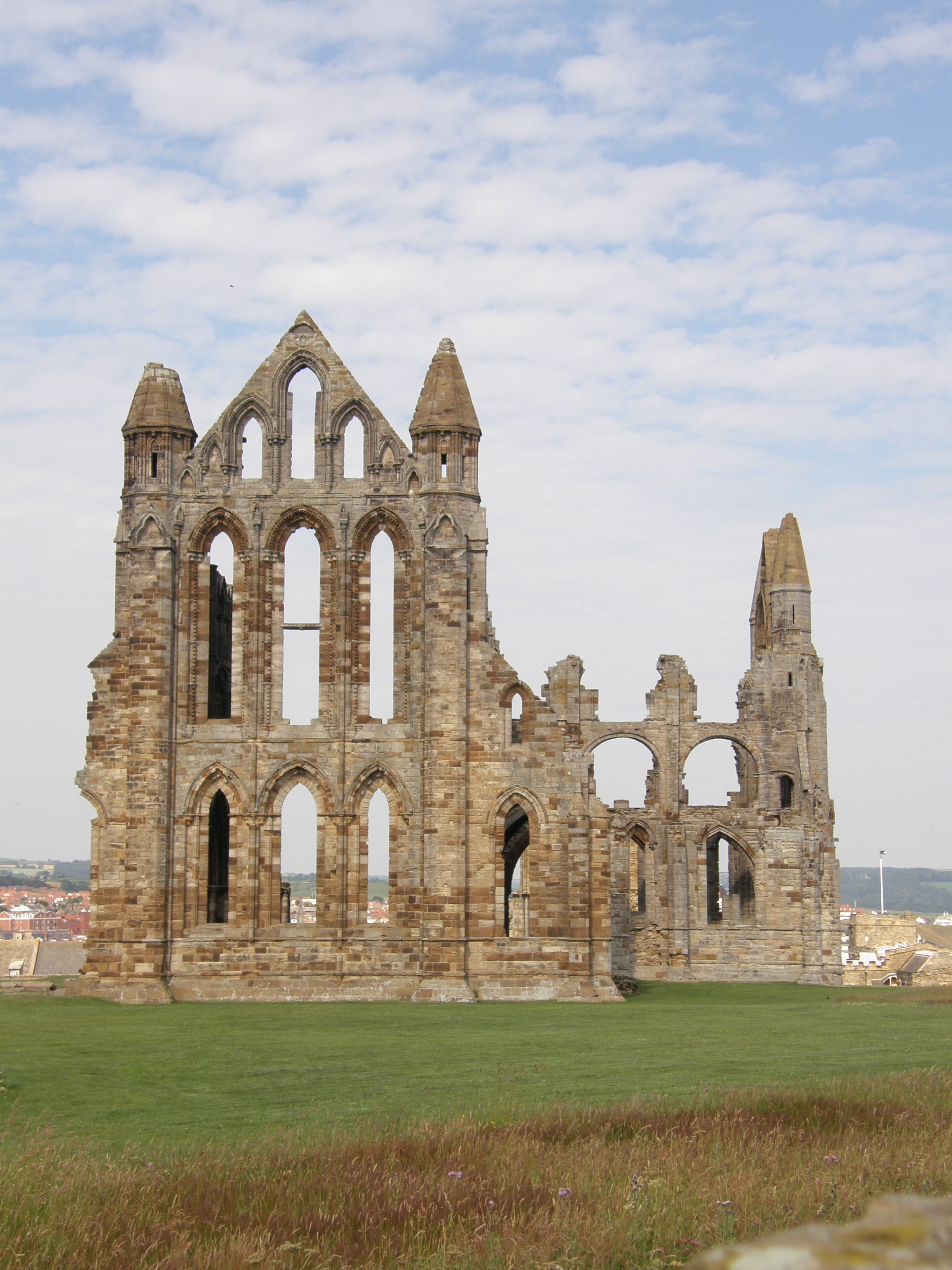




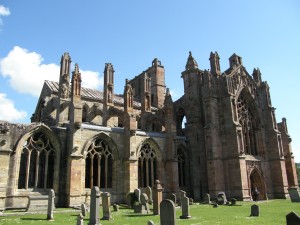 Melrose, Scotland, is an important place in Celtic church history. It was here that St. Aidan, abbot of Lindisfarne, established a mainland monastery bringing monks from Iona. It was in that Celtic monastery that St. Cuthbert became a monk and entered holy orders. This early monastic foundation, probably 2-1/2 miles from the current monastic ruin, has completely disappeared. In fact, was long gone by the 12th Century when Cistercian monks came and started what eventually became the Melrose Abbey we know now.
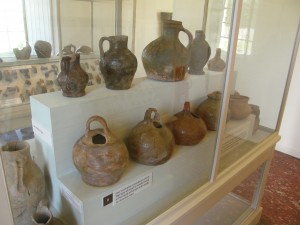 But the thing I thought about most as I left the place was the display of waste disposal artifacts. Unearthed in the excavations and on prominent display is the monks’ latrine, the “great drain” which carried away its contents and the waste of the on-site tannery, and a collection of pottery urinals! (Urine, however, was not considered waste! Tanners, which the monks were, soaked animal skins in urine to remove hair fibers. Urine is also used as a mordant to help prepare textiles, especially wool, for dyeing – and remember, these monks were shepherds with thousands of sheep to sheer and, one assumes, produce usable wool. In Scotland, the traditional process of “walking” (stretching) the tweed was preceded by soaking in urine. So these urinals may have been for the collection of a useful and necessary product, not considered waste.)
 On the north of the abbey grounds is a long, deep, stone-lined rectangular pit. A ground-level green and white sign labels it “Latrine”. About a foot or two of scummy, green, stagnant-looking water stands in it; I wondered if the Historic Scotland folks keep it that way for effect. The sign informs one that it would be periodically flushed out through the “great drain” (I keep putting that in quotes because that is the name given an exposed stone-lined culvert further to the north of the property heading downhill toward the river). One can imagine the long, narrow building sitting atop this pit with out-house privy seats.
 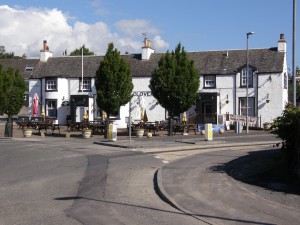 It was a very full day with lots to consider, lots to think about, and lots to relate. So let us return to Clovensford Country Hotel for the moment and consider the “full Scottish breakfast.” The full Irish, it ain’t! At least as served at Clovensford. Don’t get me wrong; it was a lovely breakfast, but it wasn’t what I was expecting.
  Last evening as I walked the dog after sunset, the sky still a fairly bright blue with plenty of light to see, I looked into the darkness of the woods behind our house and saw that the fireflies were beginning to flash their mating signals. I realized that I’m leaving Ohio at one of my favorite times of the year – firefly time! I love fireflies!

