I solicited from you, the members of St. Paul’s worshiping community, your questions about religion, the Christian Faith, the Anglican Tradition, the Episcopal Church, or St. Paul’s Parish as the fodder for a series of Lenten sermons. As I expected, I got some easy to answer questions like, “Why do we use colored vestments?” (which I’ll deal with in a later sermon), but I also got some really tough ones, like the one which I hope to discuss today. I use the term discuss advisedly because it is not a question that I can answer in the course of one short sermon. In fact, it’s not a question I’m sure can actually be answered! It is this, “Why do bad things happen to good people?”
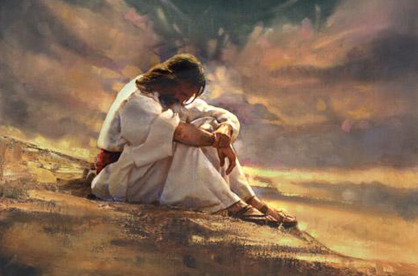 That, succinctly stated, is the issue behind what theologians and philosophers call the “logical problem of evil”. It arises from three core beliefs of Judaism and Christianity and one undeniable observed fact. The three core propositions are found in religion’s fundamental understanding of the attributes of God: all-powerful (omnipotent), all-knowing (ominiscient), and all-loving (omnibenevolent). The undeniable observed fact is that there is bad stuff in the world that causes human suffering, both moral evil (murder, corruption, sexual exploitation, greed, etc.) and disordered nature (earthquakes, hurricanes, pathogens, cancer, etc.)
The logical problem of evil is this: An all-powerful (omnipotent) God could prevent evil from existing in the world. An all-knowing (omniscient) God would know that there was evil in the world. An all-loving (omnibenevolent) God ought to wish to prevent evil from existing in the world. Since there is evil in the world these propositions cannot all be true; therefore, argues the skeptical philosopher, either the Christian God does not exist, or God must lack at least one of these fundamental attributes. God may be all-powerful and all-knowing, but cannot be all-benevolent; or God may be all-good and all-knowing, but cannot be all-powerful; and so forth. This problem, or some variation of it including non-Christian versions, has been debated by philosophers since at least the time of Epicurus in the Fourth Century BC. So, as I said, I don’t think I’m going to adequately solve the conundrum of evil in the span of a short sermon, but I do want to acknowledge its seriousness and suggest an avenue of understanding.
The parishioner who asked question explained that it is one that gets asked of him when he tries to evangelize others, to discuss faith or church with his friends or co-workers, or to invite them to join him at church. So I want to thank and praise him for that effort, and to acknowledge that it is fear of being unable to answer this question that keeps so many others from undertaking the work of an evangelist themselves. “What if someone asks me a question (like this one) that I can’t answer?” is the stumbling block that stops so many of us from talking about church with our unchurched friends and neighbors. So kudos to the person who asked this question.
I suppose I could have let that stumbling block stop me from undertaking this sort of Lenten sermon series. “What if someone asks me a question (like this one) that I can’t answer?” is something that I considered. And sure enough, someone did … because I have to tell you all, very honestly, I cannot answer this question! I do not know why bad stuff happens to good people. But I do know that most people who ask that question are not asking it out of hostility to religion! I do know that most people who ask that question are not asking it to be argumentative or contrary. They are not, by asking it, rejecting the idea of God. The theologian William Temple, who was Archbishop of Canterbury at the end of the Second World War, once said, “This problem is not the creation of an alien criticism, but arises out of the heart of religious faith itself.” It is a fundamentally religious question, so while I cannot give you an answer, I can suggest a Christian response.
The first part of that response, I would suggest, is to acknowledge that bad stuff happens to everyone. I think we might all agree that being driven into the barren desert to wander for forty days with no food or water is a bad thing … but it is what happened to Jesus immediately after his baptism. (Today’s gospel lesson, Mark 1:9-15.) I think we might all agree that being condemned by your own family members and neighbors as a lunatic, and being threatened, by them, with being thrown off a cliff is a bad thing … but that is what happened to Jesus immediately after he preached in his home town. (Mark 3:21; Luke 4:29) I think we might all agree that being unjustly condemned as a political rebel and condemned to a painful death is a bad thing … but that is what happened to Jesus. So, yes, bad things can and do happen to good people, but God in Christ is there in that wilderness of pain and suffering with us. He’s been there before; he knows what it’s like and he supports and sustains us as we go through it.
One reason these bad things happen is that God, the all-knowing, all-loving, all-powerful God, made his creation free. Human beings have been given freedom of will, and the natural world has been made free, as well, precisely because of God’s love for his creatures. Although it is possible for an omnipotent God to create a world in which creatures are not free, a loving God would not do so. Our loving God has so created a world that all his creatures have the opportunity to genuinely act in freedom, and moral beings such as humans have the opportunity to make genuinely free decisions among all the various options available to them. Sometimes, exercising freedom poorly, we make choices that result in suffering. Sometimes, acting freely, nature causes harm.
That an omnipotent God could have prevented such suffering and harm, we must admit, but God has given up some of God’s power, has limited his own power, in order for his creatures to possess the power for freedom. This is partly the witness of our reading from the Hebrew Scriptures today in which God makes covenant with Noah, giving up the power to destroy the earth again by flood and placing the rainbow in the sky as a reminder of that self-limitation. God imposes this self-limitation because God lovingly desires others with whom to relate, others to be God’s partners in creation. God’s loving nature is such that God desires his creatures to express freedom, even when the expression of creaturely freedom occasionally results in something bad, when creaturely freedom takes us into the wilderness of pain and suffering.
Another element of both the Jewish and the Christian response to bad things happening to good people is that, unlike God, we are not all-knowing. What seems to be a bad thing, or what seems to be a good thing, is not always clear to us. There is a rabbinic story which illustrates this:
There once was a farmer who owned a horse. And one day the horse ran away. All the people in the town came to console him because of the loss. “Oh, I don’t know,” said the farmer, “maybe it’s a bad thing and maybe it’s not.”
A few days later, the horse returned to the farm accompanied by twenty other horses. (Apparently he had found some wild horses and made friends!) All the townspeople came to congratulate him: “Now you have a stable full of horses!” “Oh, I don’t know,” said the farmer, “maybe it’s a good thing and maybe it’s not.”
A few days later, the farmer’s son was out riding one of the new horses. The horse got wild and threw him off, breaking the son’s leg. So all the people in town came to console the farmer because of the accident. “Oh, I don’t know,” said the farmer, “maybe it’s a bad thing and maybe it’s not.”
A few days later, the government declared war and instituted a draft of all able-bodied young men. They came to the town and carted off hundreds of young men, except for the farmer’s son who had a broken leg. “Now I know,” said the farmer, “that it was a good thing my horse ran away.”
The point of this story is obvious. Life is a series of events, and it’s hard to know what’s good and what’s bad, to know exactly how something fits into the story of one’s life. The rabbis say that that is one reason the Torah commands respect for the elderly – because through the course of life experience they have begun to see how the pieces, the good and the bad, fall into place in the puzzle of life.
Why do bad things happen to good people? I can say, “Because creation is free.” I can say, “There’s no purely bad thing because good can come of everything.” In the end, I have to admit that these are only partial and incomplete responses; they are not really answers to the question. But in the end, also, I know beyond any doubt that whatever life may bring me, good or bad, God is with me in the good and the bad of life; this, among other things, is what the story Jesus’ forty days in the desert means. This is what the whole story of the life, death, and resurrection of Jesus the Messiah means. As theologian Jurgen Moltmann writes:
God showed himself in the man whose last words were: “My God, why have you forsaken me?” God emptied himself in the pain of love and died voluntarily a death of desperation. …. In the suffering and dying of Jesus, God bridged the distance between us, so that no one can any longer say: “See – God doesn’t care!” (The Language of Liberation, Baarn 1972, p.32)
Concentration camp survivor Ellie Weisel tells this story of his experience at Auschwitz:
One day when we came back from work, we saw three gallows rearing up in the assembly place, three black crows. Roll call. SS all around us, machine guns trained: the traditional ceremony. Three victims in chains – and one of them, the little servant, the sad-eyed angel.
The SS seemed more preoccupied, more disturbed than usual. To hang a young boy in front of thousands of spectators was no light matter. The head of the camp read the verdict. All eyes were on the child. He was lividly pale, almost calm, biting his lips. The gallows threw its shadow over him.
This time the Lagerkapo refused to act as executioner. Three SS replaced him.
The three victims mounted together onto the chairs.
The three necks were placed at the same moment within the nooses.
“Long live liberty!” cried the two adults.
But the child was silent.
“Where is God? Where is He?” someone behind me asked.
At a sign from the head of the camp, the three chairs tipped over.
Total silence throughout the camp. On the horizon, the sun was setting.
“Bare your heads!” yelled the head of the camp. His voice was raucous. We were weeping.
“Cover your heads!”
Then the march past began. The two adults were no longer alive. Their tongues hung swollen, blue-tinged. But the third rope was still moving; being so light, the child was still alive…
For more than half an hour he stayed there, struggling between life and death, dying in slow agony under our eyes. And we had to look him full in the face. He was still alive when I passed in front of him. His tongue was red, his eyes were not yet glazed.
Behind me, I heard the same man asking:
“Where is God now?”
And I heard a voice within me answer him:
“Where is He? Here He is – He is hanging here on this gallows…” (Jon Pahl, Shopping Malls and Other Sacred Spaces: Putting God in Place, p. 36, quoting Wiesel, Night)
Why do bad things happen to good people? I don’t know. I can’t answer that question. But I know that when, in the middle of those bad things, in the very midst the pain and suffering, we cry out “Where is God now?” he is there in the wilderness with us.
Let us pray:
Lord, we do not know what any day may bring forth, whether good or ill, but make us ready, we pray, for whatever it may be. If we are to stand up, help us to stand bravely. If we are to sit still, help us to sit quietly. If we are to lie low, help us to do it patiently. And if we are to do nothing, let us do it gallantly. Make these words more than words, and give us the Spirit of Jesus that we may keep your covenant and your testimonies and walk in your paths of love and faithfulness. Amen.
 St. Paul gave this assurance of God’s commendation to the Corinthians in a discussion which included this reminder, “For all things are yours, whether Paul or Apollos or Cephas or the world or life or death or the present or the future – all belong to you, and you belong to Christ, and Christ belongs to God. Think of us in this way, as servants of Christ and stewards of God’s mysteries.” (1 Cor. 3:21b-4:1) In other words, it’s all about relationship, and how we manage and maintain our relationships will be the basis of God’s judgment. Eugene Peterson in his The Message paraphrases these words, “You are privileged to be in union with Christ, who is in union with God.” It is our relationship, our union with God in Christ that Paul describes as “God’s mysteries.” I recently read another blogger’s suggestion that the way to enhance intimacy in a relationship was to maintain some mystery in it. I believe that blogger is right and that our mysterious relationship with God is the most intimate relationship possible. Lent is a time to explore the mysteries of your relationship with God in Christ, to bring to light things in darkness and to disclose the purposes of both your heart and God’s.
 Although I’ve seen this text used (with others) as the foundation for what used to be called “muscular Christianity” (the idea that individual pursuit of physical strength and health are part of the proper Christian life), this text does not state that an individual person is a temple, but rather that a congregation of Christians forms a temple of the Spirit; the pronoun “you” in these verses is in the plural! The first sentence of verse 17 places God’s ultimate condemnation on any individual that damages or destroys a congregation through internal strife or bickering. A congregation of Christians is holy, and its holiness is not to be treated lightly by its members. They should treat one another with respect and dignity, even in the face of disrespect and wrongful treatment. Remember Christ’s admonition to Peter to forgive a brother or sister seventy times seven times. (Matthew 18:22) Paul here shares a metaphor with Peter who wrote to the whole church that all members should, “like living stones, let yourselves be built into a spiritual house.” (1 Peter 2:5) Of course, before stones can be built into a temple, they must be formed and fitted; they must be measured and squared. As living stones, we have the obligation (especially during this season of Lent) to perform this work on ourselves; we are called to do so by responding to God’s grace in Christ Jesus, who is the foundation of our spiritual house, by spiritual growth, faithful living, and testimony to the world. All of that and forgiveness one to another! It is not easy being a living temple! It’s hard work!
 According to the grace of God given to me, like a skilled master builder I laid a foundation, and someone else is building on it. Each builder must choose with care how to build on it. For no one can lay any foundation other than the one that has been laid; that foundation is Jesus Christ. Now if anyone builds on the foundation with gold, silver, precious stones, wood, hay, straw – the work of each builder will become visible, for the Day will disclose it, because it will be revealed with fire, and the fire will test what sort of work each has done.
  We speak God’s wisdom, secret and hidden, which God decreed before the ages for our glory. None of the rulers of this age understood this; for if they had, they would not have crucified the Lord of glory. But, as it is written, “What no eye has seen, nor ear heard, nor the human heart conceived, what God has prepared for those who love him” – these things God has revealed to us through the Spirit; for the Spirit searches everything, even the depths of God. (From the Daily Office Readings, Feb. 29, 2012, 1 Corinthians 2:7-10)
 God chose what is foolish in the world to shame the wise; God chose what is weak in the world to shame the strong; God chose what is low and despised in the world, things that are not, to reduce to nothing things that are, so that no one might boast in the presence of God. (From the Daily Office Readings, Feb. 27, 2012, 1 Corinthians 1:27-29)
 For the message about the cross is foolishness to those who are perishing, but to us who are being saved it is the power of God. For it is written, “I will destroy the wisdom of the wise, and the discernment of the discerning I will thwart.” (From the Daily Office Readings, Feb. 27, 2012, 1 Corinthians 1:18-19)
 He had to become like his brothers and sisters in every respect, so that he might be a merciful and faithful high priest in the service of God, to make a sacrifice of atonement for the sins of the people. Because he himself was tested by what he suffered, he is able to help those who are being tested. (From the Daily Office Readings, Feb. 26, 2012, Hebrews 2:17-18)
 I know what it is to have little, and I know what it is to have plenty. In any and all circumstances I have learned the secret of being well-fed and of going hungry, of having plenty and of being in need. I can do all things through him who strengthens me. (From the Daily Office Readings, Feb. 26, 2012, Philippians 4:12-13)

