Occasional thoughts of an Anglican Episcopal priest

Category: Ireland (Page 6 of 6)

Neolithic Britain – 9 July 2011

Today, 9 July 2011, I walked the hills of southeastern England visiting two fascinating sites that may date back as many as 5,000 years!

First I visited the village of Uffington, Oxfordshire, and the hill south of town on which one finds a massive depiction in white chalk of a horse. I tried to take a picture of it, but from ground level that is very difficult to do and (on this day) the site was crawling with several hundred early elementary school students on school outings. So here’s a picture from Wikicommons:
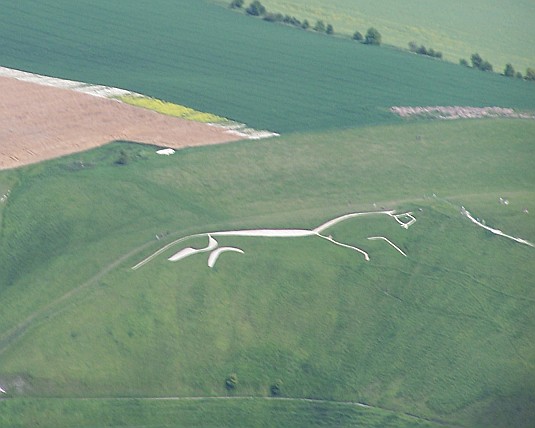
The Uffington White Horse from the Air

The Uffington White Horse from the Air

I walked up to the area where the head of the horse is seen in this picture. It was an overcast and hazy but warm day – a good thing because it was also very breezy. It was about a mile or so walk up the hill from the car park via the Ridge Path, which took me through the Uffington Castle, which isn’t what you think it is at all … not a castle in the medieval sense. Uffington Castle is all that remains of an early Iron Age hill fort. It is composed of two circular earth berms (with a circular ditch between them) surrounding about 32,000 square meters (nearly 8 acres). There is an entrance in the eastern portion, near the White Horse and another at the south (through which I entered). An entrance in the western side was apparently blocked up a few centuries after it was built. I was able to take a picture of the “castle” (although it doesn’t look like much). This picture is taken from the eastern entrance of the southeastern quadrant; the southern entrance can be seen at the right of the picture.

Uffington Castle, Oxfordshire, UK

Uffington Castle, Oxfordshire, UK

As you can see, the White Horse is a highly stylised prehistoric hill figure, 110 m long (374 feet), formed from deep trenches filled with crushed white chalk. The figure is believed, and scientific tests have shown it, to date back some 3,000 years, to the Bronze Age. The purposes of its creators is completely unknown. It is not of Celtic origin, but G.K. Chesterton used it as the setting for part of his Catholic allegorical and poetic retelling of the story of the Saxon king Alfred the Great, who defeated the invading Danes in the Battle of Ethandun in 878, which is entitled The Ballad of the White Horse.

Before the gods that made the gods
Had seen their sunrise pass,
The White Horse of the White Horse Vale
Was cut out of the grass.

Before the gods that made the gods
Had drunk at dawn their fill,
The White Horse of the White Horse Vale
Was hoary on the hill.

Age beyond age on British land,
Aeons on aeons gone,
Was peace and war in western hills,
And the White Horse looked on.

For the White Horse knew England
When there was none to know;
He saw the first oar break or bend,
He saw heaven fall and the world end,
O God, how long ago.

As retold by Chesterton, Alfred and his Saxons set out from the White Horse and Alfred gathers there three great chieftains, Mark a Roman, Eldred the Franklin who is a Saxon, and Colan who is a Celt. In describing Colan, Chesterton includes these priceless lines:

For the great Gaels of Ireland
Are the men that God made mad,
For all their wars are merry,
And all their songs are sad.

After visiting the Uffington site, I went to Avebury to see the largest “henge” in Britain (possibly the largest man-made earthwork of its kind in all of Europe). A henge (the word is derived from Stonehenge and was coined in the mid-20th Century) is an earthen berm circular with an interior circular ditch. Because the ditch is on the inside, not the outside, of the berm, henges are not considered to be defensive fortifications. One scholar, however, has suggested that they are defensive in that he believes they were built to contain something and protect those outside from what was inside – and what was inside was divine energy. The Avebury henge contains many standing stones that are laid out in peculiar formations, some circles, some straight lines, some curving formations not forming full circles. Here are some photos of the standing stones.

Standing Stones near World Heritage Center Shop, Avebury, UK

Standing Stones near World Heritage Center Shop, Avebury, UK

Stone Circle portion within the Avebury Henge

Stone Circle portion within the Avebury Henge

This is a map (from Wikimedia) showing the Avebury henge and the position of the standing stones (and theoretical stones completing the circles). It does not show the Avebury village buildings which have been built within the henge. The henge has a circumference of about 3/4 of a mile.

Map of Avebury Henge (non-free material from Wikimedia)

Map of Avebury Henge (non-free material from Wikimedia)

I am intrigued by the idea that because the ditch and bank face inward, in the opposite order that they would be placed in a defensive ring fort, something “dangerous” or “powerful” was understood to be inside the enclosure. The proposal is that henges were designed mainly to enclose ceremonial sites seen as “ritually charged” and therefore dangerous to people, that whatever took place inside the enclosures was intended to be separate from the outside. In other words, the henge may have been a means by which neolithic society set aside “sacred space” in much the same way that modern human beings do with churches, mosques, temples, and so forth.

The hymn An Aluinn Dún (The Heavenly Habitation), which was set out in an earlier post, is about sacred space (heaven, particularly). The Celts and the Gaels have a special sense about sacred places; they marked them, but did not attempt to set them off or guard against them in the way henges seem to do. In fact, holy caves and holy wells were understood to be places of refreshment, “thin places” between our world and the spiritual realm, not something to be feared, but something to enjoy, somewhere to grow closer to God.

Traveling Mercies! Please! (Part 2)

This piece follows up on a description of my day of departure from the states – here.

Suffice to say I got to and through Newark (where I had an awful Mexican supper badly burning the roof of my mouth on an obviously “nuked” chimichanga), and arrived in Edinburgh, Scotland, UK. I had pre-booked a rental vehicle from Enterprise Rent-a-Car, but finding the rental agency counters in the Edinburgh airport terminal is a bit of a trick … because they aren’t in the terminal; they’re in a separate building on the other side of the multi-level car park which thus can’t be seen from the terminal. Good planning.

Anyway, I got through immigration and customs with no problems (except a long wait because of some sort of public workers strike and then a computer outage), found the rental agency, got the car and a quick run-down on its features by the agency manager, loaded my things, and took off … only to discover that I’d misunderstood the instructions on how to get out of the parking area, made a wrong turn, and ended up blocking the way for in-coming rental returns. That’s when I discovered that I didn’t know how the put a Vauxhall Meriva five-door runabout into reverse! I put the vehicle in neutral, got out, and pushed it out of the way. Then spent several minutes looking through the owner’s manual and finally figured it out – I’d been pushing down on the gear shift knob (which was the way one got into reverse in my last two manual transmission cars) but learned that the Meriva has a pull-up ring around the gear shift stem. Well, OK, it works. And the car has turned out to be fun to drive.

The Hole of Horcum

The Hole of Horcum

After driving it for three days, however, it was time to fuel it up. I pulled into a Tessco petrol station, got out, and couldn’t get the fuel tank door to open. After looking everywhere for a release lever and not finding one, I pulled into a parking place and spent several more minutes with the owners’ manual, fruitlessly this time. I was almost ready to call Enterprise and ask, “How do I get this darned thing open!?” Then a calm voice in my head said, “What about the unlock button on the key fob?” “No,” I said to the voice, “it couldn’t be that easy, could it?” — The unlock function on the key is one of those where you press it once and the driver’s door opens, press it again all of the locks in the car are released. I pressed it twice. The fuel tank door opened! Thank you, calm voice in my head! I swung the car around the pumps and filled up.

American gasoline consumers! Listen up! The cost of petrol in the UK (the lowest grade being 95 octane, by the way) is currently between £1.309 and £1.399 depending on where you are and what station you prefer to patronize. I paid £1.319 per liter, or a total of £56.28 to fill my car with 42.67 liters of gasoline. In American terms, that’s $90.58 for 11.27 gallons – or $8.04 per gallon! Gasoline in Medina, Ohio, the day I left was $3.45 per gallon. We really don’t have anything to complain about! (I’ve since filled up twice again at similar prices.)

Anyway ….

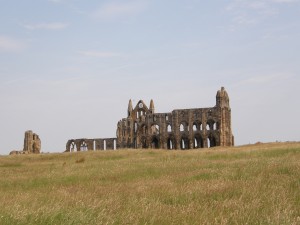
Whitby Abbey

Whitby Abbey

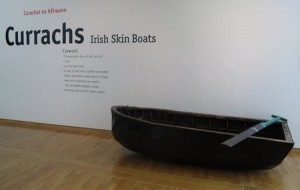
All of these minor annoyances, those set out in the earlier post and those described here, are just that, minor! When I was resting, praying, meditating at the Duddo Stone Circle and again a few days later when I was walking across the grass field at Whitby Abbey and then later that same day listening to the electronic guide commentary at Rievaulx Abbey, it occurred to me how difficult the lives and travels of the Celtic missionaries must have been. These men set out from Ireland not on jet aircraft arrived mere hours later; they sailed across the Irish Sea (not the most hospitable of waters) in small currachs, practically insignificant skin-covered boats. They traveled the countryside (which was wild and untamed, not the neatly farmed landscape of today) by foot, not in comfortable air conditioned vehicles whizzing along at 70 mph! No matter what the inconveniences of modern air travel, no matter how bad airline or airport food may be, no matter what difficulties one may have learning how to pilot a rental car … nothing that I have detailed above amounts to a hill of beans in comparison to the difficulties those Celtic monks must have faced!

Galway City Museum Currach Boat Exhibit, photo borrowed from wandermom.com

Galway City Museum Currach Boat Exhibit

It was the Celtic missionary tradition to send out thirteen men – an abbot and twelve brothers emulating Christ and the Twelve – to find a good location for a new monastic community, settle there, build their caiseal and within it their huts and other buildings, and begin seeking out the local peoples and telling them the Good News of redemption in Jesus Christ. They sailed in tiny boats; they walked across wild terrain shod only in sandals; they carried everything they needed – holy books and vessels, especially. They did the hard work of converting those who had never heard of God or of Jesus. And they did it successfully. They have much to teach us and we have much to learn.

This trip is teaching me about patience; it’s teaching me about letting go of annoyances; it’s teaching me about trusting God. Traveling charms, invocation of God’s protection while abroad, were a common part of the Celtic Christian experience. There are numerous examples of them in Alexander Carmichael’s magisterial collection of Scottish Gaelic folk hymns and poetry called Carmina Gadelica and in Douglas Hyde’s collection of Irish verse entitled Religious Songs of Connacht, from which the lyrics of many of the songs in Dantá Dé are taken. The following is from Hyde’s collection, the Irish and the translation are both from his text. It is not found in Dantá Dé. First, the Irish:

I n-ainm an Athar le buaidh
Agus an Mhic a d’fhulaing an phian
Muire ‘s a Mac go raibh liom ar mo thriall.

O a Mhuire cas dam ag an phort
Na leig m’ anam thart
Is mór m’ eagla roimh do Mhac.

I gcumaoin na naomh go raibh muidh (sinn)
Ag éisteacht le guth na n-aingeal
A’s ag moladh Mic Dé le saoghal na saoghal.

And the English rendering by Dr. Hyde:

In the name of the Father, with victory
And of the Son who suffered the pain,
That Mary and her Son may be with me on my travel.

O Mary meet me at the port
Do not let my soul [go] by thee,
Great is my fear at thy Son.

In the communion of the saints may we be,
Listening to the voices of the angels,
And praising the Son of God for ever and ever.

I’ve begun saying this invocation each morning before beginning my drive, thinking of the Celtic and Roman missionaries and the later medieval monks who traveled this way before me.

Summer and Sabbath

In about two hours I will be headed for Cleveland-Hopkins Airport to get on a flight to Newark and thence to Edinburgh. Checking email, Facebook, etc. before packing up the laptop, I found that a friend forwarded me an email from a United Methodist board of some sort containing two delightful quotations about summer and sabbath. The summer thought is from John Lubbock:

“Rest is not idleness, and to lie sometimes on the grass on a summer day listening to the murmur of water, or watching the clouds float across the sky, is hardly a waste of time.”

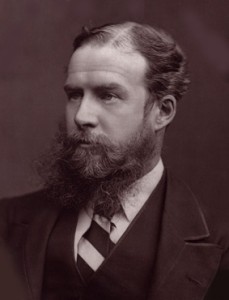
I had no idea who John Lubbock was, although I now know that I certainly should have. He was a Victoria era banker with many side interests, and the First Baron Avebury. He also was a good friend of Charles Darwin, whose hometown of Shrewsbury, Shropshire, I will be visiting in just under two weeks. Wikipedia has an extensive article about John Lubbock which includes this information:

In 1865 Lubbock published what was possibly the most influential archaeological text book of the 19th century, Pre-historic times, as illustrated by ancient remains, and the manners and customs of modern savages. He invented the terms Palaeolithic and Neolithic to denote the Old and New Stone Ages respectively. More notably, he introduced a Darwinian view of human nature and development. “What was new was Lubbock’s… insistence that, as a result of natural selection, human groups had become different from each other, not only culturally, but also in their biological capacities to utilize culture.”

Lubbock complained in the preface about Charles Lyell:

“Note.—In his celebrated work on the Antiquity of Man, Sir Charles Lyell has made much use of my earlier articles in the Natural History Review, frequently, indeed, extracting whole sentences verbatim, or nearly so. But as he has in these cases omitted to mention the source from which his quotations were derived, my readers might naturally think that I had taken very unjustifiable liberties with the work of the eminent geologist. A reference to the respective dates will, however, protect me from any such inference. The statement made by Sir Charles Lyell, in a note to page 11 of his work, that my article on the Danish Shell-mounds was published after Ms sheets were written, is an inadvertence, regretted, I have reason to believe, as much by its author as it is by me.” Preface to Pre-historic times.

Lubbock was also an amateur biologist of some distinction, writing books on hymenoptera (Ants, Bees and Wasps: a record of observations on the habits of the social hymenoptera. Kegan Paul, London; New York: Appleton, 1884.), on insect sense organs and development, on the intelligence of animals, and on other natural history topics. He was a member of the famous X Club founded by T.H. Huxley to promote the growth of science in Britain. He discovered that ants were sensitive to the ultraviolet range of the spectrum. The Punch verse of 1882 captured him perfectly:

How doth the Banking Busy Bee
Improve his shining Hours?
By studying on Bank Holidays
Strange insects and Wild Flowers!

Apparently, Mr. Lubbock’s time spent lying on the summer grass was not wasted. I hope that mine spent, in part, walking through the summer hills of Scotland, England, Wales, and Ireland will likewise not be a waste of time. And in that vein is the second quotation in my friend’s United Methodist email, a prayer for sabbath:

Sabbath God, in this season of long days and long daylight, we are grateful to be alive. Give us the wisdom to pause from our hectic routines and enjoy the simple things of this time of year. Let us live easily for a time, putting away watches and looking away from clocks, ignoring all the things that need to be moved, fixed or cleaned. Let us lose ourselves in the bounty of the earth you created. May this be a time of rest, refreshment and renewal. May we be calm enough and quiet enough to perceive your presence. Let us not fill all our time with endless activity.

The email says that this is prayer is “based on a prayer composed by Ted Loder in his book, My Heart in My Mouth.” I also didn’t know who Ted Loder is. It turns out he is another blogging clergy person. The profile on his blog says, “The Reverend Dr. Loder is a retired United Methodist minister who served as Senior Pastor for 38 years at Philadelphia, PA’s First United Methodist Church of Germantown (FUMCOG), which became well known around the country for its dynamic worship and preaching as well as its urban involvement and prophetic social action. He was named one of America’s most creative preachers. He has published several books of prayers, sermons and commentary including Guerrillas of Grace and Loaves, Fishes and Leftovers.” The header on his blog reads, “Stay Watchful – God is Sneaky.” I shall have to read this fellow….

As I fold up this laptop, stow it in my backpack, and start loading my bags into the car for the trip to the airport, my prayer is one petition in particular in the Rev. Dr. Loder’s prayer, “May this be a time of rest, refreshment and renewal.” Amen!

Leaving the Fireflies (Postscript)

I found a YouTube video of the Irish Klezmer band The Fireflies (referred to in my prior post). The video is a collection of still photos of the band with a pretty good soundtrack. Not exactly what one expects to hear from an Irish band! LOL!

Leaving the Fireflies

On June 30, 2011, I’ll load my rolling dufflebag filled with clothing and such, my backpack filled with computer and books, and my CPAP machine (its bag crammed with anything else I can fit into it) into the car, head for Cleveland-Hopkins Airport, and fly to Newark where I will wait for five hours and then take another plane to Edinburgh, Scotland, UK.

Last evening as I walked the dog after sunset, the sky still a fairly bright blue with plenty of light to see, I looked into the darkness of the woods behind our house and saw that the fireflies were beginning to flash their mating signals. I realized that I’m leaving Ohio at one of my favorite times of the year – firefly time! I love fireflies!
I was born and raised mostly in the little-known southern Nevada community of Las Vegas, but my summers from age 5 to age 13 were spent mostly in the southeastern Kansas town of Winfield. That area of Kansas has a lot of fireflies; my mother was born there and both of my parents were reared there. Those summers were spent living with my paternal grandparents and with my cousins, the children of my father’s only brother, who lived next door to them. A nearly daily activity during June and July was catching fireflies in the early evening so we could watch them flash on our dresser all night long.

I was delighted when we moved to Ohio to find fireflies here … not as many as there were in Kansas, but enough. An informational website maintained by Ohio State University has this to say about firefly habitat:

If you live in the United States, west of about the middle of Kansas, you are not apt to have the flashing type of fireflies in your area. Although some isolated sightings of luminous fireflies have been reported from time to time from regions of the western U.S., fireflies that glow are typically not found west of Kansas. The reason for this phenomenon is not known.

I can guarantee you that I never saw a firefly in Las Vegas! But those summers in Kansas there were plenty.

Fireflies are called different things in different parts of the country. I’m pretty certain that firefly was the most common term in Winfield, although occasionally someone might call them lightning-bugs. I know that some people also call them “glow worms” but the only time I ever heard them called that was when my mother would sing a song with that title popular back in those days. Whenever I would talk about catching fireflies, she start humming or singing that song. Here’s a YouTube video of the Mills Brothers singing it (it brings back a lot of memories!):

My cousins and I would catch the fireflies and keep them in mason jars. We’d grab a handful of the grass growing along the fence of our granddad’s garden (this was in the days long before “weed whackers” and no one ever seemed to feel like trimming that grass by hand, so it was always good and long, perfect for a mason-jar firefly habitat) and shove it in the jar, then run through the yard after the flashing bugs trying to trap them between jar and lid. The lid, of course, was a mayonnaise jar lid (Grammy wouldn’t let us use her good canning lids) that we had pounded a nail through several times to give the bugs air. We’d usually get five or six bugs in each jar and that would be enough for the night.

We’d put the jars on the dresser next to our beds in our grandparents’ basement or at my cousins’ house, wherever we were going to sleep that night, and then do something else for the rest of the evening. Eventually, though, bedtime would roll around and off we’d go, to lay awake as long as we could watching the fireflies flash. Come morning, Grammy would encourage us to set them free and we would dutifully dump out the contents of the jar, wilted grass, fireflies (dead or alive, who knew?), and all.

There are no fireflies in Ireland (though I’m told there’s a Klezmer band there called The Fireflies) so I am leaving one of my favorite sights of summer, the evening flashes of the lightning bugs. There are no fireflies in Ireland, but there is in the ancient verse and the Celtic spirituality of the Irish people a deep appreciation of nature and of nature’s God. In the early 20th Century, Dr. Douglas Hyde collected many bits of folk poetry reflecting that appreciation, including this one found in Dánta Dé. It is described as “ceol na ndaoine, as Albain, tré Lachlann MacBeathain” (“folk song from Scotland by Lachlann MacBeathain”); the notes in the hymnal indicate that Dr. Hyde collected it in 1924:

Áluinn fairrge spéir-ghlas
Áluinn uisgeacha ciúin,
Áluinn taithneamh na gréine
Ar na tonntaibh tá fúinn;
Faoileáin ‘g eiteal ‘s na spéarthaibh,
Teas le h-éirghe an lae;
Ó! nach áluinn, a Dhe!
Siúd uait amharc na sléibhte,
Bárra a bhfolach fá cheó,
Caoirigh ciúin ar a dtaobhaibh,
Síot a’s sonas a’s sógh.
Tógfad suas mo chroidhe-se
Tógfad suas mo ghlór,
Molfad Eisean a-choidhche
Fá gach iongantas mór;
Árdaigh feasta mo smaointe
Mar na sléibhte ‘san aéir,
Ciúnaigh feasta mo chroidhe-se
Mar an t-uisge soiléir;
Éist le m’athchuingh’, a Thigh’rna,
Tar a’s cómhnaigh im’ chléibh,
Réidhtigh m’anam: ‘s im’ inntinn
Déan-sa t’-árus, a Dhé.

The direct, non-metrical, prose interpretation:

Lovely is the sky-grey ocean,
Lovely the quiet waters,
Lovely the shining of the sun
On the waters below;
Seagulls flying in the skies,
Warmth with the rising of day, –
O how delightful is Thy world!
O how delightful, my God!
See in the distance the mountains,
Summits hidden in the mist;
Quiet sheep on their slopes,
Peace and pleasure and bliss.
I will lift up my own heart,
I will lift up my voice,
I will praise Him for ever
For each wonder great.
Lift Thou upwards my thoughts
Like to the mountains above,
Calm Thou henceforth my heart
Like the waters clear;
Hear, O Lord, my prayer,
Come, abide in my breast,
Quiet my soul, and within my mind
Make Thy dwelling, O God.

There are no fireflies in Ireland, but I’m sure if there ever had been they would have found there way into the religious songs of the Irish people. Fireflies spark our imaginations and light up our souls on summer nights. In a way, I’m sorry to be leaving the fireflies.

Translating Hymns (Part 3)

Between the steps outlined in my last two posts, there is the matter of music. The metre, the accents, the stressed syllables … all that has to be considered. Hymn metres are often described numerically by the number of syllables in each line. For example, the great Lutheran hymn A Mighty Fortess Is Our God is metrically described “87 87 87 66 7” – this means that in each nine-phrase stanza, the first line has eight syllables, the second seven, the third eight, and so on.

I look over the music in Dánta Dé and determine, using this syllable-count scheme, what the metre of the translation should be, how the music fits the Irish lyrics and how best an English re-working might fit. And then, working from the literal translations of ní Ógáin and my own literal translation, I begin crafting a metrical paraphrase.

One of my favorite pieces in the hymnal is entitled The Heavenly Habitation, written by Donnchad Mór Ó Dálaigh in the 13th Century. Here it is in three versions – the original archaic Gaeilge, ní Ógáin’s translation, and my final metrical, rhyming paraphrase.

The original Irish Gaelic:

Áluinn Dún Mhic Mhuire,
An Dún is gluine blat;
Aoibhneas ann agus ceo,
Ní fhaicthear brón go brat.

Ní fhaicthear ann cean crom,
Tuirse trom ann nó cás,
Ní fhaicthear cúis no coir,
Ar aon neach ann go brat.

Do chídhtear ann do shíor,
Aoibhneas Ríogh na ngrás;
Do chídhtear sin san Dún
Soillse nach múcann smal.

An Spioraid Naomh go taithneamhac
Mar gaethibh siúbhlac’ gréine,
Is É ag scaoileadh go ceathannach
[Glé-] grása Ríogh na Féile.

San mbrúgh suaithneach solus-bhlát,
– Óir ‘s ionann lá is oidhche –
Ó chorraibh ‘n bhrógha bháin-ghil
Tig deallradh lán do’n aoibhneas.

Tá mile ógh is máirtireach
Fuair san tsaoghal gach dochar,
Lán dá n-aoibhneas taithniomhach
Ann go sámh glan socair.

Gorta is iota is ocras
‘S gach uile galar claoidhte,
Deoch as tobar na trócaire
D’fhóirfeadh iad sin choidhche.

Iompuighmíd ar ár n-ais arís,
Go bhfeicmid Ri na ngrása,
Is iarrmaoid ar ár nglúine
Ár leigean ‘san Dún is áilne.

Úna ní Ógáin’s direct translation:

Beauteous the Dún of the Son of Mary,
The Dún of purest bloom;
Delight is there and music,
And sorrow ne’er shall be seen there.

Ne’er shall be seen there a head bowed down,
Heavy weariness nor care;
Never sorrow nor crime
On anyone there for ever.

For ever is seen there
The loveliness of the King of the graces;
This is seen in that Dún,
Light that no cloud shall quench.

The Holy Spirit radiantly
Like moving beams of the sun,
And He shedding in showers
The graces of the King of generosity.

In the Fortress colour-full, light-blossoming,
– For there day and night are the same , –
From the pinnacles of the fair bright Fortress
Comes radiance full of delight.

A thousand virgins and martyrs
Who received in the world all hardships,
Filled with joyful delight
Are there, peaceful, pure, safe.

Famine and thirst and hunger,
And every wearing disease, –
A drink from the Well of Mercy
Would relieve them for ever.

We will return back again
That we may see the King of the graces,
And beseech him on our knees
To take us into the Dwelling most beauteous

My work based on this hymn:

How wondrous bright the glorious dún
of Jesus Christ our King;
Delight is there for ev’ryone,
and there the martyrs sing.

No head is bowed with sorrow there,
no heavy weariness known;
No crime, no cloud, no toilsome care,
bedims that heav’nly home.

The beauteous mansions of God’s Son
all sound with music bright;
The radiant Spirit, like the sun,
Fills them with glorious light.

The graces of the King are spread
and purest loveliness blooms
on all the holy, faithful dead
who now live in God’s rooms.

The many virgins, martyrs, saints
who hardship all endured
are filled with joy, delight, and grace;
blest, peaceful, and secure.

From famine, suff’ring, thirst, disease,
the Well of Mercy has giv’n
release and comfort to all these
who now dwell in God’s heav’n.

That heav’nly habitation we
all live in hope to share;
The King of all the graces we
beseech to take us there.

Upon our knees, the King we pray
will there make welcome our souls,
where ev’ry night is bright as day,
and ev’ry life made whole.

How wondrous bright, the glorious dún
of Jesus Christ our King;
Delight is there for ev’ryone,
and there we all shall sing.

There ev’ry soul is pure and bright,
and ev’ry loveliness known;
There joy, and peace, and pure delight
bless our eternal home.

There are about eighty ancient Gaelic hymns in the hymnal (there are also Gaelic translations of familiar hymns, especially Christmas carols, which I will be ignoring). My sabbatical project will be to work on these metrical, rhyming English paraphrases for as many as I can complete during my time on leave.

Translating Hymns (Part 2)

Continuing from my last post ….

Here’s an example of what I was describing in my last post. This is the first verse of the fourth hymn in Dánta Dé, in the section titled Maidin (“Morning”). The hymn is described as Cantain Tíre-Chonaill (“Chant [from] Tyrconnell”) and the ascription reads, Ó na daoinibh tré Antoine Ó Dochartaigh (“From the people by Anthony O’Doherty”).

A Íosa mhilis, a Mháighistir ‘s a Dhia,
A Fhuasglóir oirdheirc ainglidhe,
Féach d’ár laige ‘s ná leig ár gclaoidhe
Le tonnaibh buadhartha an pheacaidh.

Úna ní Ógáin translates this as follows:

O, Jesu sweet, O master and God!
Deliverer august, angelic,
Look on our weakness, and let us not be overcome
By the troublous waves of sin

Now, I’m quite certain that her translations are correct, but I want to understand this Irish Gaelic text as thoroughly as possible, so I go to work translating for myself. Many of the words are familiar to me – the name of Jesus, for example, Íosa, or the word meaning “sweet”, mhilis, or the verb “to see”, féach. Others look like words I know, but they seem to be older forms – for example, ainglidhe (which she has translated as “angelic”) does remind me of aingeal meaning “angel”, and tonnaibh (which she has translated as “waves”) is similar to the word I know for “wave”, tonn. Others are new to me.

So I spend a lot of time leafing through the dictionary learning new words and trying to understand the meaning of the almost-familiar words. However, many of these words are not found in my modern Irish-English dictionary (I’m primarily using Foclóir Gaeilge-Béarla by Níall Ó Dónaill, as well as various other sources) because of the changes made in modern standard Gaeilge. For example, ainglidhe has been simplified to aingli. The changes to other words are not so easily discovered: tonnaibh, for example. The plural of “waves” that I know is tonnta, so I think that perhaps this is a related word meaning a particular kind of wave? I know from dealing with other “modernized” words that the “bh” letter combination has been often replaced with either “ch” or “dh”, so I look in the dictionary for that variant spelling. Nothing. I also know that “ai” has frequently been simplified to “a”. Aha! The dictionaries have both tonnach (“quagmire”) and tonnadh (“surge” or “tide”). There’s no way to really know which of these the “folk of Tyrconnell” might have intended, so either could be used as a translation and both suggest imagery for the later step of putting this chant into metrical, rhyming English.

I move on to the next word, buadhartha, which ní Ógáin translated as “troublous” (which I’m not sure is even an English word!) This one is also unfamiliar to me, but it reminds of a word I do know, buaigh, the verb “to win”. The structure of buadhartha suggests to me that it is what the Irish call an aidiacht bhrathartha (“verbal adjective”), but the verbal adjective of buaigh is buach (“victorious” or “winning”). Further, “winning” and “troublous” hardly seem to fit one with the other, so this is obviously some other word. This requires the time-consuming process of simply reading the dictionary word by word until something comes close to ní Ógáin’s “troublous” rendering. The “r” in the word, by the way, is a lead, so I look particularly for words beginning with “bua” and including an “r”. The search ends when I find buair, a verb meaning “to grieve”, and its related word buartha (“grievous, worrying, or sorrowful”). (And a bit of learning for use later on … the letter combination “adha” here was simplified to “a”; this pattern may be repeated in other words.)

This is the process I work through which each word, each line, each stanza of the hymn. In the case of this first verse of Anthony O’Doherty’s chant from Tyrconnell, I render the verse as follows:

O Sweet Jesus, Master and God,
O exalted [and] angelic Redeemer,
See our infirmity and do not allow our conquering
By [With] the grievous tide [quagmire] [of our] sins

Not too dissimilar to ní Ógáin’s original translation, but by doing the work of translation myself, delving into deeper and alternative renderings of the text, I gain insights and ideas that will be of use in the next step, turning the translation into something in English that can fit the metre of the original music to which the Irish words were set. More on that in a later post.

Translating Hymns

In about a month I’ll be starting my sabbatical with two weeks walking hills and visiting important pre-historic, Celtic, Roman, and medieval sites in Great Britain, starting with Melrose Abbey in Scotland, St. Cuthbert’s Way, Lindisfarne in England, Hadrian’s wall, Jedburgh, etc. As I visit these sites, I’ll be blogging and sharing pictures, continuing my self-study of Irish Gaelic (refreshing my learnings from my summer 2008 time at NUI Galway and adding to them in preparation for more study there this summer), and working on translations of the poetry in Úna ní Ógáin’s hymnal Dánta Dé idir sean agus nuadh (Hymns to God: Old and New).

I’ve been working on this for a couple of years and, let me tell you, translating old Gaelic verse into rhyming and metrical English is not easy! I usually end up with more something of my own authorship that is inspired by the original than a translation of the original. The process requires four foundational steps before anything like a singable text can even be considered:

First – the hymns in Dánta Dé are printed in old Gaelic script and in the older form of Irish Gaelic in which there are a lot of letters which have been dropped from the modern standard Irish. So my first task is simply transliterating the Gaelic script into the Latin alphabet. My old eyes aren’t what they once were, so I make frequent mistakes confusing, for example, the letter combination “id” for “ro” and similar errors.

Second – once I’ve gotten the old Gaelic transliterated is to figure out what form the word has taken in modern Irish; spellings in many cases have changed and although the changes follow a pattern, there are sometimes difficult choices to make.

Third – review ní Ógáin’s translation. Her translations are more prose or free verse than rhyming/metrical lyrics. They are fairly direct, but they are also informed by a deep early 20th Century Irish Roman Catholic spirituality so that adds a “flavor” that a more direct translation might not have.

Fourth – my own direct translation. This involves a lot of dictionary work and a lot of grammar review!

Then comes the work of recasting the ideas, images, and spirituality of the piece into singable lyrics….

And we haven’t even considered what to do with the music…..

The Full Irish

“The full Irish” is the name given a very large breakfast served at Irish B&Bs consisting of eggs (usually cooked to order), Irish sausages (the meat is more finely minced and less spicy than American breakfast sausage), black pudding and white pudding, a rasher of bacon (much meatier than American bacon), and some sort of fried potatoes. Often one also sees sauteed mushroom, broiled tomatoes and (especially in Northern Ireland) baked beans.

An especially interesting addition is the potato farl, which is basically left-over mashed potatoes with a bit of flour and butter added to it to make a dough, flattened and cooked on a griddle. They are simple but quite tasty. I’m looking forward to once again enjoying a “full Irish” when I return this summer.

Newer posts »