Occasional thoughts of an Anglican Episcopal priest

Category: Ministry (Page 28 of 59)

The Youngest Who Serve – From the Daily Office Lectionary

From the Gospel lesson for Thursday in the week of Proper 7b (Pentecost 4, 2015)
Luke 22
25 [Jesus] said to [the disciples], “The kings of the Gentiles lord it over them; and those in authority over them are called benefactors.
26 But not so with you; rather the greatest among you must become like the youngest, and the leader like one who serves.”

Within the next couple of days the Episcopal Church will have a new Presiding Bishop. Yesterday we had something akin to a group job interview in which the four nominees sat on the dais of the House of Deputies and answered questions posed by members of the Joint Nominating Committee speaking on behalf of the church. It was also somewhat like a beauty contest; anyone who has been through an episcopal election as candidate, elector, search committee member, or member of an electing diocese is familiar with the metaphor and the form. The four candidates are all men; one is black, the rest white. All are distinguished churchmen of middle age; the youngest is 56, the eldest 64 (there was plenty of grey hair on that platform). They all had lovely things to say; each said something I could whoop and holler about; each said something that made me unhappy. What none of them said was, “I will become like the youngest;” what none of them said was, “I will be like one who serves.” ~ One of the things I’ve noticed about this General Convention is the number of young deputies. My son and daughter-in-law (who are in their early thirties and late twenties) who are both deputies have many, many colleagues among those who are now governing our church. None of them, of course, is qualified by our canons to become Presiding Bishop. However, I couldn’t help but wonder what it might be like if one of them were to take the helm. How might this church be different if our leadership truly were like these, the youngest who serve among us? ~ I wish the new Presiding Bishop well. Whichever one of these distinguished bishops is chosen to serve, he will be in my daily prayers, one of which will be, “May he be like the youngest, and like one who serves.”

Privilege of Stability – From the Daily Office Lectionary

From the OT lesson for Monday in the week of Proper 6B (Pentecost 3, 2015)
1 Samuel 1
20 In due time Hannah conceived and bore a son. She named him Samuel, for she said, “I have asked him of the Lord.”

The story of Samuel intrigues me. Turned over to the priest Eli at a young age, dedicated in accordance with his mother’s promise to a life of service to God, he lived and ministered as a priest, a prophet, and a Judge of Israel in the same place for his entire life. I find that almost impossible to understand. I have lived more places than I can count without getting out a notepad and writing them down! ~ When I was sworn into the federal bar in the District of Nevada, I had to complete an FBI background check application which asked for all of my residence addresses up to that point. I was 32 years old at the time; I realized that at that point in my life I had lived at 35 addresses. (I believe my parents invented “flipping;” I lived in and helped them fix up so many homes that I know how to do things associated with nearly all of the building trades!) ~ It also occurred to me as I gave thought to Samuel’s life and career that in a few days I will be celebrating the 24th anniversary of my ordination to the priesthood, and that I have just celebrated my 12th anniversary as rector in my current parish. What that means is that I have spent more than half of my presbyteral ministry in a single congregation. I think that’s actually rare in today’s church. In some traditions, itineracy is the norm and clergy are moved on a regular basis. I read somewhere that the average tenure of an Episcopal priest in a congregation now is less than five years. I have to say that I think there is something to be said for longer pastorates; development of personal relationships and growth in community leadership takes time, usually more time than we give them. I’m not sure I could have been happy with a life-long, young-childhood-to-old-age placement, but I am glad to have had the privilege of stability for the past dozen years.

Just Get Along – From the Daily Office Lectionary

From the OT lesson for Saturday in the week of Proper 5B (Pentecost 2, 2015)
Sirach 46
7 And in the days of Moses [Joshua] proved his loyalty, he and Caleb son of Jephunneh: they opposed the congregation, restrained the people from sin, and stilled their wicked grumbling.

One wonders if it is mere coincidence that group organization is the theme of the Daily Office readings recently. This praise of Joshua, son of Nun, assistant to Moses, is paired today with Paul’s admonition to the church in Corinth: “Put things in order, listen to my appeal, agree with one another, live in peace; and the God of love and peace will be with you.” (2 Cor 13:11) My week has been filled with organization and reorganization and failure of organization, preparing for hosting a bunch of overnight guests, the (probably) last vestry meeting of the summer, and heading off (in nine days) for the two week legislative extravaganza that is the Episcopal Church’s triennial General Convention. I’ve done a bit of “wicked grumbling” myself, forgetting Paul’s admonition to “put things in order” and “live in peace.” So … I repent. I hope those I may have upset will forgive me and I extend the hand of peace to those who have rubbed me the wrong way. In the famous words of Rodney King, let’s just all get along!

General Convention and Common Sense – From the Daily Office Lectionary

From the OT lesson for Tuesday in the week of Proper 5 (Pentecost 2, 2015)
Deuteronomy 30
11 Surely, this commandment that I am commanding you today is not too hard for you, nor is it too far away.
12 It is not in heaven, that you should say, “Who will go up to heaven for us, and get it for us so that we may hear it and observe it?”
13 Neither is it beyond the sea, that you should say, “Who will cross to the other side of the sea for us, and get it for us so that we may hear it and observe it?”
14 No, the word is very near to you; it is in your mouth and in your heart for you to observe.

Every time I read this paragraph from Deuteronomy I think, “He’s saying God’s law is just common sense.” And then I recall college philosophy courses in which I learned that “common sense” isn’t common, at all, and that exactly what common sense is is a matter of some debate and has been since way, way back. From Aristotle’s koine aisthesis through Cicero’s sensus communis to Descartes’ bon sens and even Thomas Paine’s political twist in the pamphlet Common Sense that played such an important role in this country’s founding, there is very little agreement on what “common sense” actually is. Which should come as no surprise; going back almost to the day Moses received the law on Sinai there’s been disagreement as to what God’s law is and what it means. ~ In two weeks, I’ll be with a thousand or so of my closest friends at the 78th General Convention of the Episcopal Church and, at some point during the legislative hearings and floor debates about marriage equality or church structure or budget or whatever, I know I will hear someone say, “It’s just common sense” and some people will nod in agreement and others will shake their heads in negative wonderment, because for Episcopalians there just isn’t any such thing as a common “common sense”! There’s only common prayer.

Silicon Courage – From the Daily Office Lectionary

From the Epistle lesson for Monday in the week of Proper 5 (Pentecost 2, 2015)
2 Corinthians 10

1 I myself, Paul, appeal to you by the meekness and gentleness of Christ – I who am humble when face to face with you, but bold towards you when I am away! – . . . .

Later in this morning’s pericope, in verse 10, Paul alludes to those who say, “His letters are weighty and strong, but his bodily presence is weak, and his speech contemptible.” I have known a lot of people like that. People who, when removed by distance or technology, are bold and forceful, even rude and insulting, but who in person are anything but. In two weeks, the General Convention of the Episcopal Church will take place. Every three years the bishops and representatives of the dioceses gather somewhere to conduct the business of the church: adopt a budget, pass resolutions about social and church issues, enact canons, make weighty decisions (which will mostly be ignored by church members). This year the Convention will decide whether to extend the sacrament of matrimony to same-sex couples; the House of Bishops will elect a new Presiding Bishop and the House of Deputies will vote its affirmation of that vote; decisions will be made about the structure and organization of the church and whether to change it in some way. In the run up to the Convention, there are numerous electronic fora which deputies and bishops may use to express their opinions about these and other issues. Many are taking advantage of Facebook groups, Google, Twitter, an old-style email listserve, and other avenues to forcefully express their opinions. I wonder, though, when we get to the Convention site (Salt Lake City this triennium) whether those same people will be as bold face to face. I’m looking forward to meeting some, not so much some others. It will be fascinating to do so. ~ “Dutch courage” was a term my German grandmother used to describe the misplaced confidence engendered by consumption of alcohol. Perhaps we need a similar descriptor for the boldness that digital distancing provides to those whose emails and Facebook postings are “weighty and strong,” but whose physical presence is not; perhaps “silicon courage”?

Priest as Pal – From the Daily Office Lectionary

From the OT lesson for Friday in the week of Trinity Sunday
Deuteronomy 26
1 When you have come into the land that the Lord your God is giving you as an inheritance to possess, and you possess it, and settle in it,
2 you shall take some of the first of all the fruit of the ground, which you harvest from the land that the Lord your God is giving you, and you shall put it in a basket and go to the place that the Lord your God will choose as a dwelling for his name.
3 You shall go to the priest who is in office at that time, and say to him, “Today I declare to the Lord your God that I have come into the land that the Lord swore to our ancestors to give us.”

Moses today gives us a different metaphor or two for the priesthood. He begins with the picture of priest-as-produce-manager, the receiver of baskets of fruits, grains, and vegetables which are to be placed before the altar of the Lord. Today’s pericope then ends with the priest-as-party-planner: “Then you, together with the Levites and the aliens who reside among you, shall celebrate….” (v 11) ~ I must say that these are more inviting roles than those that American Christianity has assigned the clergy: priest as principal prayer, priest as preacher, priest as pastor, priest as purveyor of religious solemnity. I get so dreadfully bored with all the seriousness put on the modern priesthood. ~ I visited a lady in the hospital this week. I was with her for about 45 minutes. She’s not a parishioner; she lives in another town and goes to another church and has another pastor. Thank God! She’s just an old friend and we spent most of our time laughing. She didn’t expect me to pray with her; she didn’t ask for an anointing; she didn’t share her diagnosis, prognosis, fears, or hopes; she just shared her friendship! It was a refreshing experience: priest as pal. It would be so nice if that happened more often.

Being Healed – From the Daily Office Lectionary

From the Gospel lesson for Tuesday in the week of Trinity Sunday
Luke 17
11 On the way to Jerusalem Jesus was going through the region between Samaria and Galilee.
12 As he entered a village, ten lepers approached him. Keeping their distance,
13 they called out, saying, “Jesus, Master, have mercy on us!”
14 When he saw them, he said to them, “Go and show yourselves to the priests.” And as they went, they were made clean.

Karl was a priest I knew. I met him nearly 40 years ago when I returned to Las Vegas as an adult and decided to attend the Episcopal Church parish nearest where I ended up living. He became my friend and mentor; he was one of the clergy who presided at my wedding; he and his wife were my son’s first babysitters; he shepherded me through the ordination process, presented me for ordination to both the diaconate and the priesthood; he gave me my first job as a clergy person and defended me when parishioners complained about my pastoral style. Most of what I know about being a parish priest I learned from him. The story of the ten lepers and their healing “as they went” was one of his favorites. The journey, being on the way, was his favorite metaphor for the spiritual life and the Christian faith. Arrival isn’t important, but moving along, going forward, being healed as we go, that is. That’s what it’s all about.

Take It From the Top – Sermon for Trinity Sunday, 31 May 2015

====================

A sermon offered on Trinity Sunday, May 31, 2015, to the people of St. Paul’s Episcopal Church, Medina, Ohio, where Fr. Funston is rector.

(The lessons for the day are Isaiah 6:1-8; Canticle 13 (Song of the Three Young Men, 29-34); Romans 8:12-17; and John 3:1-17. These lessons can be read at The Lectionary Page.)

====================

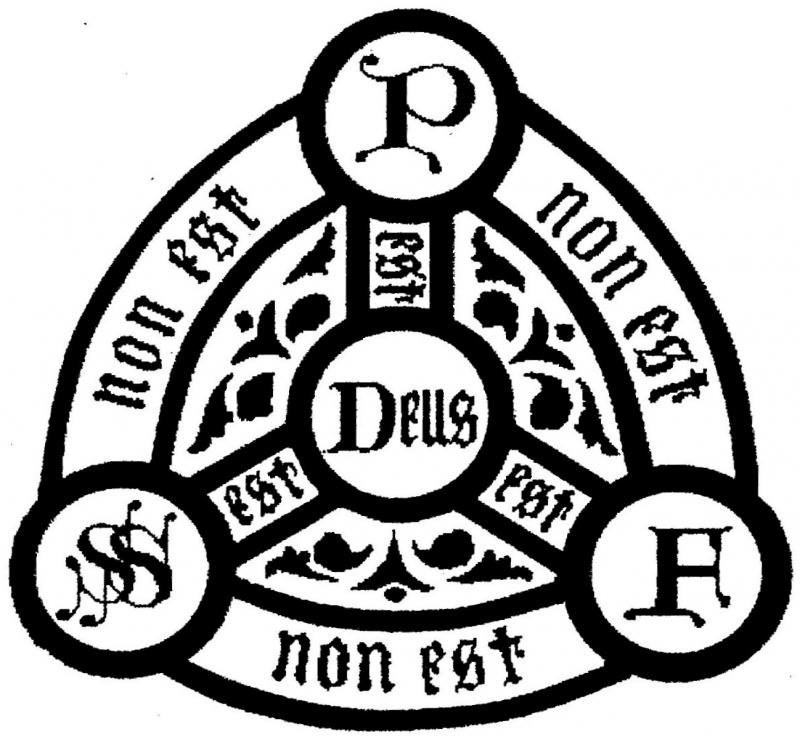
holy_trinity_symbol

In the Beginning, not in time or space,
But in the quick before both space and time,
In Life, in Love, in co-inherent Grace,
In three in one and one in three, in rhyme,
In music, in the whole creation story,
In His own image, His imagination,
The Triune Poet makes us for His glory,
And makes us each the other’s inspiration.
He calls us out of darkness, chaos, chance,
To improvise a music of our own,
To sing the chord that calls us to the dance,
Three notes resounding from a single tone,
To sing the End in whom we all begin;
Our God beyond, beside us and within.

Priest and poet Malcolm Guite’s A Sonnet on the Trinity tries to express the rhythm of a dance as a way appreciating the essence of the Holy Trinity when, on this day of the Christian year, we especially celebrate. This day, the first Sunday after the Feast of Pentecost, we set aside to contemplate the mystery of God as one-in-three and three-in-one, this is the Feast of the Most Holy and Undivided Trinity.

You and I have all heard many Trinity Sunday sermons filled with similes, metaphors, and analogies. We are all familiar with St. Patrick and his shamrock, with St. Augustine with his talk of Lover, Beloved and Love, with modern gender-neutral liturgies and their nearly Modalist constructions of Creator, Redeemer and Sustainer. We’ve all heard about candle flames and light and heat, about water which we know as liquid, solid and vapor, about preachers who are at one and the same time fathers, sons and husbands. Mention a trinitarian metaphor and we will all raise our hands and say, “Yep, been there, heard that one.”

And, yet . . . as familiar as we may be with all of that . . . we (as individuals) still struggle to grasp what we (as the church) mean when we (as a congregation) weekly profess our faith in God the Father, God the Son, and God the Holy Spirit, insisting that there are not three gods, but one God. The reason we struggle is that this doctrine, this theological perception, this self-revelation of God is a mystery in the truest sense of that word.

What we say in our creeds and in our theologies is all “code language” for this mystery. It is all an attempt to render into human words what God’s Word seems to tell us. The Trinity is not a reality that we can claim to grab hold of and test and verify and know. It is a truth that we conceive in faith, that we perceive by revelation, that we receive through the Spirit as a gift from God. It’s not spelled out in the Bible; indeed, the words “trinity” or “three-in-one” or even anything like them do not appear in Scripture. The baptismal formula “in the Name of the Father and of the Son and of the Holy Spirit” is found at the end of Matthew’s Gospel (Mt 28:19), but nearly every bible scholar agrees that those words were added to Matthew’s story and that our risen and (at that point) ascending Lord never said any such thing. No, at best we find hints of the Trinity in Abraham and Sarah being visited at the oaks of Mamre by God in the guise of three angels, in Isaiah’s call to prophecy and his vision of the heavenly throne room with the seraphim repeatedly singing the three-fold sanctus of “Holy, Holy, Holy,” in Jesus’ words to Nicodemus (part of which we heard this morning) and in his words to Philip (also in John’s Gospel) “If you know me, you will know my Father also” and “whoever has seen me has seen the Father” (Jn 14:7,9).

The Trinity is a mystery, as I said, in the truest sense of that word. Our word mystery is derived from the Greek word mysterion meaning “something hidden or secret.” Even before Christianity began, the term mysterion was used to describe an experience of divine activity in human affairs. In Christian theology, we use the word mystery to describe something that is inaccessible to the human mind through mere observation or study, something which is an object of faith because it is revealed. We cannot know that God is Trinity by any human faculty, by scientific study, or by human reason; we have faith that God is Trinity because that is revealed to us in our study of the Holy Scriptures and in our personal experiences of God.

In their conversation, Jesus tells Nicodemus that one must be “born from above.” In the Greek used by John to tell the story, Jesus uses the word anothen. An alternative meaning of this word is “again,” which is how Nicodemus understands it, that one must be “born again.” What Jesus is talking about is revelation; Nicodemus misunderstands because he is thinking about mere human existence. The word anothen is used only a few other times in the New Testament and one of those is later in John’s Gospel when Christ is crucified: the soldiers cast lots for Jesus’ tunic not wanting to tear it because “the tunic was seamless, woven in one piece [ek ton anothen] from the top.” (Jn 19:23) This, I think, is a clue to Jesus’ meaning.

How many of you play (or, at least, took instruction on) a musical instrument? Remember when you were practicing, perhaps with your teacher or in a band or an orchestra, and the leader would say, “Let’s take it from the top”? So you’d play it again. And then you’d “take it from the top” and play it again . . . and again . . . and again . . . and eventually it would happen; you’d get it right. Why or how that would happen was a mystery. I remember playing the clarinet in a high school dance band and I would swear that on what seemed the seventy-eleventh time through a piece I wasn’t playing it any differently, but somehow it was different. It clicked! It sounded right! That’s what Jesus is talking about: being “born from above” is “taking if from the top” until it clicks.

Faith is a matter of practice. We practice our faith again and again; we take it “from the top;” we are “born from above;” something clicks; we get something right, not because of our human faculty or scientific study or human reason, but because of the gift of God. That’s revelation. That’s life in the Trinity, the community of God the Three-in-One and One-in-Three into which we are constantly invited.

“The Trinity is a community of divine love and mutual self-giving. Each member not only loves the other, but acts for the well-being of the other in an effective manner.” (Peter C. Phan, The Cambridge Companion to the Trinity, Cambridge University Press, 2011, page 384) If we would enter into this divine communion, we will find ourselves expected to engage in social and ethical practices reflecting God’s love and mutuality, both in the church and in the wider world. The mystery which we profess in our Creeds only means anything when it takes concrete expression in a Christian moral life of love and mutuality. The trinitarian connection between Christian worship and Christian life is particularly expressed by our being in the world as living representatives of God, acting in ways that befit the divine character. One cannot profess love of neighbor in church, then go into the world and cheat one’s neighbor in business; one cannot hear Jesus command us in church to feed the hungry or clothe the naked, then go into the world and shred the social safety net; one cannot pray “Thy will be done” in church, then go into the world and oppress those who come to our country from foreign lands for it is clearly the will of God that “the alien who resides with you shall be to you as the citizen among you.” (Lev 19:34) Few, if any of us, are capable of attaining the ethical fullness of our trinitarian confession of faith, yet the more closely we enter into the trinitarian life of communion with God through Christ in the Spirit, the more our lives can be (and will be) expected to reflect the divine attributes of love and mutuality.

That is, in all honesty, a disconcerting revelation! Life in and with the community of the Trinity remains an ethical reality that lies beyond full human realization. It is disconcerting and disorienting; it destabilizes our existence. We are most comfortable when our lives are centered upon ourselves, but the trinitarian faith revealed in Christ demands that we focus our lives in love on the well-being of others, and not simply of a single other, but of multiple others. Perhaps this is why God’s self-revelation is found in threeness.

Karoline Lewis, a professor at Luther Seminary, has pointed out that human beings are most comfortable with pairs, “easy dyads for conversation” she calls them, and with even numbers: even numbers, she says, secure a sense of order and predictability, of expectation and dependability. But, add another person “and it’s the odd man out.”

With three, she writes, we enter “a disquieting disequilibrium. A lack of control. When you have three, the dynamics change. You are forced to share a conversation, to be attentive to another besides the one right in front of you. You have to listen to more than one person. Perhaps at the same time. You have to adjudicate feelings and responses and reactions that have doubled. That’s the problem and promise of three.” Perhaps, she suggests, “God likes disequilibrium. Maybe God thinks that’s what relationships are all about. Maybe God embraces and invites imbalance. Maybe this is essential to God’s character.” (Working Preacher: The Necessity of Three)

I think that this is what Malcolm Guite means when, in his sonnet, he writes that

[God] calls us out of darkness, chaos, chance,
To improvise a music of our own,
To sing the chord that calls us to the dance,
Three notes resounding from a single tone.

The trinitarian faith is not about how shamrocks or candles or ice cubes reflect the nature of God; the trinitarian faith is about how we reflect the nature of God! This faith which calls us to love and mutuality demands that we respond to the darkness of hunger, to the chaos of homelessness, to the disequilibrium of loneliness, to the imbalance of alienation; this faith which calls us to love and mutuality demands that we “take it from the top” again and again practicing and practicing over and over, improvising until (by the grace of God) we click, until (by the grace of God) we get it right, until (by the grace of God) we truly reflect the divine attributes and live as befits representatives of God the Father, God the Son, and God the Holy Spirit, the Most Holy and Undivided Trinity. Amen.

====================

A request to my readers: I’m trying to build the readership of this blog and I’d very much appreciate your help in doing so. If you find something here that is of value, please share it with others. If you are on Facebook, “like” the posts on your page so others can see them. If you are following me on Twitter, please “retweet” the notices of these meditations. If you have a blog of your own, please include mine in your links (a favor I will gladly reciprocate). Many thanks!

====================

Father Funston is the rector of St. Paul’s Episcopal Church, Medina, Ohio.

May We Be One: Sermon for Sunday after the Ascension (Easter 7) – 17 May 2015

====================

A sermon offered on the Sunday after the Ascension, the Seventh Sunday of Easter, May 17, 2015, to the people of St. Paul’s Episcopal Church, Medina, Ohio, where Fr. Funston is rector.

(The lessons for the day are Acts 1:15-17,21-26; Psalm 1; 1 John 5:9-13; and John 17:6-19. These lessons can be read at The Lectionary Page.)

====================

Unity in the Community“That they may be one, as we are one.” (Jn 17:11)

Obviously, there is quite a bit more to the “Farewell Discourse” or “High Priestly Prayer” of which today’s gospel lesson is a part, but in the end (I believe) the central petition of Jesus’ last prayer is one for the unity of the church and for God the Father’s protection of that unity.

Perhaps 60 or 70 years had passed since Jesus’ death, resurrection, and ascension when the author or authors of the Fourth Gospel put the finishing touches on this manuscript. Bible historians believe this gospel was written in Roman Asia (what is now Turkey), perhaps in the city of Ephesus, almost 1,100 miles from Jerusalem by land (over 600 miles by sea), sometime between 90 and 100 A.D.

They wrote not from personal experience and witness, but from oral tradition crossing decades of theological development and a great distance of cultural difference. There were many things that they had heard that Jesus had said, and a great deal that they needed Jesus to have said, and when they reached almost the end of their story, they had him say a lot of it in this Farewell Discourse.

Guided (we believe) by the Holy Spirit, the authors of this gospel portray Jesus offering this lengthy prayer to the Father, a prayer which might also be thought of as his last theological instruction to his inner circle, those who came to be called “The Apostles.” At its core is his wish that they stick together, “that they may be one, as we are one,” and that they continue his ministry by teaching the Truth he had sought to teach them.

The Episcopal Church takes this call to unity and ministry seriously, understanding it as a call not to uniformity but to harmony. In 2009, the 76th General Convention of the Episcopal Church declared that a “Biblically-based respect for the diversity of understandings that authentic, truth-seeking human beings have is essential for communal reasoning and faithful living. The revelation of God in Christ calls us therefore to participate in our relationship with God and one another in a manner that is at once faithful, loving, lively, and reasonable. This understanding continues to call Episcopalians to find our way as one body through various conflicts. It is not a unity of opinion or a sameness of vision that holds us together. Rather, it is the belief that we are called to walk together in Jesus’ path of reconciliation not only through our love for the other, but also through our respect for the legitimacy of the reasoning of the other. Respect for reason empowers us to meet God’s unfolding world as active participants in the building of the Kingdom and to greet God’s diverse people with appropriate welcome and gracious hospitality.” (Interreligious Relation Statement – Final Text)

Last Sunday, fifteen members of our congregation, joined by two others from St. Patrick in Brunswick, knelt before Bishop William Persell and, in some manner, reaffirmed the covenant made at their baptism. One was already a confirmed Episcopalian; two were teenagers who’d grown up in this parish. The others came to us from a variety of backgrounds, some actively Christian in other traditions, some not. Whatever their background, however, those fifteen persons apparently found here at St. Paul’s Parish that “appropriate welcome and gracious hospitality,” that unity in ministry to which the High Priestly Prayer compels us.

In his prayer, Jesus refers to his disciples (all of them, not just the Apostles) as “those whom [the Father] gave me from the world.” (v. 6) Earlier during their dinner conversation, he had reminded his followers, “You did not choose me but I chose you.” (Jn 15:16a) We tend to think otherwise of our membership in this or any church; we like to believe that we are autonomous, that we are here by our own decision, and our confirmation service certainly encourages our thinking in that direction.

In that liturgy, the Bishop asks the candidates, “Do you renew your commitment to Jesus Christ?” and they answer, “I do, and with God’s grace I will follow him as my Savior and Lord.” (BCP 1979, page 415) We tend to focus on only the first two words of that response, “I do.” But Jesus’ words at the Last Supper compel us to surrender our autonomy and hear clearly the rest of the answer: “I do … with God’s grace ….”

“I do … with God’s grace ….”

Let’s consider the case of Matthias chosen as replacement Apostle in our reading from the Book of Acts. Peter, having heard Christ’s prayer that the unity of the church might be preserved, knew that Jesus’ plan of a leadership group of twelve followers had to be reconstituted; the unity for which Jesus had prayed had been broken and needed to be restored. “One of these [who have been with us from the beginning] must become a witness with us to [the Lord’s] resurrection.” (Acts 1:21) Peter was well aware that Jesus’ mission had been to restore Israel and that this inner circle was key to that mission; he probably recalled that Jesus had told them that they would “sit on twelve thrones, judging the twelve tribes of Israel” (Mt 19:28), something that could not happen if there were only eleven of them. To restore the embryonic church to its original unity, a replacement apostle was needed.

Two candidates meeting the community’s qualifications are put forward, Matthias and another named Justus, and Matthias is chosen through the casting of lots. It might seem that this is all just a game of chance, but that is not so. Consider what has happened here: the action is taken by the apostles as a group; before casting the lots, the group has studied the Scriptures, prayed together, and discussed what they were about to do. The decision was not that of the leadership only; it clearly was one concurred in by the entire congregation present (about one-hundred and twenty we are told). And one scholar has suggested that there may have been some sort of group affirmation after the lots were cast, as is implied by the words, “and he was added to the eleven apostles.” (v. 26)

The election of Matthias to serve as replacement for Judas gives us a paradigm for our own decision making. The first step, obviously, is the recognition that we are at a decision point: Judas is gone, something must be done. The second is recourse to Scripture. The early followers of Jesus had only the Hebrew Scriptures to which to turn; we have, in addition, the New Testament in which we are taught that there are two great commandments ~ Love God: Love your neighbor.

Every decision we make must honor these; there may be lesser rules within Holy Writ which provide guidance, but in the end, in making our decisions, we must follow these commandments above all else.

Once we have considered the guidance of Scripture, we must pray. My grandfather, the Methodist Sunday school teacher, taught me that the purpose of prayer is not to get what we want, but to make us into instruments for God to do what God wants: he was fond of saying that the Lord taught us to pray, “Thy will be done,” not “Thy will be changed.” The followers of Jesus in that upper room, faced with the monumental task of appointing a new apostle, prayed. So should we. This has been the church’s tradition from the very beginning.

Now, let’s be honest ~ the answer to prayer is often vague and often confusing. I know very few people who have ever received specific directions for their lives and, to be truthful, I view those who claim to have done so with great suspicion. Most of us will never know for certain which is the right choice; I suspect that even those in the upper room that day wondered, when all was said and done, whether Matthias was a better choice than Justus. But they chose, and we choose.

We do not do so blindly, however. As the confirmation response says, we choose “with God’s grace.” We read Scripture; we pray in accordance with church tradition; and we seek the guidance of others, reasoning together, testing our thoughts and our beliefs about prayer’s answers against those of trusted companions. Then we decide. Perhaps the choice to be made is clear; perhaps it is not so clear, but at least one choice seems better or wiser than others; or perhaps, like that first congregation, we come to a point where there are two or more choices that seem equally good and the best we can do is flip a coin and trust God. However we make the decision, we say, “I do … with the grace of God” and trust that that grace will sustain us in the decisions we make.

Sometimes, perhaps most times, our decisions will be wrong; they will be sinful. But Martin Luther once advised his friend Philipp Melanchthon, “Be a sinner, and let your sins be strong (sin boldly), but let your trust in Christ be stronger, and rejoice in Christ who is the victor over sin, death, and the world.” (Letter 99, Paragraph 13) Having studied Scripture, having prayed, having sought the counsel of others, we make our decisions boldly, trusting in the grace of God.

In our individual choices, we may not (indeed, we will not) reach the same decisions, but valuing this process of decision-making we are able to respect our differences of opinion, belief, practice, and action. In our corporate decision-making, by this process, we are able to reach consensus all can accept, as the disciples did in numbering Matthias one of the Twelve. In the end, “we know that all things work together for good for those who love God” (Rom 8:28), even our wrong choices and bad decisions.

Every ten years or so the bishops of the Anglican Communion, including the bishops of the Episcopal Church, gather with the Archbishop of Canterbury in what is called “The Lambeth Conference.” In 1930, Archbishop William Temple preached at the opening of the seventh Lambeth Conference, assuring his colleagues:

While we deliberate, God reigns;
When we decide wisely, God reigns;
When we decide foolishly, God reigns;
When we serve God in humble loyalty, God reigns;
When we serve God self-assertively, God reigns;
When we rebel and seek to withhold our service, God reigns —
the Alpha and the Omega, which is, and which was, and which is to come, the Almighty.

We decide however we decide . . . but Almighty God will always reign!

I do not know why each of those seventeen people last week knelt before the bishop and affirmed their commitment to Christ in the context of the Anglican tradition and in the community of the Episcopal Church. I know why I did (lo, those many years ago): because I found in the Episcopal Church not a uniformity of belief and practice, not a church which claims to know (and thus to dictate) how all of life’s choices and decisions are to be made, but rather a unity of mission, a community of harmony, a church which offers “appropriate welcome and gracious hospitality,” where Christians are encouraged to explore and make life’s decisions in the same way the embryonic Christian community elected Matthias: through reliance on Scripture, prayerful tradition, and reasoned reflection. Perhaps that is also why our newest confirmed members have chosen to join us.

Or, rather, why Jesus chose them, why the Father has given them to Jesus in the context of this community, why we welcome them and join with Christ praying for them and for ourselves as he prayed for his first followers: “May we be one, as he and the Father are one.” Amen.

====================

A request to my readers: I’m trying to build the readership of this blog and I’d very much appreciate your help in doing so. If you find something here that is of value, please share it with others. If you are on Facebook, “like” the posts on your page so others can see them. If you are following me on Twitter, please “retweet” the notices of these meditations. If you have a blog of your own, please include mine in your links (a favor I will gladly reciprocate). Many thanks!

====================

Father Funston is the rector of St. Paul’s Episcopal Church, Medina, Ohio.
God Is a Nag

Deacon Logo

From the OT Lesson for Friday in the week of Easter 5
Wisdom 16:15 ~ “To escape from your hand is impossible; . . . .”

Words spoken to God
by the author of this book
(by Solomon?)
How perfect!
What a wonderfully
fitting sentiment
on this day!
25 years ago
today,
I was ordained,
made a deacon
by Bishop Stewart Zabriskie,
late bishop of Nevada.
Throughout the process leading to ordination,
through all the screening interviews,
sessions with discernment committees,
meetings with spiritual directors,
conversations with examining chaplains,
seminars with fellow students at seminary,
hiring interviews with rectors
and search committees and vestries,
the same question was asked
over and over again:
“Tell us about your sense of call. . . .”
I should have quoted Wisdom:
“To escape from God’s hand is impossible.”
I did try to escape.
I went through “the process” while in college
and found myself,
for political reasons having to do
with an episcopal election,
rejected.
So after a couple of years alienated
from the Episcopal Church,
I decided
I could be
“comfortable as an active lay person”
in the Anglican tradition.
(I actually said that
to another bishop
who had asked me
to consider training for ordination).
I taught Sunday school,
served on vestries,
was a parish treasurer,
led in the Cursillo community,
became Chancellor of my diocese.
I was fine doing my ministry
from amongst the laity
I said,
every time the question of ordination came up,
and come up it did,
often.
I was fine . . .
until my friend Barry died.
At Barry’s funeral,
I turned to my wife
and said,
“I can’t do this anymore”
and she knew
exactly
what I was saying.
The next day I met with my rector.
He said, “Tell me about your sense of call.”
I could have quoted Wisdom.
I didn’t.
I said, “God is a nag.”
Which pretty much means the same thing.
If God wants you,
you can’t escape;
God is a nag;
God will get you.
Happy 25th Anniversary, God.

« Older posts Newer posts »