From the Book of Ben Sira:
Do not find fault before you investigate;
examine first, and then criticize.
Do not answer before you listen,
and do not interrupt when another is speaking.
(From the Daily Office Lectionary – Sirach 11:7-8 – October 26, 2012)
 Jesus son of Sirach offered a lot of good advice in his little book sometimes called Liber Eccesiasticus, a book not included in the canon of inspired Scripture recognized by Protestants, but found in that selection of texts called the Apocrypha. Anglicans decline to use these texts to settle matters of doctrine, but read them ” for example of life and instruction of manners.” (Articles of Religion, Article VI, BCP 1979, page 868)
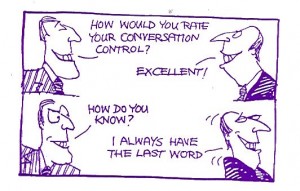
None of that advice, it seems to me, is better, nor more timely, than these verses from today’s Old Testament reading: investigate before speaking; listen before answering. The so-called “debates” (which were anything but) between the candidates for the presidency and vice-presidency of this country were exercises in how not to have a constructive and productive conversation. In whatever the format, none of which worked, these “debates” were showcases of people whose ears were hardly ever engaged, who weren’t examining things before criticizing and who weren’t listening before answering, and who definitely were interrupting when others were speaking.
I may use YouTube snippets of the debates in my pre-marital counseling of engaged couples! In that counseling, I talk with the couples about effective communication and problem solving and always, always encourage two things: active listening and assertiveness (which is very different from aggressiveness). Active listening means paying attention, not interrupting, and restating what you have heard so that you confirm your understanding; it means taking personal responsibility for getting what you hear from the other person right. Assertiveness means getting what the other hears from you right. It means taking responsibility for your feelings by using “I” statements; it means stating your position clearly and directly, not relying on the other to read your mind.
Obviously, the need for good interpersonal communications skills has been around as long as there have been people and the advice I give these couples is nothing new. Jesus Ben Sira was giving the same advice, how not to converse, a couple of millennia ago!
====================
A request to my readers: I’m trying to build the readership of this blog and I’d very much appreciate your help in doing so. If you find something here that is of value, please share it with others. If you are on Facebook, “like” the posts on your page so others can see them. If you are following me on Twitter, please “retweet” the notices of these meditations. If you have a blog of your own, please include mine in your links (a favor I will gladly reciprocate). Many thanks!
====================
Father Funston is the rector of St. Paul’s Episcopal Church, Medina, Ohio.
 There are a few folks flying all over the U.S. recently (and promising to do so for the next couple of weeks) who have not followed Ben Sira’s advice! Everyday for the past few weeks my mailbox has contained at least one and more commonly three or more expensively produced, glossy, color flyers extolling the virtues of one or the other of the political parties or candidates, or more often tearing down the other guys. Everyday for the past few weeks my voicemail has recorded a robo-call from some politician or political action group. Everyday at any hour of the day that I care to turn on my television set, I am treated to political advertisements and “news” shows. Someone is not following Ben Sira’s advice to “not seek high office or the seat of honor”! And we as a society are, I’m sad to say, disgraced among the nations by the spectacle of our electioneering.
 Heart, spirit, body. These two verses speak to me of the necessary investment of one’s whole self, the whole person, into the spiritual and religious life. One of the most influential lay theologians of the middle 20th Century, William Stringfellow wrote: “Spiritual maturity or spiritual fulfillment necessarily involves the whole person – body, mind and soul, place, relationships – in connection with the whole of creation throughout the era of time . . . . Spirituality encompasses the whole person in the totality of existence in the world, not some fragment or scrap or incident of a person.” (The Politics of Spirituality, Westminster John Knox: 1984, p. 22) If Stringfellow is right, and I think he is, then a plan for spiritual growth should follow the Psalmist example and “set the Lord always before” the person seeking to grow. Always . . . not just an hour or so on Sunday morning.
 Sound familiar? Jesus sounded a lot like Micah at times:
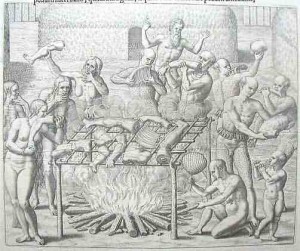 Micah gets just a wee bit graphic here with his metaphors, with his condemnation of political leaders, don’t you think? He has accused them of being cannibals! He describes them as treating the people like meat for a meal; they have butchered them, flayed them, broken their bones, and chopped them up for stew meat! It’s awful!
 Micah condemns those who plot to do wrong “on their beds” and then carry out their plans when they rise; he prophesies God’s retribution against them. But then he is told not to do so; those to whom he preaches not only reject his prophecy, they tell him not to preach such things at all. He concludes that they only want to hear their preachers tell them of pleasant things, the things they enjoy; they want preachers who will utter “empty falsehoods” and preach of “wine and strong drink.”
 It’s a darn good question, “Why do you call me “Lord, Lord,” and do not do what I tell you?” As we come to the last month of the 2012 political campaign, it is one which needs to be carefully considered by many Christians on all sides of the political divide. Are the values on which Christian voters are making their decisions those taught by Jesus, or are they cultural values dressed up in Christian clothing? One-issue voters in particular should take a broader look at their choices; just because a candidate supports your position on a question of particular importance to you does not mean his or her overall platform conforms well to the values of the Gospel, or does what Jesus told us to do.
 It is said that Martin Luther hated the Letter of James; he called it an “epistle of straw” and didn’t believe it should be in the Bible. Why? Some folks will tell you it is because this epistle doesn’t support Luther’s theology of justification by grace through faith; James insists that works are necessary and the reformer just didn’t like that. However, that’s not really the case. Luther had doubts about the epistle’s apostolicity; he didn’t think it was really written by James the Apostle. He was probably right.
 It’s a puzzlement!
  We are living through a presidential election campaign in the United States. It seems to have been going on for ever, and the political ads and the news coverage of the candidates are increasing in intensity and in frequency. Pollsters take the public’s political pulse; commentators analyze the polls; the public reacts to the analysis; the pollsters re-poll the public. It’s a system of pendulum swings that feeds upon itself and oscillates back and forth. Flip-flopping candidates are matched by a flip-flopping electorate, and the candidates, their surrogates, and the commentators all decry the fickleness of the crowd.

