Occasional thoughts of an Anglican Episcopal priest

Category: Prayer (Page 20 of 47)

Fruits of the Spirit and Groaning: Another Day in Palestine – From the Daily Office – July 5, 2014

From the Letter to the Romans:

We know that the whole creation has been groaning in labor pains until now; and not only the creation, but we ourselves, who have the first fruits of the Spirit, groan inwardly while we wait for adoption, the redemption of our bodies.

(From the Daily Office Lectionary – Romans 8:22-23 (NRSV) – July 5, 2014)

We saw the fruits of the spirit today in the faces of young children — and we did a lot of groaning as our tired muscles climbed yet another mountain!

On our second full day in the area of Nablus we drove first to Zababdeh, a town about 19 miles away to the north. Here we met Fr. Saleem Dawani (who happens to be Bishop Dawani’s nephew). He is the pastor of St. Matthew’s Arab Episcopal Church, one of four Christian congregations in this town of about 7,000 people. The other three are Greek Orthodox, Greek Catholic, and Roman Catholic (called “Latin” in this part of the world). There are two mosques in the town. Fr. Saleem estimated that the town is 60% Christian and 40% Muslim.

Fr. Saleem met us on the main street of the town and guided us on the approximately two block walk to St. Matthew’s Church. He explained along the way that the church is currently hosting its summer camp for village children.

I was fortunate to walk with Fr. Saleem and learned that he was ordained a priest less than a year ago. He attended seminary in Beirut, Lebanon; I got the impression that the seminary is an ecumenical one. He told me the Diocese of Jerusalem sends its seminarians to five different theological schools: a Lutheran school in Cairo (which is where Fr. Nairouz of Nablus went); the school in Beirut; Virginia Theological School; Cuddesdon at Oxford in England; and a school in Austria (which seems to be an Old Catholic school).

When we arrived at the gate of the church’s courtyard, we could hear the happy sounds of children at play. There are, he told us, 150 children and 50 adult volunteers participating in the camp.

After we observed the courtyard activities for a few minutes, Fr. Saleem ushered us into the church building and gave us some information about the parish. There are 275 members. Some are high church Anglicans, some are low church Anglicans, so the congregation tends to be “broad” or middle of the road. They have a projection screen on which contemporary music is projected and occasionally other parts of the service.

With regard to the summer camp program, he told us that children come from all four of the Christian communities for two weeks of learning, singing, games, and fun Their families are asked to make a summer donation of NIS 60 (about $20) to the program — this helps defray the costs of food (every child is served lunch) and the craft/educational supplies.

The church has a very lovely carved stone altar and a similar pulpit, baptismal font, and tabernacle. On the front of the pulpit and the baptismal font are stenciled in verses familiar to most. On the pulpit Psalm 51:15 is stenciled (in Arabic) — “Open my lips, O Lord, and my mouth shall proclaim your praise” (vs. 16 in the BCP version) — and on the font, Matthew 19:14 (“Let the little children come to me”), which is the same verse carved into the font at St. Paul’s, Medina.

While we looked around the church and observed the summer camp activities, I met a seminarian named Jameel, a native of the town. Jameel is also attending the school in Beirut, where he has completed his second of a Master of Divinity degree. His bachelor’s degree is from Arab American University located close to Zababdeh; his undergraduate major was accounting.

After seeing the church, we went to lunch with Fr. Saleem at the Sultan Ibrahim Restaurant. Lunch was the usual assortment of salads with a main course of chicken seasoned with onion and sumac, a popular spice in Palestinian cooking. There Fr. Saleem, who has been married only two months, told us that because his wife is an Israeli citizen from Jerusalem while he has a Palestinian passport, they could not travel together to their honeymoon destination. She had to fly from Tel Aviv, while he flew from Amman, Jordan! They were reunited in the Maldives for their two-week wedding trip, then had to fly back home again separately.

As we learned more about the church’s summer camp ministry during lunch, we took up a collection and gave Fr. Saleem about $120 to assist with their expenses. He told us he would use the money to get ice creams for the children.

From Zababdeh, we returned to Nablus by way of Sebastia, the ruins of the capital of ancient Samaria, and also of Galilee under Herod Antipas. This was the place where John the Baptist was held in prison and then beheaded. We trudged up the mountain from the car park, followed (and hounded) by souvenir hawkers, stopping at the ruined (and desecrated) Byzantine chapel said to be on the spot of John’s imprisonment and execution, then from there to the ancient palace of Jeroboam, Omri, and Ahab (and Ahab’s notorious queen Jezebel) — see the First Book of Kings for details.

Down the other side of the hill, we came upon the Roman amphitheater from the days of Herod Antipas when the city was called Sebastia (now called Sebaste). One can see why the ancient Samaritans and the Romans chose this site for a capital — it commands a fantastic view of the surrounding countryside, is steep, and looks like it would be practically impregnable. Obviously, it wasn’t.

It was an exhilarating and exhausting day. As I said, the fruits of the Spirit and groaning!

====================

A request to my readers: I’m trying to build the readership of this blog and I’d very much appreciate your help in doing so. If you find something here that is of value, please share it with others. If you are on Facebook, “like” the posts on your page so others can see them. If you are following me on Twitter, please “retweet” the notices of these meditations. If you have a blog of your own, please include mine in your links (a favor I will gladly reciprocate). Many thanks!

====================

Father Funston is the rector of St. Paul’s Episcopal Church, Medina, Ohio.
Uplifted Hands: Dashed Expectations in the Holy Land – From the Daily Office – July 4, 2014

From the Psalter:

Let my prayer be set forth in your sight as incense,
the lifting up of my hands as the evening sacrifice.

(From the Daily Office Lectionary – Psalm 141:2 (BCP Version) – July 4, 2014)

Today, we lifted up our hands for prayer in two important places: on Mt. Gerzim where the Hebrews confirmed their covenant with God by affirming the blessings and curses commanded by Moses, and at Jacob’s Well where Jesus talked with the Samaritan woman.

Today, is the Fourth of July! In this part of the world, it is remembered as the anniversary of the defeat of the Crusaders at the Horns of Hittim by Salah Eddin (“Saladin”) in 1187. There were fireworks last night and will be again tonight, but those are for Ramadan and will continue every night for the month. In any event, happy Fourth!

Our day began with an interesting drive to the top of Mt. Gerizim where most of the few remaining Samaritans (a community of 776 people at this time) now live. The drive was “interesting” in the sense of the old Chinese curse, “May you live in interesting times.” We drove through narrow, winding, climbing city streets; our driver Ismain’s skill in piloting this large travel coach is phenomenal. He takes it places where I would simply say “No,” and not take my Honda Pilot!

Part way up the mountain we found the road blocked by a double line of large stones across the pavement. Ismain, Keith, and Mark got off and kicked the stones out of the way, then Ismain was confronted by a mute who demanded money — he gave him a dollar bill (US currency is widely used here) and then the mute grabbed several pieces of candy from a basked Ismain keeps on the dash. Further up the road, we encountered a third row of stones — Mark and Keith moved those aside without further trouble.

Through a gate (and past an Israeli “settlement” — they are literally everywhere and in the most inappropriate locations) we entered a village of modern stone buildings. Not what I had expected the Samaritan town to be. My expectations were even further dashed when we parked, got off the bus, and walked to the Samaritan Museum. The door was locked, but an elderly man in a long grey gown and a red Fez-like hat quickly came and unliked the door. This turned out to be Priest Husney Cohen, one of the Samaritan priests and general manager of the museum. Inviting us to take a seat in the several chairs set up lecture-hall style, he began turning on flat-screen TVs, satellite receivers, and other high tech equipment, waving a universal remote control about like a magic wand! So much for my expectations of an “ancient religion”!

He was, nonetheless, a gracious and ingratiating informant about the Samaritan people and their religion. His brother (who is 80) is the current High Priest; Husney (who is 70) is next in line, and his sister’s husband would come after him. The High Priest is always the oldest male in his family. He told us that when he succeeds his brother, he will be the 164th High Priest in direct line of descent from Adam!

He showed us the ancient Hebrew Torah scroll maintained by the Samaritans, explained how their worship and beliefs differ from those of the Judeans (the Jews), and showed us other implements of their worship, including a huge canopy of fruits made by their women for the Feast of Sukkot (Tabernacles). He also explained how their understanding of the Hebrew language is slightly different from that of the Jews. “We,” he said, “are the real Israelites.” He made the claim (with some historical validity) that the Jews of the southern kingdom are the descendants of only two of the original twelve tribes of Israel, Judah and Benjamin, while the Samaritans are the descendants of the other ten tribes who broke from the kingship of the Davidic dynasty and created the northern kingdom (which called itself “Samaria”).

Following his presentation, I was able to chat with him about his life and family. I asked if he had children and it turns out he has two sons and three daughters. One of his daughters runs a nursery school, one is a pharmacist, and one works for Hewlitt-Packard. I asked if his sons would succeed him as priest and he said, “Oh, no! Because they are tall like me, they are professional basketball players.” That “ancient religious community” expectation was not only dashed, it was completely obliterated!

Bidding Priest Husney farewell, we made our way to almost the top of the mountain where there is an outlook over the valley toward Mount Ebol. This is the place on which Joshua and the Hebrews, following a commandment of Moses, performed the ritual of the Blessings and Curses. We read both the Deuteronomy passage (Moses’ words) and the Joshua passage (recording the actual event). As we were doing so, an Israeli soldier appeared seemingly out of nowhere fully armed and armored for battle! Mark told us he was there for our protection because Jewish groups often come to this place to recall their heritage and might be targets for a “crazy sniper” in the city below.

We returned to the Samaritan village and to a cafe next door to the museum where we had a lunch of the usual salads and some very tasty, very tender roast chicken.

After lunch we returned to Nablus to visit the Greek Orthodox Basilica of St. Photini. “Photini” (which means “enlightened”) is the name given by the Greek tradition to the Samaritan woman Jesus met at Jacob’s Well. The Basilica is built over Jacob’s Well which is accessible in a lower church chapel; we actually drank water from the Well! It is cold and sweet. The well is (as the woman told Jesus) very deep!

The Bailica is an amazing place. It has been restored by the current priest, Fr Justinus, who wrote most of the icons on its walls — he is a very talented iconographer. For me, the most moving — and the most troubling — is one of his immediate predecessor Fr Philomenas who was martyred by Israeli settlers. He was hacked to death with axes and cut into pieces! The icon depicting this is painted on a pillar in the church. I asked if there were reproductions among the several icons for sale, but the Arab caretaker (with a sad, ironic look) said, “We are not allowed to.” Such is life in Israeli occupied Palestine.

Fr. Justinus, deeply aware of the transitory nature of life, in his restoration of the church built into it (in the entrace courtyard) his own tomb. He walks past it everyday as it is between the priest’s residence and the door of the church.

Our visit to St. Photini was all-at-once spiritual, moving, and disconcerting. To lift our spirits, and to celebrate Independence Day, Iyad (who is still not back with us) treated us to a sweet — some kunafeh — at a local shop. I’m growing quite fond of this sweet, flowery, goat cheese dessert. I’m going to have to learn to make it.

After that — it was back to the hotel for a rest, then dinner, and then a night on the town … except that I begged off the late-night outing. I just wasn’t up for it.

So it was a day of humorously dashed expectations and of sadly bittersweet reality. I’m amused by the image of the Samaritan priest defending his ancient faith, his belief in his descent from Adam, his insistence that his small remnant people are the true Israel, while at the same time exhibiting astonishing proficiency with modern technology. Did I mention that he has a Facebook page and a Twitter feed? On the other hand, I’m deeply troubled by the martyrdom of Fr Philomenas, by the senselessness of Israeli settler violence against innocent people simply because they are Arabs, by the Arabs need for vengeance. My expectations of a peaceful, purely spiritual pilgrimage and retreat are equally, much less humorously, dashed.

I lift up my hands, O Lord. Let my cry come to you. Let there be peace in this land.

====================

A request to my readers: I’m trying to build the readership of this blog and I’d very much appreciate your help in doing so. If you find something here that is of value, please share it with others. If you are on Facebook, “like” the posts on your page so others can see them. If you are following me on Twitter, please “retweet” the notices of these meditations. If you have a blog of your own, please include mine in your links (a favor I will gladly reciprocate). Many thanks!

====================

Father Funston is the rector of St. Paul’s Episcopal Church, Medina, Ohio.

Who Would Be the Church? – A Holy Place in the Holy Land – From the Daily Office – July 3, 2014

From the Psalter:

Behold now, bless the Lord, all you servants of the Lord, you that stand by night in the house of the Lord.

Lift up your hands in the holy place and bless the Lord; the Lord who made heaven and earth bless you out of Zion.

(From the Daily Office Lectionary – Psalm 134 (BCP Version) – July 3, 2014)

Up an hour later than usual, breakfast at the Sisters of Nazareth today was the same as yesterday. Our bags were collected and we walked down past the R.C. Basilica, past the open air mosque, through the market district and to the bus. A long ride first to Mount Tabor and then to the very small town of Burkin.

Mount Tabor is the traditional location of the Transfiguration, that strange vision seen by Peter, James, and John of Jesus in conversation with Moses and Elijah. There is a lovely church here designed by (you can, by now, probably guess) Antonio Barluzzi. To get to the top of the mount, we had to get off the bus at a visitor center at the base and then ride up the mountain in minivans.

The road up is steep and has many switchbacks — now there is a physical parable or metaphor for the spiritual life! The physical reality of the place is lost in the simple description one finds in the gospels: “Jesus took with him Peter and James and John, and led them up a high mountain apart, by themselves.” (Mk 9:2) Mark (and Matthew who repeats the story) make it sound like they went out for a Sunday afternoon stroll. This would be a hike! This really is a high – and steep – mountain.

The church is quite beautiful with a dazzling mosaic of the Transfiguration event in the dome of the apse, two interior side chapels — one dedicated to St Francis; one for the Reserved Sacrament — and two exterior chapels — one for Elijah and one for Moses. St. Peter never got to build his three monuments (booths) but the Franciscans and Barluzzi did it for him. The Elijah chapel is interesting in that it contains a mural of the prophet’s competition with the prophets of Baal — two altars are depicted, one with a pile of meat but no fire and one with fire consuming what is on it. I’ve never seen that story depicted in art before; in this mural, the meat on the altar of Baal looks like it came straight from a really good butcher’s shop, prime cuts.

On the terrace next to the church, we encountered a cat (the most recent of many), really just a kitten, who was very vocal and very affectionate. She would have made a great souvenir, but getting her through customs would likely have been impossible. She was quite a distraction from the view, however.

One other interesting piece of art was in a gated (locked) garden — I think it shows St Francis either taking Jesus’ body from the cross, or helping Jesus’ to get down from the cross. Without being able to get closer to it and more time to study it, I can’t really be sure. In either case, it is a subject for further contemplation.

Back down the mountain we got back in our bus and took off for Burkin which turns out to be a small and very depressed village (most cities, towns, and villages in Palestine are depressed — whatever economic prosperity there is in Israel is not being shared with the Arabs). Here we visited the tiny church of St. George, which commemorates the spot on which Jesus healed ten lepers. (Luke 17:12-19) It is the fourth oldest continuously in use worship space in the world! There has been a church here since the early Fourth Century! It is under the jurisdiction of the Greek Orthodox Patriarchate.

We were guided into town and to the church by Usama, a member of the Greek Orthodox congregation. One can tell that he and the other members of this church are very proud of their heritage. Unlike most older Orthodox buildings we have visited, this space is immaculate. The silver is polished; the cloth hangings and altar vestments are clean and bright; the icons are dusted. Pride in their place is patent in every corner.

The worship space is tiny – our group of 18 people more than half filled it. It is probably very crowded on Sundays for the Divine Liturgy and at other times of Orthodox worship. This congregation has a membership of 65 people. They are the only Christians in a town of over 7,000 population. Their witness is astounding!

Usama then guided us to his home where his wife and some other ladies in the congregation, assisted by a young boy, hosted us to lunch. The tables were filled with tomato and cucumber salad, yoghurt, pita, and chiken and lamb shwarma served on heaping platters of seasoned rice. There was enough to feed a group five times our size.

Several of us had two or three helpings of the delicious food when Usama’s wife, Neda, came around and piled one more serving on everyone’s plate: “Eat,” she said, “how do I know you liked it if you leave some behind?” It was all in good fun and the graciousness and vibrancy of their hospitality was overwhelming.

The congregation supports itself by selling the usual trinkets, but mostly by making pure olive oil soap which they sell for an amazingly low price. Evie and I will look into whether we can find a way to help sell their soap in our part of the U.S. to provide greater income for them as they maintain the Christian presence in this place.

We talked with them about the dwindling of the congregation, what it is like to be a Christian minority in an overwhelmingly Muslim community. Neda said that she and her neighbors get along just fine, that she and her family visit them to celebrate Eid al-Fitr (the major Muslim feast celebrating the end of Ramadan) and their neighbors visit them to celebrate Christmas. We asked if they had ever considered leaving. “No,” Neda replied quickly, “If we left, who would be the church?”

Who would be the church? A question for us all to ponder.

Lord, bless these servants who lift up their hands in your holy place and witness to your Name!

====================

A request to my readers: I’m trying to build the readership of this blog and I’d very much appreciate your help in doing so. If you find something here that is of value, please share it with others. If you are on Facebook, “like” the posts on your page so others can see them. If you are following me on Twitter, please “retweet” the notices of these meditations. If you have a blog of your own, please include mine in your links (a favor I will gladly reciprocate). Many thanks!

====================

Father Funston is the rector of St. Paul’s Episcopal Church, Medina, Ohio.

Many Paths: Another Day in the Holy Land – From the Lectionary – July 1, 2014

From the Prophet Isaiah:

The way of the righteous is level;
O Just One, you make smooth the path of the righteous.
In the path of your judgments,
O Lord, we wait for you;
your name and your renown
are the soul’s desire.

(From the Sanctoral Lectionary [Harriet Beecher Stowe] – Isaiah 26:7-8 (NRSV) – July 1, 2014)

What a day this was! We began early, early in the morning, boarding the bus at 4:30 a.m. with no breakfast and a drive from Jerusalem to Jericho.

We got off the highway and trundled through small roads to a scenic overlook called Mizpe Yeriho (I believe it means “view of Jericho”) where we watched the sunrise over the Wadi Qelt, a tributary stream of the Jordan in the Jericho valley.

Each in the silence of his or her thoughts observed the sunrise and then it was my privilege to celebrate the Eucharist in this desolate desert place. Iyad had brought pita and wine, the necessary vessels, and a stole. I was surprised to see that the stole was a duplicate for the natural-colored, green-embroidered stole I had purchased on the Isle of Iona three years ago while on sabbatical. It was as if I were wearing my own stole!

While we celebrated, a Bedouin tribesman showed up and began laying out his wares — stone bead necklaces, bone and stone bracelets. I was facing away from him so could not see what others reported, that he was obviously elderly, obviously in some early morning pain, obviously unhappy to have to be there so early but there nonetheless to do what he does to support his family. It was both a distraction and a reminder that the Eucharist is never separated from context, and the Body of Christ (the church) is always surrounded by the people it is called to meet and serve.

After that we drove to Jericho and had breakfast in a lovely old resort garden accompanied by a little Pekingese-looking little mutt and a small orange tabby cat. Next after breakfast was a cable car trip (the hanging-gondola style cable car) up what is known as the mount of the Temptations. Tradition here teaches that Jesus spent the forty days in the desert in a cave outside of Jericho (now just on the outskirts of the modern city) and it was there that Satan offered him the Temptations. The cave has, for centuries, been incorporated into a Russian Orthodox monastery and church. Four aged monks now live in the monastery and support themselves by seeking pilgrim donations. (The similarity between the old Bedouin man at our sunrise Mass and the old Russian monk who offered us prayer candles for $1 each was striking!)

We were unable to stop at Tel Yeriho, the archaeological dig of ancient Jericho, but we could see if from the cable car gondolas. Our next stop was at the Sepphoris (modern Zippori) site; Sepphoris was the ancient capital of Galilee and it has been extensively excavated. It is a few miles from Nazareth and is probably where Joseph (and maybe Jesus) worked as a builder. We had a discussion here of the meaning of tekton, the Greek word often translated as “carpenter” but which more accurately means “craftsman” or “artisan” or “builder” (and sometimes “stonemason”). In this environment, “carpenter” seems a very inaccurate translation!

In Sepphoris, our guide Iyad, gave me the broken handle of a First Century vessel as a prize for answering a question accurately – my answer was a guess! The question was “How do we know there was a Jewish community at Sepphoris?” I guessed that it was the discovery of a mikvah (the community’s facility for ritual bathing) among the ruins. Turned out to be right.

From Sepphoris we came to Nazareth and first visited the Greek Orthodox Church of the Annunciation. Greek tradition teaches that Mary was greeted by the Archangel Gabriel at the town well and this church is built over the ancient well. There is some great iconography in this church, including one of the Holy Family’s flight to Egypt which depicts Joseph carrying Jesus on his shoulders.

We then walked to the Roman Catholic basilica. Western tradition holds that the Annunciation happened at Mary’s home and this church is built over what is believed to be her home. Originally, Antonio Barluzzi (many of whose churches we have seen) was to have built this church but, after he worked 20 years on the design, the project was awarded to a French architect in the 1960s. It is very massive and very typical French mid-century modern. In my opinion, it’s awful – it has all the spiritual wonder of a subway station.

In the church are depictions of Mary donated by the R.C. Episcopal Conferences of the several countries. The American piece is supposed to represent the “woman clothed with the sun” — an Old Testament image understood to refer to Mary — and it fits the church. It’s a disaster! Just my opinion . . . .

Our guest house was almost literally on the doorstep of the basilica, just half a block up a short street from the front door. And just beyond, the Anglican church in Nazareth, Christ Church. Unfortunately, it was not opened at any time during our stay in Nazareth.

This was a day of many paths, not many of them straight and not many of level, but all of them leading to spiritual enlightenment. I am physically, emotionally, and spiritually exhausted at this point and sorting it all out is an effort. So I’m putting it all in God’s hands, trusting that what I need to have learned, I will have learned.

====================

A request to my readers: I’m trying to build the readership of this blog and I’d very much appreciate your help in doing so. If you find something here that is of value, please share it with others. If you are on Facebook, “like” the posts on your page so others can see them. If you are following me on Twitter, please “retweet” the notices of these meditations. If you have a blog of your own, please include mine in your links (a favor I will gladly reciprocate). Many thanks!

====================

Father Funston is the rector of St. Paul’s Episcopal Church, Medina, Ohio.

Pray for the Peace of Jerusalem – From the Daily Office – June 30, 2014

From the Psalter:

I was glad when they said to me, “Let us go to the house of the Lord.” Now our feet are standing within your gates, O Jerusalem.

(From the Daily Office Lectionary – Psalm 122:1-2 (BCP Version) – June 30, 2014)

Our feet left Jerusalem today and went to Bethlehem, and what a day of varied impressions. We began in Manger Square (which is more like a parking lot than a town square) with Iyad’s presentation on the history of the Church of the Nativity, then we entered the building. It is currently under restoration, so there is scaffolding everywhere! The pillars in the nave are wrapped in cloth and banded with wood to protect them (apparently they are painted). Electric construction lighting hangs from the ceiling. The place looks like (and is) a construction zone.

Yet in the midst of this the various denominations (the Greeks, Latins, and Armenians share the space) go about their daily round of services and devotions. As we were entering, the Greeks were completing their worship in the upper church (ground floor, above the crypt of the Nativity). We were led passed them and into the adjoining more modern Church of St. Catherine, the local Franciscan (Roman Catholic) parish. Mass was just being completed there, as well.

On the right side of the Nave is a stairway leading down to some crypts adjacent to the crypt of the Nativity. Here it is said that St. Jerome translated the Vulgate (Latin) version of the scriptures. Here, also, is a crypt where the bones of several infants were found and tradition teaches the infants killed in the slaughter of the Holy Innocents were buried. There is a shrine to St. Jerome, another to the Holy Innocents, and a chapel of the Nativity whose backwall is the common wall to the crypt of the Nativity.

We gathered in this chapel, read the story of the Lord’s birth, sang What Child Is This? and O Little Town of Bethlehem. As we were finishing, the Greeks were completing their time in the crypt (down the tunnel from our chapel) and the sound of the bells (jingle bells) on the Greek thurible added to the “Christmas feel” of what we had just done.

Afterward, we went back up to St. Catherine’s where we waited for the Franciscans to begin their time in the crypt. We had been invited to participate in their Eucharist, which we believed would be in either English or Italian. As it turned out, it was in Spanish. Two young Mexican deacons were ordained yesterday and were serving their first Mass today. A group of pilgrims from Mexico (probably family members or members of their home parishes) were on hand. It was a lovely service and it was a privilege to receive communion in the Crypt, as it was to venerate the star over the place of Christ’s birth. But our few minutes of singing together in the side chapel next door was more meaningful for me.

As we left the Church, the Armenians were getting ready for their turn in the Crypt and I made note the beautiful, exceptionally celtic carving on the doors of their sacristy. Fr. Keith Owen said, “Those Celts! They got everywhere!” Indeed.

After the Mass, we traveled to another part of Bethlehem to do some souvenir shopping at a store known to our guide. (Evie and I bought only a few olive wood items. The sales staff were exceptionally pushy and while I might have bought something, my obstinate contrariness kicks in when I’m being pressured so they lost a sale. But, hey, as we keep saying, “It’s the middle east.”) The shop is in a part of the city very much affected by the Israeli security barrier; it is very much “in your face” in this section. One house (which was reported on by 60 Minutes in 2013 is almost completely surrounded by the wall!

We walked along the wall for about half a mile and really got a feel for its impact on the lives of the people of Bethlehem. I took several pictures of posters and grafitti that have been put on barricade.

After that, we drove to Beit Sahour (“House of the Angel”) a city about two miles from Bethlehem where the Shepherd’s Field (one of them, anyway) is located. There we had a great lunch of beef and chicken kabobs, and then walked to the Shepherd’s Field.

Another small Barluzzi church is located there – with a great statue of an angel over the door. We sat around the altar in the church and sang Angels We Have Heard on High and O Little Town of Bethlehem. Then we went down the hill to an archaeological excavation (on the Shepherd’s Field property) of some caves which were probably inhabited in the First Century. The cave opened to the public really gives a great sense of what the cave where Jesus was born would have been like. (He wasn’t born in an “inn” despite centuries of mistranslation of the Greek word kataluma.)

After Beit Sahour, we went to Ein Karem (“Vineyard Spring”) where it is believed that John the Baptist’s parents, Zechariah and Elizabeth, lived. Another Barluzzi church is found here commemorating the Visitation of the Blessed Virgin Mary. Here, we hiked up the hill to the church, saw its lovely murals, statuary, and other objects. On the way back down, we stopped at a gelateria and got a dish or cone of gelato (Italian ice cream). I had Belgian chocolate and berries – it was wonderful!

It was an exceptionally full day! Psalm 122 (one of the several morning psalms for today) concludes:

Pray for the peace of Jerusalem:
“May they prosper who love you.

Peace be within your walls
and quietness within your towers.

For my brethren and companions’ sake,
I pray for your prosperity.

Because of the house of the LORD our God, *
I will seek to do you good.”

(vv. 6-9; BCP Version)

The biggest impression of the day was, as it has been on other days, not the religious sites, but the political sights: the wall, the grafitti on it, the posters put there by the Wall Museum, the disruption of people’s lives, the separation of famers from their fields and orchards, the utter contempt of Israel for the Palestinian Arabs that it represents. How can there ever be peace when people are treated like this? I have spent the day with 17 other good Christian people trying to follow the Prince of Peace in a land torn by conflict. I have no answers. I have only prayers. I will pray for the peace of Jerusalem!

====================

A request to my readers: I’m trying to build the readership of this blog and I’d very much appreciate your help in doing so. If you find something here that is of value, please share it with others. If you are on Facebook, “like” the posts on your page so others can see them. If you are following me on Twitter, please “retweet” the notices of these meditations. If you have a blog of your own, please include mine in your links (a favor I will gladly reciprocate). Many thanks!

====================

Father Funston is the rector of St. Paul’s Episcopal Church, Medina, Ohio.

The Holiest Place – From the Daily Office – June 28, 2014

From Matthew’s Gospel:

When they had come near Jerusalem and had reached Bethphage, at the Mount of Olives, Jesus sent two disciples, saying to them, “Go into the village ahead of you, and immediately you will find a donkey tied, and a colt with her; untie them and bring them to me. If anyone says anything to you, just say this, ‘The Lord needs them.’ And he will send them immediately.” This took place to fulfill what had been spoken through the prophet, saying, “Tell the daughter of Zion, Look, your king is coming to you, humble, and mounted on a donkey, and on a colt, the foal of a donkey.” The disciples went and did as Jesus had directed them; they brought the donkey and the colt, and put their cloaks on them, and he sat on them. A very large crowd spread their cloaks on the road, and others cut branches from the trees and spread them on the road. The crowds that went ahead of him and that followed were shouting, “Hosanna to the Son of David! Blessed is the one who comes in the name of the Lord! Hosanna in the highest heaven!” When he entered Jerusalem, the whole city was in turmoil, asking, “Who is this?” The crowds were saying, “This is the prophet Jesus from Nazareth in Galilee.”

(From the Daily Office Lectionary – Matthew 21:1-11 (NRSV) – June 28, 2014)

Is it merely fortuitous that this turns out to be the Gospel lesson for the Daily Office today? Today we went to the Mount of Olives, to Gethsemane, to the place were Jesus was questioned by Caiaphas the High Priest.

We started, as we started yesterday, with that Middle Eastern breakfast of cucumbers and olives, pita and cheeses, yogurt and pickled eggplant. It was an early start, too. A short bus ride to the Garden of Gethsemane where we were the only people present! Walking around (not in) the Garden, seeing the ancient (though not 2,000 year old) olive trees, smelling the garden flowers in the early morning . . . it was (as my wife said) exactly as one would have envisioned it. And, of course, it’s designed that way. This Garden is a relatively modern iteration of the old reality, a modern version whose creation was guided by those spiritual and artistic sensitivities of centuries of Christian devotion. It’s emotional impact is not less real for all of that. Modern garden or not, this is the place where Jesus spent his last free moments of life.

The Garden is dominated by the Church of All Nations, a 1924 structure built by an Italian architect, Antonio Barluzzi. Heavy, dark, and foreboding as befits the story of Maundy Thursday, it is an impressive structure. It houses what is called the stone of agony: “Going a little farther, he threw himself on the ground and prayed that, if it were possible, the hour might pass from him.” (Mark 14:35) By tradition, this stone is the “ground” on which Jesus prayed for an alternative outcome. Kneeling before the altar, placing one’s hands and forehead on the stone, and giving up one’s will to God’s will is deeply profound experience.

After Gethsemane, we went up the Mount of Olives and back a few days in the Holy Week story, to Palm Sunday. We went to the Church of Bethphage at the place where Jesus is said to have stopped on his way into the city:

When they were approaching Jerusalem, at Bethphage and Bethany, near the Mount of Olives, he sent two of his disciples and said to them, “Go into the village ahead of you, and immediately as you enter it, you will find tied there a colt that has never been ridden; untie it and bring it. If anyone says to you, ‘Why are you doing this?’ just say this, ‘The Lord needs it and will send it back here immediately.’ ” (Mark 11:1-3)

Another Barluzzi church (actually his restoration of a pre-existing church), Church of Bethphage is quite small, but was wonderful accoustics. Mark Stanger and Keith Owen blessed small olive branches for us to carry, and we sang All Glory, Laud, and Honor (“Valet will ich der geben”). That was glorious! Great to be with people who clearly love to sing and in a place where that singing is enhanced.

Then we cheated a bit . . . we took a bus part of the way down the Mount, disembarked, and walked to the church called Dominus Flevit, “The Lord Wept.” Again, a Barluzzi building built in the 1950s. At the corners of the building, at roof level, are representations of urns supposed to be vials for collecting tears, inspired by the psalm verse, “You have noted my lamentation;put my tears into your bottle; are they not recorded in your book?” (Ps. 56:8, BCP version) The reference to Jesus weeping is not to the death of Lazarus, but to Jesus weeping over the city of Jerusalem which is said to have occurred at this spot.

This was the most moving part of the day for me, and I will return to it in a minute.

From there we walked on to Gethsemane, where we had already been, then board the bus for a drive through the Kidron Valley and up the slopes to an old part of Jerusalem outside the current walls, but not before a small detour to learn more about the state of things in modern Israel and Palestine.

At the top of the highway is Mount Scopus, or Mount of the Lookout. Hebrew University has a campus here and we stopped at a scenic viewpoint and terrace owned by the university on the Jerusalem side of the mountain. Visible from there was the Hecht Synagogue on the campus, which was built in honor of US Senator (from Nevada) Chic Hecht; Chic had been a good friend of my father when I was child in Las Vegas! From there, we went to a similar viewpoint on the other side of the mountain. Visible from there was the desert landscape of occupied West Bank . . . and the “settlements” Israel is building there.

“Settlement” has always suggested to me a small group of temporary houses or perhaps mobile homes occupied by a few crazy Zionist families. That’s not what they are at all. They are massive planned communities housing hundreds of thousands of people. Israel is surrounding Arab East Jerusalem (which is in the West Bank – geography here is confusing) with a ring of settlements so that, eventually, 200,000 Palestinian Arabs will be surrounded by nearly half a million Jewish “settlers.” This is not a bunch of fanatics breaking the law — this is a nation breaking international law and stealthily, steadily taking over and conquering occupied territory!

After that eye-opener about the modern state of Israel, we returned to the First Century, making our way to what is believed to have been the location of the High Priest Caiaphus’s house where Jesus was taken after his arrest and where Peter denied knowing him. A Byzantine church was built on the site many centuries ago. That was replaced in the 1990s by a modern French Benedictine church called St. Peter in Gallicantu which means “St. Peter at Cock Crow.”

Below the church is a dungeon where it is believed Christ was questioned and spent the night before his crucifixion. Here, in the pit, we gathered and recited Psalm 87. Outside the church is an ancient stone stairway leading up from the Kidron Valley into the old city. Our guides tell us that we can be certain that Christ walked these steps when he went to and from Jerusalem from and to the home of his friend’s Mary, Martha, and Lazarus in Bethany.

After that . . . lunch in a local restaurant (a variety of salty Middle Eastern “salads,” followed by baked chicken with rice, carrots, and peas) and then a return to St. George’s Guest House where, after freshening up and napping, we heard a presentation on Islam, enjoyed a lovely dinner of fish, and then read Compline together.

As I mentioned above, the most moving part of the day for me was at the Church Dominus Flevit. I entered the church and found a congregation gathered for Holy Communion. The Franciscans were setting the altar and preparing to say the Mass, and I noted that the altar window frames the Dome of the Rock. Christians celebrating our most holy sacrament would look out at two of the most holy sites of the other two Abrahamic faiths: Judaism’s temple mount and Islam’s Dome of the Rock. It occurred to me that our holiest site is not a geographically fixed place. As holy and moving as all the places we have visited (and those we will visit) are, none of them is our faith’s holiest place. Our holiest place is a table. It may be the altar or communion table of our local church; it may be a table in our own homes; it may be a folding table set up at summer camp. Wherever the elements of bread and wine are offered, blessed, broken and shared as the Body and Blood of Christ, that is our holiest place.

I had to come half-way around the world to this land of the Holy One to discover that the holiest place is back home, wherever home may be.

====================

A request to my readers: I’m trying to build the readership of this blog and I’d very much appreciate your help in doing so. If you find something here that is of value, please share it with others. If you are on Facebook, “like” the posts on your page so others can see them. If you are following me on Twitter, please “retweet” the notices of these meditations. If you have a blog of your own, please include mine in your links (a favor I will gladly reciprocate). Many thanks!

====================

Father Funston is the rector of St. Paul’s Episcopal Church, Medina, Ohio.

Israel – Day One, First Impressions – 26 June 2014

Yesterday evening we arrived at Ben Gurion International Airport. The flight from JFK was long and not all that comfortable. It was my first opportunity to fly on a Boeing 747 (Delta A/L) — I had toured a proto-type 747 when I was 11 years old and then never again set foot in one until this trip. Except for cramming more people into a somewhat larger space, the experience of flying one wasn’t much different from any other larger jet. It was quite a contrast to the Embraer 50-pax liner we took from CLE to JFK, however!

The flight was filled with children and many, many Orthodox Jewish men in their tallits and long black coats. More than enough of them to complete a minyun so, at least twice during the flight, the back of the plain was filled with men in black hats, or wearing phylactories, draped in prayer shawls, praying fervently. There was something fascinating and reassuring about it. One observation about them (and their families) — they don’t take instruction very well. I’ve never been on a flight in which the passengers paid so little attention to flight attendants’ requests. Even at the end of the flight when Israeli law requires all passengers to be seated during the last 30-min before landing, and the pilot has to circle in Israeli airspace until the cabin crew reports that that is the case. We heard numerous announcements saying, “You are delaying our landing! Please be seated!”

Ben Gurion Airport is very modern and very very large. In fact, it’s massive and monumental! It makes a huge statement: “We’re here. We’re in charge. We’re staying.” Passport control at Ben Gurion, on the other hand, adds a footnote: “We’re in charge, but we’re not very organized.” I’ve been through immigration checks in many countries (mostly Europe and the Americas) and never have I been in such a chaotic mess! Israeli customs folk could take lessons from the Disney folks in how to get people lined up and processed. And a second footnote: “We’re in charge, but we’re not pleasant.” We had prepared ourselves to answer questions like, “Where are you staying? What are you doing? What areas of the country will you be visiting?” The surly young man in the booth didn’t even say “Hello” or “Welcome to Israel” — he may have asked, “Is this your first trip here?” — at least that’s the question I thought I heard and which I answered. Otherwise he just peered at our passports, peered at us with an unfriendly look, handed us a visa slip, and shooed us away.

Baggage claim was like any large airport — no correct signage indicating which of several carousels would have our luggage, lots of people getting in each others’ ways, adults shouting at children, spouses arguing over whose bag is whose. You’ve been there in airports all over the world.

Customs. What customs? Not an official in sight checking bags. A few uniformed women sitting down and chatting, ignoring the passengers shuffling through into the outer world. First impression: Young women in army uniforms carrying Uzis. Not many of them, but enough to make an impression. A third footnote: “We’re in charge and we’re armed.”

We were met by Mark Stanger, a priest from the Diocese of California who is assisting with our pilgrimage group, and shown to our bus. A large, air conditioned conveyance. After giving those who needed it a last chance at the restrooms, we started off on the hour long drive to Jerusalem over modern highways. Looking out the windows at the traffic, the construction, the buildings in the airport environs, we could have been anywhere in the American southwest. I felt right “at home” as if I was back in southern California. And shortly, as if I were traveling through the southern Nevada desert.

Halfway to Jerusalem is a new city – Modi’in – a massive planned community of concrete and stone. Not the prettiest of cities. A realization here, confirmed when we get to Jerusalem: this is not a country of private, single-family homes. This is a country of multifamily structures: apartment blocks, high-rises, etc.

One drives from Tel Aviv to Jerusalem in along a new highway which is bounded, part of the way, by concrete walls, chain link fences, and barbed wire. This is the stretch through the West Bank, the occupied Palestinian territory. Access is limited to Israeli citizens whose cars have yellow license plates; Palestinians have green license plates and cannot enter this highway; access points are barricaded. On the hills: Palestinian villages — buildings in not as good condition as the Israeli buildings in Tel Aviv or Modi’in (nor even as good as the illegal, barricaded, barbed-wired, armed-gated Jewish “settlements” one also passes in this territory); on their roofs, black water tanks because (unlike Israel proper) the occupied territory does not get regular, 24-hour water service (the illegal Jewish settlements have white water tanks on their roofs).

We arrived in Jerusalem after sundown and were ushered quickly into the Cathedral Close and the dining room at St. George’s Pilgrim Guest House. A dinner of hummus, babaganoush, chicken and rice, pita, hummus, olives, figs, all the sorts of things you would expect: delicious! Then a short meeting with Iyad Qumri, our principal guide, and then to bed — our room is a virtual suite, although we may be moved from it to another room today (our second in country) — this room is at some remove from the Cathedral gardens and, another group leaving today, the rooms overlooking the gardens will be freed up and we may be relocated to them.

So — a very new experience in a very ancient land. A sense of history and prayerfulness, mixed with modern conveniences, armed soldiers, surly public servants, and attentive hosts. Wide open desert marred by concrete barricades and barbed wire. Jesus walked these lands. He still does in the person of peoples sharing a history and separated by generations of unnecessary enmity.

Photos of our arrival are on Facebook:

One Is Never Too Old – From the Daily Office – June 24, 2014

From the Book of Numbers:

The earth opened its mouth and swallowed them up, along with their households — everyone who belonged to Korah and all their goods. So they with all that belonged to them went down alive into Sheol; the earth closed over them, and they perished from the midst of the assembly. All Israel around them fled at their outcry, for they said, “The earth will swallow us too!” And fire came out from the Lord and consumed the two hundred and fifty men offering the incense.

(From the Daily Office Lectionary – Numbers 16:32-35 (NRSV) – June 24, 2014)

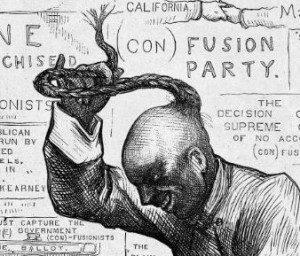
Chinese Hair QueueBelieve it or not, I’ve actually had the last of these selected verses quoted to me as part of an argument against the use of incense in the church. I was in a conversation with someone about our use of incense in “high church” liturgies, being told (among other things) that incense was fine when we were younger and acting like hippies but now that we are older and mature we should put aside such childish ways, when this chestnut was pulled out. Since I’ve studied the Old Testament (as most clergy have) I knew my critic was misusing the text.
Such a reading is hard to square with other parts of Scripture in which the use of incense as an honorable offering to God is approved. For example, speaking through the Prophet Malachi God says, “For from the rising of the sun to its setting my name is great among the nations, and in every place incense is offered to my name, and a pure offering; for my name is great among the nations, says the Lord of hosts.” (Mal 1:11)

It’s even harder to harmonize with those places were the burning of incense in religious ceremonies is not only approved, it is commanded. For instance, in the Book of Exodus Moses is commanded to make an altar for incense upon which Aaron is to burn incense two times every day: “Aaron shall offer fragrant incense on it; every morning when he dresses the lamps he shall offer it, and when Aaron sets up the lamps in the evening, he shall offer it, a regular incense offering before the Lord throughout your generations.” (Ex 30:7-8)

And more than that, that reading doesn’t accord with the verse’s own context, and that’s what I’m thinking about today. The story of Korah’s and his followers’ destruction at the hand of an angry God has nothing to do with incense. The burning of incense although it figures prominently in the story is really incidental to the story; Korah and his tribe were destroyed because of their pride, because they sought to usurp the priesthood of Aaron which was not and never would be theirs. In the story, Aaron also burns incense to the Lord and his offering is accepted; further, shortly after this incident Aaron stops a plague among the people through the burning of incense. Clearly, incense is perfectly acceptable to God.

So to say that “fire coming out from the Lord and consuming the two hundred and fifty men offering incense” is an indictment of the use of incense in worship is proof-texting of the worst type, inconsistent with other scriptural references and inconsistent with its own context.

I recall a joke (or maybe it’s a true story) about a preacher who abhorred the traditional Chinese men’s hairstyle holding forth in California in the late 1800s urging Chinese immigrants to abandon the queue or “topknot.” All Chinese men, but particularly those who had converted to Christianity, he argued, should cut off their queues because Christ himself had uttered the words, “Topknot go down!” And he was correct, sort of. What Jesus had said was, “Let him who is on the housetop not go down to take what is in his house . . . .” (Mt. 24:17) Picking and choosing the Bible’s words out of context is not a new phenomenon.

The only way to combat proof-texting is knowing the Scriptures oneself. Jesus is our model in this regard. Tempted by the devil after his baptism, he was able to answer each of Satan’s references to Scripture with counter-references of his own. (Matt. 4) If we are to respond to misuses of Scripture, we must know it ourselves.

Now, I don’t agree with my incense critic about old age and maturity being a reason to give up incense, but I suppose there might be something to that. Perhaps given the respiratory problems some older folks have, one can be too old for incense. However, one is never too old for Christian education and Bible study!

====================

A request to my readers: I’m trying to build the readership of this blog and I’d very much appreciate your help in doing so. If you find something here that is of value, please share it with others. If you are on Facebook, “like” the posts on your page so others can see them. If you are following me on Twitter, please “retweet” the notices of these meditations. If you have a blog of your own, please include mine in your links (a favor I will gladly reciprocate). Many thanks!

====================

Father Funston is the rector of St. Paul’s Episcopal Church, Medina, Ohio.

Broken Clocks – From the Daily Office – June 21, 2014

From the Psalter:

The span of our life is seventy years,
perhaps in strength even eighty;
yet the sum of them is but labor and sorrow,
for they pass away quickly and we are gone.

(From the Daily Office Lectionary – Psalm 90:10 (BCP Version) – June 21, 2014)

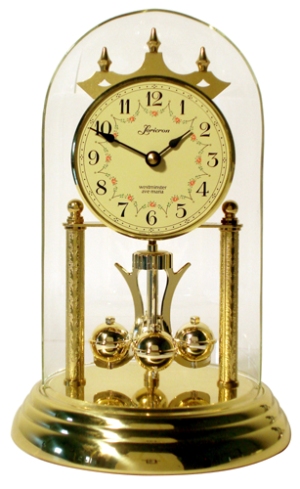
400 Day Anniversary ClockA friend and colleague preparing to sell her home and take up residence with her husband in a retirement community told me recently that she and he had begun disposing of their many possessions. Among the things to which they have said “Good-Bye” is her husband’s collection of clocks.
That got me thinking about two clocks that my wife and I own but which I’ve not seen in several years. I know where one is; the other’s location is a complete mystery.

The first is a handmade seven-foot tall grandfather clock; the actual clock workings are in the top 30″ or so. It is made almost entirely of wood. The gears, teeth, all the inner workings are hand-carved from a variety of hardwoods. Everything is open to view. There is no case, but rather a frame of hand-rubbed mahogany. The face is smoky gray plexiglass with applied hand-carved wooden numerals; one can see the escapement and other parts working away behind. Or … at least … one was able to do that.

The clock, which was made by my stepfather many years ago, was damaged, badly, by the moving company which transported our possessions from Las Vegas, Nevada, to Overland Park, Kansas, in 1993. Because that move was so bizarrely accomplished, with separation of family, temporary quarters, two storage facilities, and a variety of other missteps, we didn’t know about the damage until way too late to file a claim with the movers. But we have kept the clock and moved it to Ohio and now it sits in a storage loft that we visit maybe four times in a calendar year.

I dread opening its crate and looking at it. I will hate myself for what I have allowed to happen to that clock. I should dispose of it, but I can’t bring myself to do so. I’m sure it is unrepairable, yet I can’t let go of something that my stepdad spent so much time creating.

The other is a mantel clock we found in a garage sale many years ago. It is the sort known as an “anniversary” or “400-day” clock. It didn’t work when we bought it, but we had it repaired and it sat on the mantel in our Las Vegas home for several years. Like my stepfather’s clock, its inner workings are all visible through a glass dome. Like my stepfather’s clock, it went into a packing crate with many other things when we moved to Kansas. And like that handmade clock, I’ve not seen it since. To the best of my knowledge we’ve never opened that box; I’ve no idea what else is in it nor even where it is, in fact. (We have unopened moving boxes in a spare bedroom, in our basement, and in that storage facility. Why, I often wonder, do we have all this stuff?)

All these clocks — my colleague’s husband’s collection, my stepfather’s handmade grandfather clock, our long-unseen anniversary clock — came to mind reading today’s Psalm, supposed to be “a prayer of Moses” in which the ancient Hebrew contemplates the nature of time. “So teach us to number our days that we may apply our hearts to wisdom,” he prays (v. 12). And we have learned to “number days” with ever increasing exactitude. We measure not only days, but hours, minutes, seconds, fractions of time so tiny that millions pass in the blink of an eye. Scientists have calculated the infinitesimally small life span of sub-atomic particles and the inconceivably long existence of the entire universe (now believed to be something just short of 14 billion years). But do we really understand time?

We can reduce time to days, hours, minutes, seconds, and even smaller units. We can envision months, years, eons, and longer periods. We can measure and divide time into constituent parts just like we could separate the components of my stepfather’s broken clock or the anniversary clock. But we cannot explain time; we don’t really understand its mystery. The most we can say of time is that it exists, it passes, and we can measure it. Albert Einstein is supposed to have said, “The only reason for time is so that everything doesn’t happen at once.”

Although we experience time as “moving” in only one “direction,” from past through present and into the future, there is no reason that it must do so. The equations of quantum mechanics and superstring theory insist that time can just as well “move” in the opposite direction, although we’ve never seen it and cannot seem to make that happen in the laboratory. Nonetheless, the mathematics are there and the equations make logical sense.

So here we are 1,500 (or whatever) years after Moses still no better able to understand the workings of time than he and the wandering, wondering Hebrews were. The mysteries of time are as hidden from us as my two boxed-up clocks. In another psalm, one attributed to David, we read, “My times are in your hand.” (Ps. 31:15a) So it was for Moses, so it was David, so it was for my stepfather and the maker of the anniversary clock, and so it is for us. Teach us to use our time wisely, Lord.

====================

A request to my readers: I’m trying to build the readership of this blog and I’d very much appreciate your help in doing so. If you find something here that is of value, please share it with others. If you are on Facebook, “like” the posts on your page so others can see them. If you are following me on Twitter, please “retweet” the notices of these meditations. If you have a blog of your own, please include mine in your links (a favor I will gladly reciprocate). Many thanks!

====================

Father Funston is the rector of St. Paul’s Episcopal Church, Medina, Ohio.

Taste & See – From the Daily Office – June 20, 2014

From the Book of Numbers:

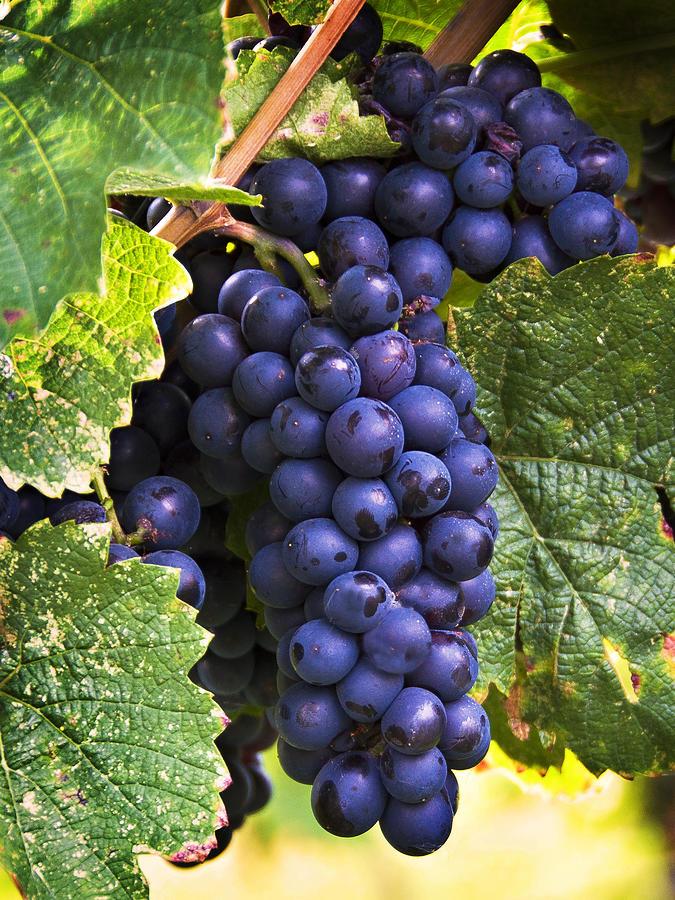
And they came to the Wadi Eshcol, and cut down from there a branch with a single cluster of grapes, and they carried it on a pole between two of them. They also brought some pomegranates and figs. That place was called the Wadi Eshcol, because of the cluster that the Israelites cut down from there.

(From the Daily Office Lectionary – Numbers 13:23-24 (NRSV) – June 20, 2014)

Cluster of GrapesHave you ever noticed how one of the most common sorts of souvenirs to be brought back from a trip is food? Every time we travel, my wife and I, we bring back food. Sometimes the authorities thwart us, but we try.

For example, when we made our first trip to Ireland a few years ago, we fell in love with some Irish sausages and with Irish bacon. In the duty-free shop at Dublin’s airport, however, we found a big sign on the meat products refrigerator advising that they could not be brought into the United States. We contented ourselves with some chocolates and some Irish whiskey.

When I was a kid, as I may have mentioned before, I spent summers in Kansas with my paternal grandparents. At the end of the summer my grandparents would often drive me back to Las Vegas and then on to southern California to visit their relatives and my maternal grandparents in the Los Angeles metroplex. Leaving Kansas, my grandfather would pack up some vegetables (especially tomatoes) from his garden into an ice-filled galvanized Gott can (the original Gott cans were made in my grandparents’ town).

Along the road, the ice would be replenished and the produce would stay fresh all the way to Nevada and California. When we got to the California border, there was an agricultural check-point on the highway at (I think) Yermo (or maybe it was Barstow). An officer of the state ag service would ask, “Do you have any fresh fruits or vegetables?” and my strict, up-standing Methodist grandfather, with a straight face and his oh-so-honest-sounding voice would answer, “No, officer.” Off we would drive with our illegal booty of garden produce. A little thing like preventing crop blight was not going to prevent our food souvenirs getting to their final destination.

And at the end of their trip those tomatoes and other veggies produced such delight! It was almost religious the way my maternal grandmother would receive her friends’ gift of a vine-ripened tomato, tenderly caress it, wash it gently, slice and serve it with the lunch she had prepared to welcome us. The look of sheer joy on her face as she tasted her first bite of it, the taste of her home town.

The taste of food reminds us of the places we have been; like the sound of music or certain smells, a taste can incite a flood of memories. Food also anticipates. We, my wife and I, are headed to the Holy Land in a short while. A few weeks ago, our tour organizer hosted a dinner at a near-by Middle Eastern restaurant so that we could meet other group members, hear a bit about our itinerary, and in the meal we shared get a foretaste of what we can expect to enjoy when we are there.

Moses sent spies over into Canaan and they came back with grapes, pomegranates, and figs to prove the land the Hebrews were entering was a bountiful one; like them, we are looking forward to entering the Promised Land. They named the place Eshcol (“cluster”) because of those grapes. One presumes that Moses and the other leaders tasted those fruits and knew the goodness of the land and of God who was giving it to them; they anticipated the future.

We do the same sort of thing each time we gather in worship and share the Eucharist. In it is the taste both of memory and of expectation. Every celebration of Holy Communion is both a memorial of what God has accomplished and a preview of what God has promised. In the Eucharist the past and the future irrupt into the present; our fellowship in the Eucharist with God and with all Christians across time and space is both a remembrance of Christ and a foretaste of the heavenly banquet.

“Taste and see that the Lord is good;” says the Psalmist, “happy are they who trust in him!” (Ps 34:8) Taste and see.

====================

A request to my readers: I’m trying to build the readership of this blog and I’d very much appreciate your help in doing so. If you find something here that is of value, please share it with others. If you are on Facebook, “like” the posts on your page so others can see them. If you are following me on Twitter, please “retweet” the notices of these meditations. If you have a blog of your own, please include mine in your links (a favor I will gladly reciprocate). Many thanks!

====================

Father Funston is the rector of St. Paul’s Episcopal Church, Medina, Ohio.

« Older posts Newer posts »