Occasional thoughts of an Anglican Episcopal priest

Category: Prayer (Page 43 of 47)

The Patients of Job: Part Two – “I Don’t Know Where to Find God!” – Sermon for Pentecost 20, Proper 23B – October 14, 2012

====================

This sermon was preached on Sunday, October 14, 2012, at St. Paul’s Episcopal Church, Medina, Ohio, where Fr. Funston is rector.

(Revised Common Lectionary, Proper 23B: Job 23:1-9,16-17; Psalm 22:1-15; Hebrews 4:12-16; and Mark 10:17-31. These lessons can be read at The Lectionary Page.)

====================

Lost and Confused SignpostIn last week’s reading from the Old Testament, you will remember, God gave Satan permission to test the righteousness of a man of integrity named Job. First all of Job’s possessions and his family are taken from him: his oxen and donkeys are carried off by Sabeans; his sheep are burned up in a fire; his camels are stolen by the invading Chaldeans; and the collapse of a house kills all of Job’s ten children. But Job, being a righteous man, does not curse God; instead, he shaves his head, tears his clothes, and says, “Naked I came from my mother’s womb, and naked shall I return there; the Lord gave, and the Lord has taken away; blessed be the name of the Lord.” Job does not sin or curse God. (1:21-22)

Therefore, Satan returns to God and seeks permission to cause Job bodily, suffering as well. God agrees saying, “He is in your power; only spare his life.” (2:6) Satan, therefore, afflicts him with a loathsome skin disease. Job’s response is to scratch his skin with broken pottery and sit down in a pile of ashes. Job’s wife prompts him to “curse God, and die” but Job answers that she is speaking foolishly, and she departs the scene and will not be heard from again. As Chapter Two closes, Job’s three friends, Eliphaz the Temanite, Bildad the Shuhite, and Zophar the Naamathite, having heard of his calamity, come to comfort him. When they arrive, they join him in mourning, tearing their own clothes, weeping loudly, throwing dust on their heads, and sitting with him in silence for a week.

After that week of silence, a dialog ensues between the friends and Job. Each speaks in turn in three cycles of addresses, and Job answers them. In the first cycle – and I admit that this is a very simplistic summary – Job curses the day he was born, but essentially holds that he is blameless and does not deserve what has befallen him; this indeed, will be his position throughout the rest of the book.

Eliphaz is the first of his friends to speak; basically, he asserts his agreement with Job that Job is blameless. “Is not your fear of God your confidence,” says Eliphaz, “and the integrity of your ways your hope?” (4:6) So Eliphaz advises him to “seek God, and to God . . . commit [your] cause.” (5:8) Eliphaz is sure that if he does so, Job will live to a ripe old age. But Job, in his misery is not able to hear what his friend says; he continues to complain of “the anguish of [his] spirit” and “the bitterness of [his] soul.” (7:11) “I loathe my life,” says Job, “I would choose death.” (7:15-16)

The next to speak is his friend Bildad. Bildad also speaks of Job’s innocence and integrity, but in a somewhat more conditional way. He’s not quite as sure as Eliphaz: “If you are pure and upright,” he says, “surely then [God] will rouse himself for you and restore to you your rightful place.” (8:6) Job is more responsive to Bildad. He acknowledges that what his friend says is true, but then rejects his advice asking, “How can a mortal be just before God? If one wished to contend with [God], one could not answer him once in a thousand.” (9:2-3) Although he rejects Bildad’s advice, this is an important turning point in the story, I think, because it is here that the seed of the idea of contending with God in a lawsuit is planted in Job’s mind. Nonetheless, he still complains of the bitterness in his soul and says he’d rather die.

The last of his friends to speak is Zophar. Zophar isn’t buying the blamelessness argument. He believes that punishments and rewards in life follow directly from our actions; if Job has suffered these calamities, Job must have committed some great sin. He simply assumes that Job is guilty: he condemns Job for babbling and for mocking the Almighty. “Shall no one shame you?” he asks Job. “Know this, Job! God exacts of you less than your guilt deserves.” (11:3,6) But Job will have none of Zophar’s condemnation: “I am a just and blameless man,” he asserts. (12:4) “I may be a laughingstock, but I am a just and blameless man.”

Now the idea of taking God to court has rooted firmly in Job’s imagination: “I would speak to the Almighty,” he declares, “and I desire to argue my case with God.” (13:3) As the first cycle ends, in fact, Job is starting to formulate his arguments.

In the second cycle of speeches, the characters leave behind the specific issue of whether Job is blameless or guilty, righteous or sinful. In fact, the second cycle of speeches seems to have little or nothing to do with Job himself. Instead, the characters debate the issue of whether, in fact, the retribution that sometimes falls upon the wicked is a result of their own blameworthiness, and all of the friends seem to be in agreement that it is. Whether this debate has anything to do with Job’s situation is somewhat ambiguous; none of the friends identifies Job as the wicked person they describe in their speeches. In answer to each of them, Job complains that their words are not a comfort to him. At the end of the second cycle, he tells them, “You comfort me with empty nothings” and “there is nothing left of your answers but falsehood.” (21:34) Apparently in reply to Job – it’s not really all that clear that it is a response, however – Eliphaz tells him that he should follow the advice of the righteous who say, “Agree with God, and be at peace; in this way good will come to you.” (22:21)

This is where the lectionary has brought us today, to Chapter 23, most of which is today’s Old Testament lesson. We are more than halfway through the Book of Job; the first two cycles of speeches have been made; and Job’s mind seems to have been made up. He is determined to take God to court and argue his case. “I would lay my case before him, and fill my mouth with arguments.” (23:4) In the verses the lectionary has left out, Job continues to argue his innocence, asserting that

[God] knows the way that I take; when he has tested me, I shall come out like gold. My foot has held fast to his steps; I have kept his way and have not turned aside. I have not departed from the commandment of his lips; I have treasured in my bosom the words of his mouth. (23:10-12)

Job’s problem now, he believes, is that he doesn’t know where to find God! “If I go forward, he is not there; or backward, I cannot perceive him; on the left he hides, and I cannot behold him; I turn to the right, but I cannot see him.” (23:8-9) This uncertainty seems to shake Job’s confidence in his case: “God has made my heart faint,” he says, “the Almighty has terrified me.” But faint and terrified though he may be, Job does present his case. None of the friends speak again, except Bildad who interrupts to ask Job’s own question, “How can a mortal be can righteous before God?” (25:1-6) Job pleads his case with eloquence and at the conclusion of the third cycle, his three friends have “ceased to answer Job, because he was righteous in his own eyes.” (32:1)

So what are we to make of today’s lesson from Job, this brief chapter in which we find Job wondering where to find God? What balm for our souls, what spiritual medicine for the “Patients of Job” does it offer?

Job’s confusion and anxiety at the elusiveness of God are echoed in today’s Psalm whose first verse is familiar to us from the story of Christ’s Crucifixion:

My God, my God, why have you forsaken me?
and are so far from my cry
and from the words of my distress? (Ps. 22:1)

God seems to be so far away that God cannot be found: “He is not there . . . I cannot perceive him . . . I cannot behold him . . . I cannot see him.” Job feels that he has been abandoned by God. But wait! Job knows that God has tested him; Job has known God’s terrifying presence. Job finds this reassuring; although Job cannot see God, God can perceive Job! God’s knowledge of Job is his comfort; it will assure his vindication. Although Job does not know where to find God, God knows where to find Job and this convinces Job that he can, in the words of today’s reading from the Letter to the Hebrews, “approach the throne of grace with boldness.” In fact, he shall do so, and so can we!

Not knowing where or how to find God is the existential problem of modern life. Baptist theologian Brooks Ramsey sums up the problem nicely in this question: “It is easy to sense God’s presence when things are going right. But where is God when things fall apart?” While the Book of Job offers no easy answers to this question, it does assure us that God is there even though we, like the character Job, may be unable to perceive God’s presence. The French Reformed theologian Jacques Ellul wrote in his book Hope in Time of Abandonment that it is in those times when we share Job’s frustration that hope is truly born:

Hope comes alive only in the dreary silence of God, in our loneliness before a closed heaven, in our abandonment . . . Hope is a protest before this God, who is leaving us without miracles and without conversions, that he is not keeping his Word.

Now, I don’t believe that God is ever truly silent, nor that God does not keep God’s promises; but I do know that there are times in our lives when we are all like Job – we cannot seem to find God; we do not sense God’s presence; and we do not know where to look for God.

Hope, as Ellul said, is humanity’s answer to God’s apparent silence, to God’s elusiveness, and it is through hopeful prayer that we demand the fulfillment of God’s promises; it is through prayer that we, like Job, approach the throne of grace and plead our case. We do not need to know where to find God in order to pray; we do not need to know where to find God in order to have hope.

Our Christian faith that assures us that in our times of pain and suffering God comes to us. God finds us and comes to us in the loving acts of others. In illness, God finds us and comes to us in the ministrations of the medical professionals who treat us. In emotional distress, God finds us and comes to us through friends, family members, and others who offer us encouragement. In moments of deep need, God finds us and comes to us in a mysterious way through those who care. This gives us hope and courage. We need not cry out like the character Job, “Oh, that I knew where I might find [God];” (23:3) God knows where to find us.

This is the balm for our souls, the spiritual medicine that we, the “Patients of Job,” find in today’s lesson from the Book of Job, that in our times of need, God knows where to find us and that God does, indeed, come to us. Amen.

Fruitful House of Bread – From the Daily Office – October 13, 2012

From the Prophet Micah:

But you, O Bethlehem of Ephrathah,
who are one of the little clans of Judah,
from you shall come forth for me
one who is to rule in Israel,
whose origin is from of old,
from ancient days.

(From the Daily Office Lectionary – Micah 5:1 – October 13, 2012)

House of BreadThis obscure little verse in the book of the Prophet Micah is best known to Christians from the story of the visitation of the wisemen in Matthew’s Gospel:

In the time of King Herod, after Jesus was born in Bethlehem of Judea, wise men from the East came to Jerusalem, asking, “Where is the child who has been born king of the Jews? For we observed his star at its rising, and have come to pay him homage.” When King Herod heard this, he was frightened, and all Jerusalem with him; and calling together all the chief priests and scribes of the people, he inquired of them where the Messiah was to be born. They told him, “In Bethlehem of Judea; for so it has been written by the prophet: “And you, Bethlehem, in the land of Judah, are by no means least among the rulers of Judah; for from you shall come a ruler who is to shepherd my people Israel.’ “

I’ve always been intrigued by the word Ephrathah (which Mattew does not quote). Apparently it is a place name; one source indicates that Ephrathah, or Ephrath, is the ancient name for the town of Bethlehem in Judah, in the southern part of the land of Israel. Micah uses both names in order to distinguish the town from another Bethlehem in the north. Another source tells me the name means “fruitful”.

The name Bethlehem means “house of bread” which always intrigues Christians who see it as somewhat prophetic of Jesus words at the Last Supper identifying the bread as his own body.

When I hear that Ephrathah means “fruitful” I am immediately put in mind of two other verses of Scripture. First, God’s admonition to Adam and Eve in Genesis: “Be fruitful and muliply.” (1:28) The second is Christ’s admonition to his disciples: “I appointed you to go and bear fruit, fruit that will last, so that the Father will give you whatever you ask him in my name.” (John 15:16)

In the name of Jesus’ place of birth as set forth in Micah, I hear a call to evangelism. Nurture and sustained by what comes from the “house of bread,” we are “to go and bear fruit;” we are sent out to “be fruitful and multiply,” The fruit which we are to bear is an increase in followers of the Way, an increase in the number of disciples (not simply the fruit of individual good works, nor only the “fruits of the spirit” in our own lives). Our efforts, our ministries, our prayers, our daily lives are to be the means by which the “house of bread” will truly be “fruitful.”

====================

A request to my readers: I’m trying to build the readership of this blog and I’d very much appreciate your help in doing so. If you find something here that is of value, please share it with others. If you are on Facebook, “like” the posts on your page so others can see them. If you are following me on Twitter, please “retweet” the notices of these meditations. If you have a blog of your own, please include mine in your links (a favor I will gladly reciprocate). Many thanks!

====================

Father Funston is the rector of St. Paul’s Episcopal Church, Medina, Ohio.

God Has Done Great Things – From the Daily Office – October 9, 2012

From the Psalms:

When the Lord restored the fortunes of Zion, then were we like those who dream.
Then was our mouth filled with laughter, and our tongue with shouts of joy.
Then they said among the nations, “The Lord has done great things for them.”
The Lord has done great things for us, and we are glad indeed.

(From the Daily Office Lectionary – Psalm 126:1-4 (BCP Version) – October 9, 2012)

Jesus Clapping and Shouting for Joy (artist unknown)Have you ever visited a church which as part of its normative worship service gives congregants an opportunity to voice aloud their own prayers to God? It may surprise some that the Episcopal Church is one such religious group. In the typical service of the Holy Eucharist in the Episcopal Church, following readings from Scripture, the sermon and a recitation of the Nicene Creed, the congregation is led in a responsive cycle of prayer called The Prayers of the People.
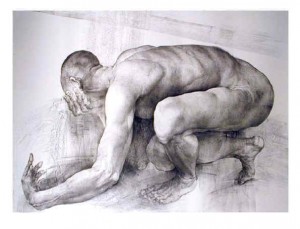
A rubric (a direction for the conduct of worship services) in The Book of Common Prayer outlines what is to be included in these prayers. It states that

Prayer is offered with intercession for
The Universal Church, its members, and its mission
The Nation and all in authority
The welfare of the world
The concerns of the local community
Those who suffer and those in any trouble
The departed (with commemoration of a saint when appropriate)
(BCP, Page 359 or 383)

Six forms of suggested prayers are provided in the BCP, but other forms conforming to the rubrical requirements may be used. Each of those forms provides opportunities for silence during which the People are encouraged to speak their own petitions, intercessions, or thanksgivings. The sixth form even includes this specific invitation, “The People may add their own thanksgivings.” (Page 393)

I have visited a lot of Episcopal Churches. I have heard many prayer leaders invite the People’s prayers during those silences. I have seldom heard anyone laugh, shout with joy, or express gladness because the Lord has done great things for them. Why do you suppose that is? Garrison Keillor (who is an Episcopalian, by the way) has suggested that “Episcopalians believe in prayer, but would practically die if asked to pray out loud.” That may be doubly true of giving thanks out loud.

I have no answer to the question. Keillor suggests that Episcopalians are known for our blandness, our excessive calm, and our fear of giving offense, and maybe that’s part of it. I don’t know. But I do wish in prayers and worship that we would laugh a little more, shout with joy from time to time, and let our gladness show when God has done great things for us, because God has done great things for us!

====================

A request to my readers: I’m trying to build the readership of this blog and I’d very much appreciate your help in doing so. If you find something here that is of value, please share it with others. If you are on Facebook, “like” the posts on your page so others can see them. If you are following me on Twitter, please “retweet” the notices of these meditations. If you have a blog of your own, please include mine in your links (a favor I will gladly reciprocate). Many thanks!

====================

Father Funston is the rector of St. Paul’s Episcopal Church, Medina, Ohio.

The Patients of Job: Part One – Sermon for Pentecost 19, Proper 22B – October 7, 2012

====================

This sermon was preached on Sunday, October 7, 2012, at St. Paul’s Episcopal Church, Medina, Ohio, where Fr. Funston is rector.

(Revised Common Lectionary, Proper 22B: Job 1:1; 2:1-10; Psalm 26; Hebrews 1:1-4; 2:5-12; and Mark 10:2-16. These lessons can be read at The Lectionary Page.)

====================

Job's Repentance (Artist Unknown)I know two things today that I didn’t know earlier in the week. First, I know that people read our sign. I got two telephone calls and one email telling me that we had misspelled “patience” on the sign. Second, I know that people won’t believe you when you tell them you did it on purpose. But I really did name this sermon series “The Patients (P-A-T-I-E-N-T-S) of Job” for reasons that I hope will become clear very shortly.

Before diving into that subject this morning, however, a word about the Lectionary. For the next four weeks our lessons from the Old Testament will be from the Book of Job as we follow what is called “Track One” of the Revised Common Lectionary.

Track One is a semi-continuous reading of major Old Testament books. The idea this is that we tend to short-change the Old Testament in our Sunday Eucharistic lectionary, and that we need to hear more of the Old Testament and be more familiar with it. So Track One is set up so that we can see the development of some of the great Old Testament stories over the course of successive Sundays; this gives us peculiar opportunities for preaching series like the one we’re embarking on today. The assumption, of course, is that the congregation each Sunday is made up of who actually come to church every week to hear the unfolding of the Old Testament readings in this way. That’s not always a valid assumption. Many of our people, because of work schedules or whatever, do not make it to church every Sunday and so are likely to miss huge chunks of the story. So each week in these sermon there may be a bit of repetition to bring these folks up to speed; I hope weekly congregants will bear with us on that score. (For those of you who may not be here every week, the sermons and lessons will be on the internet for you.)

There other thing about Track One is that, unlike Track Two, which is a Gospel-related track in which the Old Testament reading is selected because it has some sort of thematic connection to the Gospel reading appointed for the day, there is no specific link between the lesson from the Hebrew Scriptures and the lessons from the Christian Scriptures. For example, today we heard part of the backstory of Job’s suffering (we’ll return to that in a moment), while the Gospel focused on Jesus’ teaching about marriage and divorce. I suppose one could draw a connection between the little spat Job and Mrs. Job have at the end of the Old Testament reading and what Jesus has to say, but I’m not going to go there. So for the next few weeks, please don’t expect much exegesis of the Gospel lessons.

So, now, let me answer the signage critics and explain why I chose to (apparently) misuse the word “patients” on our sign. Obviously it is a play on the familiar statement made of a long-suffering individual that he or she has “the patience of Job”. That’s an odd turn of phrase because, as we shall see, Job is not particularly patient; he is at turns angry, demanding, petulant, and sullenly silent, but he is not patient. Nonetheless, I chose to play with and make a pun on that old concept because the story of Job is one to which we can turn are in need of balm for whatever turns in life may beset us.

The great preacher St. John Chrysostom, in a sermon on the Gospel of John, said of Holy Writ,

The divine words, indeed, are a treasury containing every sort of remedy, so that, whether one needs to put down senseless pride, or to quench the fire of concupiscence or to trample on the love of riches, or to despise pain, or to cultivate cheerfulness and acquire patience – in them one may find in abundance the means to do so. (Hom. 37 On John.)

In a sermon on St. Paul’s letter to the Colossians, he likened the Bible to a medicine chest:

Listen, I entreat you, all that are careful for this life, and procure books that will be medicines for the soul . . . . If grief befalls you, dive into [the Holy Scriptures] as into a chest of medicines; take from there comfort for your trouble, be it loss, or death, or bereavement of relations; or rather do not merely dive into them but take them wholly to yourself, keeping them in your mind.” (Hom. IX On Colossians)

This is especially true of the Book of Job.

This book, as I made mention from this pulpit some weeks ago, is a work of fiction, but that does not stop it from being a work from which we can learn great truth. Or perhaps I should say “great truths” for, more than any other book in the Bible, Job offers what some might call a “post-modern” or pluraform vision of truth. Job, in the midst of his suffering, is visited by his wife, his friends Eliphaz, Bildad, and Zophar, and a fourth man, Elihu (who may just be a passerby). Each of them offers an explanation of why life has treated Job so shabbily and offers advice as to how he should respond. Job’s answer to each of them is basically, “That may be true for you, but it’s not true for me!” The character Job could be the patron saint of our post-modern age, and the Book of Job offers us a variety of remedies, a selection of alternative truths for whatever besets our spirits; it also provides a glimpse at the over-arching meta-truth that sustains our lives, namely the awesome power of God. We all come to this book, as we come to all of Scripture, as patients seeking medicine for the soul; we are all the “patients of Job.”

When we first open this text we are treated to two scenes involving the characters God and Satan. (I put it that way very advisedly, very carefully. Please always remember that this is a work of fiction and so we have a character named “God” and a character named “Satan” who may or may not behave in the ways the Creator and the Adversary actually interact with the world.) In both of these scenes these two characters make and continue a wager regarding Job. In Chapter 1, all the heavenly court appears before God, including Satan whom God asks where he has been. Satan answers that has been “going to and fro on the earth, and from walking up and down on it.” (1:7) God asks if he has seen God’s servant Job who is a good and righteous man. Satan replies that he has, but then challenges God about Job’s virtue suggesting that Job is only righteous because God has provided him a good life. So they make a wager; Satan bets that if Job loses everything he has, he will curse God. God gives Satan authority to strip him of his wealth and possessions, but forbids him to lay a hand on Job. The next thing we know, Job is struck by calamity after calamity all within a very short time. Four servants come to him, one after another, the next coming before the one before has even finished speaking, telling him that Sabaeans have come and stolen his oxen and donkeys, a fire has destroyed his sheep, Chaldean invaders have killed all his servants, and a collapsing house has killed all his sons and daughters. Job is left with nothing; he tears his clothing, shaves his head, and falls to the ground, but the narrator assures us that “in all this Job did not sin or charge God with wrongdoing.” Rather, he blesses the Name of God! (1:20-21)

Which brings us now to our reading for today and the second scene in the heavenly throne room. Again, the court is assembled; again, Satan is there having come “trom going to and fro on the earth, and from walking up and down on it.” (2:2) Again, God asks if Satan has considered Job; and again, Satan makes a bet with God. It’s all well and good that he’s lost everything, but he’s still alive and healthy; “touch his bone and his flesh,” says Satan, “and he will curse you to your face.” (2:5) “Very well,” says God, “you can cause him illness, but do not take his life.” So Satan “inflict[s] loathsome sores on Job from the sole of his foot to the crown of his head.” (2:7) Job’s response is different from his actions in the first chapter; he engages in no new acts of mourning or worship. Instead, he picks up a piece of broken pot, scratches at his sores, and sits down on a pile of ashes. At this point Mrs. Job (she isn’t given her own name in the text) says to her husband, “Do you still persist in your integrity? Curse God, and die.”

One commentary points out that the concept of integrity in the Old Testament has two prongs. First, it “denotes a person whose conduct is completely in accord with moral and religious norms.” Second, it describes someone “whose character is one of utter honest, without guile.” (The New Interpreter’s Bible, Vol. IV, Abingdon Press: 1996, page 356) Mrs. Job seems to sense that for her husband to “persist in his integrity” in this situation, he cannot do both. She seems to be arguing that “if Job holds on to integrity in the sense of conformity to religious norm and blesses God as he did before, . . . he will be committing an act of deceit. If he holds on to integrity in the sense of honesty, then he must curse God and violate social integrity, which forbids such cursing.” (Ibid.)

Job, however, tells her she is being foolish. In fact, the Hebrew here is rather stronger – the commentary notes that a more accurate contemporary translation would be that he tells her she is “talking trash”! Job insists that there is no conflict between religious integrity and personal honesty. We are again assured by the narrator that “in all this Job did not sin with his lips.” (2:10)

This is where our reading this morning ends, but it is not the end of Chapter 2. As the chapter ends, Job’s three friends – Eliphaz the Temanite, Bildad the Shuhite, and Zophar the Naamathite – hearing of all of his troubles meet together to come to console and comfort him. On seeing his state, they tear their own clothes, weep loudly, throw dust upon their own heads, then sit down in the dirt with him. For a week they sit there with him in silence.

So what are we to make of these initial scenes from the story of Job. If St. John Chrysostom is right and there are “medicines for the soul” to be found here, what are they? I suggest there are a couple of things to be learned here which may be of some comfort in our modern age. The first is found in this book’s rejection of the facile answers of an older “wisdom religion” tradition.

I am sure that we have all, at one time or another, faced the death of a loved one, the loss of something or someone precious to us, or some other personal tragedy or difficult situation; or that if we have not, we surely will. And I’m equally sure that in such a situation we are all prone to ask an interior question along the lines of “Why me?” or “What have I done to deserve this?”

That older “wisdom religion” which runs through our faith tradition encourages that sort of thinking. Elsewhere in Holy Scripture, in the Book of Proverbs, for example, we are told:

Walk in the way of the good, and keep to the paths of the just. For the upright will abide in the land, and the innocent will remain in it; but the wicked will be cut off from the land, and the treacherous will be rooted out of it. (2:20-22)

And again:

The Lord’s curse is on the house of the wicked, but he blesses the abode of the righteous. Toward the scorners he is scornful, but to the humble he shows favor. The wise will inherit honor, but stubborn fools, disgrace. (3:33-35)

The message seems clear: “Do good, you’ll be rewarded with good. Do bad, you’ll be punished with bad.” It suggests a sort of post hoc ergo propter hoc (Latin for “after this, therefore because of this”) assumption that if something bad has happened to me, I must have done something bad to deserve it. And it’s not too far to the next thought, “I’ve not only done something bad, I am bad.” But post hoc ergo proper hoc is a logical fallacy and that line of reasoning is just plain wrong, as the story of Job clearly demonstrates.

Although this Book of Job is part of the “wisdom literature” and firmly grounded in the wisdom tradition, it offers a sound critique of that tradition. The character Job, an upright and righteous man, a man of integrity, is visited by loss and calamity through no fault of his own. He does not deserve what happens to him. His story avoids the clicheic simplicity of the older wisdom tradition and rejects that “Why me? What have I done to deserve this?” thinking to which we are all prone. His story “is, in fact, an impassioned assertion of the awareness that the simple moralism of most wise men is hardly enough.” (Jay G. Williams, Understanding the Old Testament, Barrons Educational Series: 1972, page 267)

Stuff sometimes happens in a person’s life, as it does in the story of Job, that he or she does not deserve and for which he or she is not to blame! Stuff sometimes happens in your life that you do not deserve, and you are not to blame for it! That is the first bit of medicine we find in these introductory scenes in the Book of Job. Give up the “Why me? What have I done to deserve this?” thinking, and stop beating yourself up over things you can’t control!

The second bit of “medicine” is the book’s apparent rejection of religious ritual as a touchstone of goodness and integrity. It is important that Job is afflicted with “loathsome sores” because, according to Jewish law in the Book of Leviticus, a person inflicted with a skin disease is ritually impure and an outcast from society. Such an individual is referred to in Hebrew as a metzorah. Jewish law as set forth in the Book of Leviticus requires the metzorah to be shunned; the person must live alone outside the confines of the community. In chapter 13 of Leviticus we read that he or she must show their sores to the local priest, and then

. . . shall wear torn clothes and let the hair of his head be disheveled; and he shall cover his upper lip and cry out, “Unclean, unclean.” He shall remain unclean as long as he has the disease; he is unclean. He shall live alone; his dwelling shall be outside the camp. (Lev. 13:45-46)

Job, however, does none of this; he does not follow any of the Levitical requirements, nor do his friends. Eliphaz, Bildad, and Zophar do not shun him, nor leave him alone outside the community. Integrity, this story assures us, does not rest in conformity to religious norms.

This should come as good news, as balm for our modern and postmodern souls, because, as Emerging Church blogger Drew Tatsuko has pointed out, “religions that make these exclusive claims to Truth demand conformity; religions that demand conformity tend to abuse non-conformists . . . ; and, in history God is [most frequently] revealed among the non-conformists.”

Now this does not mean that, in its rejection of the wisdom tradition, the Book of Job is telling to not live a good and honorable life, or that in its rejection of religious ritual as definitive of personal integrity the book is telling us to abandon our norms of worship and behavior. Rather, what we should take from the story of Job is that life is a set of questions. If there is truth to be found in this book, or in any of the books of the Bible, it is to be found in the process of struggling with those questions. We will wrestle with the questions of Job throughout this month during which our Old Testament readings will be drawn from it. The book has 42 chapters so, clearly, in four weeks of readings we are not going to cover it in depth. But I hope to demonstrate over the course of these sermons that, as my friend Greg Jenks who is Academic Dean at St Francis Theological College, Brisbane, Australia, says, Job “is a biblical text that celebrates the lack of a compelling answer, and instead calls us to faithfulness that sees beyond suffering to a meaning beyond human comprehension.”

I hope you will find, as I said at the beginning of this introductory sermon, that Job is a book which offers us a variety of remedies, a selection of alternative truths for whatever besets our spirits; it also provides a glimpse at the over-arching meta-truth that sustains our lives, namely the awesome power of God.

Complacency Is Just Not an Option! – From the Daily Office – October 5, 2012

From the Gospel of Luke:

Jesus said: “But woe to you who are rich, for you have received your consolation. Woe to you who are full now, for you will be hungry. Woe to you who are laughing now, for you will mourn and weep. Woe to you when all speak well of you, for that is what their ancestors did to the false prophets.”

Bookplate Engraving of "Sloth"Today I am forcing myself to get back in the groove with these daily meditations on bits of Scripture from the lessons of the Episcopal Church’s Daily Office Lectionary. I took a break two weeks ago about the time of my father-in-law’s death and funeral, a break which was just supposed to be a couple of days, and it stretched on and on and I got out of the habit. I tried, a couple of times (once with a bit from Judith and once with bit from the fourth chapter of Luke), but I couldn’t discipline myself to sit down, compose, and publish the thoughts in my head. I was slothful; in the words of medieval monks, I was suffering from daily, early-morning acedia. Acedia, one of the Seven Deadly Sins, according to Wikipedia is “a state of listlessness or torpor, of not caring or not being concerned with one’s position or condition in the world.” That is not the mental state exhibited by Jesus in today’s Gospel lesson from Luke, but I think he addresses it and, thus, today’s lesson has helped me out of my own torpor.
In today’s Gospel we have the Lukan version of the Beatitudes which differs in many respects from the more well-known and oft-quoted version in Matthew (Matt. 5:3–12). It differs so much that we refer to Luke’s rendition as “the Blessings and Woes” rather than as “Beatitudes,” and that title gives witness to the most distinctive difference, the addition of the “woes” addressed to the well-off. And it is those “woes” which I focus on today.

Each of these states of woe is introduced in the same way. In Greek the word translate into English as “woe” is ouai. It’s pronounced something like “oo-why” and is, according to something I remember reading in seminary but can’t find now, an onomatopoetic term expressive of a sigh . . . a sigh of profound sadness. So rather than being (as is often understood) Christ’s prediction of some terrible calamity that is to befall the well-to-do, the satisfied, the currently happy, or those who are lauded, these “woes” are statements of Jesus’ current sadness about them.

Why should Jesus be unhappy about this state of well-being? I suspect it is because well-being can lead to complacency or, worse, to efforts to maintain it at the expense of others. Complacency is a form of acedia. It makes people fear the unknown, mistrust the untried, and abhor the new; it makes people resist change. The complacent will stick to what they have always done even when it stops working. The theme-song of the complacent is, “We’ve always done it this way.” Jesus stands in opposition to “the way it’s always been done.” He calls us to new ways of behavior, new ways of being in community, new ways of caring for one another. No wonder he sighs so deeply with such sadness for the satisfied, for the complacent.

So this is where I find encouragement, inspiration, and energy in this passage . . . after heaving these profound sighs, Jesus doesn’t just sit there. He goes on with his teaching, issuing his call for changed behavior, and then goes on with his ministry; in the first verse of the next chapter, Luke tells us, “After Jesus had finished all his sayings in the hearing of the people, he entered Capernaum.” (Luke 7:1) Immediately, he is confronted by a request for healing and then, shortly thereafter, he raises the son of the widow of Nain from death. For Jesus (and for us) complacency is just not an option! We may sigh, but there is always something to be done.

====================

A request to my readers: I’m trying to build the readership of this blog and I’d very much appreciate your help in doing so. If you find something here that is of value, please share it with others. If you are on Facebook, “like” the posts on your page so others can see them. If you are following me on Twitter, please “retweet” the notices of these meditations. If you have a blog of your own, please include mine in your links (a favor I will gladly reciprocate). Many thanks!

====================

Father Funston is the rector of St. Paul’s Episcopal Church, Medina, Ohio.

Comprehending the Mind of God – From the Daily Office – September 25, 2012

From the Book of Judith:

Who are you to put God to the test today, and to set yourselves up in the place of God in human affairs? You are putting the Lord Almighty to the test, but you will never learn anything! You cannot plumb the depths of the human heart or understand the workings of the human mind; how do you expect to search out God, who made all these things, and find out his mind or comprehend his thought?

(From the Daily Office Lectionary – Judith 8:12-14a – September 25, 2012)
 
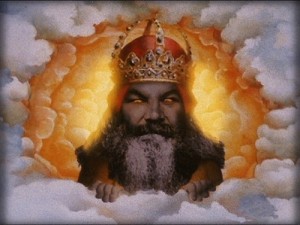
God from Monty Python & the Holy GrailThe Book of Judith is part of the Apocrypha or Deutercanon, those books accepted as Holy Writ by part of the Old Testament by Roman Catholic and Eastern Orthodox Christians, but rejected by Protestants and by rabbinic Judaism. As Anglicans, we Episcopalians adopt the position taken in the 39 Articles of Religion: they are the “other Books the Church doth read for example of life and instruction of manners; but yet doth it not apply them to establish any doctrine.” (Art. VI, BCP 1979, page 868)

The story of Judith is relatively simple. She was a widow living in the city of Bethulia when it is under siege by Holofernes, a general of the Ninvite king Nebuchadnezzar. Facing starvation, the people of the city demand that their rulers surrender. The elders of the town, named Uzziah, Chabris, and Charmis, calm them by promising to surrender Bethulia to Ninevites unless God helps rescues the city within so five days. This angers Judith who upbraids the town rulers (the selected verses are from her speech to the three elders). She then takes things into her own hands, wins entrance into the enemy camp, finds Holofernes passed out, drunk in his tent, and decapitates the general. She escapes from the camp, brings the head to the town elders, and saves the city.

While I find the book a wonderful story of faith in action, and its heroine a woman to looked up to, the verses I’ve quoted from its eighth chapter are troubling. I believe that it’s perfectly all right to put God to the test and that searching out God, trying to find out God’s mind, and seeking to comprehend God’s thought are worthy endeavors that God encourages. In the book of Prophet Malachi, when the people fail to pay their tithes, God says, “Bring the full tithe into the storehouse, so that there may be food in my house, and thus put me to the test, says the Lord of hosts; see if I will not open the windows of heaven for you and pour down for you an overflowing blessing.” (Mal. 3:10) I believe that it is not only in regard to tithes and offerings that God encourages us to “put me to the test;” God wants us to seek understanding, to try to comprehend God.

The Franciscan writer St. Bonaventure in his essay Itinerarium mentis in Deum (“The Journey of the Mind to God”) wrote of this comprehension or understanding as an ascent or journey and offered this advice:

He, therefore, who wishes to ascend to God must first avoid sin, which deforms nature. He must bring the natural powers of the soul under the influence of grace, which reforms them, and this he does through prayer; he must submit them to the purifying influence of justice, and this, in daily acts; he must subject them to the influence of enlightening knowledge, and this in meditation; and finally, he must hand them over to the influence of the perfecting power of wisdom, and this in contemplation.

Obviously, it takes effort and practice; it takes study and work. To make this effort is not (as Judith berated the Bethulian elders) to “set oneself up in the place of God,” but it is an endeavor to learn and understand. It is an effort blessed by God – we read in the Book of Proverbs:

My child, if you accept my words and treasure up my commandments within you,
making your ear attentive to wisdom and inclining your heart to understanding;
if you indeed cry out for insight, and raise your voice for understanding;
if you seek it like silver, and search for it as for hidden treasures –
then you will understand the fear of the Lord and find the knowledge of God.
For the Lord gives wisdom; from his mouth come knowledge and understanding;
he stores up sound wisdom for the upright; he is a shield to those who walk blamelessly,
guarding the paths of justice and preserving the way of his faithful ones. (Prov. 2:1-8)

So, as much as it pains me to disagree with a heroine of Scripture . . . Judith, you’re just wrong about this! You were right to cut off Holofernes’ head, but not to try to shut down the minds of those who seek to comprehend the Almighty!

====================

Father Funston is the rector of St. Paul’s Episcopal Church, Medina, Ohio.

Simple Wisdom from Above – Sermon for Pentecost 17, Proper 20B – September 23, 2012

====================

This sermon was preached on Sunday, September 23, 2012, at St. Paul’s Episcopal Church, Medina, Ohio, where Fr. Funston is rector.

(Revised Common Lectionary, Proper 20B: Wisdom of Solomon 1:16-2:1,12-22; Psalm 54; James 3:13-4:3,7-8a; and Mark 9:30-37.)

====================

Wisdom Highway SignThe collect for today from The Book of Common Prayer:

Grant us, Lord, not to be anxious about earthly things, but to love things heavenly; and even now, while we are placed among things that are passing away, to hold fast to those that shall endure; through Jesus Christ our Lord, who lives and reigns with you and the Holy Spirit, one God, for ever and ever. Amen.

On the positive side, the side of “things heavenly,” there is the “wisdom from above [which] is first pure, then peaceable, gentle, willing to yield, full of mercy and good fruits, without a trace of partiality or hypocrisy.” On the negative side, the side of “earthly things,” there is “wisdom [which] does not come down from above, but is earthly, unspiritual, [and] devilish;” the story from the Wisdom of Solomon demonstrates what this sort of “negative wisdom” leads to. How do we learn wisdom and how do we learn to choose one sort over the other?

One way, of course, is from our elders. We learn by watching them, by listening to them, by doing what they do. Sometimes that’s good, sometimes not so good, but as the old saying goes, apples don’t fall far from the tree. For most of us, the ways we do things, the ways we make choices and decisions, the ways we react the world around us are pretty much the same ways our parents or grandparents did. I know I’m not alone in having those moments when I hear myself saying something and then think, “O heavens! When did I turn into my father (or into my mother)?”

But the world changes rapidly and we don’t always find ourselves in situations where the “wisdom of the elders” can be used. We face new contexts and different challenges; we deal with a reality that they never encountered.

My wife’s father passed away a couple of weeks ago and last weekend we were away in Nevada for his memorial service. (Our thanks to the many of you who have expressed your condolences.) Paul was 95-1/2 years old, and as we celebrated his life I thought about the way the world has changed in the almost complete century of his life. The Wright brothers flew their plane at Kitty Hawk, North Carolina, just 14 years (almost to the day) before he was born. Look what has happened to the air transportation and space flight since then. Paul’s entire working life was spent in the telephone communications industry and look what has happened in that business and its offshoots, cell phones, smartphones, the internet, Facebook, and all the rest. The world has changed dramatically in just the span of his life, and the wisdom of the early 20th Century is sometimes woefully inadequate in dealing with the 21st Century.

Sometimes we humans can’t deal with change, particularly when it comes at us rapidly as it has in these past several decades. Our reaction is often to try lock things down, to try to stop the change. But we can’t really do that; the world changes anyway. Wisdom, the right kind of wisdom, the “wisdom from above” as James calls it, recognizes that. It is, he says, “willing to yield.” Earlier in his letter, in fact in its very first words, James writes, “My brothers and sisters, whenever you face trials of any kind, consider it nothing but joy, because you know that the testing of your faith produces endurance.” (1:2-3) For James, it is a simple thing: ” Humble yourselves before the Lord, and he will exalt you.” (4:10)

James understands, and he wants his readers, you and me, to understand that nothing is ever locked down, that change can never be stopped, it can only be embraced; for James this is as true for changes in ourselves as it is for changes in the world. In this letter, James writing to the whole church; unlike Paul’s letters which were written to particular congregations to solve particular problems, James’s epistle is written to all Christians in every place at every time. Therefore, he knows he is writing to people who are in different and widely differing circumstances, to Christians who are at different stages of spiritual maturity. But he is able to address each of us, no matter where along the journey we may be, because even our faith is not locked down.

Conversion to Christ is not a one-time thing; it is an on-going, life-long process. We aren’t brought suddenly in a blinding instance from darkness fully into the light so that everything before some point of conversion is left behind and all ambiguity removed. It just doesn’t work that way. Conversion is an on-going process. Every day we have to leave behind our anxieties about earthly things, and learn again to love things heavenly; every day we have to turn away from the wisdom from below, from envy and selfish ambition, from disorder and wickedness, toward the wisdom from above, toward peaceableness and gentleness, toward simplicity and mercy.
I spend some time each day in prayer and one of my favorite resources is this book, Celtic Daily Prayer from the Northumbria Community in northeastern England. In it are readings for each day of the year. This was yesterday’s taken from another book entitled Hebridean Altars: The Spirit of an Island Race by a Scots Presbyterian minister named Allistair MacLean:

When the shadows fall upon hill and glen;
and the bird-music is mute;
when the silken dark is a friend;
and the river sings to the stars:
ask yourself, sister,
ask yourself, brother,
the question you alone have power to answer:
O King and Saviour of all,
what is [Your] gift to me?
and do I use it to [Your] pleasing?

That is a wonderfully wise, spiritually simple question to ask everyday, a question which we each are only able to answer for ourselves in prayerful conversation with God: What is God’s gift to me and do I use it to God’s pleasing? It is a question which can help us to turn from earthly things, from envy and ambition and disorder and wickedness, toward heavenly things, toward peace and gentleness and mercy. It is a question which we, God’s children, should ask everyday in prayerful conversation with the Father.

In today’s Gospel lesson from Mark, when the disciples are arguing amongst themselves about envy and ambition, Jesus took a little child and put her among them; Jesus took the child in his arms and said to them, “Whoever welcomes one such child in my name welcomes me, and whoever welcomes me welcomes not me but the one who sent me.” When Matthew tells this story, Jesus also says, “Unless you change and become like children, you will never enter the kingdom of heaven. Whoever becomes humble like this child is the greatest in the kingdom of heaven.” (Matt. 18:3-4) In Mark’s Gospel he will say this in another setting, “Truly I tell you, whoever does not receive the kingdom of God as a little child will never enter it.” (Mark 10:15)

As a child, we look to our elders to learn wisdom; as children of God, we look to our Father to learn the wisdom from above. In that way, we receive the kingdom of God; we enter the kingdom of heaven. In today’s reading in Celtic Daily Prayer, also from Hebridean Altars, this is the very image presented, the image of a child reaching up to and being lifted up by the Father:

Often I strain and climb
and struggle to lay hold
of everything I’m certain
You have planned for me.
And nothing happens:
there comes no answer.
Only You reach down to me
just where I am.
When you give me no answer
to my questions,
still I have only to raise my arms
to You, my Father
and then You lift me up.
Then because You are my Father
You speak these words of truth
to my heart:
“You are not an accident.
Even at the moment of your conception,
out of many possibilities,
only certain cells combined,
survived, grew to be you.
You are unique.
You were created for a purpose.
God loves you.”

In our world today, the search for spiritual answers, the search for religious certainty, the attempt to lock things down does more to divide than it does to unite. It is a misguided quest governed more by the wisdom from below than by the wisdom from above. The wisdom from above does not try to lock down an unchangeable certainty, but rather turns daily to God with childlike simplicity to ask, “What is your gift for me today?”

In 1848, in the spirit of James’s epistle and Christ’s metaphor of childlike welcoming and faith, Elder Joseph Brackett of the Shaker community in Alfred, Maine, wrote one-verse song describing a simple children’s dance as a paradigm for gaining wisdom. It is entitled Simple Gifts, and these are the words:

‘Tis the gift to be simple, ’tis the gift to be free
‘Tis the gift to come down where we ought to be,
And when we find ourselves in the place just right,
‘Twill be in the valley of love and delight.
When true simplicity is gained,
To bow and to bend we shan’t be ashamed,
To turn, turn will be our delight,
Till by turning, turning we come ’round right.

You’ll find this song in the hymnal, Hymn No. 554. Will you stand and sing it with me today and then everyday remember to seek the wisdom from above by asking that simple question of God: “What is your gift to me today, and do I use it to your pleasing?” Shall we sing?

God My Crag, God My Commonwealth – From the Daily Office – September 20, 2012

From Psalms:

In you, O Lord, have I taken refuge;
let me never be ashamed.
In your righteousness, deliver me and set me free;
incline your ear to me and save me.
Be my strong rock, a castle to keep me safe;
you are my crag and my stronghold.

(From the Daily Office Lectionary – Psalm 71:1-3 (BCP Version) – September 20, 2012)
 
Castle Kennedy, ScotlandThis is one of my favorite images from Scripture, God as strong rock, castle, crag, and stronghold. In fact, during my sabbatical last year this verse kept coming to mind as I explored the ruins of castles and monastic foundations in Scotland, England, and Ireland. My fondness for this metaphor today dovetails with my thoughts the past couple of days about the nature of sovereignty (see yesterday’s meditation on praying Psalm 72 in modern America) and God’s reign (the day before, considering the modern political implications of Christ’s triumphal entry in John 9).

Like any metaphor and every metaphor, God as rocky fortress is limited. All metaphors, similes, and analogies breakdown at some point. Nonetheless, this is where the metaphor in today’s Psalm takes me . . . .

Life in a stone castle was anything but relaxed and luxurious. Even the “lairds and ladies of the manor” would have had their work to do, although it wouldn’t have been as onerous as that of, say, the scullery maids, the chamberlains, or the stable boys. Monastic foundations weren’t much different: a division of labor shared by everyone from the newest novice or lay brother to the abbot or prior. The same would have held true in a Celtic or early medieval convent. Everyone would have had some share in keeping the community within the stone walls running smoothly to everyone’s good. In a very real sense, the castle, monastery, or convent would have been a “commonwealth”.

Although mostly used today in the context of international trade (as in “the commonwealth of nations”) or as a synonym for nation, state, or territory (as in “the Commonwealth of Massachusetts” or “the Commonwealth of Puerto Rico”), the word dates from the 15th Century with a different significance. Meaning “common well-being,” it connoted a community of interest promoting the public welfare or general good of every member.

In the 17th Century the philosopher Thomas Hobbes wrote his book Leviathan on the origin, nature, and forms of a commonwealth, explaining that the function of a commonwealth is to protect human liberty and provide security for the people living in it. Hobbes argued that the citizens or subjects of a commonwealth have the right to food, clothing, and shelter, the right to protection from harm or injury, the right to engage in lawful commerce, the right to an education, the right to health and safety, and the right to legal protection of one’s possessions; these rights are matched by the commonwealth’s mutual responsibility to protect them. Interestingly, Hobbes’s treatise suggests the notion that the kingdom or reign of God is an eternally perfect and spiritual commonwealth.

Which brings me back to the metaphor in the Psalm. God conceived of by the Psalmist as a castle, crag, or rocky fortress is not simply an image of God’s protection of individual safety; it is a metaphor of the community which in God lives and moves and has its being (Acts 17:28). The Psalmist’s strong rock, castle, crag, and stronghold is Jesus’ kingdom of God (or kingdom of heaven). It is the commonwealth of God, “the kingdom of our Lord and of his Messiah, and he will reign forever and ever.” (Rev. 11:15) It is the community of eternal life in which we, believing participants, have mutual accountability for our rights and responsibilities.

When we pray this Psalm and claim God as our stronghold, we also claim our rights and take up our responsibilities as “citizens with the saints and also members of the household of God.” (Eph. 2:19)

====================

Father Funston is the rector of St. Paul’s Episcopal Church, Medina, Ohio.

God’s in Control – From the Daily Office – September 18, 2012

From John’s Gospel:

The next day the great crowd that had come to the festival heard that Jesus was coming to Jerusalem. So they took branches of palm trees and went out to meet him, shouting,
“Hosanna! Blessed is the one who comes in the name of the Lord – the King of Israel!.”

(From the Daily Office Lectionary – John 9:12-13 – September 18, 2012)
 
2008 Electoral MapWe are living through a presidential election campaign in the United States. It seems to have been going on for ever, and the political ads and the news coverage of the candidates are increasing in intensity and in frequency. Pollsters take the public’s political pulse; commentators analyze the polls; the public reacts to the analysis; the pollsters re-poll the public. It’s a system of pendulum swings that feeds upon itself and oscillates back and forth. Flip-flopping candidates are matched by a flip-flopping electorate, and the candidates, their surrogates, and the commentators all decry the fickleness of the crowd.

But there is nothing new in a vacillating crowd, just look at today’s story of Jesus’ triumphal entry into Jerusalem. In just a few days, without the help of 24/7 television news and the internet, the same crowd will be whipped into a frenzy demanding Jesus’ execution. In their eyes, Jesus will go from king to criminal in less than a week! They will move from “Hosanna!” to “Hang him!” in four days’ time! Talk about a rapidly swinging electoral pendulum!

Of course, at this point in the American electoral process opinions are pretty much hardened; our electoral choices are probably rock-solid by now. The candidates are courting a small portion of voters, the so-called “undecided”. This group makes up under 10% of the voting public: a recent Wall Street Journal poll says only 3% of voters haven’t decided who they will vote for, while Gallup places the number at 8% at the highest. In physics terms, I suspect, the “amplitude” of the political pendulum’s oscillations is very small.

It was larger in Jesus’ time. As told in the Gospels, the swing involved nearly the whole crowd of visitors (and residents) in Jerusalem, not just a small (under 10%) group of “undecided” Jews.

Here’s what I take away from a comparison of the Jerusalem crowd and the American electorate, and the outcome of their and our decisions . . . in the long run, they were not in control and, frankly, neither are we. That’s not to say that we shouldn’t care, shouldn’t decide as carefully and prayerfully as we can, shouldn’t take part in the electoral process, shouldn’t vote. We should do all those things! But we should do so in the faithful assurance that, in the long run, God is and will be in control. The “Jerusalem electorate” chose badly; God redeemed that decision and used its result for the salvation of the world. However we choose, whatever the short term result, in the long term God will use it.

Archbishop William Temple, archbishop of Canterbury during the Second World War, once said:

“While we deliberate, God reigns.
When we decide wisely, God reigns.
When we decide foolishly, God reigns.
When we serve God in humble loyalty, God reigns.
When we serve God self-assertively, God reigns.
When we rebel and seek to withhold our service God reigns –
The Alpha and the Omega, which is and which was,
And which is to come, the Almighty.”

So we should do our homework. We should study the issues, review the candidates, take part in the process, vote in the election. We should do so hopefully and, regardless of the outcome, we should not despair. In the end, whatever decision we make, God’s in control!

====================

Father Funston is the rector of St. Paul’s Episcopal Church, Medina, Ohio.

Unbind Him and Let Him Go – From the Daily Office – September 14, 2102

From the Gospel of John:

When Jesus saw [Mary] weeping, and the Jews who came with her also weeping, he was greatly disturbed in spirit and deeply moved. He said, “Where have you laid him?” They said to him, “Lord, come and see.” Jesus began to weep. So the Jews said, “See how he loved him!”
* * *
[Jesus] cried with a loud voice, “Lazarus, come out!” The dead man came out, his hands and feet bound with strips of cloth, and his face wrapped in a cloth. Jesus said to them, “Unbind him, and let him go.”

(From the Daily Office Lectionary – John 11:33-36,43-44 – September 14, 2012)
 
Icon of the Raising of LazarusMy father-in-law died a week ago; he will be laid to rest later today. His ashes will be interred next to those of my mother-in-law, his first wife, who passed away sixteen years ago. Marge was a Christian and an active church member; Paul was not. I’m not sure he was ever baptized but, if he was, he left that behind long ago. (Yes, I know the theology of baptism – once baptized, always baptized – and that may true from the church’s point of view, perhaps even from God’s perspective, but that was not Paul’s reality.)

There’s an old saw that “there are no atheists in foxholes,” but in our few, brief conversations about religious faith I learned from Paul how wrong that is. A communications specialist with the Air Force in World War II, Paul had seen plenty of death during combat and had been present at the liberation of one of the concentration camps; a personal encounter with the inhumanity of war and oppression had knocked any notion of God completely away. Paul simply didn’t believe. Coming face to face with the issue theologians and philosophers call “theodicy” had made religious faith impossible for him.

But Paul was a good man. Except for a couple of years during high school and those war years in Europe, Paul spent his entire life, all 95+ years of it, in the same small Nevada town. Everyone knew Paul and Paul would have done (and often did do) anything for any of his neighbors. I know that there will be a crowd at the memorial event the family has planned and that many will weep. Some (my wife and I among them) will quietly say prayers for this good man who didn’t believe but who lived his life the way believers are supposed to live theirs.

Despite the insistence of some on the Pauline requirement that salvation requires that one “confess with your lips that Jesus is Lord and believe in your heart that God raised him from the dead,” (Rom. 10:9) I cannot believe that my father-in-law is not among the saved. When I read the Gospels, I do not find Jesus laying down such requirements. Rather, I find him focusing on how one lives one’s life. I find him promising eternal life to those who do good, who help their neighbors, who care for those who cannot care for themselves, who provide food to the hungry, who make this world a better place because they have lived in it. By that standard, my father-in-law Paul is one of the saints in light. I’m quite confident that on that last great day, he will hear a voice crying “Paul, come out!” and that Jesus will say to whomever is handling the administrative details of the resurrection, “Unbind him, and let him go.”

May he rest in peace and (surely to his surprise) rise in glory!

====================

Father Funston is the rector of St. Paul’s Episcopal Church, Medina, Ohio.

« Older posts Newer posts »