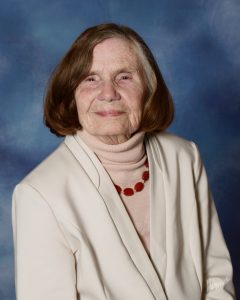
 Why do we do this? Why do we gather when a loved one dies and hold assemblies like this? Most human beings believe that death is not the end of the person who has passed away. Except for the few human beings who really strongly subscribe to an atheist philosophy, and they truly are a minority of our race, everyone on earth belongs to some faith group which teaches that we continue on, whether it is by reincarnation or in the Elysian Fields or the happy hunting grounds, as a guiding ancestral spirit or at rest in the presence of our Lord. So why do we do this?
Category: Prayer (Page 8 of 47)
 Christmas is now done. It ended Friday on Twelfth Night. I am sure than none of you, good Anglican traditionalists that we all are, put away any of your decorations before then, but have by now put them all away.
Yesterday, of course, was the Feast of the Epiphany, the day on which we remember especially the visitation of the Magi. We don’t know exactly when they visited the Holy Family, but most scholars seem certain that it was a lot more than 13 days after Jesus’ birth! More likely, it was about two years. We’ve left the Creche in place this morning and you’ll notice that the Wise Men have made their way from the table at the rear of the Nave up the Epistle side aisle, have visited Joseph, Mary, and Jesus, and are now heading back down the Gospel side aisle, returning to “their own country (as Matthew tells us) by another road.”1
 “In the beginning was the Word . . . .” The Prologue of John’s Gospel echoes the opening words of the Bibe, “In the beginning God said . . . .” Our God is a god who communicates, who speaks, whose Word creates.
The collect for blessing the Christmas Créche begins, “O God our Creator, to restore our fallen race you spoke the effectual word, and the Eternal Word became flesh . . . .” (Book of Occasional Services 2003, page 37) I’ve always like that turn of phrase, “the effectual word” . . . the word that accomplishes something, the word that has power.
In his magisterial work on the poetry of the Indian sage Rabindranath Tagore, Dr. S.K. Paul wrote of powerful words:
If we think of poetry as the use of especially powerful words, then there may reason to suppose that poetry was more important in the prehistoric, preliterate past than it is today – in song, in ritual, in myth – with the structure and choice of words compensating for the impossibility of any written record. Some have even suggested that in the beginning was poetry – in the evolution of language each new word was a poem, the outward expression of a new inward perception. (The Complete Poems of Rabindranath Tagore’s Gitanjali: Texts and Critical Evaluation, Sarup & Sons: New Dheli, 2006, page 318)
At the Christ Mass on December 25, 2017, I offered this poem as a meditation for the congregation at St. Paul’s Episcopal Church, Medina, Ohio.
Skin by Godfrey Rust
That Christmas
God treated himself to a new coat.
Till then he’d not really been dressed for visiting—
he’d nothing dull enough to wear.
Quite early he had come to realise
his appearance didn’t put people at ease.
Even the very first ones were nervous—
when he took an afternoon stroll round the garden
they would run and hide.
In place of an original sermon at the 2017 Advent 4 services, I offered this Lawrence Ferlinghetti poem as a meditation:
Christ Climbed Down
Christ climbed down
from His bare Tree
this year
and ran away to where
there were no rootless Christmas trees
hung with candycanes and breakable stars
 One of the commentaries I read this week about our gospel lesson was written by a Lutheran serminary professor named Jan Schnell Rippentrop. She noted three things about John the Baptizer’s self-description in the Fourth Gospel:
- He’s very clear about who he isn’t (not the Messiah, not Elijah, not the prophet);
- He cites a verse or two of Scripture that inspires him and defines his life (the passage from Isaiah); and
- He says what he does (he baptizes people in witness of their repentance).
She suggested that this would be a good thing for all of us to do: “Can these same three methods,” she asks, “help us claim our identity within our vocation to bear witness to Jesus?” (Working Preacher Commentary, 2017) Rippentrop recommended that we all prayerfully consider and complete three fill-in-the-blank statements (sort of like that old party game “Mad-Libs”):
“I am not ___________________.”
“This scripture will tell you something about me: _____________”
“If you want to really know what I’m about, you’d have to know that I do this: _____________________________________________.”
 Today’s Gradual, Psalm 85, includes what may be my favorite verse in the entire collection of the Psalms: “Mercy and truth have met together; righteousness and peace have kissed each other.” (v. 10)
I think it may be my favorite because it figures prominently in the movie Babette’s Feast, based on a short story by the Danish write Isak Dinesen (Karen Blixen). The story tells of a grand meal prepared for the residents of a small Danish village in memory of their deceased Lutheran pastor. In flash backs, we see his ministry and on several occasions we hear him quote this verse, which seems to be a rallying cry for his flock.
Mercy and truth have met together; *
righteousness and peace have kissed each other.
It’s a lovely poetic summation of the Peaceable Kingdom painted by Isaiah in our Old Testament lesson and elsewhere in that book of prophecy.
 In a few minutes, when this sermon comes to an end, we will all stand together as we do every week and recite the Nicene Creed in which we will say that, among other things, we believe that Jesus Christ
. . . will come again in glory to judge the living and the dead, and his kingdom will have no end. (BCP 1979, page 359)
In the Apostle’s Creed said at Morning and Evening Prayer, and in our Baptismal Covenant, we affirm our expectation that “he will come again to judge the living and the dead.” (BCP 1979, pages 96, 120, and 304)
In the course of the Eucharistic Prayer we re-affirm this this belief by saying (as we will in Prayer C this morning), “We celebrate his death and resurrection, as we await the day of his coming.” (Pg 371) We say something very similar in Prayer A: “Christ has died. Christ is risen. Christ will come again.” (Pg 363) In Prayer B: “We remember his death. We proclaim his resurrection. We await his coming in glory.” (Pg 368) And in Prayer D, we offer our gifts “recalling Christ’s death and his descent among the dead, proclaiming his resurrection and ascension to [the Father’s] right hand, [and] awaiting his coming in glory.” (Pg 374)
I think it’s no secret that I am a news junkie. I read several articles and opinion pieces in three major newspapers (the N.Y. Times, the Washington Post, and the Manchester Guardian) everyday. I watch the cable news commentaries on all of the news channels (yes, even Fox) and I read a couple of major international journals on a regular basis (the Economist and Foreign Policy).
I’ve been a news junkie since I was a kid. It was not uncommon for my parents and me (and my older brother when he was still living with us) to watch the CBS Evening News during dinner. I will always remember Walter Cronkite’s sign off: “And that’s the way it is . . . . ” and then he would say the date. “And that’s the way it is November 5, 2017.” Over on NBC, which my grandparents preferred to watch, Chet Huntley and David Brinkley shared the anchorman job, one in Washington, DC, the other in New York City, and they would sign off by wishing each other and the nation “Good Night!” There was something reassuring about those sign-offs, something solid and final. If Uncle Walter said, “That’s the way it is . . . .” If Chet and David said, “Good night!” we could rest easy knowing that the world was right, that the facts were nailed down.
 As I pondered our scriptures for today I was struck by how different, how utterly foreign, one might most accurately use the word “alien,” the social landscape of the bible is from our own. We, children of a post-Enlightenment Constitution which makes a clear delineation, almost a compartmentalization, between the civic and the religious, simply cannot quickly envision the extent to which those areas of human existence were entangled and intertwined for those who wrote and whose lives are described in both the Old and New Testaments. I tried to think of an easy metaphor to help illustrate the difference between our worldview and that of either the ancient wandering Hebrews represented by Moses in the lesson from Exodus or of the first Century Palestinians and Romans characterized by Jesus, the temple authorities, and Paul.
The best I could come up with was this. First, as a representation of our viewpoint, consider a mixture of water and vegetable oil which, as I’m sure you know, is no mixture at all. The oil will float on the water and no amount of mixing, shaking, or stirring will make them blend; the oil may disperse in small globules throughout the water, it may even emulsify temporarily, but eventually (without the aid of a stabilizer) the oil will separate from the water. In our constitutional society, religious institutions and political entities are supposed to be like that; just as there is a surface tension barrier between the two liquids, the Constitution (in Mr. Jefferson’s memorable phrase) erects a “wall of separation between church and state.”1


