I believe for every drop of rain that falls
A flower grows
I believe that somewhere in the darkest night
A candle glows
I believe for everyone who goes astray, someone will come
To show the way
I believe, I believe
I believe above a storm the smallest prayer
Can still be heard
I believe that someone in the great somewhere
Hears every word
Every time I hear a new born baby cry,
Or touch a leaf or see the sky
Then I know why, I believe1
Those are the lyrics of a song written the year after I was born and which was very popular in the early 1950s. Frankie Laine, the Four Letterman, Elvis Presley, and many others recorded versions of it. It was even arranged in combination with Gounod’s Ave Marie as a Christmas choral piece.
 One of the commentaries I read this week about our gospel lesson was written by a Lutheran serminary professor named Jan Schnell Rippentrop. She noted three things about John the Baptizer’s self-description in the Fourth Gospel:
 Today’s Gradual, Psalm 85, includes what may be my favorite verse in the entire collection of the Psalms: “Mercy and truth have met together; righteousness and peace have kissed each other.” (v. 10)
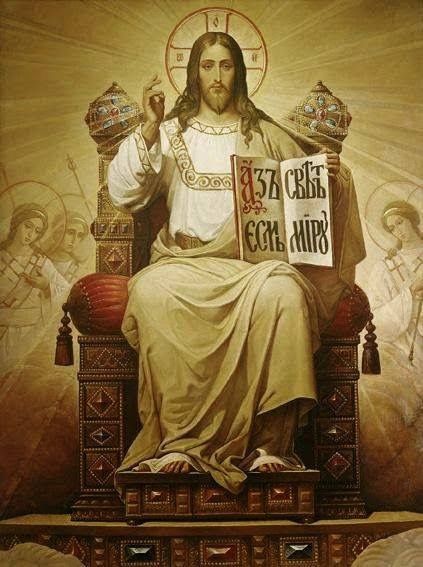
 In a few minutes, when this sermon comes to an end, we will all stand together as we do every week and recite the Nicene Creed in which we will say that, among other things, we believe that Jesus Christ
 In Nigerian writer Chinua Achebe’s novel of post-colonial political intrigue in Africa, Anthills of the Savannah (1987), one of the characters (echoing Karl Marx’s famous aphorism about religion) opines:
 A lawyer asked Jesus a question to test him. “Teacher, which commandment in the law is the greatest?” He said to him, “’You shall love the Lord your God with all your heart, and with all your soul, and with all your mind.’ This is the greatest and first commandment. And a second is like it: ‘You shall love your neighbor as yourself.’ On these two commandments hang all the law and the prophets.”
 As I pondered our scriptures for today I was struck by how different, how utterly foreign, one might most accurately use the word “alien,” the social landscape of the bible is from our own. We, children of a post-Enlightenment Constitution which makes a clear delineation, almost a compartmentalization, between the civic and the religious, simply cannot quickly envision the extent to which those areas of human existence were entangled and intertwined for those who wrote and whose lives are described in both the Old and New Testaments. I tried to think of an easy metaphor to help illustrate the difference between our worldview and that of either the ancient wandering Hebrews represented by Moses in the lesson from Exodus or of the first Century Palestinians and Romans characterized by Jesus, the temple authorities, and Paul.

