Occasional thoughts of an Anglican Episcopal priest

Category: Travel (Page 7 of 8)

Visiting Wilmslow

I’ve driven from Hay-on-Wye to Wilmslow (near Manchester) to visit friend Sally M. She’s taken me on a whirlwind tour of the area focusing on the two churches of the Parish, St. Bartholomew’s and St. Anne’s. Both lovely church facilities. Take a look at their website, which includes a virtual tour of the older church (St. Bartholomew’s).

One the way, I stopped in Shrewsbury and saw the Abbey, then drove on to Oswestry where I had planned to visit the neolithic round fort at Old Oswestry, but somehow got lost and never made it.

Now I’m here for my last night in England (tomorrow I’ll be back in Scotland and the next day off to Ireland). More later….

My Day in Wales (Postcript)

I should probably make mention of the fact that on my return to Hay-on-Wye I spent a couple of hours wandering through a few of the several book stores in this town, which is famous for the used book trade. I saw lots and lots of books, so many that even I, bibliophile that I am, was overwhelmed. I’m quite proud of the fact that I didn’t buy a single one! That’s saying a lot for a man who, I’m quite sure, has never before entered a bookstore without leaving with at least one purchase! It’s a fun town, though, if you’re into books. And it has some good restaurants – I recommend The Blue Boar for local fare and Red Indigo for really fine Indian cuisine.

My Day in Wales (Part 3)

This post concludes the tale of this day begun in Part 1 and continued in Part 2.

Llanthony Priory was a monastery of Augustinian Canons nine miles south of Hay-on-Wye. St. David is said to have lived in the area as a hermit, but this tradition lacks confirmation.

The story of the Priory is that around the year 1100 the ruins of a chapel and cell, supposed to have been that occupied by St. David, were discovered by a retainer of Hugh de Lacy, Baron of Herefordshire, named William. He thereupon decided to quit the world and become a hermit himself. He was later joined by Ernisius, chaplain to Queen Maud, wife of Henry I. These two anchorites became famous and their story reached Baron de Lacy, who in 1107 founded and endowed a monastery for them, dedicated to St. John the Baptist. The rule of the Canons Regular of St. Augustine was adopted. In the course of time, the severity of the climate, the poverty of the soil, and the persecution of the Welsh natives combined to make life there impossible. In 1134 the entire community, numbering about forty, abandoned the monastery and took refuge in the palace of Robert, Bishop of Hereford. After two years a new monastery was built for them near Gloucester by Milo, Earl of Hereford, which was called Llanthony Secunda. Only a few canons lived from time to time in the original monastery, and both houses were governed by one prior, who resided at Gloucester.

The buildings at Llanthony fell gradually into decay and passed into private hands when Henry VIII dissolved the monasteries in 1539. In 1807 the property was bought by Walter Savage Landor. It still belongs to his descendents, the habitable portion of it having been added to and converted into an inn during Queen Victoria’s reign. The church is in ruins, but the western towers, part of the central one, and some of the nave piers and arches are standing.

Here are a few pictures of Llanthony Priory taken today, 11 July 2011:

Llanthony Priory, Black Mountains, Wales

Llanthony Priory, Black Mountains, Wales

Llanthony Priory, Black Mountains, Wales

Llanthony Priory, Black Mountains, Wales

Llanthony Priory, Black Mountains, Wales

Llanthony Priory, Black Mountains, Wales

Llanthony Priory, Black Mountains, Wales

Llanthony Priory, Black Mountains, Wales

And this is the Inn built into the Priory ruins by the Landor family:

Victorian Inn at Llanthony Priory, Black Mountains, Wales

Victorian Inn at Llanthony Priory, Black Mountains, Wales

There is also a functioning Anglican Church in Wales parish church on the site of the Priory, St. Davids, Llanthony. The structure first seen in this picture is a cottage attached to the church, presumably intended to be the vicarage:

St Davids Parish Church, Llanthony, Wales

St Davids Parish Church, Llanthony, Wales

This is the interior of the church:

Interior of St Davids Parish Church, Llanthony, Wales

Interior of St Davids Parish Church, Llanthony, Wales

Notice the pulpit … it is built into the wall and cannot be accessed from the congregation’s side of a wall and arch that separates the congregation from the choir and chancel.

Pulpit of St Davids Parish Church, Llanthony, Wales

Pulpit of St Davids Parish Church, Llanthony, Wales

I entered the pulpit through this door. I almost couldn’t fit in and getting back out was a really spine-bending challenge!

Pulpit Doorway of St Davids Parish Church, Llanthony, Wales

Pulpit Doorway of St Davids Parish Church, Llanthony, Wales

All things considered, it was a good day in Wales. After visiting the parish church, I made my way back to the B&B in Hay-on-Wye by way of a “single track lane with passing areas” about which I’ve written earlier.

My Day in Wales (Part 2)

I left Llantwit Major, where I had surveyed the Church of St. Illtud (see My Day in Wales (Part 1)), and having given serious consideration to driving the 101 miles from there to St. David’s where the primatial Cathedral of the Church in Wales is located, I set out to do just that. It really is a lovely cathedral and there are well-preserved ruins of a monastery founded by St. David there. (Here is a link to the Cathedral’s website.) I got onto the M4 motorway and started driving west, but a little bit beyond Swansea, stopping for petrol and a Diet Coke, discretion got hold of me and I realized that I really didn’t want to spend two hours driving there and then to face three hours getting back to Hay-on-Wye. So I went back to my original plan, which was to drive to the village of Penderyn and visit the only whisky distillery in Wales.

I didn’t take any photos at the distillery; I simply enjoyed the tour in the company of an American family from Florida and their friends from Wales. The whisky at Penderyn was lovely – if you ever have a chance to sample any, do so. They have three finishes – standard, which is aged before bottling in bourbon barrels then finished in madeira casks; sherry, which is aged in the bourbon barrels then finished in sherry casks; and “peated”, which is aged and finished in barrels previously used for Laphroig Scotch. Penderyn is not the first whisky made in Wales. Welsh monks made whisky in the middle ages, but the practice died out. The last commercial distillery before Penderyn was R. J. Lloyd Price’s Welsh Whisky Distillery Company established in 1887 at Frongoch. However, it was not a success and was sold in 1900 to William Owen of Bala for £5,000. The company made its last batch of bottled whisky in 1903 and was finally liquidated in 1910. That last batch met with an ignoble end when the horse cart it was being carried on fell over and all the bottles except two were smashed! One of the two is at the Penderyn Distillery today and the other is supposedly owned by Prince Charles, the Prince of Wales. However, our guide told us that the Prince’s steward is reportedly unable to locate the bottle! The bottle at Penderyn is on display and we were told that it is believed that, at auction, it would fetch a price of £300,000! For one liter of whisky! (The Frongoch product must have been pretty good … a cask of it was given to Queen Victoria by the local lodge of Freemasons when she visited the area in 1900 and she is reported to have gone through it rather quickly.)

The Penderyn products are pretty good, too! They didn’t have any of the peated available for tasting, but the standard and the sherry were delightful. They also make a gin and a vodka. Not being a vodka drinker I didn’t try that, but the gin is superb. More like the Dutch oude jenever than a traditional English dry gin. (The distillery has a very good and informative website which I invite you to view for yourself.) I only tasted very small sips of these spirits because, after all, I was on the road and still had to drive to Llanthony Priory and then back to Hay-on-Wye.

Driving through Wales today, I was struck by contrasts. From Cardiff to Swansea and beyond the M4 motorway is a broad, modern expressway on which cars and lorries zip along at 70 mph. Actually, many race by at even faster speeds. I’ve gotten the impression that in the United Kingdom “speed limits” are really “speed suggestions”…. Off of the motorway, on roads labeled as “A” roads, it’s a somewhat different story. “A” roads are two lane highways (one each direction) which back in the States (or at least in Ohio where I now live) would have a speed limit of no more than 45 mph and in many places, 35 mph. Here they generally are posted at 60 mph! And then there are “B” roads … these can be anything from something equivalent to a city residential street back home to a cow path!

My friends Ruthie and Clive live in Tylers Green, Penn, Buckinghamshire. To get to their home, my GPS (or “sat nav” as they are called here in the UK) directed me up a street called “Cock Lane” at the beginning which was a sign saying, “Single Lane Track with Passing Areas” … and that’s exactly what it is. I traveled on another road today with the same sign on display. Here’s few photos of that road taken from the driver’s viewpoint in my car:

Single Lane Track with Passing Areas, Black Mountains, Wales

Single Lane Track with Passing Areas, Black Mountains, Wales

Single Lane Track with Passing Areas, Black Mountains, Wales

Single Lane Track with Passing Areas, Black Mountains, Wales

The speed limit along here, by the way, is 30 mph! I did not drive anywhere near that speed; to travel these 9.2 miles took me 45 minutes. I met several vehicles coming the other way and often one or the other of us would have to stop and back-up to find a “passing area” where the other waved a thank you and we each went our way.

Single Lane Track with Passing Areas, Black Mountains, Wales

Single Lane Track with Passing Areas, Black Mountains, Wales

This particular single lane track with passing areas runs from Llanthony Priory to just outside Hay-on-Wye, a distance of 9.2 miles. Shortly after I took the photos above, the road got even narrower, and darker as trees growing along side arched over it forming a verdant tunnel. But then, rather quickly and unexpectedly, the roadside bushes and trees just disappeared and though the road got no wider, the vista broadened considerably.

Single Lane Track with Passing Areas, Black Mountains, Wales

Single Lane Track with Passing Areas, Black Mountains, Wales

I was in a mountain valley that was lush and green and filled with grazing sheep. It reminded me of the scenery in that great old movie starring Maureen O’Hara, Walter Pidgeon, and Barry Fitzgerald, How Green Was My Valley, a movie about growing up in a Welsh mining community (a young Roddy McDowall played a principal character). I don’t know where that movie was filmed, but my B&B host tells me that the area I drove through was where the outdoor scenes of another movie were filmed – An America Werewolf in London!

High mountain valley, Black Mountains, Wales

High mountain valley, Black Mountains, Wales

Sheep Grazing, Black Mountains, Wales

Sheep Grazing, Black Mountains, Wales

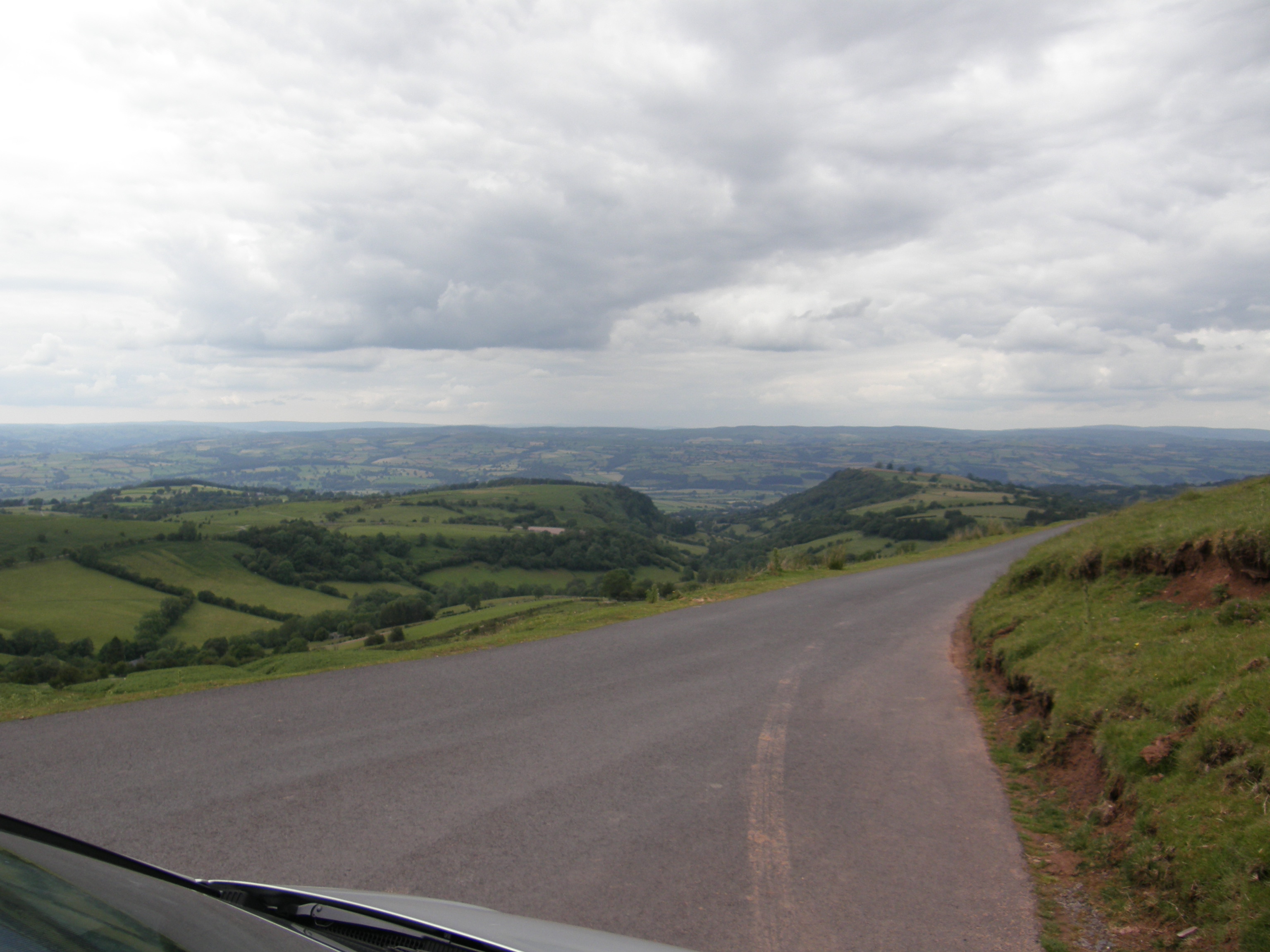
Shortly after I stopped to take the pictures above, I rounded a curve, topped a summit, and was treated to a breathtaking view of the Wye River valley. Even though the day was overcast at the time, the view was magnificent.

Wye Valley from Black Mountains summit, Hay-Llanthony Road

Wye Valley from Black Mountains summit, Hay-Llanthony Road

Wye Valley from Black Mountains summit, Hay-Llanthony Road

Wye Valley from Black Mountains summit, Hay-Llanthony Road

I was on this road driving from Llanthony Priory in the Black Mountains to my B&B in Hay-on-Wye. In the third and final installment of this description of my day in Wales, I’ll have pictures of the Priory. See My Day in Wales (Part 3).

Driving this sort of road (or any road, for that matter) is one of the times when I especially pray for God’s protection. In Dánta Dé there is a morning hymn (described as a ceol na ndaoine or “folk music”) which seeks God’s protection as “king of the graces” when “in each way that I shall take in the road that I wish to go.” First, the Irish Gaeilge:

A Rí na ngrás thug slán mé ó oidhche aréir,
Buidheachas naomhta do gnat do Rí na gCréacht;
Do bhrigh Do Pháise, a Árd-Mhic, dídean mé saor
Ó ghníomharthaibh Shátain gach lá is go críc mo shaoghail.

‘Athair na gcómhacht fóir mé ó phéist an uilc
Anns gach anach a ngeóbhad san ród ‘n ar méin liom dul,
Go cathair [Do Ghlóire] a gcómhnaidhe téidhim ar dtús
‘S a n-ainm na trócaire treóruigh féin mé indiú.

And the direct English translation:

O King of graces, Who brought me safe from yester-night,
Holy thanksgiving (be) always to the King of the Wounds:
By the power of Thy Passion, O High Son, protect me safe
From the deeds of Satan each day to my life’s end.

O Father of powers, save me from the serpent of evil,
In each way that I shall take in the road that I wish to go,
To the Throne [of Thy Glory] always first I go,
And in Mercy’s Name lead me Thyself to-day.

My Day in Wales (Part 1)

Noswaith dda!

Noswaith dda is Welsh for “Good evening” – do not try to pronounce it – whatever you guess will be wrong, I assure you.

I drove a circle through the Brecon Beacons today – I almost drove to St. David’s – but five hours of driving (two to get there from where I was just west of Swansea and three to get back from there to my B&B in Hay-on-Wye) didn’t seem like a good idea, so I didn’t. Instead I went to St. Illtuds in Llantwit Major, then to the Penderyn Distillery, then to Llanthony Priory … and then walked the streets of Hay-on-Wye and looked at lots of old books. It was overwhelming, even for a bibliophile like me … there are too many books … and some of the shops are simply disorganized. Many have the books categorized by subject, shelved alphabetically by author, etc. But some are just disorganized heaps of books – I think even the owners don’t know where anything is.

I was disappointed in St. Illtud’s Church and the ruins at Llantwit Major. The modern Welsh-English name comes from the old Welsh name Llanilltud Fawr. Llan means “monastery” and you can see St. Illtud’s name in the rest of that first word. The second word, fawr, means “great”. So the name is something like “Illtud’s Great Monastery” which was founded in the early 5th Century by St. Illtud as a center of learning … but it’s not so great any longer.

This is a very important site in Celtic Christian history and it’s not cared for very well at all. The monastic community here, over which St. Illtud and St. Samson were priors, was once so important in the formation of monks, priests, missionaries, and bishops that it has been called “The University of Celtic Saints.” St. David of Wales was educated and ordained there, and he is not the only one: in addition to St. David, St. Samson, St. Paul Aurelian, St. Gildas, St. Tudwal, St. Baglan and King Maelgwn ap Cadwallon (King of Gwynedd and apparently High King of Wales in the middle of the 5th Century) are said to have studied at the Cor Tewdws or “divinity school”.

The Scots and the Irish seem to have a sense of reverence for their ancient Christian monastic sites, but apparently not so the Welsh (or at least not the people of Llantwit Major). Although inside the church there is a poster about a fund raising effort to preserve what’s left and build a visitor center, it’s pretty clear it’s not going anywhere – the poster is a few years old. And in the old chapel, there are dustbins and a composting thing set up….

Here are some pictures of the Church of St. Illtud’s and what remains of the medieval buildings that were once found at this site. Of course, the earlier Celtic site has long since disappeared. First, the church as seen from the town’s public car park and then a couple of photos of the building from the church yard.

St. Illtuds Church, Llantwit Major, from town car park

St. Illtuds Church, Llantwit Major, from town car park

St. Illtuds Church, Llantwit Major, from church yard

St. Illtuds Church, Llantwit Major, from church yard

St. Illtuds Church, Llantwit Major, from church yard and showing ruined monastic chapel at west end

St. Illtuds Church, Llantwit Major, from church yard and showing ruined monastic chapel at west end

There is a ruined chapel affixed to the functioning church directly out the west door; in this chapel are currently housed dustbins (trash cans, to an American) and a green plastic composting container!

St. Illtuds, ruined chapel with composting bin

St. Illtuds, ruined chapel with composting bin

On the grounds was also a ruined chantry which has now been turned into a memory garden:

St. Illtuds, ruined chantry memory garden

St. Illtuds, ruined chantry memory garden

Inside the church there are some stones with Celtic carving and Latin inscriptions which may date from the early Celtic monastery:

St. Illtuds, Celtic Cross bearing name of Illtud

St. Illtuds, Celtic Cross bearing name of Illtud

St. Illtuds, Celtic carved stones

St. Illtuds, Celtic carved stones

And, of course, the Victorians got to the place and their influence is seen in the chancel of the church and the reredos:

St. Illtuds, chancel, altar and reredos

St. Illtuds, chancel, altar and reredos

After surveying the church at Llantwit Major (which didn’t really take as much time as I thought it would), I gave serious consideration to driving the 101 miles from there to St. David’s where the primatial Cathedral of the Church in Wales is located. It really is a lovely cathedral and there are well-preserved ruins of a monastery founded by St. David there. (Here is a link to the Cathedral’s website.) In fact, I got onto the M4 motorway and started to do just that, but a little bit west of Swansea, stopping for petrol and a Diet Coke, discretion got hold of me and I realized that I really didn’t want to spend two hours driving there and then to face three hours getting back to Hay-on-Wye. So I went back to my original plan, which was to drive to the village of Penderyn and visit the only whisky distillery in Wales. (See My Day in Wales (Part 2) for more about that.)

(Later in the day I visited Llanthony Priory, another monastic ruin, in the Black Mountains south of Hay-on-Wye. Read My Day in Wales (Part 3) for that story and more photos.)

St. Alban’s Cathedral

The other cathedral church I visited on 8 July 2011 was that in the town of St. Albans. It might not actually be a town. British law makes distinctions between hamlets, villages, towns, and cities – and perhaps other urban designations (I don’t really know). There are also parishes (of two types, ecclesiastical and legal), boroughs, and counties. Each of these legal geographies has its own council or other form of government, and their interactions (amongst themselves and between them and the national government) are the stuff of much news commentary. In any event, there is a place called St. Albans and I’ll call it a town whether it legally is one or not.

St. Albans was founded by the Romans who called it Verulamium. The town now has a really lovely public park call Verulamium Park and parts of the old Roman town’s wall are on display there. There are also lovely rolling green hills, huge willows and other shade trees, and a delightful pond which is the home of swans, geese, and ducks who are regularly fed by the citizenry. Here are a couple of pictures of the park (including the wall):

Pond at Verulamium Park, St. Albans

Pond at Verulamium Park, St. Albans

Roman Wall, Verulamium Park, St. Albans

Roman Wall, Verulamium Park, St. Albans

St. Albans Cathedral seen through the Roman Wall, Verulamium Park

St. Albans Cathedral seen through the Roman Wall, Verulamium Park

The cathedral is dedicated to, and the town gets its current name from, St. Alban, first martyr of Britain. The story is that Alban was a pagan Roman soldier. According to James Kiefer’s hagiography, “he gave shelter to a Christian priest who was fleeing from arrest, and in the next few days the two talked at length, and Alban became a Christian. When officers came in search of the priest, Alban met them, dressed in the priest’s cloak, and they mistook him for the priest and arrested him. He refused to renounce his new faith, and was beheaded. He thus became the first Christian martyr in Britain. The second was the executioner who was to kill him, but who heard his testimony and was so impressed that he became a Christian on the spot, and refused to kill Alban. The third was the priest, who when he learned that Alban had been arrested in his place, hurried to the court in the hope of saving Alban by turning himself in. The place of their deaths is near the site of St. Alban’s Cathedral today.”

Front porch, Cathedral Church of St. Alban, St. Albans, UK

Front porch, Cathedral Church of St. Alban, St. Albans, UK

The shrine of St. Alban is inside the cathedral. It forms a separate chapel behind the “screen” or reredos behind the high altar (and before the Lady Chapel which takes up what an American church member would think of as the “chancel” area of the building). While I was photographing the shrine, one of the cathedral guides came up and engaged me in conversation. In the course of our discourse she said, “We have a bone you know?” – “I thought the saint’s whole body was here!” – “Oh, no! The bones were taken away when Henry the Eighth abolished the monasteries! Most of his bones were taken to the continent and an awful lot of them were taken to the cathedral in Cologne. A few years ago the Bishop of Cologne visited and he brought us a bone – Alban’s right shoulder bone! Of course, we’re Anglicans so we’re not much on relics … but we said, ‘Thank you very much’ and accepted his bone.” – “Oh… well, where is this bone?” – “It’s in a lovely box under the shroud on the shrine!” So here’s a picture of the shrine … under that red cover somewhere is a “lovely box” contained a shoulder bone, allegedly Alban’s…..

Shrine of St. Alban, St. Albans Cathedral

Shrine of St. Alban, St. Albans Cathedral

The reason I visited this particular place, other than it’s Roman history connection (there’s no Celtic connection that I know of), is that I was ordained on the feast of St. Alban (well… the eve, actually, but we used the Propers for St. Alban’s feast), so I consider him the patron of my priesthood.

St. Edmundsbury Cathedral

On 8 July 2011 I visited two cathedrals, the first of which was St. Edmundsbury Cathedral (which is in the town of Bury St. Edmunds – don’t ask me why the names are differently formatted; even the cathedral guide I spoke with couldn’t tell me). The town and cathedral are named for St. Edmund, King and Martyr, who was king of the East Angles; he was killed by Danish invaders in 869 CE. They had offered him peace on condition that he would rule as their vassal and forbid the practice of the Christian faith. For his refusal, he was tied to a tree and shot with arrows. Around 900 CE, Edmund’s body was brought to Bedericesworth (now called Bury St. Edmunds) and housed in a shrine in what developed into a great Benedictine abbey. That shrine became a great place of pilgrimage and Edmund was the patron saint of England, until St George replaced him.

The Diocese of St Edmundsbury and Ipswich was created in 1914, the Church of St James (on the grounds of the Benedictine abbey’s ruins) was designated as the Cathedral. In 2009 the Cathedral changed its dedication to become the Cathedral Church of St James and St Edmund.

Here are a few photos from the cathedral. First, exterior as seen from the gate from the Abbey Gardens. It was a very rainy day when I visited, so I did not go around and take a photo of the front of the cathedral from the High Street.

St. Edmundsbury Cathedral seen from the Abbey Garden gate

St. Edmundsbury Cathedral seen from the Abbey Garden gate

The main nave of the church:

St. Edmundsbury Cathedral Interior

St. Edmundsbury Cathedral Interior

The High Altar and then the altar in a side chapel:

St. Edmundsbury Cathedral High Altar

St. Edmundsbury Cathedral High Altar

St. Edmundsbury Cathedral side chapel

St. Edmundsbury Cathedral side chapel

Finally a couple of pieces of statuary. First, a wood carving of St. Edmund inside the cathedral. There is a larger bronze statue on the grounds, but because of the rain, I wasn’t able to get a picture of it. The second statue is a piece commemorating explorer Bartholomew Gosnold who gave Martha’s Vineyard, Massachusetts, its name. He sailed to the island in 1602. On seeing wild grape vines growing there, he named it for his second child, who died in infancy, and who was named Martha. Martha Gosnold had been christened in St James Church and her body is buried it its churchyard.

Wooden carving of St. Edmund, King and Martyr

Wooden carving of St. Edmund, King and Martyr

Statue commemorating explorer Bartholomew Gosnold

Statue commemorating explorer Bartholomew Gosnold

After visiting St. Edmundbury Cathedral, I left the city and drove to the university town of Cambridge to have lunch with friends. Unfortunately, the English roads, English traffic, and English congestion got the better of me and I never made it to the lunch date. I tried … but I can now say, “I have been to Cambridge, where I failed.” Instead of meeting my friends for lunch, I threw up my hands in frustration and drove on to St. Albans where I visited the second cathedral of the day and about which I will write another post later.

Some Pictures

No great thoughts today (have there been any at all so far?) – just a few pictures.

I’m trying to figure out what to do about Flickr and its upload limit. I may need to figure out how to use MobileMe and make it publicly accessible. In the meantime, some photos here…

First, from Lady Waterford Hall in the Village of Ford, Northumberland. Lady Louisa Waterford founded a school here well before elementary education was compulsory in Britain. She was an amateur painter and also a very religious woman. To make the stories of the Bible come alive for her students she decorated the inside of her classroom with murals of biblical stories for which they and their parents were the models. The project took her 21 years. This is her portrait of “The Boy Jesus” –

The Boy Jesus at Waterford Hall

The Boy Jesus at Waterford Hall

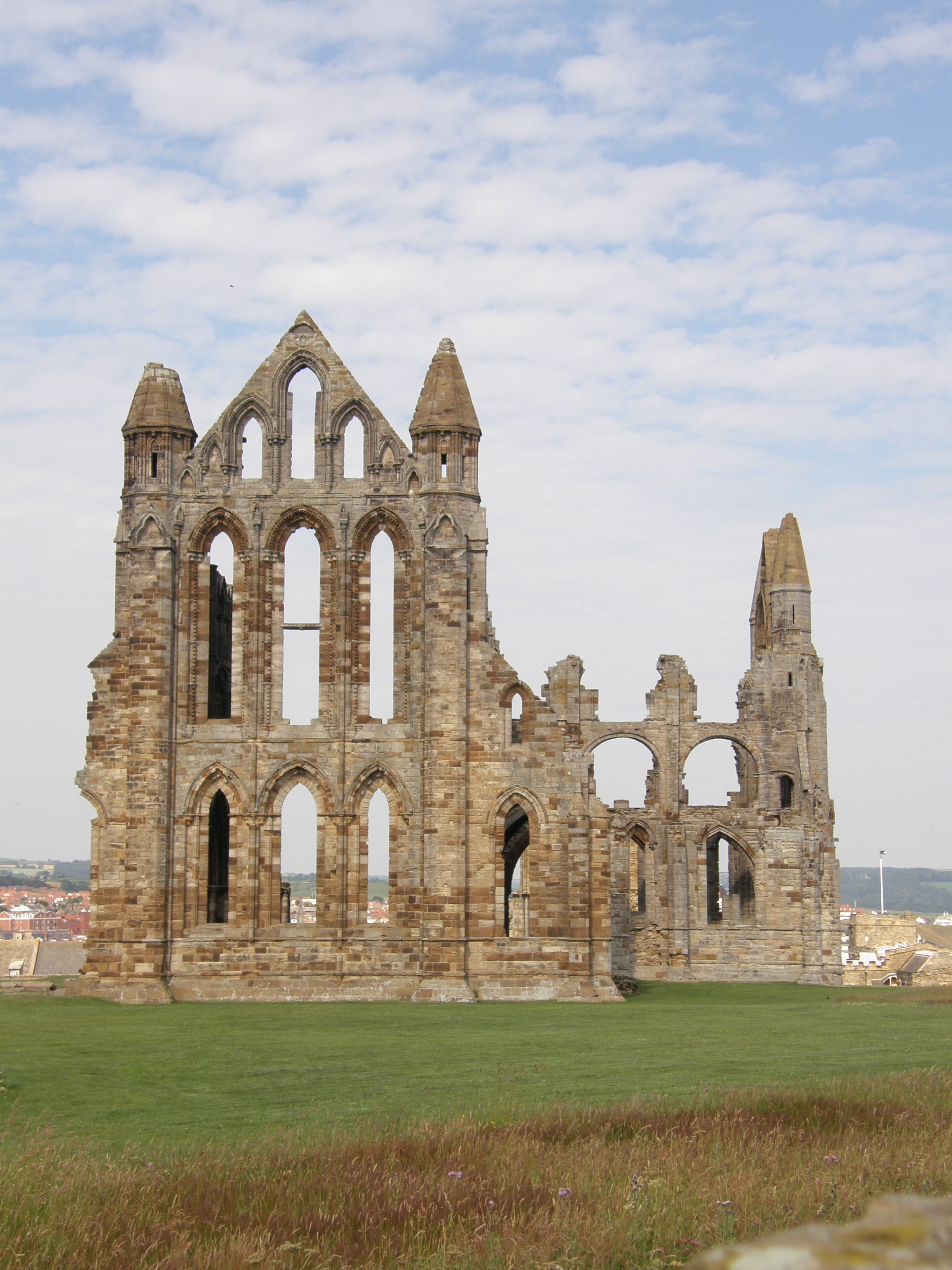
Next, Whitby Abbey. Whitby is a place important in Celtic Church history for it is here that a synod was held which essentially ended the influence of Celtic Christianity in Britain for several centuries. The first monastery here was founded in 657 CE by King Oswy of Northumbria. An Anglo-Saxon style “double monastery” for men and women, its first abbess was a formidable royal princess named Hilda. She hosted the Synod of Whitby in 664 at which it was decided that the English church would follow the traditions of Rome rather than the Celtic practices. Whitby is also famous as the home of the Anglo-Saxon poet Caedmon, an illiterate cowherd who was transformed into an inspired writer of Christian hymns. The Anglo-Saxon monastery has long since disappeared and is believed to have been in a location closer to the ocean than this 13th Century ruin; this monastery was begun in 1220 CE, like many of the re-established Celtic and Anglo-Saxon sites, by the Benedictines.

Whitby Abbey, N. Yorkshire, UK

Whitby Abbey, N. Yorkshire, UK

Third, a tomb in the Minster at York. I don’t actually know who this bishop is … but I love this non-traditional effigy. Usually these things simply look like the fully-vested stretched out corpse of whomever … but this one, with the bishop reclining, resting his head on his hand, and looking for all the world like a day-dreaming schoolboy who ought to be studying his Bible, struck me as delightfully whimsical.

Bishop's Tomb at York Minster

Bishop's Tomb at York Minster

My friend, the Rev. Michael Bishop, is the vicar of an eight-congregation united benefice in the Church of England. He ministers to the members of these eight congregations, offering worship in seven of the eight every Sunday! One of these is All Saints, Dalbury, Derbyshire, which houses this window – the oldest piece of stained glass in the British Isles. It depicts St. Michael the Archangel. I was particularly taken with it because Michaelmas happens to be my birthday.

St. Michael Window, All Saints, Dalbury, Derbyshire, UK

St. Michael Window, All Saints, Dalbury, Derbyshire, UK

Lastly – another depiction of St. Michael from a side chapel in Coventry Cathedral. My poor photographic skills and inadequate camera simply cannot convey the grandeur of the Cathedral of St. Michael, Coventry, nor the emotional impact this place has. The original Gothic cathedral was bombed during World War II. After the war, rather than restore the ruins or rebuild on the same site, it was decided that the ruins would be turned into a prayer area and the new cathedral built adjoining it. The new structure, in a style that can only be called “mid-century modern”, was started in 1956 and completed in 1962. It is magnificent! The old cathedral prayer garden is also outstanding.

Chapel at Coventry Cathedral

Chapel at Coventry Cathedral

Traveling Mercies! Please! (Part 2)

This piece follows up on a description of my day of departure from the states – here.

Suffice to say I got to and through Newark (where I had an awful Mexican supper badly burning the roof of my mouth on an obviously “nuked” chimichanga), and arrived in Edinburgh, Scotland, UK. I had pre-booked a rental vehicle from Enterprise Rent-a-Car, but finding the rental agency counters in the Edinburgh airport terminal is a bit of a trick … because they aren’t in the terminal; they’re in a separate building on the other side of the multi-level car park which thus can’t be seen from the terminal. Good planning.

Anyway, I got through immigration and customs with no problems (except a long wait because of some sort of public workers strike and then a computer outage), found the rental agency, got the car and a quick run-down on its features by the agency manager, loaded my things, and took off … only to discover that I’d misunderstood the instructions on how to get out of the parking area, made a wrong turn, and ended up blocking the way for in-coming rental returns. That’s when I discovered that I didn’t know how the put a Vauxhall Meriva five-door runabout into reverse! I put the vehicle in neutral, got out, and pushed it out of the way. Then spent several minutes looking through the owner’s manual and finally figured it out – I’d been pushing down on the gear shift knob (which was the way one got into reverse in my last two manual transmission cars) but learned that the Meriva has a pull-up ring around the gear shift stem. Well, OK, it works. And the car has turned out to be fun to drive.

The Hole of Horcum

The Hole of Horcum

After driving it for three days, however, it was time to fuel it up. I pulled into a Tessco petrol station, got out, and couldn’t get the fuel tank door to open. After looking everywhere for a release lever and not finding one, I pulled into a parking place and spent several more minutes with the owners’ manual, fruitlessly this time. I was almost ready to call Enterprise and ask, “How do I get this darned thing open!?” Then a calm voice in my head said, “What about the unlock button on the key fob?” “No,” I said to the voice, “it couldn’t be that easy, could it?” — The unlock function on the key is one of those where you press it once and the driver’s door opens, press it again all of the locks in the car are released. I pressed it twice. The fuel tank door opened! Thank you, calm voice in my head! I swung the car around the pumps and filled up.

American gasoline consumers! Listen up! The cost of petrol in the UK (the lowest grade being 95 octane, by the way) is currently between £1.309 and £1.399 depending on where you are and what station you prefer to patronize. I paid £1.319 per liter, or a total of £56.28 to fill my car with 42.67 liters of gasoline. In American terms, that’s $90.58 for 11.27 gallons – or $8.04 per gallon! Gasoline in Medina, Ohio, the day I left was $3.45 per gallon. We really don’t have anything to complain about! (I’ve since filled up twice again at similar prices.)

Anyway ….

Whitby Abbey

Whitby Abbey

All of these minor annoyances, those set out in the earlier post and those described here, are just that, minor! When I was resting, praying, meditating at the Duddo Stone Circle and again a few days later when I was walking across the grass field at Whitby Abbey and then later that same day listening to the electronic guide commentary at Rievaulx Abbey, it occurred to me how difficult the lives and travels of the Celtic missionaries must have been. These men set out from Ireland not on jet aircraft arrived mere hours later; they sailed across the Irish Sea (not the most hospitable of waters) in small currachs, practically insignificant skin-covered boats. They traveled the countryside (which was wild and untamed, not the neatly farmed landscape of today) by foot, not in comfortable air conditioned vehicles whizzing along at 70 mph! No matter what the inconveniences of modern air travel, no matter how bad airline or airport food may be, no matter what difficulties one may have learning how to pilot a rental car … nothing that I have detailed above amounts to a hill of beans in comparison to the difficulties those Celtic monks must have faced!

Galway City Museum Currach Boat Exhibit, photo borrowed from wandermom.com

Galway City Museum Currach Boat Exhibit

It was the Celtic missionary tradition to send out thirteen men – an abbot and twelve brothers emulating Christ and the Twelve – to find a good location for a new monastic community, settle there, build their caiseal and within it their huts and other buildings, and begin seeking out the local peoples and telling them the Good News of redemption in Jesus Christ. They sailed in tiny boats; they walked across wild terrain shod only in sandals; they carried everything they needed – holy books and vessels, especially. They did the hard work of converting those who had never heard of God or of Jesus. And they did it successfully. They have much to teach us and we have much to learn.

This trip is teaching me about patience; it’s teaching me about letting go of annoyances; it’s teaching me about trusting God. Traveling charms, invocation of God’s protection while abroad, were a common part of the Celtic Christian experience. There are numerous examples of them in Alexander Carmichael’s magisterial collection of Scottish Gaelic folk hymns and poetry called Carmina Gadelica and in Douglas Hyde’s collection of Irish verse entitled Religious Songs of Connacht, from which the lyrics of many of the songs in Dantá Dé are taken. The following is from Hyde’s collection, the Irish and the translation are both from his text. It is not found in Dantá Dé. First, the Irish:

I n-ainm an Athar le buaidh
Agus an Mhic a d’fhulaing an phian
Muire ‘s a Mac go raibh liom ar mo thriall.

O a Mhuire cas dam ag an phort
Na leig m’ anam thart
Is mór m’ eagla roimh do Mhac.

I gcumaoin na naomh go raibh muidh (sinn)
Ag éisteacht le guth na n-aingeal
A’s ag moladh Mic Dé le saoghal na saoghal.

And the English rendering by Dr. Hyde:

In the name of the Father, with victory
And of the Son who suffered the pain,
That Mary and her Son may be with me on my travel.

O Mary meet me at the port
Do not let my soul [go] by thee,
Great is my fear at thy Son.

In the communion of the saints may we be,
Listening to the voices of the angels,
And praising the Son of God for ever and ever.

I’ve begun saying this invocation each morning before beginning my drive, thinking of the Celtic and Roman missionaries and the later medieval monks who traveled this way before me.

Traveling mercies! Please! (Part 1)

Seven shirts – check.
Three pairs of jeans – check.
Two pair of hiking shorts – check.
Swimming trunks – check.
Two sweaters – check.
Jacket – check.
Shoes, socks, etc. – check.

You know the drill! Plan ahead, figure out what you need to pack, lay it all out on the bed, determine what will go in which part of the suitcase (the bag that will be checked all the way to final destination and thus inaccessible during travel), what will be put in the carry-on bag(s).

The modern-world, security-conscious additions to all of this are weight limits and carry-on item restrictions. The checked luggage cannot weigh more than 50 pounds each; you cannot check more than two bags (without incurring hefty fees). You cannot have bottles of liquid in your carry-on bags (except for itty-bitty ones). And so on and so forth.

I started writing this at home, while I was sorting the clothes, toiletries, etc. I had planned to pack, but then the phone rang or something and I set this aside. In Newark Liberty International Airport, I tried to added to it. (I thought I was just going to surf the web or play on Facebook or something, but for reasons I was too tired to try to understand, I couldn’t seem to sign on through the airport’s Boingo network. I’m not a big fan of Boingo, in any event, so I’m not broken-hearted. It gave me a chance to share a few thoughts about modern air travel … and share the annoyances of the day.)

So, anyway this is what I wrote in Newark….

I thought I would check just one bag and carry on another. So I packed my rolling dufflebag as carefully as I could, sure I was not over-packing and that I would be under that 50-pound limit. Got it all zipped up! “My God, I thought, this thing is heavy. I can’t be that much over the limit!” I was – slightly more than 20 pounds over! The carry-on was awfully heavy, too. So … time to rethink the only-one-checked-bag decision.
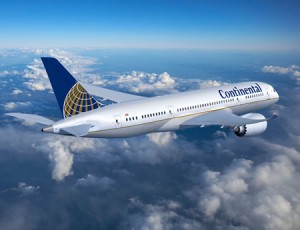
I am using Continental Airlines this trip. On international flights, Continental (which charges $25 for the first checked bag on domestic flights) permits one piece of checked luggage without an additional fee. The weight limit, of course, is 50 pounds. The over-weight fee is $200. On the other hand, you can check a second 50-pound bag for $50 (or, I could because I purchased my ticket several months ago; for a passenger with a more recently purchased ticket, it’s $70). A no-brainer, right?

So I spent another 30 minutes or so juggling things from one back to another and finally getting the duffle down to 48.5 pounds and the second bag came in at 31 pounds. My single carry on item was now manageable – a backpack with a jacket, my computer, my camera, and a book.

Evie (my lovely wife) helped me get the bags to and into the car and, as we were doing this, my cellphone made it’s “you’ve-got-a-text-message” bong. It was Orbitz – my plane is delayed an hour because of high winds in Newark. This was not a problem; after all, I have a long layover at Newark.

We decided to take advantage of the delay to run and errand or two before heading for the highway and, as we were doing that, I realized … I had left my hat at home. So back we go, get the hat, get on the freeway. For some reason traffic in Medina that day was heavy! Lots of cars, slow speeds, crazy drivers … I’m the sort who likes to get to the airport rather early, so this drove me nuts!

On the way to the airport, I plugged my cellphone into the “cigarette lighter” charger to get that last little bit of power topped up. (You know what’s coming, but let’s wait for that … OK?)

We finally got to the airport. Evie decided that, rather than just drop me off, she would come in with me to see how the check-in process with an e-ticket works at the Continental counter since she’ll be doing this herself in a couple of months. The truth is, it doesn’t work all that well. After standing in the queue, we are directed to one of the self-serve kiosks and after claiming not to find my reservation by Continental’s tracking number, the machine responded to my driver’s license and led me through the baggage check (and payment) process and the boarding passes were printed. It then directed me to wait until an agent assists with baggage tagging. So we waited … and waited … and waited … Finally I went to the woman who was directing the traffic in the queue and said to her, politely, “No one seems to be working kiosk 25 to which I was directed.”

“Well,” came the exasperated reply, “all you have to do is ask!”

“I’m asking,” I said with a smile. Together we walked to the kiosk, I stopping on the customer side and she walking around the agent’s side.

“Here’s the problem,” she says, “you haven’t completed the process. There are no baggage tickets printed.”

“Yes, I have. Here is my receipt for $50 telling me to wait for an agent.”

“Oh.” She took my receipt and walked off. After she fiddled with the agent’s keyboard of another kiosk terminal, she turned my receipt (and the problem) over to a young man who was apparently able to solve the problem. In a few minutes, he came back to kiosk 25 with the tags for my bags, my receipt, my claim tickets, and good wishes for a safe trip.

Evie and I said our good-byes and I got in the line for the security check. About two-thirds of the way through the line, while organizing my items to put in the bins for the x-ray scanner, I realized (you saw this coming, remember?) that I didn’t have my cell phone! When I got to the woman who was checking identification, I asked if there was any way, if I could find a way to contact my wife, if she could get my phone to me. No. I would have to go back out and do the security thing all over again. I decided the phone wasn’t worth it since it would only be good in Newark (I don’t have an international phone).

Next thing I know, as I’m taking off my shoes, I heard my name on the PA system. (OK, I think, I’ll deal with that from the other side of security.) Just as I exitted the body scanner, a man with airport credentials around his neck comes up to me and asks if I am Eric Funston. Yes. “I have something for you from your wife,” he says. He was holding a plastic bowl containing the phone and my car charger! Bless you, Evelyn! These had to be run through the scanner while I put on my shoes, first locating my wife outside the security line, waving to her and blowing her a kiss.
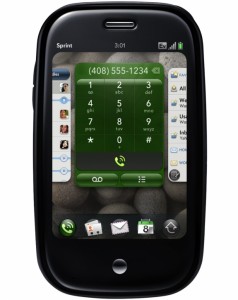
It turned out that on returning to the car, she’d seen the phone and brought it back in. Continental Airlines was unable to help, but she had quickly figured out who to get to and gotten the phone over to me. Bless her! Because although it doesn’t work in Europe, it does have all my Stateside phone numbers in it and I can use it as an address book to get numbers I can call with the European phone I intend to buy.

(The boarding call for my flight has just sounded, so I will put this away and finish it later.)

— Seven days later —

Sitting in a Burger King just within the city limits of Coventry – I’m going to go ahead and post this odd little squib as an introductory piece to some thoughts about travel and monks … more on that in a later piece. I also want to post it as a big thank you and tribute to my wife who got my phone to me and without whose support I couldn’t be doing this at all! Love you, dear!

« Older posts Newer posts »