From the Book of Joshua:
I hereby command you: Be strong and courageous; do not be frightened or dismayed, for the Lord your God is with you wherever you go.
(From the Daily Office Lectionary – Joshua 1:9 (NRSV) – June 2, 2014)
 These are among the words spoken by Yahweh to Joshua son of Nun, the assistant to Moses, as he is commissioned to succeed Moses as leader of the Hebrews and lead them into Canaan.
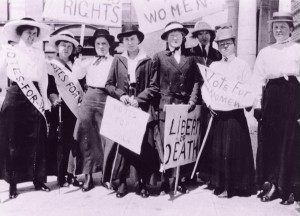
It occurred to me as I thought about them that they can mean very different things depending on the audience to whom they are spoken, or at least they can seem to. It also occurred to me that although there are similar admonitions given to various people throughout Scripture, none of those people are women. There are women who are lauded for their strength and courage, Deborah the judge and Yael who killed the general Sisera, for example, but they are exceptions to the rule (the Scriptural rule seeming to be that women are to be meek and compliant). But I can think of no instance in which a woman is directly instructed to be “strong and courageous” (or anything similar).
I suppose my thoughts run in that channel this morning because of something I heard during an NPR discussion of the recent mass killing in Isla Vista, California, the motivations of the killer, and the public conversation in the aftermath. Two news analysts were talking about the Twitter hashtag #yesallwomen and one of them quoted novelist Margaret Atwood, “Men’s greatest fear is that women will laugh at them, while women’s greatest fear is that men will kill them.” I’d not heard that comment before, but a look at that Twitter hashtag feed made me appreciate the truth that underlies it.
Reading the various Tweets from women under that hashtag is a real eye-opener! Here are a few (edited to remove Twitter identifiers and vulgarities):
Because I thought I was safe walking 2 blocks home in my town ’til rape reports started piling up last year. I wasn’t safe; I was lucky.
Because this is “humor”: Never trust anything that can bleed for seven days straight and doesn’t die.
Because I was recently told by a man that I was “forcing him to have impure thoughts” by the way I was dressed.
Because I’m made out to be a slut for being a single mother.
Because when I’m walking home at night, instead of self-reflection or self-improvement I think about self-defense.
Because when I walk through a parking lot and get catcalled I’m told to ignore it rather than standup for myself.
Because when my intellect stuns someone, attacking my weight is an obvious second choice.
Because when women share stories of being scared or hurt, some people say “Yeah? Prove it.”
Because when you hit on me, my curves are sexy, and when I reject you, I’m a fat bitch you’d only ____ with a paper bag on.
Because I was advised by a male supervisor to flirt with men to get them to sign a petition.
Because when a guy posts a post-workout pic he’s “confident” but when a girl does the same thing she’s “attention-seeking”.
The other eye-openers on that hashtag thread were the Tweets by men. I simply can’t repeat many of them here! To call them misogynistic would be an understatement; to call them vile would be closer to the truth.
As the child of a single mother and the parent of a single woman living on her own, I thought I appreciated the difficulties of women in our society. I was wrong. I didn’t and I probably still don’t, but what I took away from reading through those Tweets is a more visceral (if still partial) understanding of patriarchy. Those Tweets flesh-out and give substance to what, for most men (I think), can be nothing more than an intellectual concept. I suggest my brethren do as I have done and spend some time reading through those Tweets. You’ll be amazed by the comments of the women and appalled by those of the men. You’ll have to be strong and courageous to read them, but in the end you’ll be better for having done so.
So God told Joshua, “Be strong and courageous,” but I can think of no instance when God gave similar instruction to a woman. It occurs to me that perhaps the reason those words aren’t spoken to women in the Scriptures is that they don’t need to be. Women don’t need to be told to be strong and courageous; they already are. Women growing up and living in patriarchy simply have to be.
====================
A request to my readers: I’m trying to build the readership of this blog and I’d very much appreciate your help in doing so. If you find something here that is of value, please share it with others. If you are on Facebook, “like” the posts on your page so others can see them. If you are following me on Twitter, please “retweet” the notices of these meditations. If you have a blog of your own, please include mine in your links (a favor I will gladly reciprocate). Many thanks!
====================
Father Funston is the rector of St. Paul’s Episcopal Church, Medina, Ohio.
 I admit that I’m never quite sure how to read this publicly, what tone of voice to use for Jesus. I suppose I could avoid that question by reading in that dull monotone some lectors chose, or in that “stained glass church voice” many clergy affect. However, the bible is mostly story, and the Gospels are entirely story, and I believe stories are to be read, especially in public, as stories — living, breathing, interesting, engaging stories.
 “The Lord is a God of knowledge” may be the most important assertion in Hannah’s song. Many bible scholars believe her song to be the model of Mary’s song, The Magnificat. Both are sung by pregnant women; both extol the might and power of God; both confirm God’s preference for the poor and lowly over the rich and powerful. Only Hannah’s song, however, includes this description and her accompanying admonition to her hearers to not speak arrogantly. The translation in The Complete Jewish Bible renders her words in this way: “Stop your proud boasting! Don’t let arrogance come from your mouth! For ADONAI is a God of knowledge, and he appraises actions.”
 I cannot read these verses of Hebrews (nor the verses of Psalm 8 which the author quotes) without thinking of Hamlet:
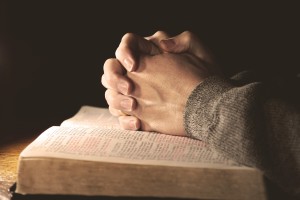
 Two years ago I wrote a meditation on First Timothy on this blog about our need to pray for our political leadership, especially those with whom we disagree; yesterday, I repeated that same reflection. Really, our need is to pray for everyone, including those we really don’t want to pray for: “Love your enemies and pray for those who persecute you.” (Mt 5:44) I believe that, I really do.
  There was a meme circulating the conservative blogosphere and email circuit several months ago in which folks of a certain political persuasion asserted that they were “praying” for President Obama by reciting a verse from Psalm 109: “Let his days be few, and let another take his office.” The psalm continues in the next verse: “Let his children be fatherless, and his wife become a widow.” And the petition get even worse after that. This is not what Paul is admonishing the faithful to do in his letter to the young bishop Timothy. In fact, it is clearly the very opposite.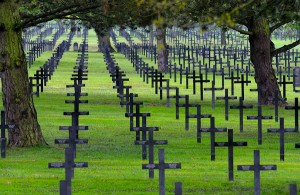
 I love this verse! I always think of it as Jesus’ version of “Don’t just stand there. Do something!”
 I am an absolutely faithful believer in the biblical concept of sabbath. I am also one of its worst offenders. No matter what day I choose to be my day “away from the office,” at least 50% of the time I will end up doing something work related. Today, for example, a Friday, is supposed to be my day off. What will I be doing? Giving my time to the church as a volunteer working on the refurbishment of the undercroft which is being converted to office space (laying peel-and-stick carpet tiles, to be precise). — This raises the interesting issue: “Can one volunteer at one’s place of employment?” I suspect the answer is “No” because whenever I am on the church property or in the church building I am “the rector,” not just some Joe who’s helping out.
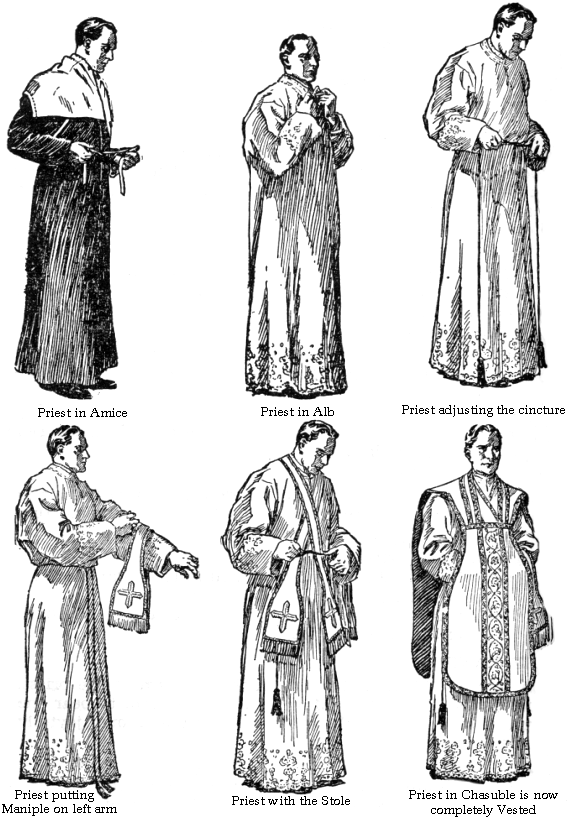 “In essentials unity, in non-essentials liberty, in all things charity.” This aphorism has been variously attributed to St. Augustine of Hippo, to Menno Simons the spiritual father of the Mennonites and the Amish, to Richard Baxter of the Moravians, and various others.

