From the Book of Exodus:
When all the people witnessed the thunder and lightning, the sound of the trumpet, and the mountain smoking, they were afraid and trembled and stood at a distance, and said to Moses, “You speak to us, and we will listen; but do not let God speak to us, or we will die.” Moses said to the people, “Do not be afraid; for God has come only to test you and to put the fear of him upon you so that you do not sin.” Then the people stood at a distance, while Moses drew near to the thick darkness where God was.
(From the Daily Office Lectionary – Exodus 20:18-21 – April 26, 2012)
 The rest of today’s Daily Office reading from the Hebrew Scriptures sets out the Ten Commandments. My first thoughts were of those and wondering whether the course of world history might have been different if the Lord had laid out those laws in an affirmative rather than a negative style. You know – said something like “You shall hold all life in reverence” rather than “You shall not murder” (Exod. 20:13) or “You will respect your neighbor’s right of possession” rather than “You shall not steal” (Exod. 20:15). But then the ending verses caught my eye and I immediately thought, “Incense!” ~ OK, not immediately … but I did think of incense and liturgy. Smoke and lightning and loud noises and a leader separated from the people to do special things vis-à-vis God (so the people don’t have to do them for themselves, because – God knows! – those things are downright dangerous!). Skip forward several generations and you have the liturgy of the Temple . . . skip forward several more generations and you have the liturgy of the Church. As I thought about today’s Exodus reading, I realized that the liturgy of temple and church is about recreating Sinai; liturgy is an attempt to experience in the here-and-now what the Hebrews experienced in this encounter with God. And I began to ask, “Is this what has put us on the trajectory of irrelevance and disbelief?” ~ The stagecraft of temple and church became the stagecraft of the theatre, of vaudeville, of burlesque, of the stage magician. There is very little difference between staging a good worship service and staging a good theatrical or musical production. Use of “props”, use of lighting, use of stage technique . . . it all started in the temple and the church, and was borrowed by the entertainment stage (in fact, one might argue that the Western European way of staging dramas and other forms of entertainment in some sense originated in the church with medieval “passion plays” and whatnot). And now, today, the flow is in the opposite direction: the staging techniques of the rock concert have replaced the formal liturgy in many independent congregations and so-called megachurches. This is so well-known that there’s even a very funny parody of the situation on YouTube. ~ When these techniques of stagecraft moved from church to secular stage, however, the reason for their use changed. No longer was the intent to recreate an experience of the holy, the numinous, the mysterium tremendum et fascinans, rather the intent was to deceive. Well, that may be overstating the initial change, but truly the secular stage’s use of “smoke and mirrors” is to create a fictional illusion of reality, and when used by magician’s its function is to mislead the observer. It is not without cause that the term “smoke and mirrors” has entered the modern lexicon! ~ So I began to wonder . . . even if we do really great job of staging the liturgy in all its glory – beautiful music, loud “noises” from brass and organ, lovely flowers and candles, the sweetness of incense, the splendor of colorful vestments – is all that stagecraft pointing toward God-at-Sinai, or is it raising a barrier of “smoke and mirrors”? Is a public, which now looks beyond stagecraft and understands that on the secular stage it masks that which is untrue, made skeptical by its use? I have to admit that I don’t know, but I wonder if today’s attitude toward religion, an attitude of disbelief and irrelevance, might not find some of its origin here. (On the other hand, I also have to admit that I don’t intend to stop celebrating the liturgy with as much care and good stagecraft as possible!)
 “Let it be so for now.” Acceptance of the status quo, even if only for a little while, is a hard thing for a change agent like John, but some times that’s what has to be done. Some time after this event, Jesus would use the metaphor of a mustard seed to describe the kind of faith that can accomplish great things. (Matthew 17:20; Luke 17:6) It’s a great metaphor because it reminds us of the need to follow the advice he gave here to John: “Let it be.” ~ As any gardner knows (and this is the time of year when gardners are reminded if they’ve forgotten), waiting and accepting the status quo is the essence of planting seeds. After all the fun and anticipation of choosing seeds from a catalog or garden-supply store, after the activity of preparing the soil, after making the hole for your seed, after covering the seed and watering . . . there is the waiting. If one is an impatient type of person, growing things from seeds is not the way to experience instant gratification. The worst thing about growing seeds is waiting for them to grow. But that’s what has to be done: “Let it be.” ~ Depending on what one has planted, the wait may be anywhere from five or ten days or to as much as six or eight weeks to germinate. Until then, you continue to water soil that just sits there looking the same. You hope for sunlight, because sunlight warming the soil is important to growth, but there’s not much you can do about that. So you water and you wait. It’s what has to be done: “Let it be.” ~ If a change agent like John can be patient, can make a small change and then accept the status quo for a little while, great changes can be wrought. Jesus used the seed metaphor another time. He said, “Very truly, I tell you, unless a grain of wheat falls into the earth and dies, it remains just a single grain; but if it dies, it bears much fruit.” (John 12:24) ~ Small change . . . patience . . . great change. “Let it be so for now.” And you may just hear the voice of God saying, “I am well pleased.”
 You’ve got to hand it to John the Baptizer! He sure knows how to warm up and relate to a crowd. ~ What is John saying by greeting his audience thus? Is John speaking to the Pharisees and the Sadducees at all, or rather to the rest of the crowd? Or, more likely, is Matthew (who here is repeating a line found also in Luke and who later puts these same words into Jesus’ mouth) saying something to us, his later readers? ~ I grew up with snakes. In the desert wilderness of southern Nevada, pit vipers (in the form of rattlesnakes) were common even our backyards. Rattlesnakes can be dangerous, but they are also cowards. A rattler prefers to remain motionless, hoping not to be noticed. If you come too close and corner it, it will rattle a warning and stand its ground. But rattlesnakes never pursue people; they would rather flee than fight. They prefer to “flee the wrath to come”; make them aware that you’re coming and they will slither away as quickly as they can. ~ The image Matthew’s Baptizer puts before us may be that of a fearful group scattering in all directions. On the other hand, when snakes are congregated in a large group where they cannot flee, they are very dangerous. It is noteworthy that John says, “You brood of vipers” not simply “You vipers”. To me, the word brood suggests a bunch of snakes all tangled up together (as in the picture accompanying this text). When rattlers are congregated like this, they can’t and don’t flee – maybe it’s a phenomenon of “safety in numbers” – they stick together in a writhing, deadly mass. ~ Who are the vipers today? Back then, it was the religious leadership and not just those of one “party”. John addressed himself to both Pharisees and Sadducees, both the “right” and the “left” of his day. Could it be that today’s “brood of vipers” are the leaders of the churches? Could it (in my own denominational tradition) be all of the bishops and leaders of the Anglican Communion who have spent too much time tangled up, hissing and rattling at each other about issues which truly are adiaphora to the Gospel of Jesus Christ? Could it be that John’s complaint was not that the Sadducees and the Pharisees were corrupt or evil, but that they were distracted and wasting their time and effort, that his ire was worked up because rather than be about the work of God they were too busy wrangling with one another over that which was extraneous and immaterial to that work? ~ John contrasts the “brood of vipers” to the “brood of Abraham”, reminding his listeners that God could “from these stones . . . raise up children to Abraham.” God was able to raise up in the church of Christ a brood for Abraham who were not of the lineage of the Jews. Has that brood, however, slipped into the same irrelevant behavior?
 Jethro, Moses’ father-in-law, has to have been one of the wisest men in all of Holy Scripture! What he advises Moses to do is nothing less that to delegate authority and responsibility. Delegation is one of the most important management skills. Good delegation saves time, develops people, grooms successors, and motivates subordinates. Poor delegation will causes frustration,confuses subordinates, discourages others, and leads to failure of purpose. Delegation is vital for effective leadership. Jethro seems to have known this and recommended it to Moses: “Look for able men among all the people, men who fear God, are trustworthy, and hate dishonest gain; set such men over them as officers over thousands, hundreds, fifties and tens.” (Exod. 18:21) ~ Here’s the thing, though, delegation means letting go! Once you have handed over authority, you cannot dictate what is delegated nor how that delegation is to be managed. Delegation means letting go and letting go is hard. Human beings, especially talented and successful ones, are reluctant to let go of the things we do well. It’s simply human nature. But refusal to hand-over jobs to subordinates minimizes our productivity and effectiveness. We need to learn to let go. That, by the way, is the message of Christ. Jethro anticipated Jesus: “Do not worry about tomorrow, for tomorrow will bring worries of its own. Today’s trouble is enough for today.” (Matt. 6:34) In other words, let go! ~ When I was in college there was a bumper sticker popular among church-going Christians of a particular sort. It read, “Let go and let God”. And I know it’s also a catch-phrase for twelve-steppers and apparently it works for them…. but I hated it then and I don’t like it any better now! I think it misinterprets and trivializes the Christian message, what it means to be an active and responsible Christian. Jesus, in fact, never tells us to “let go and let God”. “Letting go” in this catch-phrase seems to imply that one do nothing, say nothing, feel nothing, and accept responsibility for nothing. That is neither what Jesus said, nor what Jethro advised Moses! Jethro told Moses to continue to be involved: “Let them sit as judges for the people at all times; let them bring every important case to you, but decide every minor case themselves.” (Exod. 18:22) Every good manager knows that delegation doesn’t mean complete relinquishment of responsibility, and every good Christian ought to know that “letting go” doesn’t mean just shrugging everything off onto God’s plate! Yes, we need to learn to let go, but letting go means letting go of tension, anxiety, worry . . . not of all responsibility. God has high expectations of us! That bumper sticker catch phrase fails to acknowledge that. ~ The fellow who said “Do not worry about tomorrow . . .” is also the man who said “Beware, keep alert . . .”, the man who said “[When] you did it to one of the least of these who are members of my family, you did it to me.” (Mark 13:33; Matt. 2:40) We are not to abandon our responsibilities; we are to meet them in a non-anxious way in community working with others. That is what “letting go” means. That is what God expects of us; that is what Jethro advised Moses.
 In some ancient manuscripts of this “longer ending” of Mark’s Gospel the text above continues with the following response by the apostles: “And they excused themselves, saying, ‘This age of lawlessness and unbelief is under Satan, who does not allow the truth and power of God to prevail over the unclean things of the spirits. Therefore reveal your righteousness now’ – thus they spoke to Christ.” Jesus says a few nearly incomprehensible words about Satan’s power ending in this age and so forth, and then the text picks up with the received version’s comments about snake-handling and poison-drinking. ~ I absolutely love this first part of that addition: the fact that “they excused themselves” and that they demanded of Jesus “reveal your righteousness now”. I love it! It’s so darned modern . . . or maybe even post-modern. I can almost hear them saying something like, “Well, Jesus, that resurrection stuff may be true for you, but it’s not true for us!” Making excuses, making demands, relativizing the situation . . . these men aren’t just First Century Palestinian Jews; they are 21st Century Americans; they are US! ~ Well, actually, they aren’t. Where they differ is that after this confrontation with the Risen Christ, they got up off their duffs and went to work. “They went out and proclaimed the good news everywhere, while the Lord worked with them and confirmed the message by the signs that accompanied it.” (Mark 16:20) Very few excuse-making, demanding, relativizing, modern American church members do anything like that! ~ For nearly forty years, since Authorized Services, 1973 (a precursor to the current American Book of Common Prayer), at every baptism, the Episcopal Church has been asking its members if they will “proclaim by word and example the Good News of God in Christ” and those members have answered affirmatively, “I will, with God’s help.” However, when we discuss evangelism, inviting people to church, talking with others about one’s faith, and similar topics, it becomes painfully clear that very few of those Episcopalians are actually doing so. And it does no good to confront them with that failure; they excuse themselves, just like the apostles! And just like the apostles, many of them make note of the fact that they don’t see much response when they try, that God doesn’t seem to be helping much. ~ Maybe we need to confront God, just like the apostles . . . maybe we need to say to God, as the apostles said to their risen Lord, “Reveal your righteousness now.” After all, when they went out and spread the gospel “the Lord worked with them and confirmed the message” with “signs” . . . we could use a few signs right now. ~ Yesterday, I made mention here of those times when it’s hard to see Jesus, when we fail to recognize him. I think we must all admit that there are times like that, when we do not see God, when we cannot feel God’s presence, when God seems to be silent. One of the most important books I read while in theological study was Hope in Time of Abandonment (Seabury 1973) by the French Protestant philosopher Jacques Ellul. In it Ellul wrote, “Hope comes alive only in the dreary silence of God, in our loneliness before a closed heaven, in our abandonment . . . Hope is a protest before this God, who is leaving us without miracles and without conversions, that he is not keeping his Word.” Hope, said Ellul, is humanity’s answer to God’s silence and it is through prayer that we demand the fulfillment of God’s promise. ~ If God is not living up to God’s promise to support the work of Jesus’ present-day apostles with confirming signs, then perhaps we Episcopalians who excuse ourselves from fulfilling our promise in the baptismal covenant are not to be faulted. Perhaps, like those first apostles we should be demanding of God in Christ, “Reveal your righteousness now!” ~ On the other hand, if God is living up to God’s promises and we just aren’t seeing that . . . .
 “A little while, and you will no longer see me, and again a little while, and you will see me.” Say, what? I have to admit that I have the same reaction to what Jesus says here that the disciples seem to have – a sort of scratching of the head and wondering, “What the heck does that mean?” ~ On the other hand, when I read that statement what immediately comes to mind is that traveling carnival arcade game “Whack-a-Mole” – the one where the rodent pops up unexpectedly from holes and you’re supposed to hit it with a mallet! Undoubtedly, someone will tell me that I’m being blasphemous or sacrilegious or something, but the image that comes to my mind is that game with Jesus popping up out of the holes – “Now you see me. Now you don’t. A little while . . . you’ll see me again. Try to get me!” ~ And truly, that is the way Jesus sometimes “pops up” in my life. I see Jesus in the hungry who come to my church’s food pantry on Saturday mornings and in the volunteers who serve them, but then sometimes on Sunday I wonder where he is: “He was here yesterday. Why isn’t he here now?” Or sometimes, I do see him on Sunday morning in the wonder and glory of worship and in the fellowship among parishioners during coffee hour, but then on Monday I see folks I know driving less-than-courteously in what my daughter calls “gas guzzling SUVs” (confession: I drive one, too) and I wonder: “Where’s Jesus?” He pops up, I see him, he disappears, I don’t see him, a little while . . . there he is again. Like that darned rodent popping up in the game! ~ I know full and well that this is not what Jesus was talking about to the disciples. I know he’s talking about his crucifixion and his resurrection and his ascension; I know that . . . but I still see that “Whack-a-Mole” game in my mind’s eye! That’s one of the beauties of Scripture, that we can find applications of the text in situations that may not be exactly what the original story was about, but that are nonetheless related and valid. Jesus may have been talking about his immediate return in the resurrection, but he also returns in his community through the ages. The original disciples didn’t see him and then they did; church members today are still seeing him in many places and contexts. Sometimes we don’t, but then in a little while, we do. ~ I’m terrible at “Whack-a-Mole”, by the way. I have lousy reaction times with such things, always have – it’s why I was terrible at sports like baseball or tennis in elementary, junior high, and high schools. But I was good at shooting guns. I went to a military high school where we were required to pass Army ROTC firearms tests. I qualified as either a “marksman” or an “expert” with every weapon on which we trained. I was also pretty good at archery. Did you know that the New Testament word for “sin” comes from the sport of archery? It’s hamartia, which means “missing the mark”. Aristotle (384-322 BC) borrowed the term and used it in his Poetics to describe the “fatal flaw” in the hero of a dramatic tragedy; the writers of the New Testament then used it to mean “sin”. ~ So, sometimes I don’t see Jesus when I ought to. It’s not that Jesus isn’t there; it’s just that I don’t see him or if I do, like not reacting to the mole fast enough, I don’t recognize him. Like playing “Whack-a-Mole” and failing to hit the rodent, my reaction timing is just not right and I “miss the mark”. I sin by failing to “whack” when Jesus pops up! Therein lies the spiritual discipline to which this text calls me – to look, to recognize, to hone my reaction time, to respond quickly and affirmatively, and (if you’ll pardon some really blatant sacrilege) to Whack-a-Jesus!
  The early members of the church were prepared, I think, to be separated from the synagogue, to be cast out from Judaism, and to take the major step of becoming adherents of a new and distinct religion. The church members of the first few centuries were, I think, prepared to be persecuted, killed, martyred. Through their witness and the strength of their faith, the church overcame that separation and that persecution to become the most powerful institution in Western Europe; it was prepared to do that. That was, of course, a mixed blessing and there is a lot of historical debate about and some warranted condemnation of the church’s record as the established religion of empires and kingdoms. However, for 2,000 or so years the church, faced with and prepared for either persecution or power, flourished. ~ What the church was not and still is not prepared for is to be relegated to the sidelines, to be treated with indifference, to be seen as irrelevant to the lives of the people it is charged to reach (I’m thinking “Great Commission” here – Matthew 28:16–20). In other words, the church is not prepared for the contemporary, so-called post-modern world which it, in many ways, has helped to create. A recent book, The Millenials (B&H Books, 2011), claims that 70% of those born between 1980 and 2000 consider the church irrelevant to their lives. Meanwhile,
 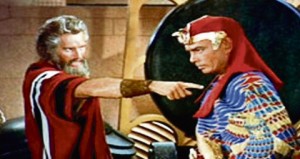 Why is Moses angry at Pharaoh? Moses (and God) have put the Egyptians through a series of miserable plagues. The people of the Nile valley have lived through water turning to blood killing all life in the river; invasions of frogs, lice, and flies; livestock diseases; painful, unhealing boils; hail and thunder; locusts; and unnatural darkness. Throughout the course of this series of events, there have been many times when Pharaoh seemed on the verge of releasing the Hebrews but then “the Lord hardened Pharaoh’s heart, and he did not let the sons of Israel go.” (Exod. 10:20) ~ Over the years, I’ve read a lot of commentary on this passage, the introduction to the slaughter of the first born which is context of the Passover. Wesley opined, “Moses hereupon was provoked to a holy indignation, being grieved, as our Saviour afterwards, for the hardness of [Pharaoh’s] heart.” Well, yeah, but who’s responsible for that? Over and over again the Scripture tells us it was God who hardened Pharaoh’s heart! Pharaoh’s not just obstinate, he’s manipulated into stubbornness by God himself! Why be angry at Pharaoh? ~ I don’t really think he is. I think he was mad at God…. ~ I think it’s OK to be mad at God. We have the freedom to express and respond to that emotion, to own up to our occasional anger with God. When parishioners come to me and “confess” being angry at God, I tell them it’s OK, that God is a big boy and can take their anger. The issue to be addressed is whether they can! Can they pray their anger honestly? Prayer is not always peaceful and serene and believing that ought to be can be a real obstacle to faith. But praying out one’s anger is unfamiliar territory; it feels awkward; it’s not much like any prayer we hear in church. ~ Do you remember the episode of The West Wing in which Pres. Bartlett’s secretary was killed by a drunk driver? Her funeral was held in the Washington National Cathedral (an Episcopal church, by the way). After the funeral, Bartlett stays behind in the quiet privacy of the cathedral to offer a personal prayer to God … not out of sadness or faith or hope. His prayer is offered out of anger. He begins by calling God a “son of a bitch” and a “feckless thug.” Then, good Roman Catholic that Josiah Bartlett was, he continued in Latin. Here’s what he said: “Am I really to believe that these are the acts of a loving God? A just God? A wise God? To hell with your punishments. I was your servant here on earth and I spread your word and I did your work. To hell with your punishments and to hell with you!” No amen – just a cigarette stamped out on the cathedral floor, after which Bartlett stalked out. Pretty clearly “in hot anger he left.” Praying our anger is not like any prayer we (usually) hear in church. ~ Scripture doesn’t tell us what Moses did in or with his anger, but we do know what followed. The story of Moses’ “hot anger” and what followed it affirms for us that anger, even anger at God, need not be destructive. It can be the source of a rebirth of hope; it can heighten our confidence in the future, and empower us to undertake the creation of a new reality. Appropriately and creatively channeled, anger, even anger at God, can lead us out of bondage and into freedom.
 I can’t read Paul’s words “treasure in clay jars” without thinking of this old Indian parable. ~ Once upon a time, there was a man who lived on a hillside high above the river. He had to fetch his water from the river every day. He did this with two large earthen jars slung from a yoke carried across his neck. The jars were heavy and it was a long path with many switchbacks down to the river, but the path was bordered by flowers and he didn’t mind the walk or the work at all. Both of the water jars were large and held several gallons, but there was a tiny crack in one so that the water would gradually leak out of that jar and splash on to the side on the path. The cracked jar was very sad that it lost half its water on the way back from the river each time. After many years the jar spoke to the man and apologized for being such a failure. “Why should you feel like that?” asked the man, ” I knew all about that crack; in fact, I made use of it.” “What do you mean?” asked the jar. “Well look,” he replied, “Do you see the flowers growing by the side of the path?” The jar looked and, sure enough, there were beautiful flowers growing all along the way. “Those flowers are there because I knew you had that small leak. I sowed some flower seeds along the side of the path and as I walked, the water leaking from your small crack watered them. For years now I’ve enjoyed those flowers as I walk, and I’ve been able to pick fresh flowers every day to decorate my home. I couldn’t have done that if you hadn’t watered them through that little crack. So, you see, I like you just the way you are. You are a very treasured water jar!” ~ Like the earthen jar carrying water, we carry in our cracked and faulty bodies the death of Jesus. And like the water that leaked from the jar, the life of Jesus flows out from us to accomplish his work in the world. This extraordinary power does not come from us, but we are the conduit (even and often when we don’t realize it). ~ As a preacher, I continue to relearn this each time someone refers to “something you said in a sermon”. I never remember my sermons! I look back on notes or scripted sermons from which I’ve preached and think, “Did I say that?” Apparently I did … and apparently it made a difference in someone’s life, watered some flowers along their path! So to preachers especially but to everyone, be assured – you are an earthen jar, probably a flawed one, carrying the death of Jesus in yourself that you may spread the life of Jesus to those around you, even though you may not realize it.
 Threading a needle…. That used to be a simple task for me. I was very, very near-sighted. I could barely see a school bus twenty feet away without my pop-bottle-bottom spectacles. But I could thread a needle! I could do anything that required close-up detail work; I had marvelous up-close vision. Then one day in 1995 (I think it was 1995) my mother saw my glasses. “Good Heavens! Are your eyes that bad?” – “Yes, Mother, they always have been.” – “Why don’t you have that Lasik surgery?” – “Because I can’t afford it, Mother.” – “You get it done. I’ll pay for it.” ~ (Side comment: My mother was a depression child born in 1919. As a result of spending her formative pre-teen and teen years in the years of the Great Depression, she was one of the most tightfisted people I’ve ever known when it came to spending money on herself or her spouse, my step-father. She would not spend a dime on her own healthcare, even when she felt badly. But she was generous to a fault with her children, her grandchildren, her friends, and her church. If she’d been less generous to us and more generous to herself, she might still be alive. But that’s another story.) ~ So I talked with my ophthalmologist, who had earlier been quite negative about PK and RK and other forms of keratotomy, and he thought Lasik would be a good option. He referred me to a surgeon. A couple of weeks later, I was able to do everything without glasses … everything except thread a needle. Now I needed a pair of dime-store “cheaters” to do what had once been easy, and even though I squinted and used those magnifying lenses I had difficulty. Getting anything through the eye of a needle, much less a camel, is no mean task! ~ About thirty years before that surgery, I visited the Cathedral at Chartres on my first trip to Europe. I was 16 years old at the time. I walked the labyrinth there. Since that first time I’ve walked many replicas of that deceptively simple path and other forms of labyrinth. Threading one’s way through the labyrinthine path requires concentration (especially in a cathedral full of tourists, but really at any time, even when completely alone). It is a careful endeavor not unlike threading a needle; one might even say it is a soulful endeavor. ~ Perhaps the most famous labyrinth in history or myth is the one built on Crete to house the Minotaur. King Minos’s daughter Ariadne fell in love with Theseus, an Athenian who was to be a sacrificial victim of the Minotaur. She gave Theseus a ball of thread to unwind as he made his way through the labyrinth, which showed him the path to by which he could leave once he had done battle with the beast (assuming he killed it, which he did). It was her thread of love which helped Theseus thread his way through the labyrinth. ~ Our walk through a spiritual labyrinth is said represent our way through life. Victor Hugo once said, “He, who every morning plans the transactions of the day, and follows that plan, carries a thread that will guide him through a labyrinth of the most busy life.” I’m not so sure that’s true, however; plans are too often subject to change! Like the odd turnings of the Chartres labyrinth, we meet with obstacles which change our direction; when we seem to be headed for our goal, suddenly the way changes; even though we squint and use magnifying glasses, the way through is unclear. We may not be able to follow our plans and we may not see the way ahead, but we are threaded through the unexpected and unknown path of life if we trust and rely on God’s guidance. Like Ariadne’s thread of love, God’s love threads us through life’s labyrinthine ways. Following God’s guidance is a careful, soulful endeavor, but “with God all things are possible.”

