Jesus said….
The sower sows the word. These are the ones on the path where the word is sown: when they hear, Satan immediately comes and takes away the word that is sown in them. And these are the ones sown on rocky ground: when they hear the word, they immediately receive it with joy. But they have no root, and endure only for a while; then, when trouble or persecution arises on account of the word, immediately they fall away. And others are those sown among the thorns: these are the ones who hear the word, but the cares of the world, and the lure of wealth, and the desire for other things come in and choke the word, and it yields nothing. And these are the ones sown on the good soil: they hear the word and accept it and bear fruit, thirty and sixty and a hundredfold. (From the Daily Office Readings, Mar. 7, 2012, Mark 4:14-20)
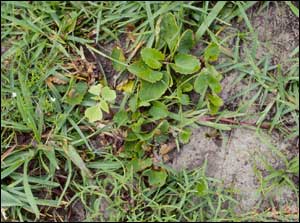 Priests and preachers are sowers of the seeds of the gospel, but we are called to do more than simply cast the seed on the ground. Many of us are called to the additional tasks of clearing rocks, tilling the soil, watering and fertilizing, fencing the field, pulling weeds, chasing away pests, and so forth. Paul wrote to the Corinthians, “I planted, Apollos watered, but God gave the growth. You [the church or the unchurched in the mission field] are God’s field.” (1 Cor. 3:6,9) He might have carried the analogy further (as I have done). The analogy breaks down, of course, because weed-choked soil cannot relieve itself of weeds nor can rocky soil relieve itself of stones, but human beings influenced by “the cares of the world, and the lure of wealth, and the desire for other things” can turn from these things. The Lenten “fast” is a time and a mechanism whereby we may make the conscious effort to do so.
 Only a little bit of yeast is necessary to leaven a whole batch of dough. In ancient Judaism, leaven could not be offered on the altar: “No grain offering that you bring to the Lord shall be made with leaven, for you must not turn any leaven or honey into smoke as an offering by fire to the Lord.” (Leviticus 2:11) Although this prohibition is repeated elsewhere, the Hebrew Scriptures not say why leaven is forbidden. A popular theory is that it is because leaven spoils and corrupts. The Babylonian Talmud uses the image of “yeast in the dough” as a metaphor for “the evil impulse, which causes a ferment in the heart”; the commentary in the Anchor Bible refers to leaven as “the arch-symbol of fermentation, deterioration, and death and, hence, taboo on the altar of blessing and life.” St. Paul, steeped as he was in Jewish learning, used leaven as a metaphor for sin and its insidious ability to infect an entire community such as a church congregation. No amount of sin may be safely tolerated in the community of faith for sin spreads. So our Lenten discipline of self-examination must include an evaluation of our church communities and, says Paul, if we find any among us who is “sexually immoral or greedy, or is an idolater, reviler, drunkard, or robber” we are to “drive out the wicked person from among [us].” These are harsh words that Paul quotes from several places in the Book of Deuteronomy, e.g., Deuteronomy 17:7; 19:19; 21:21. We should temper his admonition with the encouragement of Christ in Matthew’s Gospel: “If another member of the church sins against you, go and point out the fault when the two of you are alone. If the member listens to you, you have regained that one. But if you are not listened to, take one or two others along with you, so that every word may be confirmed by the evidence of two or three witnesses. If the member refuses to listen to them, tell it to the church; and if the offender refuses to listen even to the church, let such a one be to you as a Gentile and a tax collector.” (Matt. 18:15-17) Correction is always preferable to expulsion! As the Ash Wednesday absolution in The Book of Common Prayer reminds us, God’s preference is that sinners “turn from their wickedness and live.” During this Lent, clean out the old leaven of malice and evil, and encourage one another to keep in mind “the need which all Christians continually have to renew their repentance and faith.”
 In this bit from his First Letter to the Church in Corinth, St. Paul nails the Corinthians with sarcasm. Apparently they had been bickering among themselves about who was the most spiritually advanced and some had even boasted that they had grown beyond their teachers, Paul and Apollos. So Paul sardonically congratulates them that they have already achieved every spiritual goal and climbed every spiritual mountain. Paul cynically suggests that he wishes to ride their coattails into glory without the painful cost of obedience that mere mortals must pay. I admire Paul’s willingness to be confrontational with this congregation, but I often find myself unable to do so in my own ministry setting – and I would suspect that I am not alone among clergy. Influenced as we are by our society’s consumer mentality it is all too easy to analyze and evaluate our ministries according to some standard of marketability, but a priest must never forget that popularity with a parish is not proof God’s favor and blessing; clergy are accountable to God not to some corporate-culture inspired performance evaluation. We must struggle not to substitute human approval for obedience to God. In the end, this is true of everyone, not just of clergy. During these weeks in which we are invited “to the observance of a holy Lent, by self-examination and repentance,” it is well to ask who it is we are trying to please, the world around us or God?
 This is one of my favorite bits of theology from St. Paul! This portion of the Letter to the Romans is also in the Epistle Lesson for the Great Vigil of Easter in the Episcopal Church’s lectionary. I love the certitude with which Paul writes: “We will certainly by united with him!” For Paul this is incontrovertible! The Greek word translated “certainly” is alla which has the additional meaning of “nevertheless” or “notwithstanding” – in other words, there is nothing that can stand in the way of our resurrection with Christ. I am reminded of another favorite passage from Paul’s letter to the Roman church: “For I am convinced that neither death, nor life, nor angels, nor rulers, nor things present, nor things to come, nor powers, nor height, nor depth, nor anything else in all creation, will be able to separate us from the love of God in Christ Jesus our Lord.” (Rom. 8:38-39) As we spend these weeks of Lent in self-examination and introspection, this is well worth remembering. No matter what faults or flaws we may think we find in ourselves, nothing, absolutely nothing can stand in the way of the loving relationship God desires with each of us.
  St. Paul gave this assurance of God’s commendation to the Corinthians in a discussion which included this reminder, “For all things are yours, whether Paul or Apollos or Cephas or the world or life or death or the present or the future – all belong to you, and you belong to Christ, and Christ belongs to God. Think of us in this way, as servants of Christ and stewards of God’s mysteries.” (1 Cor. 3:21b-4:1) In other words, it’s all about relationship, and how we manage and maintain our relationships will be the basis of God’s judgment. Eugene Peterson in his The Message paraphrases these words, “You are privileged to be in union with Christ, who is in union with God.” It is our relationship, our union with God in Christ that Paul describes as “God’s mysteries.” I recently read another blogger’s suggestion that the way to enhance intimacy in a relationship was to maintain some mystery in it. I believe that blogger is right and that our mysterious relationship with God is the most intimate relationship possible. Lent is a time to explore the mysteries of your relationship with God in Christ, to bring to light things in darkness and to disclose the purposes of both your heart and God’s.
 Although I’ve seen this text used (with others) as the foundation for what used to be called “muscular Christianity” (the idea that individual pursuit of physical strength and health are part of the proper Christian life), this text does not state that an individual person is a temple, but rather that a congregation of Christians forms a temple of the Spirit; the pronoun “you” in these verses is in the plural! The first sentence of verse 17 places God’s ultimate condemnation on any individual that damages or destroys a congregation through internal strife or bickering. A congregation of Christians is holy, and its holiness is not to be treated lightly by its members. They should treat one another with respect and dignity, even in the face of disrespect and wrongful treatment. Remember Christ’s admonition to Peter to forgive a brother or sister seventy times seven times. (Matthew 18:22) Paul here shares a metaphor with Peter who wrote to the whole church that all members should, “like living stones, let yourselves be built into a spiritual house.” (1 Peter 2:5) Of course, before stones can be built into a temple, they must be formed and fitted; they must be measured and squared. As living stones, we have the obligation (especially during this season of Lent) to perform this work on ourselves; we are called to do so by responding to God’s grace in Christ Jesus, who is the foundation of our spiritual house, by spiritual growth, faithful living, and testimony to the world. All of that and forgiveness one to another! It is not easy being a living temple! It’s hard work!
 According to the grace of God given to me, like a skilled master builder I laid a foundation, and someone else is building on it. Each builder must choose with care how to build on it. For no one can lay any foundation other than the one that has been laid; that foundation is Jesus Christ. Now if anyone builds on the foundation with gold, silver, precious stones, wood, hay, straw – the work of each builder will become visible, for the Day will disclose it, because it will be revealed with fire, and the fire will test what sort of work each has done.
  We speak God’s wisdom, secret and hidden, which God decreed before the ages for our glory. None of the rulers of this age understood this; for if they had, they would not have crucified the Lord of glory. But, as it is written, “What no eye has seen, nor ear heard, nor the human heart conceived, what God has prepared for those who love him” – these things God has revealed to us through the Spirit; for the Spirit searches everything, even the depths of God. (From the Daily Office Readings, Feb. 29, 2012, 1 Corinthians 2:7-10)
 God chose what is foolish in the world to shame the wise; God chose what is weak in the world to shame the strong; God chose what is low and despised in the world, things that are not, to reduce to nothing things that are, so that no one might boast in the presence of God. (From the Daily Office Readings, Feb. 27, 2012, 1 Corinthians 1:27-29)
 For the message about the cross is foolishness to those who are perishing, but to us who are being saved it is the power of God. For it is written, “I will destroy the wisdom of the wise, and the discernment of the discerning I will thwart.” (From the Daily Office Readings, Feb. 27, 2012, 1 Corinthians 1:18-19)

