====================
This sermon was preached on the First Sunday of Advent, December 1, 2013, at St. Paul’s Episcopal Church, Medina, Ohio, where Fr. Funston is rector.
(The Revised Common Lectionary, Advent 1A: Isaiah 2:1-5; Psalm 122; Romans 13:11-14; and Matthew 24:36-44. These lessons can be read at The Lectionary Page.)
====================
 Friday was a Holy Day in America! It was a day when all across the nation thousands, if not millions, of people breathed prayers of thanks. It was a day when all across the nation thousands, if not millions, improved the lives of many, many others. It was a day when news organizations from the smallest local radio station to international broadcast and cable conglomerates asked Americans across the nation, “How did you participate?” Yes, Friday was a Holy Day in America!
Wait! Did he say, “Friday?” Yes, he said, “Friday.” It was Black Friday. The day on which, we are told, retailers whose businesses have been operating at a loss all year long finally find themselves making a profit, when the ink on the ledger changes (in accounting tradition and terminology) from red to black. The thousands, possibly millions, uttering those thanksgivings were the managers, executives, Chief Executive Officers, financial officers, accountants, stockholders, and owners of retail concerns from smallest local boutique to the largest retail chains. Those thousands, possibly millions, who improved the lives of those retail owners and managers were the shoppers, the consumers, the buyers of bargains who . . .
In Odessa, Texas, trampled an 8-year-old boy and got themselves pepper-sprayed by store security in a mad rush to tear open a WalMart pallet of bargain-priced tablet computers.
* * *
In Las Vegas, Nevada, another shopper in the leg during a struggle over a bargain TV in a Black Friday sale at Target.
* * *
In incidents in Virginia and California, stabbed and slashed each other with knives in their efforts to get at sale-priced merchandise.
And they all did it in celebration of the birth of our Lord and Savior Jesus Christ. Or so those news organizations, from the smallest radio station to the international broadcast and cable conglomerates, tell us — this is all a part of “the Christmas Season.”
Somehow, though, I think we can be fairly sure that this isn’t what the Prophet Isaiah had in mind when he wrote:
Come, let us go up to the mountain of the LORD,
to the house of the God of Jacob;
that he may teach us his ways
and that we may walk in his paths.
Nor is it what St. Paul had in mind when he wrote:
Let us live honorably as in the day, not in reveling and drunkenness, not in debauchery and licentiousness, not in quarreling and jealousy.
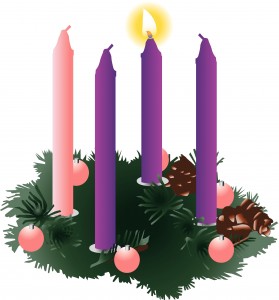
Yes, the church has a rather different understanding of what we should be about during these days leading up to the celebration of the Messiah’s birth. Contrary to what the retail advertisers and the international news conglomerates tell us, this is not “the Christmas season.” This is the season of Advent. These four weeks or so leading up to Christmas Day are a time when the church bids us, as we make our preparations to celebrate the Messiah’s Birth, also to more consciously prepare for the his return. To ask ourselves a question . . .
But the question for Advent is not “When will Jesus come back?” Although the Scriptures continually remind us that one day God will, in Isaiah’s words, “judge between nations and shall arbitrate for many people,” Jesus reminds us that “about that day and hour no one knows.” So we must “keep awake” because we “do not know on what day [the] Lord is coming.” “The Son of Man is coming at an unexpected hour.” No, the question is not about when (or even if) the Messiah will return.
We all know that preparing to celebrate the birth of Christ is not a once-and-done thing. We do it again and again and again, every year. Sometimes we make mistakes doing it — We invite the wrong co-worker to our open house . . . next year we won’t do that again! We try using gorgonzola cheese in the stuffing . . . won’t do that again! Sometimes something new turns out to be something we want to do again — Apollo’s Fire’s Christmas vespers was lovely; we’ll take that in again next year. Going to church is great; let’s do that again soon! It’s not once-and-done; it’s something we do again and again and again.
Preparing for the Messiah’s return is also not a once-and-done thing. It’s something we have to work at and be ready at any time. This is what Jesus is saying when says that “two will be in the field; one will be taken and one will be left. Two women will be grinding meal together; one will be taken and one will be left,” or when he reminds us that “if the owner of the house had known in what part of the night the thief was coming, he would have stayed awake and would not have let his house be broken into.” It’s not that those things will happen at the end of time when he returns, but rather that they can happen at any time and, therefore, one must always be prepared. We must, in fact, always be preparing. We are to stay awake, to watch for signs of God’s activity in the world.
No, the question is not about when (or even if) the Messiah will return.
On the First Sunday in Advent, we are called upon to take our God and ourselves seriously. We are called upon to recognize that life can be changed, possibly even ended in an instant and to live our lives accordingly.
I was reminded earlier in the week by an old colleague from Kansas about something our bishop, the Rt. Rev. Bill Smalley, often said when we would gather as clergy. He liked to say that each order of the clergy, deacons, priests, and bishops, had a particular “iconic ministry.” Priests, in particular, he would say are the “icons of the story.” The role of the priest, in Bishop Smalley’s estimation, is to tell the story of God, the story of God’s People, the story of Jesus . . . to tell the story again and again and again. My colleague said, “Throughout the church year our worship tells the story over and over without much thought about how we live our lives, how we live in the Kingdom of God. We say we gather to praise God, but in truth we gather to tell the story, over and over. Our praise of God is in our lives.” And so, my old colleague suggested, a person who truly believes the story should ask him- or herself, “How does a person who believes this story live and praise God?”
That strikes me as a really good question to ask oneself during Advent, “How does a person who believes this story live?” Isaiah’s answer was, “they shall beat their swords into plowshares, and their spears into pruning hooks; nation shall not lift up sword against nation, neither shall they learn war any more.” St. Paul’s answer was, “Make no provision for the flesh, to gratify its desires.”
How does a person who believes this story live? It’s not a question that I can answer for you, but it is a question we can explore together and find answers that work for each of us, though our answers may not be exactly the same. And we may find answers that work for us today but won’t be right next year. It’s not a question with a once-and-done answer.
I was reading through a list of “things you can do for Advent,” things like read a chapter of Holy Scripture every morning, or reconnect with five old but not recently contacted friends, or reach out to a new charity. They were all good suggestions, but the one that particular rang a bell for me this year was to take five minutes every morning and make a list. Not a Christmas list of things to buy, or things to do, or things you want. Make an Advent list list of 24 blessings in your life, it could include the people you love, the people who love you in spite of yourself, the signs you recognize of God’s presence in your life. After you’ve made your list, each day in Advent pray a prayer of thanks for one of the things on the list.
That made sense to me this year because for me, this year, the answer to ” How does a person who believes this story live?” is “With gratitude.” And then my friend Mary Frances Schjonberg shared her sermon for this morning and in it introduced me to a poet new to me, Gunilla Norris. She is a psychotherapist who describes her work as “the practice of spiritual awareness in the most mundane and simple of circumstances.” In a poem called Polishing the Silver, she prays for the gift of gratitude:
As I polish let me remember
the fleeting time that I am here. Let me let go of
all silver. Let me enter this moment
and polish it bright. Let me not lose my life
in any slavery – from looking good
to preserving the past, to whatever idolatry
that keeps me from just this –
the grateful receiving of the next thing at hand.
Remember, it’s not Christmas yet. It’s Advent and Advent asks a question: “How does a person ‘keep awake’ because we ‘do not know on what day [the] Lord is coming?'” How does a person who believes this story live? Poet Norris suggests a pretty good answer to consider: By gratefully receiving the next thing at hand. Amen.
====================
A request to my readers: I’m trying to build the readership of this blog and I’d very much appreciate your help in doing so. If you find something here that is of value, please share it with others. If you are on Facebook, “like” the posts on your page so others can see them. If you are following me on Twitter, please “retweet” the notices of these meditations. If you have a blog of your own, please include mine in your links (a favor I will gladly reciprocate). Many thanks!
====================
Father Funston is the rector of St. Paul’s Episcopal Church, Medina, Ohio.
 Black Friday. The day after Thanksgiving Day in the United States. A day whose name comes from financial accounting and the ancient practice of recording profits in black ink, losses in red. Supposedly, at one time, this was the day when retail merchants who might have been running “in the red” the whole year would see themselves “in the black” at long last. I don’t know if that is still the case, but the name has stuck. Black Friday is the day after Thanksgiving Day.
 I had to read the first line of this familiar parable three or four times this morning before my eyes (it had to be my eyes; it couldn’t have been my brain) focused well enough to properly read the word landowner. On first reading, I read it as lawnmower.
  Obadiah’s words (on behalf of God) are directed to the Edomites; this short (one-chapter) book is a rather dire prediction of the complete destruction Edom for the way it had dealt with Israel. Apparently it was correct for there seem to be no Edomites, nor any descendants of Edomites identifiable in the modern world.
 I will go on record has being not an adherent of the ransom theory of the Atonement, which holds that the death of Christ was a ransom sacrifice in satisfaction for the bondage and debt on the souls of humanity as a result of inherited sin (another theory, “original sin,” with which I have some strong debate). It is unclear to me exactly who is the recipient of the ransom. Depending on who is setting out the argument, the ransom is usually said to have been paid either to Satan, which I think makes the ol’ devil rather bigger than he ought to be, or to God the Father, which makes the Almighty considerably less than we ought to think of God.
 Read it carefully, it’s not what you think it is. It’s not what you expect. It’s not a call to make agricultural implements out of the weapons of war . . . it is quite literally the opposite!
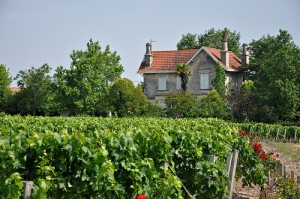 This part of Isaiah was written shortly after the return of the Jewish exiles from Babylon, which Cyrus of Persia had allowed in the middle of the 6th Century BCE. Isaiah (on God’s behalf) was promising two things with these images of laborers enjoying the fruits of their own efforts: first, that the people would no longer be (if not slaves) subjugated workers of foreign (or domestic) overlords and, second, that there would be peace. Israel’s and Judah’s history had been one of regular (if not constant) upheaval with invaders coming in and taking control of the vineyards and seizing the people’s lands and homes: the simple planting of vineyards with an expectation of enjoying the crop was a metaphor of peace and security.
  Today is the 50th anniversary of the assassination of President John F. Kennedy. Like everyone who was even marginally grown up or conscious on that day, I know exactly where I was and what I was doing when it happened. It is one of those moments in time that are surreal in their clarity.
  I’m following a thread on a friend’s Facebook page about the future of the “institutional church,” by which I think the various participants mean their several denominations. (We are Episcopalians, Methodists, Presbyterians, Lutherans, etc., all of whom seem primarily to identify as Christians and only secondarily with the variety of polities, theologies, liturgical styles, and so forth we each prefer.) I suggested in the discussion that creating institutions is in the very nature of human beings; we create them, criticize them, tear them down, reform them, and recreate them, but we never escape from them. Another participant in response said, “I do not create community.”
 “You shall draw water with rejoicing from the springs of salvation.”

