 Today is the first Sunday in November which means that instead of the normal sequence of lessons for Ordinary Time, we are given the option of reading the lessons for All Saints Day, which falls every year on November 1. So today we heard a reading from the Wisdom of Solomon (a part of the apocrypha in which we hear that the righteous are in the hand of God), a psalm reminding us that the saints pledge themselves to truth rather than falsehood, a bit of the Book of Revelation describing the “new Jerusalem” where God will make God’s home with the saints, and (oddly enough) to the story of the raising of Lazarus in John’s Gospel.
Early in my meditations and study for preaching today, I thought I would explore with you the meaning of these various readings, but the more I thought about the less I wanted to do that.
So, instead of dealing with these bits of the Bible right now, what I’d like you to do is come with me for a drive. Let’s just set the Bible aside and go get in our car and head off down the road. It’s a country road, a hard-pack dirt country road out in the farm country. We’re taking a country drive on a fine, beautiful spring day. It’s been raining, just like it’s been doing here for the past week, but it’s not raining now.
 Five weeks ago we began our month long journey through the world of bread with what Presbyterian scholar Choon-Leon Seow called the “remarkably mundane” story of food for the hungry, the feeding of the 5,000.
 In 2014, Evie and I were privileged to join a group of other pilgrims from Ohio and Michigan and spend not quite three weeks in Palestine and Israel visiting many of the sites we hear about in the Bible, especially the Christian holy places of the Gospel stories. One of those was a hilly place overlooking the Sea of Galilee called Tabgha. Until 1948, when the Israelis uprooted its residents, a village had been there for centuries; now it is simply an agricultural area and a place of religious pilgrimage.
 In today’s gospel lesson from the sixth chapter of Mark, Jesus has come home to Nazareth immediately after last week’s two stories of healing. Apparently he is there for at least a few days and when the Sabbath comes he does as he has done elsewhere: he goes to the synagogue. In Luke’s version of this story, Jesus is given a scroll from the prophet Isaiah and reads from it:
 Our Old Testament lesson this morning is a very small bit of the Book of Job, that really sort odd bit of Biblical literature that tells the story of a wager between God and Satan. Some scholars believe that it may find its origins in an earlier Babylonian work known as the Poem of the Righteous Sufferer, that the Jews in Exile became familiar with the older Babylonian story and adapted it to their own theology.
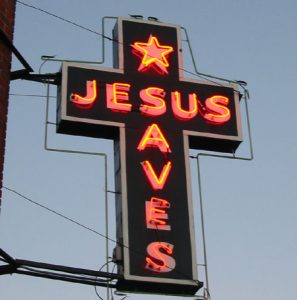 Our kids this week have been “Shipwrecked,” but they’ve also been “rescued by Jesus.”
 For recreational reading these days, I’m into a novel entitled Winter of the Gods.

