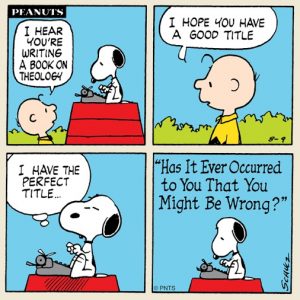
When a couple gets married in the Episcopal Church, our canon law requires that they spend some time in pre-marital counseling, usually with the priest who will preside at their wedding. That didn’t happen in this case. I’ve spent no time helping P____ and L____ to build a strong foundation for their marriage; we haven’t talked about the theology of Holy Matrimony, or about communication, or conflict resolution skills, or any of the key issues of married life like dealing with finances, children, and extended family. No, my colleague the Rev. Lisa _______ did all of that. She was supposed preside today, but a member of her family announced that they were getting married today, so she asked me to step in, so it’s my privilege to witness and bless P_____ and L_____’s union.
 In any event, I know that Mother Lisa has been over all of that with them, so this sermon is not for them. It’s for you, their family and friends; it’s about their marriage, but it’s for you.
If you were raised in the church you probably went through confirmation classes at some point and had to learn some bits of the catechism. You may remember learning about the Sacraments; there are seven of them. Holy Baptism and Holy Communion are the big ones, the ones Christ himself established. Then there are five others which the church created under, we believe, the guidance of the Holy Spirit. One of those five is the Sacrament of Holy Matrimony.
 Do you all know what a tort is? Tort … T-O-R-T … no E on the end; I’m not talking about those wonderful little German or Austrian pastries. A tort is a civil wrong that causes harm to another person, resulting in legal liability for the person who commits the wrong. You leave a puddle of milk on the floor of your grocery store knowing it’s there, then someone slips in it and injures themselves: you have committed a tort. You speed through a stop sign, collide with another car, and injure the driver: you’ve not only broken the law, you’ve committed a tort.
 Again this week as last, our first reading today is from the First Book of Kings and like last week’s, it is a prayer spoken by King Solomon. Last week, it was a private prayer spoken in a dream late at night. Today, it is a public prayer. As long as it was, this reading is just a small part of the dedicatory prayer that Solomon offered when the Temple was finished and consecrated. In it, Solomon asks an important question, “[W]ill God indeed dwell on the earth?”
 When I find myself in times of trouble,
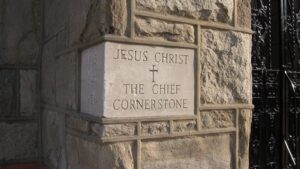 This is the second of three Sundays during which our lessons from the Gospel according to Matthew tell the story of an encounter between Jesus and the temple authorities. Jesus has come into Jerusalem, entered the Temple and had a somewhat violent confrontation with “the money changers and … those who sold doves,”
 When I was a sophomore in college, I lived in a dormitory suite with nine other guys: six bedrooms, two sitting rooms, and a large locker-room style bathroom. About mid-way through the first semester, one of our number, a 3rd-year biochemistry major, suggested that set up a small brewery in one of the sitting rooms. We all read up on how to make beer and thought it was a great idea; so we helped him do it. It takes three to four weeks to make a batch of beer, so over the next few months we made quite a bit of beer.
 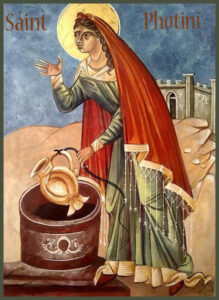 We “boast in our sufferings,” writes Paul to the Romans, “knowing that suffering produces endurance, and endurance produces character, and character produces hope, and hope does not disappoint us….”
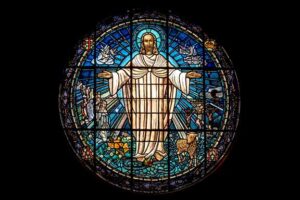 It’s the last Sunday of the Christian year, sort of a New Year’s Eve for the church. We call it “the Feast of Christ the King” and we celebrate it by remembering his enthronement. Each year on Christ the King Sunday we read some part of the crucifixion story. As Pope Francis reminded the faithful in his Palm Sunday homily a few years ago, “It is precisely here that his kingship shines forth in godly fashion: his royal throne is the wood of the Cross!”