From the Letter to the Colossians:
Epaphras, who is one of you, a servant of Christ Jesus, greets you. He is always wrestling in his prayers on your behalf, so that you may stand mature and fully assured in everything that God wills.
(From the Daily Office Lectionary – Colossians 4:12 (NRSV) –May 12, 2014)
 “Wrestling in his prayers” seems such an odd turn of phrase! Aren’t prayers supposed to be peaceful? The image of prayer as athletic competition (and vigorous, muscular, and very personal competition, at that) just seems contradictory. But the contradiction calls to mind two thoughts.
The first is that I remembered Jacob: “Jacob was left alone; and a man wrestled with him until daybreak. When the man saw that he did not prevail against Jacob, he struck him on the hip socket; and Jacob’s hip was put out of joint as he wrestled with him.” (Gen 32:24-25)
Doing early morning study of Koine Greek is probably a mistake . . . but I wondered, “Does Paul use the same word to describe Epaphras as the Septuagint uses to describe Jacob?” Short answer — no. Long answer — In Genesis, the wrestling contest is described using the word palaío; in Colossians, the word is agonizomai. The former is specific; the latter refers in general to athletic competition and may also mean “to struggle” or “to labor.”
Nonetheless, I wonder if Paul is calling Jacob’s late-night wrestling match with God to mind. If Jacob’s dream-time contest is a metaphor for prayer (and I think it is), then there is a striking contrast between first-party prayer (petition) which leaves the supplicant limping, and third-party prayer (intercession) which permits the subject to “stand mature and fully assured.” I don’t know what to make of this. Is there a suggestion that the prayers of others are more effective for our well-being than our own?
An Indian guru once said, “Prayer is not asking. It is a longing of the soul. It is daily admission of one’s weakness.” Was Jacob’s hip put out of joint by his encounter with God? Or was it always out of joint and the encounter merely led to a recognition or an admission of that fact? Prayer for oneself always does, in my experience, bring one up face-to-face with one’s own inadequacies. And, I have to say, I rely much more upon the prayers and prayerful support of others than upon my own. So perhaps there is something in the contrast Paul may be making.
The second, unrelated thought, is how often I struggle to find the “right words” with which to pray, both in private meditation and in public worship. As a priest, I am often asked to pray in public and, when that happens, I am grateful that, as an Episcopalian, I have been steeped in the language and cadences of The Book of Common Prayer. When I cannot think of anything original to say, I can rely on the prayerful words of generations of Anglicans and, from memory of the prayer book’s beautiful phrases, cobble something quickly together.
It is not always so in my private devotions. But that same Indian guru said of prayer, “It is better in prayer to have a heart without words than words without a heart.” So if my struggle to find the right words is unsuccessful, I just let it go and sit quietly, sure that God will understand me.
====================
A request to my readers: I’m trying to build the readership of this blog and I’d very much appreciate your help in doing so. If you find something here that is of value, please share it with others. If you are on Facebook, “like” the posts on your page so others can see them. If you are following me on Twitter, please “retweet” the notices of these meditations. If you have a blog of your own, please include mine in your links (a favor I will gladly reciprocate). Many thanks!
====================
Father Funston is the rector of St. Paul’s Episcopal Church, Medina, Ohio.
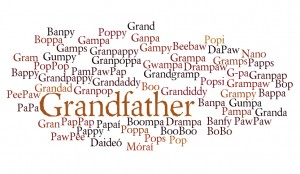 Sometime this fall, probably during October, my wife and I will become grandparents for the first time. Last night, a friend asked, “What will you be called?” Because the question came out of the blue (we hadn’t been discussing children or grandchildren), I didn’t know what he was asking — and my face must have shown it. “As grandfather,” he clarified, “what will you be called as a grandparent?”
 ADDED LATER: Oops!!! I just realized late on May 9 that I had read the lessons for May 10 one day ahead of time. This lesson is actually for the next day . . . . mea culpa, mea culpa, mea maxima culpa! Apologies, faithful readers!
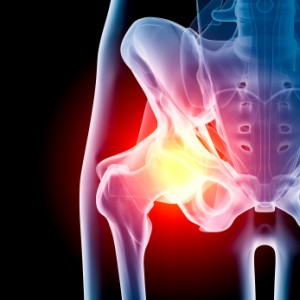 Today, the Feast of Dame Julian of Norwich, is the 24th anniversary of my ordination to the diaconate. I am spending it, at least the morning, in the company of several fellow presbyters and a few deacons at a clergy conference. I am also spending it in some discomfort because yesterday morning I slipped and fell in the hotel bath; I wrenched my back and it appears I did something (only soft-tissue-ish, I hope) to my right hip.
 The Gospel lesson today is the baptism of Jesus as told by Matthew. With it, for the evening, is coupled a portion of Psalm 119 which includes this verse. This image of a soul clinging to the dirt caught my attention. I wonder if baptism is efficacious if the soul being baptized steadfastly and stubbornly “cleaves to the dust” of its pre-baptismal life.
 John the Baptizer is speaking to the Pharisees and the Sadducees, warning them against the very common human practice of relying upon the piety of our forebears instead of practicing our own faith. Relying on the religion of our ancestors is weakens and attenuates our own spirituality. One might as well be rocks lying by the roadside.
 Apparently Moses didn’t learn anything from his experience at the battle with Amelek when he needed Aaron and Hur to hold up his hands, so his father-in-law Jethro has to remind him that he can’t do it all alone and that, if he tries to do so, he will wear himself out. Smart man, Jethro!
 At first blush, this just feels like another unbelievable story of religious ritual and “magic hands.” It fits neatly into the pattern of war stories one finds in the Torah that are attributed to the Deuteronomist. For that writer, the Hebrews’ victory in battle always depends not on military preparation, strength of arms, or fighting skill, but on ritual exactitude — perform a religious ritual properly and you win, flub it and you lose.
 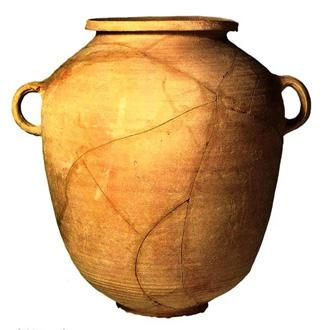 An ephah is a bushel, about 35 liters. Ten ephahs make a homer; a tenth of an ephah is an omer. (I’ll bet that was sometimes confusing.) So an omer is 3.5 liters, just a little bit shy of a gallon.
 Two days ago we celebrated the Feast of St. Mark the Evangelist and the Gospel lesson for use at the Eucharist was the opening of his Gospel which relates the story of Jesus’ baptism following which, Mark says, “the Spirit immediately drove him out into the wilderness,” (Mk 1:12) so the word “wilderness” caught my attention today.

