From John’s Gospel:
The next day the great crowd that had come to the festival heard that Jesus was coming to Jerusalem. So they took branches of palm trees and went out to meet him, shouting,
“Hosanna! Blessed is the one who comes in the name of the Lord – the King of Israel!.”
(From the Daily Office Lectionary – John 9:12-13 – September 18, 2012)
 We are living through a presidential election campaign in the United States. It seems to have been going on for ever, and the political ads and the news coverage of the candidates are increasing in intensity and in frequency. Pollsters take the public’s political pulse; commentators analyze the polls; the public reacts to the analysis; the pollsters re-poll the public. It’s a system of pendulum swings that feeds upon itself and oscillates back and forth. Flip-flopping candidates are matched by a flip-flopping electorate, and the candidates, their surrogates, and the commentators all decry the fickleness of the crowd.
But there is nothing new in a vacillating crowd, just look at today’s story of Jesus’ triumphal entry into Jerusalem. In just a few days, without the help of 24/7 television news and the internet, the same crowd will be whipped into a frenzy demanding Jesus’ execution. In their eyes, Jesus will go from king to criminal in less than a week! They will move from “Hosanna!” to “Hang him!” in four days’ time! Talk about a rapidly swinging electoral pendulum!
Of course, at this point in the American electoral process opinions are pretty much hardened; our electoral choices are probably rock-solid by now. The candidates are courting a small portion of voters, the so-called “undecided”. This group makes up under 10% of the voting public: a recent Wall Street Journal poll says only 3% of voters haven’t decided who they will vote for, while Gallup places the number at 8% at the highest. In physics terms, I suspect, the “amplitude” of the political pendulum’s oscillations is very small.
It was larger in Jesus’ time. As told in the Gospels, the swing involved nearly the whole crowd of visitors (and residents) in Jerusalem, not just a small (under 10%) group of “undecided” Jews.
Here’s what I take away from a comparison of the Jerusalem crowd and the American electorate, and the outcome of their and our decisions . . . in the long run, they were not in control and, frankly, neither are we. That’s not to say that we shouldn’t care, shouldn’t decide as carefully and prayerfully as we can, shouldn’t take part in the electoral process, shouldn’t vote. We should do all those things! But we should do so in the faithful assurance that, in the long run, God is and will be in control. The “Jerusalem electorate” chose badly; God redeemed that decision and used its result for the salvation of the world. However we choose, whatever the short term result, in the long term God will use it.
Archbishop William Temple, archbishop of Canterbury during the Second World War, once said:
“While we deliberate, God reigns.
When we decide wisely, God reigns.
When we decide foolishly, God reigns.
When we serve God in humble loyalty, God reigns.
When we serve God self-assertively, God reigns.
When we rebel and seek to withhold our service God reigns –
The Alpha and the Omega, which is and which was,
And which is to come, the Almighty.”
So we should do our homework. We should study the issues, review the candidates, take part in the process, vote in the election. We should do so hopefully and, regardless of the outcome, we should not despair. In the end, whatever decision we make, God’s in control!
====================
Father Funston is the rector of St. Paul’s Episcopal Church, Medina, Ohio.
 My father-in-law died a week ago; he will be laid to rest later today. His ashes will be interred next to those of my mother-in-law, his first wife, who passed away sixteen years ago. Marge was a Christian and an active church member; Paul was not. I’m not sure he was ever baptized but, if he was, he left that behind long ago. (Yes, I know the theology of baptism – once baptized, always baptized – and that may true from the church’s point of view, perhaps even from God’s perspective, but that was not Paul’s reality.)
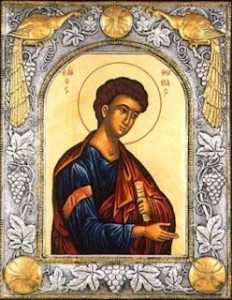 Commentaries insist that all John is doing in identifying Thomas as having been “called the Twin” is translating his Semitic name into its Greek equivalent, Didumos meaning “two-fold, twain, or twin”. But I wonder why he does this? A strain of Christian gnosticism insisted that Thomas was Jesus’ twin brother! Wouldn’t that have been interesting? How would we explain the Incarnation if the “power of the Holy Spirit” which came over Mary and produced a child with no earthly father had actually resulted in twins? Only one of them would be the Incarnation? Would that even make sense? No, I don’t think the gnostics got that one right, at all. But still, I find it intriguing that John throws in this little tidbit that Thomas was called “the Twin.” (He does it three times! He must have thought it important! See also John 20:24 and 21:1.)
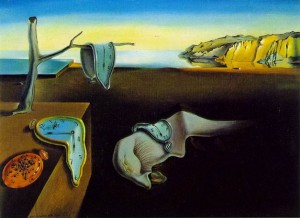 I’ve been sort of mulling this over all day. It’s one of those interesting mixed-tense things; Jesus uses the past tense for Abraham (“Abraham was”), but the present tense for himself (“I am”), while placing his presence before Abraham’s past. I think what he’s trying to do here his describe eternity. That’s not easy to do!
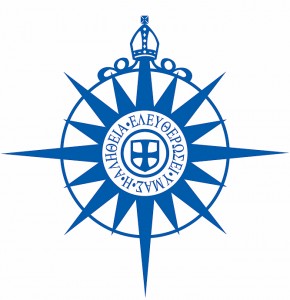 Look at the Compass Rose emblem of the worldwide Anglican Communion and you will find these words, “The truth will make you free,” emblazoned on it in Greek. As an Anglican, I think that’s great. But there are times when Pilate’s question to Christ, “What is truth?” (John 18:38) makes a lot of sense! What is truth? What is this truth that will set us free?
 A couple of days ago I talked about Cornelius’s conversion from pagan to Christian through some time spent as a pious not-quite-proselyte Gentile. In today’s reading Peter defends his decision to baptize the Gentiles (Cornelius and his entire household) with this great question, “Who was I that I could hinder God?” It certainly shut down his critics!
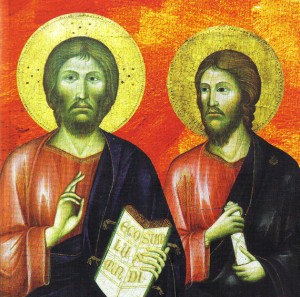 The picture of Jesus getting advice from his brothers just tickles me. John makes such a deal of it (while pointing out that his brothers did not believe in him – as the Messiah, I suppose – at the time). It seems so at odds with John’s otherwise oh-so-perfect, oh-so-divine Jesus!
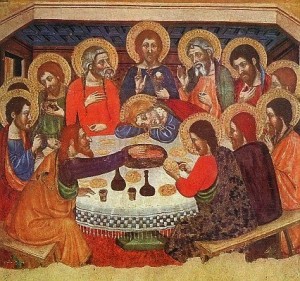 The Jews, John tells us, disputed among themselves as Jesus was delivering the lengthy dissertation on bread from which these statements come. Earlier he had introduced this idea that his flesh was bread to be eaten by his followers: “I am the living bread that came down from heaven. Whoever eats of this bread will live for ever; and the bread that I will give for the life of the world is my flesh.” (v. 51) The very idea of consuming human flesh is off-putting, even disgusting, and would have been extremely objectionable to the Jews; no wonder they grumbled and mumbled, complained and disputed. Even as a metaphor, the statement demands a lot from Jesus’ followers!

