From the Prophet Malachi:
A son honors his father, and servants their master. If then I am a father, where is the honor due to me? And if I am a master, where is the respect due to me? says the Lord of hosts to you, O priests, who despise my name. You say, “How have we despised your name?” By offering polluted food on my altar. And you say, “How have we polluted it?” By thinking that the Lord’s table may be despised. When you offer blind animals in sacrifice, is that not wrong? And when you offer those that are lame or sick, is that not wrong? Try presenting that to your governor; will he be pleased with you or show you favor? says the Lord of hosts.
(From the Daily Office Lectionary – Malachi 1:6-8 (NRSV) – November 21, 2012)
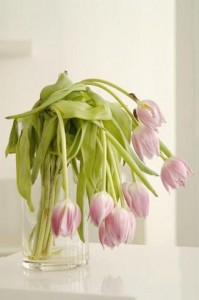 Several years ago I served in a small parish which had a very tight budget. Among its many cost-saving efforts was the reuse of altar flowers. Arrangements would be purchased and used on one Sunday, then quickly put away in the refrigerator in the basement kitchen to be used again the next week. Of course, they didn’t last as well as they might have been wished to (and some varieties of flower fared worse than others), so it was noticeable that they’d been around for awhile. In addition, if there’d been any sort of parish dinner in the interim so that food had been stored in the same refrigerator, they would often have taken on a bit of the odor of fried chicken or garlic or cheesy tuna surprise.
After holding my peace about this my first few weeks, I suggested to one of the older altar guild members, a woman about my mother’s age, a child of the depression, that it seemed to me that putting reused flowers at the altar was rather like offering a blemished cow. She looked at me with an expression that was both dumbfounded and angry – an interesting look to be sure. I explained the proscription of Jewish law against the offering for sacrifice of an animal that was defective in any way (see, e.g., Leviticus Ch. 3-5). She didn’t see the parallel but, because (as it turned out) she was the one who had come up with this money-saving scheme, she was fairly convinced the new priest in the parish was defective. Nonetheless, I held my ground and exercised my role as chief liturgist and insisted that if we were going to have flowers, they were going to be fresh. Better to have no flowers than a floral offering that was second-rate (and much better than flowers that smelled of cheesy tuna surprise).
We often run into this in the church, the giving of the less-than-good. Church youth group rooms and lounges are furnished with hand-me-down, out-of-fashion, and often badly worn furniture from someone’s recently redecorated home (or from someone’s recently deceased parent’s home). Clothing-for-the-poor drives amass large piles of worn out sport coats, scuffed shoes, and long out-of-date bell-bottom trousers. Recently, a box of food donated to our church’s food pantry ministry included a box of cereal that had been opened and partially consumed; I guess the donor had decided he or she didn’t like blueberry crunch whole grain healthfood breakfast food. We seem to have forgotten that the Bible commends the giving of unblemished offerings.
I’ve learned that if one challenges these less-than-perfect gifts the nearly universal justification for giving them is “Beggars can’t be choosers.” That may be true, but givers certainly can be! We who give can choose to give the very best, not our worn-out, cast-off hand-me-downs. The laws of the Old Testament, including these rules about blemished gifts, are meant to teach us to choose to do and to give that which is our best. The several Jewish laws, it is said, are where faithfulness to God is translated into action. When we strive to do our best to follow the ways revealed in Scripture, God’s words and God’s Word are etched into our hearts and become an intimate part of our identity, whether we are Jewish or Christian.
Since 1944, Hallmark Cards has used the sales pitch and slogan, “When you care enough to send the very best . . . . ” That’s what the rules concerning sacrifice of unblemished offerings are all about. They ask us whether we care enough to give the very best. What we give is a reflection of who we are. Are we people on whose hearts the Word of God is indellibly etched? Are we people for whom the Word of God is an intimate part of our identity? Do we stand, as our offering should stand, unblemished before God?
Or are we defective, or sick, or lame, or polluted . . . like last week’s flowers smelling of cheesy tuna surprise?
====================
A request to my readers: I’m trying to build the readership of this blog and I’d very much appreciate your help in doing so. If you find something here that is of value, please share it with others. If you are on Facebook, “like” the posts on your page so others can see them. If you are following me on Twitter, please “retweet” the notices of these meditations. If you have a blog of your own, please include mine in your links (a favor I will gladly reciprocate). Many thanks!
====================
Father Funston is the rector of St. Paul’s Episcopal Church, Medina, Ohio.
 Giving thanks at a time privation, that’s what these two verses from Habakkuk’s prophecy are about. Habakkuk describes a situation in which he (and all the people of Jerusalem) have lost everything. Just look at what he lists in verse 17: figs, grapes, and olives, the year-round fruit crops of the area; the fields, which is to say the annual crops, the grains and staple foods; flock and herd, which means sheep and cows. All their their produce is gone, all their livestock are dead.
  There are two passages of Scripture that I always think of when vestries or other church governing boards begin to discuss a vision for the church’s mission and ministry. One is the King James version of Proverbs 29:18a – “Where there is no vision, the people perish.” – the other is this passage from Habakkuk. I really like the image of the vision being written so large that someone running by can read it and make sense of it; the church’s vision needs to be as big, expansive, and attention-getting as a billboard.
 The “valley of decision” is probably another name for the Valley of Jehoshaphat referred to in an earlier verse of this chapter of the Prophet Joel. Jehoshaphat (a Hebrew name pronounced “yeh-hoh-shah-faht”) is a compound word of two other Hebrew terms, Yahweh (one of the names of God) and shaphat (meaning “to judge” or “to decide”). Jehoshaphat, therefore, means “God will judge” or “God will decide”. Geographically, the valley of Jehoshaphat, the valley of decision, lies between the city of Jerusalem and the Mount of Olives.
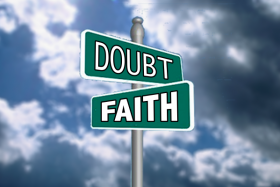 I suppose I take issue with Scripture more often than I should, but this is one of those bits that I just can’t agree with. I vehemently disagree with James’s equation of “doubt” with what he calls “double-mindedness”. The Greek word translated “double-minded” is dipsuchos , from dis , meaning “twice,” and psuche , meaning “mind.” James use of it to describe someone who has doubts suggests that such a person is divided in his or her interests or loyalties, wavering, two-faced, and half-hearted.
 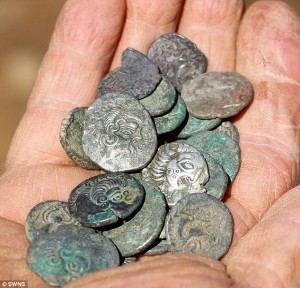 This story of the woman seeking her lost coin follows on the heels of the parable of the lost sheep in which the shepherd leaves the ninety-nine to seek the lost one. That story is much more familiar and, I suppose, is more popular because of romantic notions of some emotional bond between sheep and shepherd, supported no doubt by those lovely Sunday School images of Jesus carrying a lamb on his shoulders. As we modern (and now post-modern) 21st Century urban Christians have moved further and further from agrarian reality, those romantic misconceptions deepen and the less-palatable aspects of the parable’s metaphor are forgotten.
 Perhaps among the most familiar words from St. John’s apocalypse, “Blessed are they who are invited to the marriage feast of the Lamb.” They are used as a fraction anthem or invitation to communion in many churches. But in this brief passage from Revelation, the most powerful image for me today is the angel saying, “I am a fellow-servant with you and your brothers and sisters.”
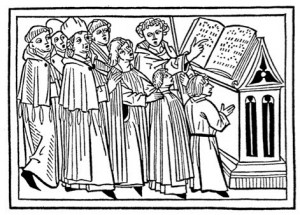 Chapter 50 of Ben Sira’s book is a description of a temple liturgy led by “the high priest, Simon son of Onias.” (v. 1) It is filled with poured-out wine, sumptuous vestments, the shouting of priests, the blowing of trumpets, the people falling on their faces. Not the sort of ho-hum run-of-the-mill worship service one finds in most Christian churches these days.
 Doing that which is right in the face of an opposition which has tradition and law on its side. That’s what this gospel story is about. This is not simply another story of Jesus’ healing someone.
  “This election is the most important, ever. If that candidate is elected, it will be the end of the world!” The first time I heard that was during the campaign of the first presidential election I paid attention to: the race between John F. Kennedy and Richard Nixon in 1960. I heard it as my family watched the televised debate; it was said by my older brother who was then a freshman studying history and political science at the University of Texas, so of course he knew everything. “That candidate,” by the way, was Richard Nixon. We heard it again in 1964; remember the television commercial with the little girl plucking petals from a daisy and the atomic explosion? “If Barry Goldwater is elected,” it suggested none too subtly, “it will be the end of the world.” We hear it every election, “This election is the most important election of our lifetimes.” And, to be honest, that is a correct statement. Those in the past are no longer important; they’re done and other with. Only this election can impact the future so, at this time, up to now, it is the most important. But truth be told . . . none of them, including this election, are really all that important in the grand scheme of things.

