====================
On the Sixth Sunday of Easter, May 25, 2014, this sermon was offered to the people of St. Paul’s Episcopal Church, Medina, Ohio, where Fr. Funston is rector.
(The lessons for the day were: Acts 17:22-31; Psalm 66:7-18; 1 Peter 3:13-22; and John 14:15-21. These lessons can be read at The Lectionary Page.)
====================
 I’m going to do something I have never done before! I’m going to read someone else’s sermon. While I was pondering these lessons, doing the usual research, and thinking about what to say, I came upon a superb sermon preached on Memorial Day weekend three years ago when, as today, the lesson from Acts was the story of St. Paul preaching at the Areopagus. The preacher was the Rev. Kurt Wiesner who is the rector of All Saints Episcopal Church in Littleton, New Hampshire, and whom many of us remember from his tenure as curate at our own Trinity Cathedral. This is what Kurt had to say and I earnestly commend his thoughts to you:
[The sermon as originally posted on the internet can be found on Fr. Wiesner’s blog One Step Closer: Religion & Popular Culture.]
Memorial Day in Church — (A sermon preached Sunday of Memorial Day Weekend, 5/29/2011)
Contrary to the assumptions of many, Memorial Day is not officially a celebration of the church. Unlike Independence Day and Thanksgiving Day (both which I have talked about in the past), it is not on our church calendar, and there is no prayer in our Prayerbook to mark this day. It did not come from the church, nor was it formally adopted by it.
Robert Bellah writes that sociologists have suggested that America has a secular “civil religion” –- one with no association with any religious denomination or viewpoint –- that has incorporated Memorial Day as a sacred event. Our American tradition includes an obligation to honor the sacrifices made by our nation to earn our freedom. With the Civil War, a new theme of death, sacrifice and rebirth enters the civil religion. Memorial Day gave ritual expression to these themes, integrating the local community into a sense of nationalism. The American civil religion in contrast to that of France was never anticlerical or militantly secular; in contrast to Britain it was not tied to a specific denomination like the Church of England. Instead, Americans borrowed selectively from different religious traditions in such a way that the average American saw no conflict between the two, thus mobilizing deep levels of personal motivation for the attainment of national goals. (Civil Religion in America, by Robert Bellah, 1967. Used by Wikipedia)
This cannot completely explain why the church has not officially adopted Memorial Day: after all, the church has taken and adapted plenty of public events and celebrations in the past. Perhaps it’s only a matter of time. Then again, one could argue that every day is a Memorial Day in the church.
Regardless, this morning I want to share with you some Memorial Day history, which comes mostly from the Wikipedia Memorial Day entry:
Our tradition of Memorial Day comes from the time after the Civil War, honoring the soldiers who had died by decorating their graves with flags or flowers. By 1865 the practice of decorating soldiers’ graves had become widespread in the North. The first known observance was in Boalsburg, Pennsylvania, on October, 1864, and each year thereafter. Similar events followed around the northern states on various scales.
In Charleston, South Carolina, in 1865, freed enslaved Africans celebrated at the Washington Race Course, today the location of Hampton Park. The site had been used as a temporary Confederate prison camp for captured Union soldiers in 1865, as well as a mass grave for Union soldiers who died there. Immediately after the cessation of hostilities, freedmen exhumed the bodies from the mass grave and reinterred them in individual graves. They built a fence around the graveyard with an entry arch and declared it a Union graveyard. On May 1, 1865, a crowd of up to ten thousand, mainly black residents, including 2800 children, proceeded to the location for events that included sermons, singing, and a picnic on the ground.
Beginning in 1866 the southern states had their own Memorial Days. The earliest Confederate Memorial Day celebrations were simple, somber occasions for veterans and their families to honor the day and attend to local cemeteries.
General John A. Logan may be most responsible for growth of a particular holiday. On May 5, 1868, in his capacity as commander-in-chief of the Grand Army of the Republic -– the organization for Northern Civil War veterans -– Logan issued a proclamation that “Decoration Day” should be observed nationwide. It was observed for the first time on May 30 of the same year; the date was chosen because it was not the anniversary of a battle.
There were events in 183 cemeteries in 27 states in 1868, and 336 in 1869. The northern states quickly adopted the holiday; Michigan made “Decoration Day” an official state holiday in 1871 and by 1890 every northern state followed suit. The ceremonies were sponsored by the Women’s Relief Corps, which had 100,000 members.
The Decoration Day speech became an occasion for veterans, politicians and ministers to commemorate the war -– and at first to recall the atrocities of the enemy. They mixed religion and celebratory nationalism and provided a means for the people to make sense of their history in terms of sacrifice for a better nation, one closer to their God. People of all religious beliefs joined together, and the point was often made that the German and Irish soldiers had become true Americans in the “baptism of blood” on the battlefield.
By the end of the 1870s the rancor was gone and the speeches praised the soldiers of both the Union and Confederacy. In 1882, the name of Decoration Day was formally changed to Memorial Day in “memory” and ‘honor” of those who gave their lives fighting for a common cause, America.
This name, however, did not become more common until after World War II and was not declared the official name by Federal law until 1967.
Many Americans observe Memorial Day by visiting cemeteries and memorials. A national moment of remembrance takes place at 3 p.m. local time. Another tradition is to fly the flag of the United States at half-staff from dawn until noon local time. The half-staff position remembers the more than one million men and women who gave their lives in service of their country. At noon their memory is raised by the living, who resolve not to let their sacrifice be in vain, but to rise up in their stead and continue the fight for liberty and justice for all. The National Memorial Day Concert takes place on the west lawn of the United States Capitol the Sunday before Memorial Day. The concert is broadcast on PBS and NPR. Music is performed, and respect is paid to the men and women who died in war.
There have, however, been a number of the historical problems concerning Memorial Day. Many of the celebrations have included a demonization of whatever is the perceived other side: not just concerning the Civil War, but the world conflicts that have followed. Certain ideologies have upended Memorial Day at different times. Continuing from Wikipedia:
In many southern locations in the 1890s from the consolatory emphasis of honoring soldiers to public commemoration of the Confederate “Lost Cause”. Changes in the ceremony’s hymns and speeches reflect an evolution of the ritual into a symbol of cultural renewal and conservatism in the South.
By the 1950s, the theme of Memorial Day had become more geared towards American exceptionalism and understood duty to uphold freedom in the world.There have also been challenges beyond nationalism. The tradition has become permanently linked to sporting events. One of the longest-standing traditions is the running of the Indianapolis 500, the auto race has been held in conjunction with Memorial Day since 1911, run on the Sunday preceding the Memorial Day holiday. The Coca-Cola 600 stock car race has been held later the same day since 1961. The Memorial Tournament golf event has been held on or close to the Memorial Day weekend since 1976.
On June 28, 1968, the Congress passed the Uniform Holidays Bill which moved three holidays from their traditional dates to a specified Monday in order to create a convenient three-day weekend. The holidays included Washington’s Birthday, Veterans Day, and Memorial Day. The change moved Memorial Day from its traditional May 30 date to the last Monday in May. The law took effect at the federal level in 1971. This change is still controversial. The VFW stated in a 2002 Memorial Day Address:
Changing the date merely to create three-day weekends has undermined the very meaning of the day. No doubt, this has contributed a lot to the general public’s nonchalant observance of Memorial Day. (David Mechant, April 28, 2007, “Memorial Day History”, in the Wikipedia entry)
While the actual significance of the original date is debatable, it is pretty clear that Memorial Day Weekend’s role as the unofficial start of summer has come to dominate the observance. And I don’t think it’s a stretch to say that, in the vocabulary of many, the phrase “Memorial Day” include the word “sale.”
As I said at the beginning, Memorial Day is not officially a day marked by the Episcopal Church. Certainly remembering those who have given their lives in service is appropriate for church communities to do, and explains why plenty of individual churches celebrate the day.
Perhaps some of what the church has to offer Memorial Day can be found in Paul’s insightful preaching in the Book of Acts this morning (Acts 17:22-31). Paul observes the many religious practices of the Athenians. He does not spend it time condemning what is wrong with their practice. Instead, he lifts up the Athenians pursuit of religious understanding, and building on their creativity and passion, preaches about God “…in whom we live and move and have our being”. (Acts 17:28)
Perhaps it is the role of the church to not only help remember what is good in Memorial Day … honoring those who died in service to their country … but to also lift up the day as something more: articulating a vision of a world that so values peoples’ lives as dwelling in God, that violence towards others becomes unacceptable.
Perhaps this is why I find the [hymn from the United Methodist Hymnal], A Song of Peace, so appropriate:
This is my song, O God of all the nations,
A song of peace for lands afar and mine;
This is my home, the country where my heart is;
Here are my hopes, my dreams, my holy shrine:
But other hearts in other lands are beating
With hopes and dreams as true and high as mine.My country’s skies are bluer than the ocean,
And sunlight beams on clover leaf and pine;
But other lands have sunlight too, and clover,
And skies are everywhere as blue as mine;
O, hear my song, Thou God of all the nations,
A song of peace for their land and for mine.This is my song, O God of all the nations,
A song of peace for (people) in every place;
And yet I pray for my beloved country
The reassurance of continued grace:
Lord, help us find our oneness in the Savior,
In spite of differences of age and race.
[From the United Methodist Hymnal (Stanzas 1 & 2 by Lloyd Stone, Stanza 3 by Georgia Harkness)]
========================
That is Kurt’s sermon…. to which I want to add just a brief postscript, beginning with a personal story:
From 1972 to 1974, I was the youth minister at St. Peter’s Episcopal Church in Del Mar, California, where Fr. Tally Jarrett, a former military chaplain who had served in Germany, was the rector. Fr. Tally had absolutely no musical talent or skill, and seldom used hymns in his sermons, so (unlike me) he did not select the hymns for worship; he left that up to the Choir Director. (I select the hymns, but I leave the selection of preludes, postludes, voluntaries, and anthems up to Bertie.)
One Sunday we had a guest preacher, the local Reformed Jewish rabbi, and I was on the schedule as the chalice bearer for the service. As we lined up in the back of the church for the procession, the organist struck the opening notes of the first hymn, Glorious Things of Thee Are Spoken. The words were written by John Newman, the same man who wrote Amazing Grace, but the hymn is set to the tune Austria by Franz Joseph Haydn. That tune is also the music for Das Lied der Deutschen, the German national anthem. Fr. Tally heard that tune start up, looked at the rabbi, and turned beet red with embarrassment; the rabbi just laughed and said, “Don’t worry about it! It’s a lovely tune.”
Thursday evening I was here in the church and heard the choir practicing their anthem . . . which turns out to be a choral arrangement of that hymn. I chuckled remembering that Sunday morning back in Del Mar and it occurred to me how similar to that event the singing of that tune, the melody of the national anthem of our sworn World War II enemy, on Memorial Day is. Some of us who fought against Germany in WW2 ourselves or whose fathers fought in that theatre, as did mine, might find it odd to do so. I find it particularly appropriate; a reminder that we have gotten past that conflict and that our former enemy is now our ally.
I would ask you to pay particular attention to the final verse that the choir will sing:
Savior, since of Zion’s city
I through grace a member am,
Let the world deride or pity,
I will glory in your name.
Fading are the worldlings’ pleasures
All their boasted pomp and show;
Solid joys and lasting treasures
None but Zion’s children know.
This, as Fr. Wiesner suggested, is what the church can lift up and articulate on Memorial Day, a “vision of a world that so values peoples’ lives as dwelling in God, that violence towards others becomes unacceptable,” a vision of a world in which all can enjoy the “solid joys and lasting treasures” of peace and good will.
Let us pray:
O Judge of the nations, we remember before you with grateful hearts the men and women of our country who in the day of decision ventured much for the liberties we now enjoy. Grant that we may not rest until all the people of this and every land share the benefits of true freedom and gladly accept its disciplines. This we ask in the Name of Jesus Christ our Lord. Amen.
====================
A request to my readers: I’m trying to build the readership of this blog and I’d very much appreciate your help in doing so. If you find something here that is of value, please share it with others. If you are on Facebook, “like” the posts on your page so others can see them. If you are following me on Twitter, please “retweet” the notices of these meditations. If you have a blog of your own, please include mine in your links (a favor I will gladly reciprocate). Many thanks!
====================
Father Funston is the rector of St. Paul’s Episcopal Church, Medina, Ohio.
 I love this verse! I always think of it as Jesus’ version of “Don’t just stand there. Do something!”
 I am an absolutely faithful believer in the biblical concept of sabbath. I am also one of its worst offenders. No matter what day I choose to be my day “away from the office,” at least 50% of the time I will end up doing something work related. Today, for example, a Friday, is supposed to be my day off. What will I be doing? Giving my time to the church as a volunteer working on the refurbishment of the undercroft which is being converted to office space (laying peel-and-stick carpet tiles, to be precise). — This raises the interesting issue: “Can one volunteer at one’s place of employment?” I suspect the answer is “No” because whenever I am on the church property or in the church building I am “the rector,” not just some Joe who’s helping out.
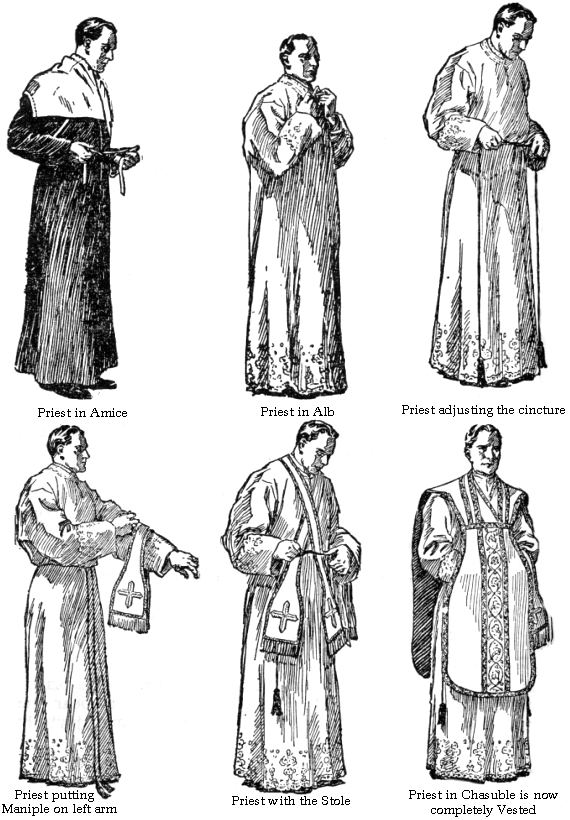 “In essentials unity, in non-essentials liberty, in all things charity.” This aphorism has been variously attributed to St. Augustine of Hippo, to Menno Simons the spiritual father of the Mennonites and the Amish, to Richard Baxter of the Moravians, and various others.
 Time for me to put on my curmudgeon hat and unload a rant I’ve been promising myself for the better part of two weeks. It’s a matter of respect for elders, so this verse which links reverence of parents with reverence of God is a perfect entrée for me to set down what’s been bugging me.
 The scapegoat! One of the little-known but very often mentioned figures of the Old Testament is the scapegoat. If I were a betting man, I would bet that very few people actually know the origin of this term that nearly everyone has used at some time or another. Well, here it is in Israel’s ancient ritual of atonement.
 What is joy? A bible study group at church grappled with that question recently and I’m still thinking about the question, so these concluding verses of today’s evening psalm got my attention. It’s not just a matter of defining emotion. Joy is a religious attitude, a stance toward God mentioned numerous of times in the Holy Scriptures; according to St. Paul, it is one of the “fruits of the Spirit.” (Gal 5:22) It’s important to know what we mean when we name it.
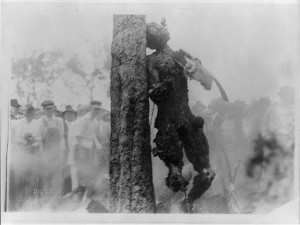 Does the name “Jesse Washington” mean anything to you? It’s unlikely that it does. If I tell you that Jesse Washington died in 1916 in Waco, Texas, would that spark any memory? Have you ever been taught about the incident in which Washington was killed? Have you ever heard of what came to be called “The Waco Horror?”
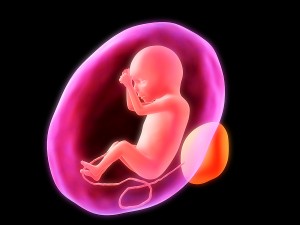 Let me make one thing clear: I do not want to get into the abortion debate! I never want to get into the abortion debate!
 It has been almost 40 years since presidential candidate Jimmy Carter admitted to Playboy magazine, “I’ve looked on many women with lust. I’ve committed adultery in my heart many times. God knows I will do this and forgives me.” Caused quite a stir and, some say, marked the beginning of the erosion of presidential privacy, the start of an era of leadership toxicity in American politics when partisan reporters feel free to reveal any fact or rumor, no matter how irrelevant, if it will hurt a politician of the opposite party or position. I’m not sure that that’s the case; a good argument can be made that the current polarized, hyper-partisan atmosphere started building during the Nixon, or even Johnson, years. That, however, is not what I’m thinking about this morning.

