From the Book of Psalms:
Each evening they come back, howling like dogs and prowling about the city.
(From the Daily Office Lectionary – Psalm 59:6 (NRSV) – May 15, 2014)
 I usually prefer the Prayer Book Psalter to the NRSV translation of the Psalms, but in today’s readings I find the latter rather more compelling. The NRSV makes it clear who the “they” is in this verse (which is repeated again at verse 14). “They” are “the nations,” which in the Hebrew bible always refers to ethnic groups other than the tribes of Israel. The BCP version refers to “the ungodly,” which is decidedly unclear; it could refer to individuals and, further, could refer even to persons from within the Jewish people, neither of which understandings would be accurate.
With regard to this specific verse (which is numbered 7 or 16 in the BCP), the notion of returning late in the day from some unspecified and perhaps unknown other location is lost: “They go to and fro in the evening; they snarl like dogs and run about the city.” They (whoever they are) could have been at rest within the city during the day, but the Hebrew shuwb ‘ereb is clear: “They return at sunset.” The nations have been somewhere else during the light of day, but where is unknown (at least, it is not stated in the psalm).
The NRSV text is also much more poetic than the BCP version (which is something of a surprise, frankly). The evocative rhyming of “howling . . . and prowling” is so much more effective than “snarl . . . and run about.” It casts a disturbing vision of a dog pack roaming, possibly hunting, through the darkened city streets.
Dogs, of course, are considered unclean in Judaism. They are scavengers which will eat any sort of refuse and carrion, even excrement. Although mothers do tenderly care for their young, dogs do not pair bond and have no sexual loyalty. They urinate and defecate wherever they wish. Left on their own and untrained, dogs are pretty unsavory characters!
They also have a social order that is decidedly not a human one. 21st Century research into the organization of packs of both canis lupus (wolves) and canis familiaris (dogs) has demonstrated that the “alpha male” aggression-dominance model of pack behavior is nothing more than a human projection. Dog packs are (I use the word very loosely) organized in a much more fluid and changing way, a way not easily appreciated by human observers. For all intents and purposes, dog packs mostly appear to us to be disorganized mobs.
So these are the ungodly (to use the BCP’s word): gone when it is light, showing up in the darkness, decidedly unclean in their habits, leaderless, disorganized, and dangerous. They are like feral, untamed dogs. And, yet, dogs have shown themselves not only willing but eager to give up these ways! Dogs are more than happy to associate with humans, to acknowledge humans as their leaders, to behave in ways humans deem acceptable. And we have been happy to accept them on those terms as pets, as friends, and as co-workers.
Last Sunday’s Gospel lesson was from John — Jesus declaring himself to be the good shepherd. Shepherds are nearly always assisted by dogs to whom none of the negative characteristics implicit in this psalm could be ascribed. My pastoral theology instructor (as I told my congregation in my extemporaneous children’s sermon) objected to the word pastor as a descriptor of clergy; pastor, he pointed out, means “shepherd” and there is only one shepherd. Clergy, he insisted, should be thought of as sheepdogs.
The good shepherd made a few other claims for himself. “I am the light of the world,” for example, and “I am the way.” (Jn 9:5, 14:6) For those who are leaderless, living in darkness, howling and prowling the night-time streets, Jesus offers an alternative of light and direction.
Years ago, when I was a college student in southern California, my friends and I would visit the border towns of northern Mexico. There always seemed to be plenty of ownerless, feral dogs running about. From time to time, I would notice that a feral dog would gingerly approach and befriend (possibly another human projection) a domesticated dog and, with and through that dog, would approach its owner. More often than not they were kicked and shooed away, but occasionally the human would be willing to share some food; perhaps this was the beginning of a longer relationship — I don’t know; I never stuck around or went back to find out.
Remembering those wild dogs seeking, through a domestic dog, the friendship and protection of a human being . . . thinking about the picture of dogs set out in the psalm today . . . and putting meat on the bones of my theology professor’s objection to pastor, I think there is a lesson for me and my fellow sheepdogs here. Or, more correctly, there is a question: are we in the right place?
Are we (and the flocks we are tending) in the places where the howling and prowling, the wild and feral, the leaderless, those in darkness and hunger, can gingerly approach and possibly, through us, meet the good shepherd?
====================
A request to my readers: I’m trying to build the readership of this blog and I’d very much appreciate your help in doing so. If you find something here that is of value, please share it with others. If you are on Facebook, “like” the posts on your page so others can see them. If you are following me on Twitter, please “retweet” the notices of these meditations. If you have a blog of your own, please include mine in your links (a favor I will gladly reciprocate). Many thanks!
====================
Father Funston is the rector of St. Paul’s Episcopal Church, Medina, Ohio.
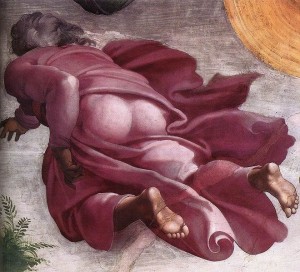 The translators of the NRSV are a bunch of prudes; a better translation of the last verse of this section would be “. . . you shall see my butt.”
 “I threw it into the fire, and out came this calf!”
 “Wrestling in his prayers” seems such an odd turn of phrase! Aren’t prayers supposed to be peaceful? The image of prayer as athletic competition (and vigorous, muscular, and very personal competition, at that) just seems contradictory. But the contradiction calls to mind two thoughts.
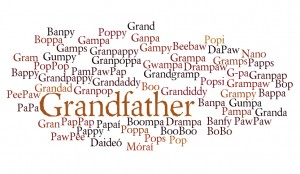 Sometime this fall, probably during October, my wife and I will become grandparents for the first time. Last night, a friend asked, “What will you be called?” Because the question came out of the blue (we hadn’t been discussing children or grandchildren), I didn’t know what he was asking — and my face must have shown it. “As grandfather,” he clarified, “what will you be called as a grandparent?”
 ADDED LATER: Oops!!! I just realized late on May 9 that I had read the lessons for May 10 one day ahead of time. This lesson is actually for the next day . . . . mea culpa, mea culpa, mea maxima culpa! Apologies, faithful readers!
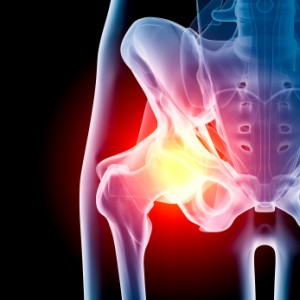 Today, the Feast of Dame Julian of Norwich, is the 24th anniversary of my ordination to the diaconate. I am spending it, at least the morning, in the company of several fellow presbyters and a few deacons at a clergy conference. I am also spending it in some discomfort because yesterday morning I slipped and fell in the hotel bath; I wrenched my back and it appears I did something (only soft-tissue-ish, I hope) to my right hip.
 The Gospel lesson today is the baptism of Jesus as told by Matthew. With it, for the evening, is coupled a portion of Psalm 119 which includes this verse. This image of a soul clinging to the dirt caught my attention. I wonder if baptism is efficacious if the soul being baptized steadfastly and stubbornly “cleaves to the dust” of its pre-baptismal life.
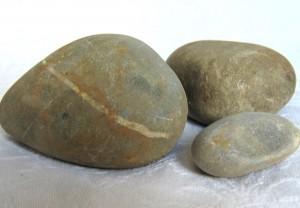 John the Baptizer is speaking to the Pharisees and the Sadducees, warning them against the very common human practice of relying upon the piety of our forebears instead of practicing our own faith. Relying on the religion of our ancestors is weakens and attenuates our own spirituality. One might as well be rocks lying by the roadside.
 Apparently Moses didn’t learn anything from his experience at the battle with Amelek when he needed Aaron and Hur to hold up his hands, so his father-in-law Jethro has to remind him that he can’t do it all alone and that, if he tries to do so, he will wear himself out. Smart man, Jethro!

