From the Gospel of John:
When he was in Jerusalem during the Passover festival, many believed in his name because they saw the signs that he was doing. But Jesus on his part would not entrust himself to them, because he knew all people and needed no one to testify about anyone; for he himself knew what was in everyone.
(From the Daily Office Lectionary – John 2:23-25 (NRSV) – January 20, 2014.)
 The Definition of Chalcedon affirms, in part:
Following the holy fathers, we all with one accord teach men to acknowledge one and the same Son, our Lord Jesus Christ, at once complete in Godhead and complete in manhood, truly God and truly man, consisting also of a reasonable soul and body; of one substance (homoousios) with the Father as regards his Godhead, and at the same time of one substance with us as regards his manhood; like us in all respects, apart from sin . . . .
That last bit is derived from Holy Scripture, specifically from a verse in the Letter to the Hebrews: “We do not have a high priest who is unable to sympathize with our weaknesses, but we have one who in every respect has been tested as we are, yet without sin.” (Heb. 4:15 NRSV)
The Jesus described by the writer of Hebrews and affirmed in the Chalcedonian definition is a man I can follow. There are times when the Jesus described by the writer of the Fourth Gospel creeps me out! This is one of them. The thought that someone could “know all people” and “know what is in everyone” is just spooky.
Now, let me be clear, I am not speaking of the eternal Second Person of the Trinity; I’ve no doubt that God knows all people and knows what is in everyone. But the human person born in early First Century Palestine, who ate and drank and walked around, who expressed joy and disappointment, who got mad, who went to parties, who hiked the roads from town to town, that guy who was “like me in all respects” . . . . I don’t think that Jesus in his human life had access to the divine mind or could have known “what was in everyone.” If he did, he wasn’t like me and what he lived through, what he taught, and his death, resurrection, and ascension have no bearing on my life or meaning for me. He’s too spooky for me!
Years ago I was given a “holy card” which I have since lost. (In the Roman Catholic tradition, holy cards, also called “prayer cards” are small, devotional pictures, often mass-produced for the use of the faithful.) This card had what I’m sure is a very unrealistic portrait of Jesus done in what is technically called “lenticular printing;” that’s the process that makes the printed image seem to change or move as it is viewed from different angles. On that holy card, Jesus’ eyes seemed to move and follow you. It was creepy! When I read about Jesus reading the minds of everyone around him and knowing “what was in everyone,” I think of that spooky holy card.
John does this a lot; this gospel sometimes makes Jesus so divine that the human being gets lost. The wisdom of the biblical canon is that John’s too-divine Jesus is tempered by Mark’s portrait which is too human! (Could the longer ending of Mark’s Gospel, Mark 16:9-20 which includes the Great Commission and a description of Christ’s Ascension, have been added as a corrective to that too-human portrayal? That’s a topic for another exploration.)
I’m not suggesting that John’s Gospel be discounted or overlooked or thrown away. I’m just acknowledging that its mind-reading Jesus who “knew what was in everyone” is someone I wrestle with (like Israel in the desert with the angel of God). He’s spooky and spooky bothers me.
====================
A request to my readers: I’m trying to build the readership of this blog and I’d very much appreciate your help in doing so. If you find something here that is of value, please share it with others. If you are on Facebook, “like” the posts on your page so others can see them. If you are following me on Twitter, please “retweet” the notices of these meditations. If you have a blog of your own, please include mine in your links (a favor I will gladly reciprocate). Many thanks!
====================
Father Funston is the rector of St. Paul’s Episcopal Church, Medina, Ohio.
 I read those words and heard Bill Cosby’s voice. I’ll bet I’m not alone. More than 50 years ago (1963), Cosby’s debut comedy album Bill Cosby Is a Very Funny Fellow…Right! included a 3-1/2 minute skit he’d been doing on stage entitled Noah: Right! Ever since, it has colored the story of Noah and the ark for Americans; I know people who wouldn’t be born for another quarter century after that album’s release for whom Cosby’s skit is nonetheless an interpretive filter for the Noah story. Millions read the story and hear Noah asking, in Cosby’s voice, “Lord, what’s a cubit?”
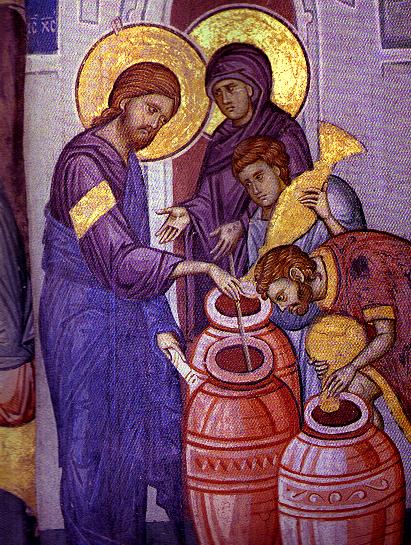 Today is the feast of St. Antony of Egypt. According to a Life of St. Antony written by Athanasius, Antony and his younger sister were orphaned when he was about 18 years of age, inheriting a goodly estate which he began to manage. However, writes Athanasius, six months after his parents’ death he was “turning over in his mind the way the apostles had left everything to follow the Savior” when he heard a sermon on Christ’s encounter with the rich young man whom the Lord instructed, “If you wish to be perfect, go, sell your possessions, and give the money to the poor, and you will have treasure in heaven; then come, follow me.” (Matt. 19:21)
  We make many assumptions based on geography. Think of the all the comedians who make a living in North America by joking about stereotypes of Canadians — the television program South Park has made a running gag of Canadian stereotypes for years! Just try saying, as I truthfully can, “I was born in Las Vegas.” You’ll be very surprised by the reactions and the seriously ridiculous comments (I no longer am).
 What is fear of death but fear of the unknown? The fear of death and the unknown brings anxiety, despair, and a frantic search for meaning. The fear of death and the unknown distracts us and makes us afraid to truly live. We end up fearing both death and life; we end up not attending to those things which are most important.
 Look up cherub in a secular dictionary and this is what you find: “a member of the second order of angels, often represented as a beautiful rosy-cheeked child with wings.” (Collins) I don’t know why, when, or how the fat little boys with aerodynamically inadequate wings came to be an artistic and now normative depiction of cherubs, but there it is! Technically, these little guys (and they are male) are known as putti — an Italian plural; the singular is putto. (Putto is occasionally used in modern Italian to mean a male toddler.)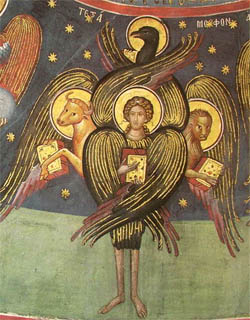


 I sometimes wonder to what extent Paul, as an educated Jewish citizen of a Greek-speaking empire, was schooled in the classical Greek philosophers. Had he read Plato’s Republic? Was he aware of the conversation portrayed in Book VII between Socrates and Glaucon in which the allegory of the cave is laid out?
 There’s a lot of talk these days about “class warfare,” most of it sheer nonsense. There is, it must be admitted, a growing class divide, an increasing gap between the wealthiest Americans and the rest of us. One might be tempted to write about that in light of this psalm’s reference to the “scorn of the indolent rich” and the “derision of the proud.” But, let’s face it . . . scorn, derision, contempt, and generally obnoxious conduct transcend class and other distinctions.
  My wife and I met at a Cursillo three-day weekend event. I was a part of the team (one of the cooks) putting on the Cursillo; she was “making” her Cursillo (as the lingo has it). She claims we’d met before at a fund-raiser fair at my parish (she attended elsewhere), but I was very busy during the fair and don’t recall that. I remember meeting her at the Cursillo weekend.

