From the Letter of James:
Come now, you rich people, weep and wail for the miseries that are coming to you. Your riches have rotted, and your clothes are moth-eaten. Your gold and silver have rusted, and their rust will be evidence against you, and it will eat your flesh like fire. You have laid up treasure for the last days. Listen! The wages of the laborers who mowed your fields, which you kept back by fraud, cry out, and the cries of the harvesters have reached the ears of the Lord of hosts. You have lived on the earth in luxury and in pleasure; you have fattened your hearts on a day of slaughter.
(From the Daily Office Lectionary – James 5:1-5 (NRSV) – November 22, 2012)
 It may be the United States’ holiday of Thanksgiving Day, but the Daily Office continues at this time of year delivering its message of repentance rather than encouraging thanksgiving. The Old Testament lesson is another from Malachi in which the Lord speaking to the priests says that he has spread dung on their faces and put them out of his presence! The gospel lesson from Luke has Jesus predicting the end of the world. And then there’s this epistle lesson which condemns the wealthy. Just not a lot of giving thanks!
On the other hand, Jame’s warning about the dangers of wealth is perhaps a fitting counterpoint to the day. During the past several days, the international news services to which I subscribe on the internet have shown pictures not seen on American television or in the US papers, pictures of dead Palestinian children stacked like so much cordwood in makeshift morgues, pictures of children in temporary hospitals missing legs and arms. My throat kept constricting and my tears kept flowing, and in the back of my mind I kept hearing a phrase my step-father often used – “And here we sit – fat, dumb, and happy.”
The President of Egypt and the American Secretary of State have, the news reports, brokered a ceasefire. It’s not peace, but at least the shelling and the missile launches have stopped. At least the 75,000 Israeli reservists activated by their government will not be leaving their families and marching into Gaza. For that we can and surely should be thankful.
I don’t mean to put a damper on the day, and the lectionary pointing us to James’s letter and the other lessons today is simply coincidence. But they are a reminder to pause in the midst of our family gatherings, to eschew being “fat, dumb, and happy,” and to think of things for which we should be truly thankful – love, peace, family, friends – not merely the stuff we possess – the riches, the clothes, the gold, the silver. A sober reminder to pause yet again and “pray for the peace of Jerusalem.” (Ps. 122:6)
====================
A request to my readers: I’m trying to build the readership of this blog and I’d very much appreciate your help in doing so. If you find something here that is of value, please share it with others. If you are on Facebook, “like” the posts on your page so others can see them. If you are following me on Twitter, please “retweet” the notices of these meditations. If you have a blog of your own, please include mine in your links (a favor I will gladly reciprocate). Many thanks!
====================
Father Funston is the rector of St. Paul’s Episcopal Church, Medina, Ohio.
 Several years ago I served in a small parish which had a very tight budget. Among its many cost-saving efforts was the reuse of altar flowers. Arrangements would be purchased and used on one Sunday, then quickly put away in the refrigerator in the basement kitchen to be used again the next week. Of course, they didn’t last as well as they might have been wished to (and some varieties of flower fared worse than others), so it was noticeable that they’d been around for awhile. In addition, if there’d been any sort of parish dinner in the interim so that food had been stored in the same refrigerator, they would often have taken on a bit of the odor of fried chicken or garlic or cheesy tuna surprise.
  Giving thanks at a time privation, that’s what these two verses from Habakkuk’s prophecy are about. Habakkuk describes a situation in which he (and all the people of Jerusalem) have lost everything. Just look at what he lists in verse 17: figs, grapes, and olives, the year-round fruit crops of the area; the fields, which is to say the annual crops, the grains and staple foods; flock and herd, which means sheep and cows. All their their produce is gone, all their livestock are dead.
  There are two passages of Scripture that I always think of when vestries or other church governing boards begin to discuss a vision for the church’s mission and ministry. One is the King James version of Proverbs 29:18a – “Where there is no vision, the people perish.” – the other is this passage from Habakkuk. I really like the image of the vision being written so large that someone running by can read it and make sense of it; the church’s vision needs to be as big, expansive, and attention-getting as a billboard.
 The “valley of decision” is probably another name for the Valley of Jehoshaphat referred to in an earlier verse of this chapter of the Prophet Joel. Jehoshaphat (a Hebrew name pronounced “yeh-hoh-shah-faht”) is a compound word of two other Hebrew terms, Yahweh (one of the names of God) and shaphat (meaning “to judge” or “to decide”). Jehoshaphat, therefore, means “God will judge” or “God will decide”. Geographically, the valley of Jehoshaphat, the valley of decision, lies between the city of Jerusalem and the Mount of Olives.
 I suppose I take issue with Scripture more often than I should, but this is one of those bits that I just can’t agree with. I vehemently disagree with James’s equation of “doubt” with what he calls “double-mindedness”. The Greek word translated “double-minded” is dipsuchos , from dis , meaning “twice,” and psuche , meaning “mind.” James use of it to describe someone who has doubts suggests that such a person is divided in his or her interests or loyalties, wavering, two-faced, and half-hearted.
 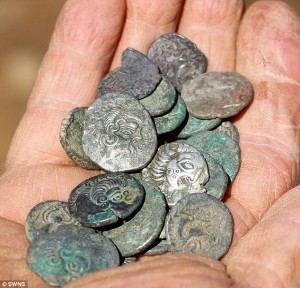 This story of the woman seeking her lost coin follows on the heels of the parable of the lost sheep in which the shepherd leaves the ninety-nine to seek the lost one. That story is much more familiar and, I suppose, is more popular because of romantic notions of some emotional bond between sheep and shepherd, supported no doubt by those lovely Sunday School images of Jesus carrying a lamb on his shoulders. As we modern (and now post-modern) 21st Century urban Christians have moved further and further from agrarian reality, those romantic misconceptions deepen and the less-palatable aspects of the parable’s metaphor are forgotten.
 Perhaps among the most familiar words from St. John’s apocalypse, “Blessed are they who are invited to the marriage feast of the Lamb.” They are used as a fraction anthem or invitation to communion in many churches. But in this brief passage from Revelation, the most powerful image for me today is the angel saying, “I am a fellow-servant with you and your brothers and sisters.”
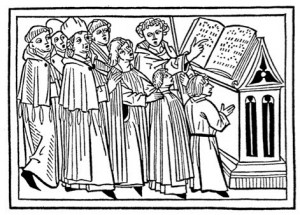 Chapter 50 of Ben Sira’s book is a description of a temple liturgy led by “the high priest, Simon son of Onias.” (v. 1) It is filled with poured-out wine, sumptuous vestments, the shouting of priests, the blowing of trumpets, the people falling on their faces. Not the sort of ho-hum run-of-the-mill worship service one finds in most Christian churches these days.
 Doing that which is right in the face of an opposition which has tradition and law on its side. That’s what this gospel story is about. This is not simply another story of Jesus’ healing someone.

