From the Wisdom of Jesus, Son of Sirach:
Let us now sing the praises of famous men,
our ancestors in their generations.
The Lord apportioned to them great glory,
his majesty from the beginning.
There were those who ruled in their kingdoms,
and made a name for themselves by their valor;
those who gave counsel because they were intelligent;
those who spoke in prophetic oracles;
those who led the people by their counsels
and by their knowledge of the people’s lore;
they were wise in their words of instruction;
those who composed musical tunes,
or put verses in writing;
rich men endowed with resources,
living peacefully in their homes —
all these were honored in their generations,
and were the pride of their times.
Some of them have left behind a name,
so that others declare their praise.
But of others there is no memory;
they have perished as though they had never existed;
they have become as though they had never been born,
they and their children after them.
But these also were godly men,
whose righteous deeds have not been forgotten;
their wealth will remain with their descendants,
and their inheritance with their children’s children.*
Their descendants stand by the covenants;
their children also, for their sake.
Their offspring will continue for ever,
and their glory will never be blotted out.
Their bodies are buried in peace,
but their name lives on generation after generation.
The assembly declares their wisdom,
and the congregation proclaims their praise.
(From the Daily Office Lectionary – Eccesiasticus 44:1-15 (NRSV) – November 6, 2014)
I don’t usually set out the entire text of one of the Daily Office lessons in these morning ramblings of mine, but long before I had read and appreciated the rest of the Book of Ben Sira, I knew of these “hymn to the ancestors.” Twenty-one years ago, as a fledgling priest with just two years of presbyteral ministry under my belt, I was called upon to cobble together a grave-side service for the burial of my older brother, Richard York Funston, a dis-churched former member of the Lutheran Church – Missouri Synod. I chose to use this as the only reading from Scripture because it seemed to suit both the occasion and the person.
Rick had been a professor of political science and, at the time of his untimely death at age 49, the Dean of Faculty and Academic Vice President of a major west coast university. He had studied the famous and the forgotten political figures of our American political past, those “whose righteous deeds have not been forgotten,” and whose descendants (you and me) ” stand by the covenants” they have made over the generations of the republic.
He loved politics as much as he loved sports; presidential debates and election night coverage were as much entertainment to him as the Super Bowl or the NCAA basketball championships. I often wonder what he would have made of the rise of the “Tea Party.” His specialty was the study of the U.S. Supreme Court and its impact on electoral politics – what would he have thought of Citizens United?
Anyway, in the aftermath Tuesday’s election, my older brother was on my mind and it seemed more than serendipitous that this text should be the Old Testament lesson for today.
One of the things Rick and I once talked about was the nature of the Senate and how it has changed over the decades. Senators were originally selected by State legislatures, but the Seventeenth Amendment approved in 1913 transferred that decision to the popular electorate. Once that was done, the politics of the Senate changed in the sense that the Senators became much better known to the people within the states they represented. The advent of mass communication – radio then television and now the internet ¬ has made them better known to the nation as a whole. For example, I now know at least as much and possibly more about Joni Ernst, the Senator-elect from Iowa, than I do the Senators from the state in which I live! (I might, perhaps, wish that I didn’t!) Senators now seem to play on a national stage to a national (possibly even international) audience with more concern for their egos and their personal agendas than for the people of their several states or even the people of the nation!
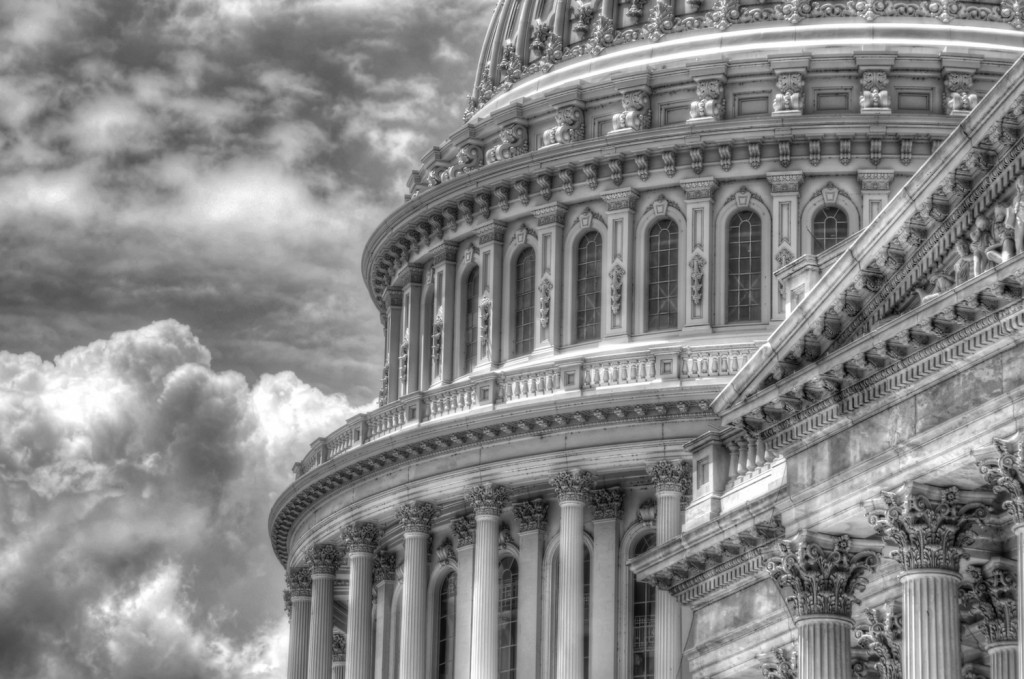
They are well-known now, but how many will go down in history to be remembered even a decade from now if they are defeated in their next senatorial election. How many will stay multiple terms to make a significant mark on the American political landscape? Since the founding of the republic there have been 1,950 Senators. How many can you name? I can’t name very many, of them “there is no memory; they have perished as though they had never existed.”
Remembered or forgotten, however, their predecessors have and they will contribute to some extent to the political tenor of this country and to its future. We may fear what some of them would do individually but the theoretical beauty of the system is that the legislative body is wiser than any individual in it; the collective group-think of the hive-mind tones down the outrageous outspoken craziness of some and amplifies the softly spoken cool-headedness of others. The assembly may momentarily “declare the wisdom” of the individual, but eventually it is the wisdom of the assembly than prevails.
My late brother the political scientist had great faith in the system. He always insisted that, in the end, when the system works, it works well, and that when it works badly, there is hope for change. I pray that he his faith was not misplaced! The Book of Common Prayer of the Episcopal Church includes this prayer for the Congress; I have said it daily for the past several weeks leading up to the election. Now that we have its results, I plan to continue it as a daily discipline:
O God, the fountain of wisdom, whose will is good and gracious, and whose law is truth: We beseech thee so to guide and bless our Senators and Representatives in Congress assembled, that they may enact such laws as shall please thee, to the glory of thy Name and the welfare of this people; through Jesus Christ our Lord. Amen. (BCP 1979, page 821)
I hope that we will be able to praise these famous people, those who are remembered and those who are not, because for good or ill their deeds will not be forgotten. Ben Sira was right about that!
====================
A request to my readers: I’m trying to build the readership of this blog and I’d very much appreciate your help in doing so. If you find something here that is of value, please share it with others. If you are on Facebook, “like” the posts on your page so others can see them. If you are following me on Twitter, please “retweet” the notices of these meditations. If you have a blog of your own, please include mine in your links (a favor I will gladly reciprocate). Many thanks!
====================
Father Funston is the rector of St. Paul’s Episcopal Church, Medina, Ohio.


 This isn’t what we want or expect to hear from “the Prince of Peace,” but here it is! Jesus is not going to let us “make nice” and “all get along.” He insists that we acknowledge and confront the reality of interpersonal conflict, that we admit that even good news can bring division.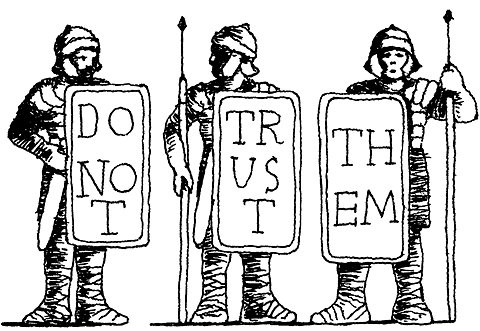



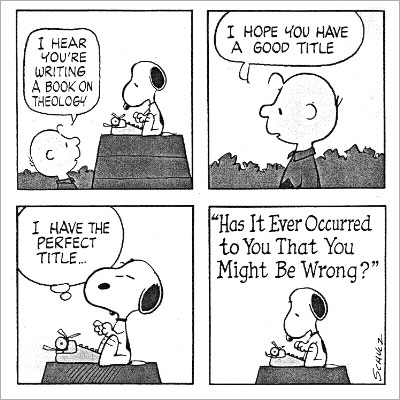
 Truth, United States Senator Hiram Johnson observed in 1917, is the first casualty of war. When war becomes nearly universal is truth in danger of being fully obliterated? I don’t think so; I think truth will ultimately survive and prevail. My faith is that the Truth will no doubt prevail, but for the moment, I am speaking neither of grand philosophical concepts nor of the One who made the audacious claim, “I am the Truth.” (Jn 14:6) Rather, I speak simply of factual accuracy and of the intellectual integrity of those who communicate; that truth is suffering some mighty hurtful body blows at present.

