Occasional thoughts of an Anglican Episcopal priest

Category: Prayer (Page 28 of 47)

Stuff Happens – From the Daily Office – December 3, 2013

From the Prophet Amos:

Do two walk together unless they have made an appointment?
Does a lion roar in the forest when it has no prey?
Does a young lion cry out from its den if it has caught nothing?
Does a bird fall into a snare on the earth when there is no trap for it?
Does a snare spring up from the ground when it has taken nothing?

(From the Daily Office Lectionary – Amos 3:3-5 (NRSV) – December 3, 2013.)

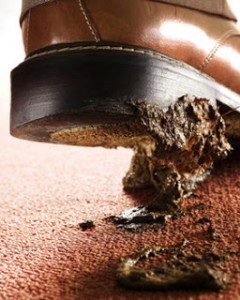
Shoe Stepping in StuffThis series of questions is asked by Amos just before he asks, “Does disaster befall a city unless the Lord has done it?” (v. 6b) He’s provoking his readers (originally, his listeners) to answer each preliminary question, “Of course not” so that their answer to his capper will also be “Of course not.”

Amos’ question: “Does disaster befall a city unless the Lord has done it?” Amos’ answer: “Of course not!”

What is Amos saying here? Is Amos promoting that sorry sort of pop theology that says, “Everything happens for a reason” and implies that the reason is the will of God? Is the prophet promoting that equally sorry sort of personal religion that, when some misfortune strikes, asks, “What did I do wrong?” and implies that personal unhappiness, too, is punishment from God for a failure of faith or a paucity of piety?

If so, I reject the notion. I think the prophet is just dead wrong! “Does disaster befall a city unless the Lord has done it?” Sure. Everything does happen for a reason, but not every reason is God’s doing. Sometimes, perhaps more often than not, the reasons have nothing to do with God, and everything to do with the nature of the physical and human reality within which we live.

I used to practice personal injury law litigating cases where misfortune befell people who then sued other people because everything has to be somebody’s fault . . . somebody else’s fault . . . and that somebody should be made to pay damages because of my inconvenience. I reject that notion, too. All too often the cause of injuries and misfortune is pure accident. Nobody did anything wrong. They couldn’t have done anything other than what they did. And yet … well … there’s a bumper sticker that (politely rephrased) reads, “Stuff Happens.”

That’s the nature of reality . . . that sometimes “stuff” just happens. Not because somebody willed it so, not because somebody made a mistake or acted negligently or did anything wrong, and certainly not because God decreed it. It just happens. The great British preacher Leslie Weatherhead once said, “Surely we cannot identify as the will of God something for which a man would be locked up in jail, or put in a criminal lunatic asylum.”

In fact, Weatherhead suggested that to blame catastrophes and other terrible events on “the will of God” is “a greater blasphemy than the denial of the Holy Trinity.” He went on to say, “One of the first things we must do is to dissociate from the phrase ‘the will of God’ all that is evil and unpleasant and unhappy.” Evil, he noted, is never creative of good; I think that was his polite British way to say “stuff happens.” But in every circumstance where calamity and misfortune befalls us, where “stuff happens,” there is opportunity for good to be revealed.

So what does a person of faith do with that? When “stuff” happens, what should a person of faith do? That’s a pretty good Advent question because one thing I know about Christmas celebrations is that, invariably, stuff happens. Things don’t go according to plan. Presents get lost or broken. Special dishes don’t get cooked properly (or at all). There are arguments. Feelings get hurt.

Be prepared for it! And when it happens look for the opportunity to redeem it, to sooth the hurt, to be an instrument of God’s good and creative will to redeem the “stuff.”

====================

A request to my readers: I’m trying to build the readership of this blog and I’d very much appreciate your help in doing so. If you find something here that is of value, please share it with others. If you are on Facebook, “like” the posts on your page so others can see them. If you are following me on Twitter, please “retweet” the notices of these meditations. If you have a blog of your own, please include mine in your links (a favor I will gladly reciprocate). Many thanks!

====================

Father Funston is the rector of St. Paul’s Episcopal Church, Medina, Ohio.

Advent Anger – From the Daily Office – December 2, 2013

From the Psalter:

He whose throne is in heaven is laughing; the Lord has them in derision.

(From the Daily Office Lectionary – Psalm 2;4 (BCP Version) – December 2, 2013.)

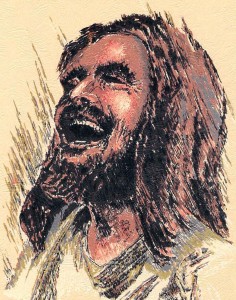
Laughing JesusIn the library of my parish church is a pen-and-ink drawing of Jesus laughing. It’s not a picture I particularly like, nor is it particularly well executed. In fact, if someone hadn’t told me that it is supposed to show Jesus laughing, I would have thought he was angry! Whenever I look at it, this verse from the Psalter comes to mind.

I think it’s hard for some people to conceive of Jesus (or God) showing emotions, particularly negative ones. I remember years ago (I was in my early 20s) listening to a meditation on anger at a church retreat. The priest offering the meditation said, “Jesus never displayed anger.” Really? I thought. What about that little incident in the Temple overturning tables and brandishing a whip? A false and mistaken idea that Jesus was never just plain mad, that God never gets royally pissed off does nothing more than create guilt in people who do (that would be everybody, I think).

One of the most interesting portrayals of the Lord in art that I have ever seen was a small hand-carved crucifix. The face of Jesus was contorted in obvious rage. I asked the artist about it and he told me it was how he saw Jesus saying, “Father, forgive them.” — “I think that what he is saying at that moment is, ‘You forgive them because, right now, I can’t! I have done everything you asked of me. I have taught them, healed them, exhorted them to proper conduct, shown them how to live, and this is what they do to me. I have run out of forgiveness. You do it!'” — I wish I’d been able to obtain that crucifix, but it wasn’t for sale.

I am quit certain that Jesus exhibited the full range of emotion, and I am equally certain that God does, as well. After all, Jesus was — is — God Incarnate. Furthermore, our faith teaches us that through his Ascension, Jesus has taken humanity into God’s heavenly domain; that includes everything it means to be human, including our emotions, positive and negative.

During these days of preparation for Christmas, this season the church calls “Advent,” emotions run high. For many people, sadness, anger, depression, a sense of loss, feelings of exclusion and betrayal may be the major emotions of the holidays. Laughing Jesus who looks to be angry, God laughing in derision, Jesus angry in the Temple, Jesus in exasperated rage on the cross . . . they should remind us that there should be no guilt in feeling these things. They are part of our humanity. Our human task is to accept them, work through them, and let go of them.

Lord, accept my Advent anger, my Christmas blues; help me lay them aside so that I may enter into the joy of your Incarnation.

====================

A request to my readers: I’m trying to build the readership of this blog and I’d very much appreciate your help in doing so. If you find something here that is of value, please share it with others. If you are on Facebook, “like” the posts on your page so others can see them. If you are following me on Twitter, please “retweet” the notices of these meditations. If you have a blog of your own, please include mine in your links (a favor I will gladly reciprocate). Many thanks!

====================

Father Funston is the rector of St. Paul’s Episcopal Church, Medina, Ohio.

The Advent Question – Sermon for Advent 1, RCL Year A – December 1, 2013

====================

This sermon was preached on the First Sunday of Advent, December 1, 2013, at St. Paul’s Episcopal Church, Medina, Ohio, where Fr. Funston is rector.

(The Revised Common Lectionary, Advent 1A: Isaiah 2:1-5; Psalm 122; Romans 13:11-14; and Matthew 24:36-44. These lessons can be read at The Lectionary Page.)

====================

Advent WreathFriday was a Holy Day in America! It was a day when all across the nation thousands, if not millions, of people breathed prayers of thanks. It was a day when all across the nation thousands, if not millions, improved the lives of many, many others. It was a day when news organizations from the smallest local radio station to international broadcast and cable conglomerates asked Americans across the nation, “How did you participate?” Yes, Friday was a Holy Day in America!

Wait! Did he say, “Friday?” Yes, he said, “Friday.” It was Black Friday. The day on which, we are told, retailers whose businesses have been operating at a loss all year long finally find themselves making a profit, when the ink on the ledger changes (in accounting tradition and terminology) from red to black. The thousands, possibly millions, uttering those thanksgivings were the managers, executives, Chief Executive Officers, financial officers, accountants, stockholders, and owners of retail concerns from smallest local boutique to the largest retail chains. Those thousands, possibly millions, who improved the lives of those retail owners and managers were the shoppers, the consumers, the buyers of bargains who . . .

In Odessa, Texas, trampled an 8-year-old boy and got themselves pepper-sprayed by store security in a mad rush to tear open a WalMart pallet of bargain-priced tablet computers.
* * *
In Las Vegas, Nevada, another shopper in the leg during a struggle over a bargain TV in a Black Friday sale at Target.
* * *
In incidents in Virginia and California, stabbed and slashed each other with knives in their efforts to get at sale-priced merchandise.

And they all did it in celebration of the birth of our Lord and Savior Jesus Christ. Or so those news organizations, from the smallest radio station to the international broadcast and cable conglomerates, tell us — this is all a part of “the Christmas Season.”

Somehow, though, I think we can be fairly sure that this isn’t what the Prophet Isaiah had in mind when he wrote:

Come, let us go up to the mountain of the LORD,
to the house of the God of Jacob;
that he may teach us his ways
and that we may walk in his paths.

Nor is it what St. Paul had in mind when he wrote:

Let us live honorably as in the day, not in reveling and drunkenness, not in debauchery and licentiousness, not in quarreling and jealousy.

Yes, the church has a rather different understanding of what we should be about during these days leading up to the celebration of the Messiah’s birth. Contrary to what the retail advertisers and the international news conglomerates tell us, this is not “the Christmas season.” This is the season of Advent. These four weeks or so leading up to Christmas Day are a time when the church bids us, as we make our preparations to celebrate the Messiah’s Birth, also to more consciously prepare for the his return. To ask ourselves a question . . .

But the question for Advent is not “When will Jesus come back?” Although the Scriptures continually remind us that one day God will, in Isaiah’s words, “judge between nations and shall arbitrate for many people,” Jesus reminds us that “about that day and hour no one knows.” So we must “keep awake” because we “do not know on what day [the] Lord is coming.” “The Son of Man is coming at an unexpected hour.” No, the question is not about when (or even if) the Messiah will return.

We all know that preparing to celebrate the birth of Christ is not a once-and-done thing. We do it again and again and again, every year. Sometimes we make mistakes doing it — We invite the wrong co-worker to our open house . . . next year we won’t do that again! We try using gorgonzola cheese in the stuffing . . . won’t do that again! Sometimes something new turns out to be something we want to do again — Apollo’s Fire’s Christmas vespers was lovely; we’ll take that in again next year. Going to church is great; let’s do that again soon! It’s not once-and-done; it’s something we do again and again and again.

Preparing for the Messiah’s return is also not a once-and-done thing. It’s something we have to work at and be ready at any time. This is what Jesus is saying when says that “two will be in the field; one will be taken and one will be left. Two women will be grinding meal together; one will be taken and one will be left,” or when he reminds us that “if the owner of the house had known in what part of the night the thief was coming, he would have stayed awake and would not have let his house be broken into.” It’s not that those things will happen at the end of time when he returns, but rather that they can happen at any time and, therefore, one must always be prepared. We must, in fact, always be preparing. We are to stay awake, to watch for signs of God’s activity in the world.

No, the question is not about when (or even if) the Messiah will return.

On the First Sunday in Advent, we are called upon to take our God and ourselves seriously. We are called upon to recognize that life can be changed, possibly even ended in an instant and to live our lives accordingly.

I was reminded earlier in the week by an old colleague from Kansas about something our bishop, the Rt. Rev. Bill Smalley, often said when we would gather as clergy. He liked to say that each order of the clergy, deacons, priests, and bishops, had a particular “iconic ministry.” Priests, in particular, he would say are the “icons of the story.” The role of the priest, in Bishop Smalley’s estimation, is to tell the story of God, the story of God’s People, the story of Jesus . . . to tell the story again and again and again. My colleague said, “Throughout the church year our worship tells the story over and over without much thought about how we live our lives, how we live in the Kingdom of God. We say we gather to praise God, but in truth we gather to tell the story, over and over. Our praise of God is in our lives.” And so, my old colleague suggested, a person who truly believes the story should ask him- or herself, “How does a person who believes this story live and praise God?”

That strikes me as a really good question to ask oneself during Advent, “How does a person who believes this story live?” Isaiah’s answer was, “they shall beat their swords into plowshares, and their spears into pruning hooks; nation shall not lift up sword against nation, neither shall they learn war any more.” St. Paul’s answer was, “Make no provision for the flesh, to gratify its desires.”

How does a person who believes this story live? It’s not a question that I can answer for you, but it is a question we can explore together and find answers that work for each of us, though our answers may not be exactly the same. And we may find answers that work for us today but won’t be right next year. It’s not a question with a once-and-done answer.

I was reading through a list of “things you can do for Advent,” things like read a chapter of Holy Scripture every morning, or reconnect with five old but not recently contacted friends, or reach out to a new charity. They were all good suggestions, but the one that particular rang a bell for me this year was to take five minutes every morning and make a list. Not a Christmas list of things to buy, or things to do, or things you want. Make an Advent list list of 24 blessings in your life, it could include the people you love, the people who love you in spite of yourself, the signs you recognize of God’s presence in your life. After you’ve made your list, each day in Advent pray a prayer of thanks for one of the things on the list.

That made sense to me this year because for me, this year, the answer to ” How does a person who believes this story live?” is “With gratitude.” And then my friend Mary Frances Schjonberg shared her sermon for this morning and in it introduced me to a poet new to me, Gunilla Norris. She is a psychotherapist who describes her work as “the practice of spiritual awareness in the most mundane and simple of circumstances.” In a poem called Polishing the Silver, she prays for the gift of gratitude:

As I polish let me remember
the fleeting time that I am here. Let me let go of
all silver. Let me enter this moment
and polish it bright. Let me not lose my life
in any slavery – from looking good
to preserving the past, to whatever idolatry
that keeps me from just this –
the grateful receiving of the next thing at hand.

Remember, it’s not Christmas yet. It’s Advent and Advent asks a question: “How does a person ‘keep awake’ because we ‘do not know on what day [the] Lord is coming?'” How does a person who believes this story live? Poet Norris suggests a pretty good answer to consider: By gratefully receiving the next thing at hand. Amen.

====================

A request to my readers: I’m trying to build the readership of this blog and I’d very much appreciate your help in doing so. If you find something here that is of value, please share it with others. If you are on Facebook, “like” the posts on your page so others can see them. If you are following me on Twitter, please “retweet” the notices of these meditations. If you have a blog of your own, please include mine in your links (a favor I will gladly reciprocate). Many thanks!

====================

Father Funston is the rector of St. Paul’s Episcopal Church, Medina, Ohio.

Open Windows — From the Daily Office — November 29, 2013

From the Prophet Isaiah:

For the windows of heaven are opened, and the foundations of the earth tremble.

(From the Daily Office Lectionary – Isaiah 24:18b (NRSV) – November 29, 2013.)

Open WindowBlack Friday. The day after Thanksgiving Day in the United States. A day whose name comes from financial accounting and the ancient practice of recording profits in black ink, losses in red. Supposedly, at one time, this was the day when retail merchants who might have been running “in the red” the whole year would see themselves “in the black” at long last. I don’t know if that is still the case, but the name has stuck. Black Friday is the day after Thanksgiving Day.

I’m never sure what to do on Black Friday. I am definitely not going shopping. I hate shopping in the first place, and the idea of being shoved and jostled about by larger crowds than usual would just make it worse! Looking at the news coverage of Black Friday events, one could almost imagine Isaiah’s prophecy has come true. Under the onslaught of all those trampling feet, surely “the foundations of the earth tremble.”

Anyway, what to do? The dishes need to be done. The leftovers from yesterday need to be checked; were they put away properly? Should I start stewing the turkey carcass to make the soup which will be a staple for the next week or so? Should I just kick back and relax and read a good book? (“But don’t forget you need to finish your sermon for Advent 1,” says the small voice of conscience somewhere inside my head.)

Even more so than Thanksgiving Day itself, this is a day to give thanks, but not for gifts received. This day is a day to give thanks for a future of limitless possibility. Isaiah’s statement, “the windows of heaven are opened,” reminds of me of summer mornings when my mother would wake me up by coming in my room and throwing open the window. In the Nevada desert, it would already be warm even early in the morning. The dry desert breeze would carry away the slightly musty, not-very-chill air from the “swamp cooler” that had kept us cool through the night. The arid warmth would suggest so many things a boy freed from school might do. The open window, the open windows of heaven, inviting one into a future of limitless possibility.

I’m never sure what to do on Black Friday. There are so many options, so much possibility, so much to be thankful for.

====================

A request to my readers: I’m trying to build the readership of this blog and I’d very much appreciate your help in doing so. If you find something here that is of value, please share it with others. If you are on Facebook, “like” the posts on your page so others can see them. If you are following me on Twitter, please “retweet” the notices of these meditations. If you have a blog of your own, please include mine in your links (a favor I will gladly reciprocate). Many thanks!

====================

Father Funston is the rector of St. Paul’s Episcopal Church, Medina, Ohio.

Like a Lawnmower — From the Daily Office – November 28, 2013

From Matthew’s Gospel:

[Jesus said:] For the kingdom of heaven is like a landowner who went out early in the morning to hire laborers for his vineyard.

(From the Daily Office Lectionary – Matthew 20:1 (NRSV) – November 28, 2013.)

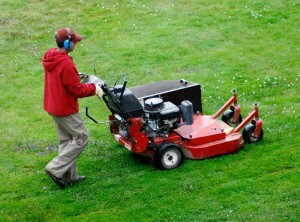
Man Mowing a LawnI had to read the first line of this familiar parable three or four times this morning before my eyes (it had to be my eyes; it couldn’t have been my brain) focused well enough to properly read the word landowner. On first reading, I read it as lawnmower.

“The kingdom of heaven is like a lawnmower . . . .”

What!?

I read it again; same thing! Shake my head; drink some coffee; look again. Oh! Landowner!

So I read the rest of the story about the vineyard owner hiring men in the morning, more at noon, a last bunch late in the day . . . and then paying them all the same wage. “So the last will be first, and the first will be last.” (v. 16) Nice counterpoint to the really awful bit of the First Letter of Peter appointed for today: “Slaves, accept the authority of your masters with all deference, not only those who are kind and gentle but also those who are harsh.” (1 Peter 2:18)

Although I really feel like I should be contemplating the issues of economic justice the two readings present, especially on Thanksgiving Day when I must acknowledge that I am so blessed and there are so many who aren’t, that has to be a conversation for another time. Meditating on the daily readings, I just kept coming back to my blurry-eyed misreading of the text.

“The kingdom of heaven is like a lawnmower . . . .”

Several weeks ago, back when it was warm and the grass was growing and it hadn’t rained for a few days so the dirt wasn’t spongy and the grass wasn’t too wet and I could mow the lawn, that’s what I was doing. Running the machine in long, curving swaths across our hillside back yard, I noticed a praying mantis in the piece I’d be covering in the next pass. The insect was bright green, about two inches long, and apparently injured.

Sure enough on my next pass there it was, right in front of the lawnmower. I disengaged the mower blade, disengaged the self-propelling mechanism, powered down the engine, set the brake, and walked around to scoop up the bug. I carried it to the edge of the lawn, to a flower bed where we have planted day lilies, forsythia, and butterfly bush, and set it among the plants. I hoped that I hadn’t been responsible for its injuries and that it would regrow whatever limb it was missing. (I think mantids are like crabs, that they can grow back whole limbs.) I walked back to the mower, re-engaged all the mechanisms, released the brake, and resumed my mowing.

So I think I can see how the kingdom of heaven might be like a lawnmower, if the word is understood to refer to the person doing the mowing, not to the machine.

I’m still working on the machine as a metaphor for heaven . . . I’ll probably be working on that one all day. Reading scripture in the early morning does that, sets my mind spinning and whirling and chopping away at these images, the ones actually in the bible and the extrabiblical ones my blurry-eyed imagination puts there. All day long. These images and metaphors challenge preconceptions, whack down received wisdom, pulverize prejudices, slice through both silly and profound notions, and mix my thoughts and the things I think I know all together in a rich mulch from which new ideas often grow and old ones give fruit.

Interestingly, a colleague yesterday commented on Facebook: “One of the things I am thankful for is the interesting dialogues and debates that can be fostered via Facebook. We may not always agree on any number of a wide variety of issues, but it is always interesting and informative to see the diversity of opinions that are offered on any number of topics from Ashes to Go, to politics, to how we prepare recipes, to how to approach some of the pressing social ills of our day, and so on and so forth. For me it helps further develop my own thoughts and perspective.” That’s my take on it, too, and it’s a lot like the processing I do as I reflect on biblical and extra-biblical metaphors; it all gets mashed together into a fertile mass.

So today while I’m at church presiding at the Eucharist, at home roasting a turkey, later in the day playing dominoes with friends, that’s what will be happening. I’ll be thinking about strange metaphors, about contemplation, about Facebook conversations, and what it all might teach, because “The kingdom of heaven is like a lawnmower . . . .”

Thanks be to God!

====================

A request to my readers: I’m trying to build the readership of this blog and I’d very much appreciate your help in doing so. If you find something here that is of value, please share it with others. If you are on Facebook, “like” the posts on your page so others can see them. If you are following me on Twitter, please “retweet” the notices of these meditations. If you have a blog of your own, please include mine in your links (a favor I will gladly reciprocate). Many thanks!

====================

Father Funston is the rector of St. Paul’s Episcopal Church, Medina, Ohio.

Quick! Grab a Pruning-Hook! — From the Daily Office — November 25, 2013

From the Prophet Joel:

Proclaim this among the nations:
Prepare war,
stir up the warriors.
Let all the soldiers draw near,
let them come up.
Beat your ploughshares into swords,
and your pruning-hooks into spears;
let the weakling say, “I am a warrior.”

(From the Daily Office Lectionary – Joel 3:9-10 (NRSV) – November 25, 2013.)

Sword MakingRead it carefully, it’s not what you think it is. It’s not what you expect. It’s not a call to make agricultural implements out of the weapons of war . . . it is quite literally the opposite!

It’s another surreal moment with scripture, like that reading from Revelation we had a few days ago! It’s God saying precisely what we do not want God to say . . . but isn’t that the way with God?

And like Revelation is sometimes understood, these words from God spoken through the Prophet Joel are about the end times; they are about judgment. God is summoning the nations do battle with God! God is coming to pronounce and carry out judgment, so he is ironically calling the peoples of the world to defend themselves against God. Earlier Joel had used a courtroom and law case metaphor, so this is just an escalation of that call to present a defense.

“I’m comin’; you best get ready,” is what this prophecy says. “Defend yourselves!” Can we do so?

Can we defend the failure all around us to feed the poor? In a country where our elected leadership has cut food assistance to the poor by $40 million while continuing and expanding corporate subsidies to agribusiness (and other industries), can we do so?

Can we defend the failure all around us to house the homeless? In a country where there homes sitting vacant because of the “real estate bubble” and the “foreclosure crisis” while families live in their cars and camp under highway bridges, where there are in fact more vacant homes than there are families in need of housing, can we do so?

Can we defend the failure all around us to care for the widowed and the orphan? In a country where we spend more per capita on health care than nearly any other industrialized nation but rank 37th overall in health care outcomes and have the 46th ranked life-expectancy for an adult, can we do so?

Can we defend the failure all around us to honor human life? In a country that regularly sends unmanned aerial vehicles (otherwise known as “drones”) into foreign nations to murder perceived enemies (including our own citizens) without warning, where thousands die every year because we value the “right to bear arms” so highly that we will not enact even reasonable regulations for the ownership of firearms, can we do so?

Quick! Grab a pruning-hook! Start straightening and sharpening it, because I think we’re going to need more than a few spears.

====================

A request to my readers: I’m trying to build the readership of this blog and I’d very much appreciate your help in doing so. If you find something here that is of value, please share it with others. If you are on Facebook, “like” the posts on your page so others can see them. If you are following me on Twitter, please “retweet” the notices of these meditations. If you have a blog of your own, please include mine in your links (a favor I will gladly reciprocate). Many thanks!

====================

Father Funston is the rector of St. Paul’s Episcopal Church, Medina, Ohio.

Houses and Vineyards, Laws and Regulations – From the Daily Office – November 23, 2013

From the Prophet Isaiah:

They shall build houses and inhabit them;
they shall plant vineyards and eat their fruit.
They shall not build and another inhabit;
they shall not plant and another eat.

(From the Daily Office Lectionary – Isaiah 65:21-22 (NRSV) – November 23, 2013.)

House and VineyardThis part of Isaiah was written shortly after the return of the Jewish exiles from Babylon, which Cyrus of Persia had allowed in the middle of the 6th Century BCE. Isaiah (on God’s behalf) was promising two things with these images of laborers enjoying the fruits of their own efforts: first, that the people would no longer be (if not slaves) subjugated workers of foreign (or domestic) overlords and, second, that there would be peace. Israel’s and Judah’s history had been one of regular (if not constant) upheaval with invaders coming in and taking control of the vineyards and seizing the people’s lands and homes: the simple planting of vineyards with an expectation of enjoying the crop was a metaphor of peace and security.

As I read the words this morning in our modern context, I thought how inappropriate a metaphor this is for us. We no longer live in a world where enjoying the fruits of one’s own labor is the norm. We live in a world dominated by an economic system in which those who tend the vines and harvest the grapes are not those who enjoy the crop, those who build the houses are not those who will ultimately live in them; indeed, they are several levels of “production” and “marketing” away from those who do. The metaphorical vineyard workers and home builders of our society have no personal or emotional connection to the crops and the buildings; they work for a paycheck which, one hopes, will enable them to purchase other crops harvested by other workers and to live in other homes built by other builders.

Not that there is anything wrong with that system, so long as it is fairly administered. Fairness, justice, and peace are, after all, what this prophecy is really addressing. Any economic system that produces those fruits lives up to the biblical standard. But it takes laws and regulations (and law enforcement systems and regulatory agencies) to assure that human beings and their economies behave in such ways. Left to our own devices, we humans seldom do so, as the historical record makes painfully clear.

As so often happens, I could not help but think of two recent news reports when confronted with this witness of scripture, reports that clearly demonstrate the need for such laws and the need for vigilance by those (like me) who would insist that they are needed. The first was the news that a congress woman from another state has introduced a bill to abolish, as a matter of federal law, the requirement of overtime pay for those whose employers demand they work in excess of 40 hours per week. The second was a report yesterday that British authorities had found and freed three women who had been kept as domestic slaves (in London, for heaven’s sake!) for thirty years!

We are so far from the biblical standard of fairness and justice for laborers! So far! And at times we seem to be slipping further way. The prophecy promises that the time will come when workers will know justice and peace; present-day news reports show that that time hasn’t come yet.

Another prophet once asked “What does the Lord require of you?” and then answered his own question: “To do justice, and to love kindness, and to walk humbly with your God.” (Micah 6:8) Only when each person and the whole of society (through its laws, regulations, and law enforcement) does so can we be assured that workers will build houses and inhabit them, plant vineyards and eat their fruit.

====================

A request to my readers: I’m trying to build the readership of this blog and I’d very much appreciate your help in doing so. If you find something here that is of value, please share it with others. If you are on Facebook, “like” the posts on your page so others can see them. If you are following me on Twitter, please “retweet” the notices of these meditations. If you have a blog of your own, please include mine in your links (a favor I will gladly reciprocate). Many thanks!

====================

Father Funston is the rector of St. Paul’s Episcopal Church, Medina, Ohio.

Drawing Water from the Springs of Salvation – Sermon for Pentecost 26, Proper 28C – November 17, 2013

====================

This sermon was preached on the 26th Sunday after Pentecost, November 17, 2013, at St. Paul’s Episcopal Church, Medina, Ohio, where Fr. Funston is rector.

(The Revised Common Lectionary, Proper 28C: Isaiah 65:17-25; Canticle 9 (Isaiah 12:2-6); 2 Thessalonians 3:6-13; and Luke 21:5-19. These lessons can be read at The Lectionary Page.)

====================

Illustration of Chinese Fifteen Buckets Idiom“You shall draw water with rejoicing from the springs of salvation.”

Their placement in the Book of Isaiah suggests that these words were written early in the career of the first prophet whose writings are collected into this book (there are three), a time when Judah had been conquered by and was a tributary-state of the Assyrian Empire. In the first eleven chapters of the book, Isaiah had prophesied against the Jewish people and the nation’s leaders, condemning their failure to follow God’s Law, their failure to take care of the widows, the orphans, the poor, the resident alien. He had even given his son a prophetic name, Maher-shalal-hash-baz — meaning “He has made haste to the plunder!” — to reflect God’s judgment against them. Isaiah prophesied of desolation and loss, and those prophecies seemed to have come true. It was a time such as Jesus describes in the Gospel today, a time when nation had risen against nation, kingdom against kingdom. Yet, in the midst of it, Isaiah offers this song of hope.

“You shall draw water with rejoicing from the springs of salvation.”

I once worked with a man who blew, as the saying goes, hot and cold. If you asked him, “How’s it going?” you’d get one of two responses. If things were OK, he’d say, “God’s in his heaven and all’s right with the world.” But on another day he’d answer, “The world’s going to Hell in a hand-basket!” There was no in-between with him, no shades of gray, no shades of anything! Either everything was great, or everything was awful. Isaiah’s message in our Gradual today is a message that even when everything is awful, even if the world is going to Hell in a hand-basket, God’s still in his heaven, God’s still in charge and eventually all will be right with the world.

“You shall draw water with rejoicing from the springs of salvation.”

One of the things we preachers do is look back to see if we said anything about a Biblical text the last time it came up on the lectionary rotation, so that is what I did. The last time we had the First Song of Isaiah as part of our Sunday worship, it was the Sunday following the Sandy Hook School shooting in Newtown, Connecticut. I didn’t preach on this particular text that Sunday, but it would have been a fitting text; it is a message of reassurance for the worst of times.

“You shall draw water with rejoicing from the springs of salvation.”

So . . . there are three themes or images in this one verse that I’d like to explore with you today: drawing water, rejoicing, and the springs of salvation. And I want to begin with the middle one because that is the way Isaiah begins.

Chapter 12 is only six verses long but, for some reason, when it is used liturgically as a canticle, the first verse is dropped off: we begin with Verse 2, “Surely, it is God who saves me . . . . ” But Isaiah began his song this way: “You will say in that day: I will give thanks to you, O Lord, for though you were angry with me, your anger turned away, and you comforted me.” (v 1) “I will give thanks to you, O Lord . . . .”

This is more than a polite “Thank You” note. This is a song of praise that describes, that would accompany a physical expression of gratitude. The Hebrew word here is yadah, which signifies the stretching out of one’s hands in thanks while singing.

It’s like . . . do you know the 1964 movie Zorba the Greek? It’s based on a novel of the same name by Nikos Kazantzakis. It is the story of Basil, a young English-Greek intellectual played by Alan Bates, and his encounter with a vibrant Greek peasant, Alexis Zorba, the title character; it is a story full of betrayal, death, and failure. But, at the end, as Basil is preparing to leave Crete (where the story is set) and return to Oxford, he asks Zorba to teach him to dance. What follows is this wonderful scene in which Anthony Quinn, who plays Zorba, lifts his hands and begins slowly to demonstrate the sirtaki. The music, by Mikis Theodorakis, builds as Quinn and Bates dance, with their hands raised, faster and faster, laughing, and overcoming all the darkness and tragedy that has gone before. That is yadah!

That theme is continued in this pivotal verse: “You shall draw water with rejoicing from the springs of salvation.” The word yadah is not repeated; here we have another word sawsone, which means “joyfulness,” or “mirth,” or even “giddiness,” translated in our Prayer Book text as “rejoicing.” Nonetheless, the meaning is the same: an exultant joy which requires physical expression.

“You shall draw water with rejoicing” — with dancing and singing and laughter and giddiness — “from the springs of salvation.”

The next image to consider is the drawing of water from a well. That’s not something many of us are familiar with, even if we live on farm properties with wells those wells are equipped with electric pumps and we get our water from a tap at the sink; we just turn a handle and the water comes out. Not so in Isaiah’s day or in Jesus’ time, nor even for some of our grandparents. In those days you took your bucket to the well and you lowered down, filled it, drew it up (not with a turn crank, by the way, but by brute strength), and then you carried it into the home, however far away that might be.

That day to day reality would most certainly have been in the minds of Isaiah’s first audience, but perhaps for them it would have been overshadowed by memories of an annual ritual. An important part of the celebration called Sukkoth or the Feast of Tabernacles was the “Festival of Water-drawing.” In this ritual, on each morning of the seven days of Sukkoth, a young priest would take a golden pitcher to the Pool of Siloam and fill it with water. He would then carry the water in a procession with lighted torches up to the Temple where the water was poured upon the altar, and the people broke out into jubilant song and dance.

The ritual of water-drawing was a reminder that God’s Presence is as fundamental and basic to human life as the water that falls from the sky or springs up from the earth. Life-giving water symbolizes God’s power. The image here is of water flowing with abundance, spilling over, and flowing out to the whole earth. In Isaiah’s song, the ritual of water-drawing leads directly to the proclamation of good news to all nations. The good news of God’s salvation cannot be contained; it must reach out to all the world.

Now something lost in the English translation is Isaiah’s use of singular and plural “yous,” his address is first to individuals and then to the community as a whole. In the ritual of water-drawing, it was the priest who drew the water as representative of the community, but in Isaiah’s song the “you” in this verse is addressed to each individual. “You shall draw water . . . .” — not the priest on your behalf — not the community of which you are a part — but you individually, you personally, you shall draw from the well of living water. Each of us goes to the well-spring individually . . . but what a mess it would be if we all showed up and tried to do that at the same time without any coordination!

As I thought about that, I remembered an old Chinese proverb I learned in Asian folklore course in college: Qi shang ba xia, literally, “seven up, eight down.” The full saying is, “My heart has fifteen buckets, seven up, eight down.” The image is from a folktale of fifteen people at a community well, all trying to draw water; seven with their buckets going up and eight going down, all clanging and banging against one another, spilling the water and achieving nothing. It refers to a person or a community faced with a time of uncertainty, fear, or turmoil. The English equivalent is “to be all sixes and sevens,” to be in a general state of confusion and disarray, possibly even a condition of irreconcilable conflict.

That certainly cannot be what Isaiah had in mind with his image of each of drawing out water individually! Surely there is here a lesson about working together in community! Remember that though each of us draws from the well we do so together, with yadah and sawsone, with that thankfulness and joy that expresses itself in dancing. Like Zorba and Basil dancing the sirtaki together, we work together so that our buckets are not “seven up, eight down,” not banging against one another and spilling their water uselessly, but all filled, drawn up, and poured out in proclamation of God’s good news. We never go to the well alone; we go together, and together we fill and draw out our buckets in a purposeful and concerted dance of joyful abundance.

“You” — each of you individually, but all of you together — “shall draw water with rejoicing” — with dancing and singing and laughter and giddiness — “from the springs of salvation.”

Which brings us to the last image of this verse: the springs of salvation.

While reviewing the commentaries and study guides about this text, I came across an alternative translation: “With great joy, you people will get water from the well of victory.” (CEV) At first blush, “well of victory” and “springs of salvation” seem like very different images! Salvation is something we receive, something that God gives us. Victory is something achieved, something that we do ourselves! But when I went to my Hebrew lexicon, I discovered that, indeed, the Hebrew word used here has been translated in other circumstances as “victory” (Psalm 20:5) and also as “prosperity” (e.g., Job 30:1) or as “deliverance” (e.g., Psalm 3:2). The well of God’s grace produces all of these things: deliverance, salvation, prosperity, victory.

In John’s Gospel we are told a story of Jesus meeting a Samaritan woman at the communal well in the city of Sychar. He asked her to draw him a drink from the well, and when she expressed surprise that a Jewish man would ask that of a Samaritan woman . . .

Jesus answered her, “If you knew the gift of God, and who it is that is saying to you, “Give me a drink,’ you would have asked him, and he would have given you living water.” The woman said to him, “Sir, you have no bucket, and the well is deep. Where do you get that living water? Are you greater than our ancestor Jacob, who gave us the well, and with his sons and his flocks drank from it?” Jesus said to her, “Everyone who drinks of this water will be thirsty again, but those who drink of the water that I will give them will never be thirsty. The water that I will give will become in them a spring of water gushing up to eternal life.” The woman said to him, “Sir, give me this water, so that I may never be thirsty or have to keep coming here to draw water.” (John 4:10-15)

The word used by the Prophet Isaiah, the word translated as “salvation,” as “victory,” as “prosperity,” as “deliverance,” is also a Name. The word is yeshu’ah; the name we translate as “Jesus.”

Even when the enemy (whoever or whatever that may be) has invaded and all seems to be desolation and loss . . . even when nations rise against nations and kingdoms against kingdoms . . . even when the world seems to be going to hell in a hand-basket . . . even in a time of unfathomable tragedy and grief, Isaiah’s words comfort and reassure us. They are a promise of “buoyant and determined hope that refuses to give in to debilitating present circumstances.” (Walter Brueggemann)

“You” — each of you, each of us individually, but all of us together —

“shall draw water” — living water —

“with rejoicing” — with dancing and singing and laughter and giddiness —

“from the springs of salvation” — from the wellspring who is Jesus.

Let us pray:

Lord Jesus, you promised that you would give to any who asked living water gushing up to eternal life: Make us thirsty for that living water that we may love God with our whole heart and soul and mind, that we may rejoice in your victory and salvation with dancing and singing and laughter, that we may fill our buckets with your abundant prosperity and may pour out your good news for all the world, that we may love our neighbor as ourselves; in your Holy Name we pray. Amen.

====================

A request to my readers: I’m trying to build the readership of this blog and I’d very much appreciate your help in doing so. If you find something here that is of value, please share it with others. If you are on Facebook, “like” the posts on your page so others can see them. If you are following me on Twitter, please “retweet” the notices of these meditations. If you have a blog of your own, please include mine in your links (a favor I will gladly reciprocate). Many thanks!

====================

Father Funston is the rector of St. Paul’s Episcopal Church, Medina, Ohio.
The Literature of Veterans Day — In Lieu of a Sermon for Pentecost 25C, November 10, 2013

====================

In lieu of a sermon on November 10, 2013, the 25th Sunday after Pentecost at St. Paul’s Episcopal Church, Medina, Ohio, where I am rector, I gave a report on the recently concluded 197th Diocesan Convention of the Diocese of Ohio.

In lieu of a sermon transcript, therefore, this week I offer two pieces of literature I read every Veterans Day.

====================

Veterans Day HonorBoth my father and my father-in-law were veterans of World War II. My father was gravely injured in France — while he was running from his position as a forward artillery spotter to convey information for the gunners (running because his radio had malfunctioned and he had vital data to convey), shrapnel entered the bottom of his right foot, exited, entered and exited his calf, then entered his thigh and damaged the bone. Wounded, he made it to a place where his information could be transmitted. He was eventually evacuated to England, underwent surgery, and was sent home to the States for therapy and convalescence. He was nearly always in pain from those injuries and frequently found relief in a bottle; it was that drinking that eventually killed him when he lost control of his car in a single-vehicle accident.
My father-in-law suffered no physical injuries. But he did witness friends and fellow soldiers die in horrible ways, and he was in the group of soldiers who liberated Ohrdruf and Buchenwald. He was never able to talk about his war experiences, but I know he suffered psychic and spiritual damage.

Every year on Veterans Day, I especially remember my father and (since my marriage) my father-in-law. In their honor, since being introduced to them in college as a student of English and American literature, I make it a practice to read two pieces of literature on this day. The American piece is a short story by Mark Twain, The War Prayer:

It was a time of great and exalting excitement. The country was up in arms, the war was on, in every breast burned the holy fire of patriotism; the drums were beating, the bands playing, the toy pistols popping, the bunched firecrackers hissing and spluttering; on every hand and far down the receding and fading spread of roofs and balconies a fulttering wilderness of flags flashed in the sun; daily the young volunteers marched down the wide avenue gay and fine in their new uniforms, the proud fathers and mothers and sisters and sweethearts cheering them with voices choked with happy emotion as they swung by; nightly the packed mass meetings listened, panting, to patriot oratory with stirred the deepest deeps of their hearts, and which they interrupted at briefest intervals with cyclones of applause, the tears running down their cheeks the while; in the churches the pastors preached devotion to flag and country, and invoked the God of Battles beseeching His aid in our good cause in outpourings of fervid eloquence which moved every listener.

It was indeed a glad and gracious time, and the half dozen rash spirits that ventured to disapprove of the war and cast a doubt upon its righteousness straightway got such a stern and angry warning that for their personal safety’s sake they quickly shrank out of sight and offended no more in that way.

Sunday morning came — next day the battalions would leave for the front; the church was filled; the volunteers were there, their young faces alight with martial dreams — visions of the stern advance, the gathering momentum, the rushing charge, the flashing sabers, the flight of the foe, the tumult, the enveloping smoke, the fierce pursuit, the surrender!

Then home from the war, bronzed heroes, welcomed, adored, submerged in golden seas of glory! With the volunteers sat their dear ones, proud, happy, and envied by the neighbors and friends who had no sons and brothers to send forth to the field of honor, there to win for the flag, or, failing, die the noblest of noble deaths. The service proceeded; a war chapter from the Old Testament was read; the first prayer was said; it was followed by an organ burst that shook the building, and with one impulse the house rose, with glowing eyes and beating hearts, and poured out that tremendous invocation:

God the all-terrible! Thou who ordainest,
Thunder thy clarion and lightning thy sword!

Then came the “long” prayer. None could remember the like of it for passionate pleading and moving and beautiful language. The burden of its supplication was, that an ever-merciful and benignant Father of us all would watch over our noble young soldiers, and aid, comfort, and encourage them in their patriotic work; bless them, shield them in the day of battle and the hour of peril, bear them in His mighty hand, make them strong and confident, invincible in the bloody onset; help them crush the foe, grant to them and to their flag and country imperishable honor and glory —

An aged stranger entered and moved with slow and noiseless step up the main aisle, his eyes fixed upon the minister, his long body clothed in a robe that reached to his feet, his head bare, his white hair descending in a frothy cataract to his shoulders, his seamy face unnaturally pale, pale even to ghastliness. With all eyes following him and wondering, he made his silent way; without pausing, he ascended to the preacher’s side and stood there waiting. With shut lids the preacher, unconscious of his presence, continued his moving prayer, and at last finished it with the words, uttered in fervent appeal, “Bless our arms, grant us the victory, O Lord and God, Father and Protector of our land and flag!”

The stranger touched his arm, motioned him to step aside — which the startled minister did — and took his place. During some moments he surveyed the spellbound audience with solemn eyes, in which burned an uncanny light; then in a deep voice he said:

“I come from the Throne — bearing a message from Almighty God!” The words smote the house with a shock; if the stranger perceived it he gave no attention. “He has heard the prayer of His servant your shepherd, and will grant it if such be your desire after I, His messenger, shall have explained to you its import — that is to say, its full import. For it is like unto many of the prayers of men, in that it asks for more than he who utters it is aware of — except he pause and think.

“God’s servant and yours has prayed his prayer. Has he paused and taken thought? Is it one prayer? No, it is two — one uttered, and the other not. Both have reached the ear of Him who heareth all supplications, the spoken and the unspoken. Ponder this — keep it in mind. If you would beseech a blessing upon yourself, beware! lest without intent you invoke a curse upon your neighbor at the same time. If you pray for the blessing of rain on your crop which needs it, by that act you are possibly praying for a curse on some neighbor’s crop which may not need rain and can be injured by it.

“You have heard your servant’s prayer — the uttered part of it. I am commissioned by God to put into words the other part of it — that part which the pastor — and also you in your hearts — fervently prayed silently. And ignorantly and unthinkingly? God grant that it was so! You heard the words ‘Grant us the victory, O Lord our God!’ That is sufficient. The whole of the uttered prayer is compact into those pregnant words. Elaborations were not necessary. When you have prayed for victory you have prayed for many unmentioned results which follow victory — must follow it, cannot help but follow it. Upon the listening spirit of God fell also the unspoken part of the prayer. He commandeth me to put it into words. Listen!

Lord our Father, our young patriots, idols of our hearts, go forth into battle — be Thou near them! With them — in spirit — we also go forth from the sweet peace of our beloved firesides to smite the foe. O Lord our God, help us tear their soldiers to bloody shreds with our shells; help us to cover their smiling fields with the pale forms of their patriot dead; help us to drown the thunder of the guns with the shrieks of their wounded, writhing in pain; help us to lay waste their humble homes with a hurricane of fire; help us to wring the hearts of their unoffending widows with unavailing grief; help us to turn them out roofless with their little children to wander unfriended in the wastes of their desolated land in rags and hunger and thirst, sports of the sun flames in summer and the icy winds of winter, broken in spirit, worn with travail, imploring thee for the refuge of the grave and denied it —

For our sakes who adore Thee, Lord, blast their hopes, blight their lives, protract their bitter pilgrimage, make heavy their steps, water their way with their tears, stain the white snow with the blood of their wounded feet!

We ask it, in the spirit of love, of Him Who is the Source of Love, and Who is the ever-faithful refuge and friend of all that are sore beset and seek His aid with humble and contrite hearts. Amen.

(After a pause.) “Ye have prayed it; if ye still desire it, speak! The messenger of the Most High waits.”

It was believed afterward that the man was a lunatic, because there was no sense in what he said.

The other, the English piece, is a poem from World War I by Wilfrid Owen, Dulce et Decorum Est. The title and last lines of the poem are the Latin for “It is sweet and proper to die for one’s country.” It is a line from one of the Roman poet Horace’s Odes. In that poetic setting, it has been translated, “What joy, for fatherland to die!”

Bent double, like old beggars under sacks,
Knock-kneed, coughing like hags, we cursed through sludge,
Till on the haunting flares we turned our backs
And towards our distant rest began to trudge.
Men marched asleep. Many had lost their boots
But limped on, blood-shod. All went lame; all blind;
Drunk with fatigue; deaf even to the hoots
Of disappointed shells that dropped behind.

GAS! Gas! Quick, boys! — An ecstasy of fumbling,
Fitting the clumsy helmets just in time;
But someone still was yelling out and stumbling
And floundering like a man in fire or lime…
Dim, through the misty panes and thick green light
As under a green sea, I saw him drowning.

In all my dreams, before my helpless sight,
He plunges at me, guttering, choking, drowning.

If in some smothering dreams you too could pace
Behind the wagon that we flung him in,
And watch the white eyes writhing in his face,
His hanging face, like a devil’s sick of sin;
If you could hear, at every jolt, the blood
Come gargling from the froth-corrupted lungs,
Obscene as cancer, bitter as the cud
Of vile, incurable sores on innocent tongues, —
My friend, you would not tell with such high zest
To children ardent for some desperate glory,
The old Lie: Dulce et decorum est
Pro patria mori.

I honor the sacrifices made by those who have served. I mourn the loss of those who died. I remember the wounds sustained by my father and father-in-law. May no one ever be asked by their country to do so again.

God, our refuge and strength, bring near the day when wars shall cease and poverty and pain shall end, that earth may know the peace of heaven through Jesus Christ our Lord. Amen. (Church of England, Common Worship, Collect for Remembrance Sunday)

====================

A request to my readers: I’m trying to build the readership of this blog and I’d very much appreciate your help in doing so. If you find something here that is of value, please share it with others. If you are on Facebook, “like” the posts on your page so others can see them. If you are following me on Twitter, please “retweet” the notices of these meditations. If you have a blog of your own, please include mine in your links (a favor I will gladly reciprocate). Many thanks!

====================

Father Funston is the rector of St. Paul’s Episcopal Church, Medina, Ohio.

Cleaning the Windshield — Sermon for All Saints Sunday, RCL Year C – November 3, 2013

====================

This sermon was preached on All Saints Sunday, November 3, 2013, at St. Paul’s Episcopal Church, Medina, Ohio, where Fr. Funston is rector.

(The Revised Common Lectionary, All Saints: Daniel 7:1-3,15-18; Psalm 149; Ephesians 1:11-23; and Luke 6:20-31. These lessons can be read at The Lectionary Page.)

[Note: The Revised Common Lectionary Old Testament reading for All Saints in Year C is an edited pericope; I had the reader at Mass read the entire thing, verses 1 through 18.]

====================

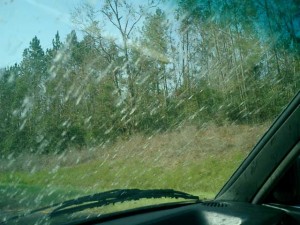
Windshield with BugsToday is the first Sunday in November which means that instead of the normal sequence of lessons for Ordinary Time, we are given the option of reading the lessons for All Saints Day, which falls every year on November 1. So today we heard a very strange reading from the Book of Daniel, a to-my-ear very troubling gradual psalm (in which we sing of wreaking vengeance on the nations and punishment on the peoples, of binding king in chains, and of inflicting judgment on the nobles bound in iron), a bit of Paul’s letter to the Church in Ephesus extolling the riches of the inheritance of the saints, and to Luke’s version of the Beatitudes in which Jesus not only blesses the poor, the hungry, and the weeping, he sighs woefully over the future plight people like ourselves – the comparatively wealthy, those whose bellies are full, and those in relatively good state of mind.

I asked our Old Testament reader this morning to read a somewhat longer lesson from Daniel than you find in your bulletin insert because the edited (or, more accurately, gutted) version there (which are the verses required for the day by the Revised Common Lectionary) includes only the introduction of a dream or vision experienced by Daniel and then skips immediately to the interpretation. We would have heard none of the apocalyptic imagery of the dream, but I think it important that we listen to and consider Daniel’s troubling vision of four strange beasts and the coming of one “like a son of man,” else how are we to understand the interpretation given by the “attendant.”

Early in my meditations and study for preaching today, I thought I would explore with you the meaning of the beasts and so on, but the more I thought about that, and especially as I began actually organizing my thoughts and writing out my sermon, I decided against doing so. It would I think be a distraction from the focus of the day. I was thinking that the reading as edited in the Lectionary presents us with a passage that makes little sense, but after reading and hearing again the full Daniel’s story of seeing a winged lion, a tusked bear, a four-headed leopard, and a ten-horned and iron-toothed monster, I guess that’s what we have in the longer reading, too! A lesson that distracts us, as so much in the Bible can do; so many people focus on these arcane details that they miss the bigger picture the Bible tries to show. As result, we get such non-Biblical nonsense as the various forms of “tribulationism” and the story of “the Rapture;” we get “one-issue Christians” who refuse to recognize as members of the same faith Christians who disagree with them. We get exactly the opposite of what the Feast of All the Saints is supposed to underscore.

So, instead of dealing with this troubling bit of the Bible right now, what I’d like you to do is come with me for a drive. Let’s just set the Bible aside and go get in our car and head off down the road. It’s a country road, a hard-pack dirt country road out in the farm country. We’re taking a country drive on a fine, beautiful spring day. It’s been raining, but it’s not raining now. Now the sun is shining and the birds are singing and insects of all sorts are buzzing and humming and chirping. In fact, there are loads of insects. It’s one of those days when the damsel flies are swarming, doing their brief romantic aerial ballets to attract mates and perpetuate their species. It’s one of those days when the grasshoppers are doing their best to eat everything in sight. It’s one of those days with yellow swallow-tails and monarchs and viceroys and white cabbage butterflies are flittering all over the place.

As we drive along, we’re traveling at a pretty good clip and, as you might expect with all those bugs around, the windshield is getting pretty messy. And since it just stopped raining and the dirt road is still a bit muddy, a lot of that has splashed up onto the windows and the windshield, as well. In fact, we can barely see through the windshield! We put the wipers on and twist the knob so the washer fluid sprays onto the glass, but the bug juice is sticky and there’s a lot of mud, so the washers only clear a little of the muck away, and the windshield is now not only covered with dead bugs and muck, it’s streaky, too!

Still, we peer through the streaks of bug blood and mud, and keep our eyes on the road ahead. Eventually we come to a filling station and we pull in. In a bygone era, a man in coveralls with a greasy rag tucked in his pocket would have run out and begun filling our tank with gas, and he would have checked under the hood, and he would have carried out a bucket of soapy water with a large sponge and a squee-gee, and he would have washed our bug-be-splattered, mud-streaked windshield and cleaned away all that distracting muck that was keeping us from seeing our way ahead.

A few days ago, I was reviewing a Vacation Bible School curriculum based on the story of Jonah and in the sales literature the publisher had written these words: “The Bible is a window that shows us God’s heart. In the stories, in the writings, and in the Gospels we see what God is like. The Bible reveals God to us, just like the windows in a car or in a building reveal what is going on outside.”

Isn’t that a great image for Holy Scripture: “The Bible is a window that shows us God’s heart.” Now I don’t know about you, but when I am driving in a car on a day like I described to you, a day when the windshield gets are splattered and messy with dead bugs and mud, I have a hard time looking beyond that cloudy window in front of me. I get distracted by the details on the window; I focus on them and not on the road out in front of me.

But so long as I focus on the window, the window is not serving its purpose. The window is not there to be the object of my attention; it is there to let me see what is happening on the other side. So it is with the Bible.

The Education for Ministry group that I have the privilege to mentor in this parish is made up of all first year students, so everyone in the group is working through study of the Old Testament. We are about six weeks into reading Genesis and Exodus now, and one of the things we’ve noticed is that the stories of the Patriarchs and the first Hebrews are not very pretty: Abraham is a liar; Jacob is a cheat; Joseph’s brothers are petulant bullies who nearly kill him; Moses whines a lot; and Aaron (Moses’ brother), although he is the first high priest, is the one who turns the people away from God and fashions the golden calf for them to worship! We are all, I think, finding it difficult to look past the peccadillos of the Patriarchs in order to see the God who is behind the stories; just like its difficult to look past the bugs and the mud on the windscreen!

And then today, along comes Daniel with his weird vision, the Palmist with his bloodthirsty delight in vengeance and revenge, and Jesus telling us that those of us who are fairly well off are destined to be hungry and in mourning! It’s hard to look past all of that understand where God is. As one commentator on Daniel noted, we who read this story in the Bible are “in the midst of bewildering events that affright and confuse.”

We find this all hard to accept and difficult to look through because we want the Bible to be clear! We want the Bible to be the answer book, to lay it all out for us in simple and easy-to-follow instructions; we want to be able to say, as our Sunday School children sang last week, “The B-I-B-L-E, that’s the book for me! I stand alone on the word of God, the B-I-B-L-E!” We just want it to be clear! But the Bible doesn’t exist to be the object of our devotion; the Bible doesn’t exist to be regarded on its own and for itself. The Bible is a window through which God is reveals Godself to us and, like any window, its got some distracting stuff we have to look past.

It does so because it is book (several books, actually) full of human stories, and human stories are messy. So we end up with stories of people who are sometimes liars and cheaters; people who can sometimes whine and be unfaithful. We end up with stories of weird hallucinations and frightful dreams. We end up with poetry by someone who’s been hurt so badly that vengeance and revenge can look like a gift of God. We end up with troubling warnings that we might, probably will, face hunger and grief. How do we look past that to see, as Paul encouraged the Ephesians, with the eyes of our hearts enlightened, so that we may know what is the hope to which God has called us?

Well, when we were on our drive through the countryside with our windshield spatted with bug goo and mud, we pulled into a gas station, and a mechanic came out and washed all of that away. Remember? Today is the day that we remember those who help clean away all of the distractions, the filling station attendants of the faith. Today we remember the saints who help to clear our vision of God. Broadly speaking, of course, the saints are all those who are baptized, who follow Jesus Christ, and who live their lives according to his teaching, which would include all of us here today. Church tradition, however, also uses the term more narrowly to refer to especially holy women and holy men who are heroes of the faith, who through lives of extraordinary virtue reveal the Presence of God to us, who clean that window through which we all look.

Cleaning a WindshieldThe saints whom we celebrate on this day (and the many who are given special days of individual recognition) were people who tried to live according to the Bible as they understood its teachings. Like us, they read it and encountered those troubling visions, those petulant patriarchs, those bloodthirsty psalms, and somehow looked past them and through them to see the God of faith, the God who Incarnate in Jesus said, “Love your enemies, do good to those who hate you, bless those who curse you, pray for those who abuse you.” We extoll the virtues of those saint and we celebrate their lives and their witness because they help us to do the same. By their lives and their examples, they clean the windshield for us; they clean away the bug blood and the mud, so that we no longer focus on the window, but on the God the window shows us.

This is not to suggest that we should not study nor seek to understand the murkiness and cloudiness that we find on the window, the questionable and troublesome visions of Daniel, the lying and cheating of the Patriarchs, the bloodthirstiness of the Psalmist, or the petulant pettiness of the Prophets. Certainly, we should for we can learn thereby of the graciousness of the God who overlooked and overcame those faults, who regarded and redeemed those men and women! But following the example of the saints before us, we should not let ourselves be distracted by them so that we fail to see and appreciate that same God.

Today we give thanks for the saints, the filling station attendants of the faith, who help us clean our windshields.

O God, the King of saints, we praise and glorify your holy Name for all your servants who have finished their course in your faith and fear: for the blessed Virgin Mary; for the holy patriarchs, prophets, apostles, and martyrs; and for all your other righteous servants, known to us and unknown; and we pray that, encouraged by their examples, aided by their prayers, and strengthened by their fellowship, we also may be partakers of the inheritance of the saints in light; through the merits of your Son Jesus Christ our Lord. Amen. (BCP 1979, Burial of the Dead, page 504)

====================

A request to my readers: I’m trying to build the readership of this blog and I’d very much appreciate your help in doing so. If you find something here that is of value, please share it with others. If you are on Facebook, “like” the posts on your page so others can see them. If you are following me on Twitter, please “retweet” the notices of these meditations. If you have a blog of your own, please include mine in your links (a favor I will gladly reciprocate). Many thanks!

====================

Father Funston is the rector of St. Paul’s Episcopal Church, Medina, Ohio.

« Older posts Newer posts »