Occasional thoughts of an Anglican Episcopal priest

Category: Sermons (Page 25 of 40)

If You’re Serious About This: Sermon for Proper 11B (Pentecost 8, 19 July 2015)

====================

A sermon offered on Eighth Sunday after Pentecost (Proper 11B, Track 1, RCL), July 19, 2015, to the people of St. Paul’s Episcopal Church, Medina, Ohio, where Fr. Funston is rector.

(The lessons for the day are 2 Samuel 7:1-14a; Psalm 89:20-37; Ephesians 2:11-22; and Mark 6:30-34,53-56. These lessons may be found at The Lectionary Page. Note: The Revised Common Lectionary provides that the first lesson is 2 Samuel 6:1-5,12b-19.)

====================

LoveGodBumperSticker

I was ordained a deacon in May of 1990 and made a priest in June of 1991. For two years, I served as associate rector of a parish in Nevada and then accepted a call to be rector of a parish in the Kansas City metropolitan area in a small, exurban community called Stilwell. Sometime after we had moved to Stilwell, my family and I visited my parents in southern California.

Now I should tell you that my parents were not church-going people. After the death of my biological father in 1958, my mother pretty much stopped going to church. In 1962, she married by step-father, a non-practicing Roman Catholic, in a Methodist church ceremony, but that is the only time I remember my parents going to church on their own (that is to say, not dragged there for the holidays or some other special occasion by one of their children). My folks were not particularly happy campers the day I told them I would be leaving the practice of law and entering ordained ministry.

So we were visiting my parents about three years after my ordination as a priest and during the visit I happened to go into their bedroom and found, on my mother’s bedside table, a copy of The Book of Common Prayer and an Inquirer’s Class study folder from St. George’s Episcopal Church in Laguna Hills, California. I picked them up and went out to the living room where they were both watching television and said, “Hey, Mom? What’s this all about?”

“Well,” she said, “I guess you’re serious about this, so I thought I should check it out.”

“If you’re serious about this . . . .” Took her three years after my priesting, but she finally, reluctantly got there . . . . But that was my mom. Today would have been her 96th birthday, by the way.

Once she decided I was serious about this, she got serious about this. She and my step-dad completed their Inquirer’s Class, became members of St. George’s and then a few years later transferred their membership to St. Wilfrid of York in Huntington Beach, California. Both volunteered to work at the church in various ways; he did handiwork; she became the secretary of the ECW. Both are now buried in the memory garden at St. Wilfrid Parish. That was my mom: “If you’re serious about this, then be serious about this.”

In the Gospel lesson today, I can imagine Jesus saying something similar to the apostles.

Chapter 6 of Mark’s Gospel is a bit hard to read because it’s all choppy and excited, like someone telling a story but who can’t get his words out fast enough to satisfy himself. Mark jams this chapter full of detail, but breaks the details up. Jesus goes to his home town and is rejected, so he and the apostles leave. He then sends the apostles out two-by-two with no provisions or equipment. They spread through the countryside, proclaiming the gospel of repentance, casting out demos, and anointing the sick. Mark tells us that King Herod hears about all this activity and becomes convinced that John the Baptizer has returned from the dead, at which point Mark goes off on a tangent and tells the story of Herod and Herodias, Salome’s dance and demand for the Baptizer’s head, and John’s execution. Now, in today’s bit, we return to the apostles and their missionary journey.

They are back, all excited by what they’ve done; Mark tells us (in Mark’s usual breathless style) that they told Jesus “all that they had done and taught.” So Jesus tells them to slow down; he can tell that they are excited by what they’ve done, but they are also exhausted and, because of all the coming and going of people who have heard about them, they can’t even take a break to eat. So he tells them, “Come away to a deserted place all by yourselves and rest a while.” I can almost hear him, in my mother’s voice, prefacing that with, “If you’re serious about this . . . .”

“If you’re serious about this, come away to a deserted place all by yourselves and rest a while.”

What’s going to happen is that they are going to try to do as Jesus instructs, but people aren’t going to let that happen. They are going to get in their boat, head out to a deserted place a few miles away across the lake, the “Sea” of Galilee, a place now called “Tabgha,” but the people are going to follow; in fact, they are going to “hurry there on foot from all the towns and arrive ahead of them.” (v. 33) “If you’re serious about this, come away to a deserted place all by yourselves and rest a while.” But guess what, you’re not going to get the chance to do that today.

Do you notice the verse references on your insert? Once again, the Lectionary has us edit out some verses in our Sunday readings, nearly twenty of them from this gospel reading. Guess what happens in those twenty verses. Jesus feeds the 5,000 people who have “hurried there on foot from all the towns and arrived ahead of them,” and he sends the apostles back across the lake by themselves, and he walks on water, and he calms a strong adverse wind. All of that in this one short chapter . . . all of that, but no one actually gets away to deserted place by themselves. Instead, they are continually confronted by the demands of people who “rush about the whole region and bring the sick on mats to wherever they hear Jesus and the apostles may be.”

If you are serious about following Jesus, however, you have to find a way to get away to that deserted place by yourself. If you are serious about following Jesus, if you are going to love God, you have to find time for private time with God. If you are serious about following Jesus, if you are going to love your neighbor as yourself, you have to find time to take care of yourself.

We have another variation on this same theme in the story from the Second Book of Samuel. David has become king over Israel, supplanting Saul. He has taken over the city of the Jebusites, sometimes called Jebus, sometimes metsudat Zion, and made it his capital, renaming it “Jerusalem, the City of David.” He has built a fine house for himself (a “house of cedar,” as he calls it). He has reclaimed the Ark of the Covenant from the Philistines and moved it to Jerusalem, where it is now housed in a tent. Now he wants to build a house for the Ark, a temple for God.

At first, the prophet Nathan, who is David’s trusted adviser, says, “Fine. Go ahead and do this thing.” But then Nathan has a dream in which he is given a message to David from God. He is to say to David, “Are you the one to build me a house to live in? I have not lived in a house since the day I brought up the people of Israel from Egypt to this day; I have been moving about in a tent and a tabernacle.” In other words, God doesn’t want a temple; God is happy with a moveable tent. And Nathan is to remind David, “I took you from the pasture, from following the sheep to be prince over my people Israel….” In other words, God has given you a job to do and, if you’re serious about this, you need to do it. If you are serious about being king over Israel, make sure the people may live in their own place and be disturbed no more. If you are serious about being king over Israel, make sure that evildoers shall afflict the people no more. If you are serious about being king over Israel, do the jobs I have given you and don’t take on tasks that don’t need to be done now (building the temple will be someone else’s job).

And that’s really Paul’s point in writing to the Ephesians, as well. “You [Gentiles],” he writes to them, “are no longer strangers and aliens, but you are citizens with the saints and also members of the household of God, built upon the foundation of the apostles and prophets, with Christ Jesus himself as the cornerstone. In him the whole structure is joined together and grows into a holy temple in the Lord; in whom you also are built together spiritually into a dwelling place for God.” He will, in a few pages, say to them, “I beg you to lead a life worthy of the calling to which you have been called, with all humility and gentleness, with patience, bearing with one another in love, making every effort to maintain the unity of the Spirit in the bond of peace.” (Eph 4:1-3) He will remind them that every church member, baptized into the one faith, following the one Lord, is gifted, equipped for ministry, for the building up of the body. “If you’re serious about this,” he seems to be saying, “if you’re serious about being a Christian, then get serious. Do the job you have been given to do.”

And what is that job? The job given to each of us, though we may be given different gifts with which to accomplish it is, is the same. We who are “living stones … built into a spiritual house” (1 Pt 2:5) of which Christ is the cornerstone all have the same job: “You shall love the Lord your God with all your heart, and with all your soul, and with all your strength, and with all your mind; and your neighbor as yourself.” (Lk 10:27)

If you’re serious about being a Christian, get serious about this:

Don’t take on jobs that you don’t need to do; building the temple is someone else’s job. If you’re serious about serving God, do the tasks God gives you.

Go away to a deserted place from time to time; spend time in prayer. If you’re serious about loving God, spend time with God. If you’re serious about loving your neighbor as yourself, take care of yourself.

If you’re serious about following Jesus . . . Love God. Love your neighbor. Use the gifts you have been given. Change the world.

Amen!

====================

A request to my readers: I’m trying to build the readership of this blog and I’d very much appreciate your help in doing so. If you find something here that is of value, please share it with others. If you are on Facebook, “like” the posts on your page so others can see them. If you are following me on Twitter, please “retweet” the notices of these meditations. If you have a blog of your own, please include mine in your links (a favor I will gladly reciprocate). Many thanks!

====================

Father Funston is the rector of St. Paul’s Episcopal Church, Medina, Ohio.

Neither Hot Nor Cold: A Sermon of Ecclesial Disappointment – 12 July 2015

====================

A sermon offered on Seventh Sunday after Pentecost (Proper 10B, Track 1, RCL), July 12, 2015, to the people of St. Paul’s Episcopal Church, Medina, Ohio, where Fr. Funston is rector.

(The lessons for the day are 2 Samuel 6:1-19; Psalm 24; Ephesians 1:3-14; and Mark 6:14-29. These lessons may be found at The Lectionary Page. Note: The Revised Common Lectionary provides that the first lesson is 2 Samuel 6:1-5,12b-19.)

====================

Israel-Palestine MapWhy do people in church seem like cheerful, brainless tourists on a packaged tour of the Absolute? On the whole, I do not find Christians, outside of the catacombs, sufficiently sensible of conditions. Does anyone have the foggiest idea what sort of power we so blithely invoke? Or, as I suspect, does no one believe a word of it? The churches are children playing on the floor with their chemistry sets, mixing up a batch of TNT to kill a Sunday morning. It is madness to wear ladies’ straw hats and velvet hats to church; we should all be wearing crash helmets. Ushers should issue life preservers and signal flares; they should lash us to our pews. For the sleeping god may wake someday and take offense, or the waking god may draw us out to where we can never return. (Annie Dillard, Teaching a Stone to Talk: Expeditions and Encounters [New York: Harper & Row, 1982], pp. 40-41.)

I wonder if Ms. Dillard might not have had in mind the episode recounted today in our reading from the Second Book of Samuel. Confession: The Lectionary edited out the verse that describe the death of the priest Uzzah and the circumstances and causes thereof. I put them back in because they explain the sudden reluctance of David to take the Ark of the Covenant into his city, and his three-month delay in doing so. With Uzzah’s death David, as the writer of Second Samuel tells us, got a notion of “what sort of power we so blithely invoke,” of what sort of power he was bringing into Jerusalem, and it frightened him.

After all, what had Uzzah done. Nothing disrespectful of God, that’s for sure. If anything, he saved the Almighty the indignity of the Ark tumbling out of the ox cart and falling to the ground. All he had done was reach out to steady it when it was jostled by the oxen; he was doing only what comes naturally when one is moving a large, heavy object over rough terrain. And for this, for touching the Ark with the most innocent and benign of intentions, he was stricken dead. At first, David was angry with God about that; apparently he cursed up a storm because the place gets renamed “Perez-uzzah” which means “outburst about Uzzah” – could be God’s outburst that killed Uzzah, more likely it’s David’s outburst of anger after Uzzah is dead. Once he vents, however, David becomes frightened; we are told, “David was afraid of the Lord that day; he said, ‘How can the ark of the Lord come into my care?'” So, he leaves the Ark right there in the care of a foreigner, Obed-edom the Gittite, for three months. David has realized that he may need a crash helmet when dealing with the power of the Almighty.

And then there’s John the Baptizer. John knew all too well the Power he’s been dealing with; he’d talked directly with God (“The one who sent me to baptize with water said to me,” he claimed – Jn 1:33) and John spoke to earthly power on God’s behalf. He said to the crowds that came out to him, to the scribes and the Pharisee, the priests and the Sadducees, to all who came to him at the River Jordan, “You brood of vipers! Who warned you to flee from the wrath to come? Bear fruits worthy of repentance. Do not begin to say to yourselves, ‘We have Abraham as our ancestor;’ for I tell you, God is able from these stones to raise up children to Abraham. Even now the ax is lying at the root of the trees; every tree therefore that does not bear good fruit is cut down and thrown into the fire.” (Lk 3:7-9) John knew there was danger, terrible danger when one becomes involved with Almighty God. It was the writer of the Letter to the Hebrews who said it, but John knew well, “It is a fearful thing to fall into the hands of the living God.” (Heb 10:31) Because even if the power of God doesn’t kill you, the ministry demanded of you by God may well put you in harm’s way . . . and that, in the end, is what happened with John.

Speaking truth to power, John publicly denounced Herod Antipas for his sinful, adulterous relationship with his half-brother Philip’s wife Herodias, who also happened to be Antipas’s niece. For that public reproof, John was arrested and held for a time in prison; the Gospel lesson tells us that Herod protected John after his arrest because he feared him! – Even Herod Antipas felt the danger of involvement with the Almighty at second hand, the danger of dealing with God’s anointed prophet. But in the end, tricked by his own foolish behavior, Antipas must order John beheaded; for John the ax is laid not at the foot of the tree, but at the base of his neck. As Ms. Dillard might put it, “The waking god drew John out to where he could never return.”

We, the Episcopal Church, take this dangerous prophetic step out to where we might never return every time we make a statement or take an action and proclaim to the world, “We do this because we are called to do so by our Lord and our God.” I do it every time I step into this pulpit and dare to preach a sermon. You do it every time you take a stand on an issue or behave in a particular way and say, “I do this because I am a Christian, because I am an Episcopalian.” Our church does it when it meets in deliberative council, in vestry meetings, in diocesan conventions, or as we have just done in our triennial General Convention; we do it when we issue public statements on important issues of the day.

We feel like we have done it now in the aftermath of our 78th General Convention because, for example, we have taken the bold step of opening our marriage liturgies to same-sex couples. However, I would suggest to you that that was not a very prophetic step after all. We had already, several years ago, declared that gay and lesbian persons are beloved children of God entitled to the full ministry of and to full inclusion within the body of the faithful. We underscored that a dozen years ago when we approved the election and consecration of the first openly gay bishop, Gene Robinson of New Hampshire. When we declared last week that same-sex couples could marry in the church, we were only continuing down a path we had already been walking, a path which (frankly) the United Church of Christ, the Presbyterian Church in the USA, and the United States Supreme Court had just walked before us. It’s easy to be prophetic when others have already done so before you.

We feel like we have taken a prophetic stance because 1,500 bishops, deputies, and other Episcopalians marched the streets of Salt Lake City to protest against gun violence and to call for rational handgun licensing laws and for background checks on all gun sales including gun show and private transactions. We feel like we have done so because, a few days after that protest march, the General Convention passed a resolution making that same call; but in all honesty it’s a call we have made before. We have been on record as a church in support of reasonable regulation of gun manufacture, sale, and ownership for nearly 40 years; we have passed resolution after resolution urging registration, licensing, and insuring of handguns, as well as the banning of civilian sale and ownership of automatic and semi-automatic weapons since at least 1976. And we have not been alone among the churches in doing so. It’s not particularly original or prophetic to do and say again that which you and many others have done and said many, many times.

We feel like we have been prophetic in the House of Bishop’s election of Michael B. Curry of North Carolina to be our Presiding Bishop, our first black Presiding Bishop! But, folks, we have had black bishops in the Episcopal Church for over 140 years since the consecration of James Theodore Holly to be Bishop of Haiti in 1874. Neither God nor the world would be out of line in telling us that Bishop Curry’s election is not particularly prophetic and asking, “What took you so long?”

It’s not that these are not important and vital issues; they are. It’s not that our voice, added to so many others, is not worth raising about these issues; it is. It’s not that we should not be taking a stand on these matters; we should. We should and we have and we will continue to do so, but we are not being particularly prophetic when we do so. We are merely doing what comes naturally moving a large, heavy institution over the rough terrain of difficult issues. Like Uzzah steadying the Ark of the Covenant, it may be dangerous, but it’s not particularly prophetic.

We did have the opportunity to be prophetic, but we failed to take it. A resolution numbered D016 was offered for our consideration. It would have called upon our church and our leadership to

work earnestly and with haste to avoid profiting from the illegal occupation of Gaza and the West Bank, and [to] seek to align itself with, and learn from, the good work of our Ecumenical and Anglican Communion partners, who have worked for decades in support of our Palestinian Christian sisters and brothers and others oppressed by occupation. (Resolution D016 as originally proposed)

It did not call for divestment from Israeli investments. It did not call for the boycotting of products made in the occupied territories. It did not call for sanctions against Israel. It did not call upon us to join the “BDS” movement as it is called – Boycott, Divest, Sanction. It was opposed on the grounds that it did, but in truth it did not.

We could have taken such action; we could have joined BDS although the resolution did not call for it. Alternatively, we could have proclaimed that, instead of doing that, we would work through positive investment and constructive engagement with both Israelis and Palestinians to foster reconciliation and peace. Or, we could simply have done as the resolution sought and undertaken a time of intentional study and discernment as to what our ministry as a church with important ties to the Holy Land might be, how we might try to encourage healing in that broken, wounded, and bleeding place. We could have done any of those things, any of those prophetic things. But do you know what we did?

We ducked the issue. We played it safe. We closed off debate. We failed to act. The House of Bishops rejected Resolution D016 so the House of Deputies never had a chance to consider it and, thus, we did nothing. – We should know better! As Paul wrote to the Ephesians,

With all wisdom and insight [God] has made known to us the mystery of his will, according to his good pleasure that he set forth in Christ, as a plan for the fullness of time, to gather up all things in him, things in heaven and things on earth. (Eph 1:8b-10)

We know that! We have declared as much in our catechism that “the mission of the Church is to restore all people to unity with God and each other in Christ,” and that “the Church pursues its mission as it prays and worships, proclaims the Gospel, and promotes justice, peace, and love.” (BCP 1979, page 305) We are a church for whom the ministry of reconciliation should come as naturally as reaching out to steady the cargo on an ox cart came to Uzzah. And yet with respect to our brothers and sisters in Israel and Palestine, we did nothing…. We are a church who believes itself to speak like John the Baptizer prophetically to power on any number of subjects. And yet with respect to our brothers and sisters in Israel and Palestine, we said nothing….

As a church meeting in deliberative assembly and praying for the guidance of the Holy Spirit, we did nothing, we said nothing to promote justice, peace, love, and reconciliation in the Holy Land.

When John of Patmos had the vision recorded in the Book of Revelation, he was instructed to deliver a message from Jesus to the church in Laodicea. He was told to write these words to them: “I know your works; you are neither cold nor hot. I wish that you were either cold or hot. So, because you are lukewarm, and neither cold nor hot, I am about to spit you out of my mouth.” (Rev. 3:16) With regard to those living in the land where Jesus was born, where he lived and taught and loved and died, where he rose from the dead for our salvation . . . with regard to our brothers and sisters living in that land, our General Convention action (or, really, lack of action) was lukewarm; it was tepid; neither hot nor cold, worthy only to be spit out.

I love my church. I love what we do in our synods and our conventions. I love that we take positions, sometimes unpopular positions. I love that we take risks with power, the kind of risks that Uzzah took, the kind of risks that John the Baptizer took, the kind of risks for which we should be wearing crash helmets and life preservers and holding signal flares. But we failed to do that with regard to the occupation of Palestine and the strife existing between our Israeli and Palestinian brothers and sisters, and I am disappointed in the church I love. As the Rev. Winnie Varghese, a priest from New York who was one of the supporters of Resolution D016, wrote after its rejection: “I will never understand why we would not listen … to our brothers and sisters truly on the ground, the lay and ordained Palestinian Christians who have been displaced; who work for justice; and who ask for our help.” (Huffington Post, July 10, 2015) Nor will I. I will never understand.

Let us pray:

Lord our God, the earth is yours and all that is in it, so we lift up our heads, we open our gates, and we give you glory; the Psalmist asked who could stand in your holy places and answered his own question saying, “Those who have clean hands and a pure heart;” give us clean hands and pure hearts that we may follow through on the promises made at our baptism, promises to “proclaim by word and example the Good News of God in Christ,” to “respect the dignity of every human being,” and to “work for justice and peace;” give us grace that we, as the Episcopal Church, may do so in solidarity with those who have dedicated their lives to justice for Palestinians and security for Israel, that we may be either hot or cold, never tepid or lukewarm; give us the strength to do what should come naturally and to speak prophetically in your name; all this we ask through your Son, our Savior, the King of Glory. Amen.

====================

A request to my readers: I’m trying to build the readership of this blog and I’d very much appreciate your help in doing so. If you find something here that is of value, please share it with others. If you are on Facebook, “like” the posts on your page so others can see them. If you are following me on Twitter, please “retweet” the notices of these meditations. If you have a blog of your own, please include mine in your links (a favor I will gladly reciprocate). Many thanks!

====================

Father Funston is the rector of St. Paul’s Episcopal Church, Medina, Ohio.

Yeah, Not So Much – From the Daily Office Lectionary

From the Daily Office Lectionary (Yr 1), Thursday in the week of Proper 9B (Pentecost 6, 2015)
1 Samuel 16
14 Now the spirit of the Lord departed from Saul, and an evil spirit from the Lord tormented him.

I can relate. At least to the first part of the verse. How often have I stared at a blank paper or a blank computer screen wondering what to write? Whether it be a letter of condolence to a parishioner who’s lost a family member, note of congratulations to someone, a report to the vestry, or (worst of all) a sermon for next Sunday, what secular authors know as “writer’s block” hits hard and I am left completely uninspired (which, as you know, means that the spirit is absent). That’s been the case most of this week. I’ve had to write two letters of condolence, one newsletter squib, a letter in response to a complaint about a sermon (thank heaven, those aren’t often required), and some sort of something to preach next Sunday, and it’s been like pulling teeth without anesthetic to get the words put together. When I’ve tried to write for this blog . . . nothing; that’s why there’s been no entry for a few days. So I read this verse (or the first half of this verse, anyway) and I can relate. – But “an evil spirit from the Lord”? I don’t get that. What does that mean? If the text simply said “an evil spirit,” it would make sense to me. If it say “an evil spirit from Satan (or the tempter or the devil or Baal or some other agency),” that would make sense. But “an evil spirit from the Lord”? I don’t get that. Does God really send “evil spirits to torment” God’s people? This is, honestly, one of those times when I have to look at the Hebrew Scriptures through the lens of the Gospel, squint, and say, “Yeah. Not so much. I think you got that one wrong.” As one of my seminar professors would have said, “The Gospel trumps the Bible.”

Our Chronic Illness, Our Besetting Sin (Eve of St. Alban, 21 June 2015)

====================

A sermon offered on the Eve of the Feast of St. Alban, First Martyr of Britain, June 21, 2015, to the people of St. Paul’s Episcopal Church, Medina, Ohio, where Fr. Funston is rector.

(The lessons for the day are Wisdom 3:1-9; Psalm 31:1-5; 1 John 3:13-16; and Matthew 10:34-42.)

====================

Heavenly Father,
We have come over a way that with tears has been watered.
We have come, treading our path through the blood of the slaughtered,
God of our weary years,
God of our silent tears,
Thou who hast brought us thus far on the way;
Thou who hast by Thy might,
Led us into the light,
Keep us forever in the path, we pray.
Amen.

We are moving away from the Lectionary this morning and are using the propers for the commemoration of St. Alban, First Martyr of Britain, whose feast is tomorrow. I hope you’ll forgive me this personal conceit: we are doing so because twenty-four years ago today, on the Eve of St. Alban’s Day 1991, the Right Rev. Stewart Zabriskie, bishop of the Diocese of Nevada and about 30 presbyters of that diocese laid their hands upon me and ordained me a priest in Christ’s One, Holy, Catholic, and Apostolic Church.

In our gospel lesson today, Jesus promises that one result of following him will be conflict with one’s family: “I have come to set a man against his father,” he said. Those are hard words to hear spoken on Father’s Day (which today also happens to be), but they are words that speak to me because of my family history. I have spoken to you often of my father, York Funston, and of my grandfather, Charles Edgar Funston (known to everyone as “CE”), but you may not have notice that I have never involving both of them. That is because during the time they were both alive during my lifetime they never spoke to one another; I can recall no time when they were ever together.

When my father came home from the Second World War and finished his degree at Washburn University in Topeka, Kansas, my father and mother moved to southern Nevada. That was in 1947. From that point until he died in 1958, my father never again saw nor did he ever speak to his father. The reason was a very simple one, but one which is deeply imbedded in the culture of this country and is the besetting sin of our society; I believe it may be a chronic disease that is killing country.

My father had been an enlisted man in the US Army artillery. While serving in the European theater, he had become friends with several black service men. That was, I believe, a transformative experience for him. I don’t know what may have happened between my father and grandfather to sever their relationship, but I do know this . . . my grandfather was a racist: until he died in 1977, I never heard my grandfather ever refer to an African American by any term other than “n***er.” That was an attitude and a word my father simply could not and would not tolerate.

When my grandfather died in 1977 it was because he had suffered a stroke. My grandfather suffered that stroke because he, like every other member of our family (myself included) had a chronic disease, high blood pressure. Being a stubborn man, he did nothing about it and eventually that stubbornness caught up with him. He suffered a stroke, became bed ridden, and eventually contracted pneumonia which killed him. His chronic disease weakened him; the opportunistic, acute illness killed him.

The accurate medical term for high blood pressure is “hypertension,” a word which was originally coined in the mid-19th Century to mean, “excessive or extreme emotional tenseness.” That’s what racism is, a hypertension, a chronic disease which is killing American society.

Cartoon from "The New Yorker Magazine" by Christopher Weyant On Wednesday night, America witnessed what happens when that chronic illness is augmented by the acute and opportunistic disease of easy unfettered unregulated unrestricted access to firearms. A 21-year-old white man named Dylann Roof with a history of racism planned and carried out the murders of nine black men and women worshiping in their church, Emanuel African Methodist Episcopal Church in Charleston, South Carolina; four of those who died were pastors of the church, including the senior pastor Clementa Pinckney, who was also a South Carolina state senator.

Researcher Timothy Tyson of Duke University has written recently about the killer . . .

[A photograph of Roof shows] a young man wear[ing] Rhodesian and apartheid-era [South African] flags on his jacket. Both countries never existed during his lifetime. Both flags are commonly worn as in-group insignia among politically organized white supremacists.

Dylann Roof told his victims that he came to kill black people because they are “raping our women and taking over our country.” Both claims date back to the white supremacy campaigns of the 1890s . . . . These ideas did not just percolate up inside of his mind; this is not ordinary “bias” or suspicion of people different from him; someone had to teach him these elaborated historical traditions. * * * He gunned down nine people at a historic black church, historic enough that he might well have selected it intentionally; Emanuel AME has been at the center of the civil rights struggle since the early 19th century. * * *

Roof said he wanted to start a race war; this is a common theme among white supremacists and depicted in their favorite book, The Turner Diaries, which also helped inspire Timothy McVeigh to commit the Oklahoma City bombings. He is part of something, . . . something dangerous. America in general and South Carolina in particular are generously sprinkled with white supremacist groups. (From a Facebook Note)

Wednesday’s tragedy, unfortunately, is only one of several recent incidents throughout the nation which have made it clear that racism is a chronic disease that is killing us. It may even be a part of our nation’s DNA. The evil institution of white Europeans owning black African slaves was allowed by our Founders to continue here when our nation was created. Some recognized the iniquity of doing so. Abigail Adams, wife of the first Vice President, once wrote in a letter to her husband, “I wish most sincerely there was not a slave in this province. It always appeared a most iniquitous scheme to me to fight ourselves for what we are daily robbing and plundering from those who have as good a right to freedom as we have.”

Many people do not realize that the U.S. Constitution as originally adopted provide that, in determining the proportional representation in House of Representatives, blacks were to be counted as lesser than whites. Specifically, it provided that the number of representatives to which a state was entitled would be “determined by adding to the whole Number of free Persons, including those bound to Service for a Term of Years, and excluding Indians not taxed, three fifths of all other Persons.” (Art. I, Sec. 2, Cl. 3)

Interestingly, it was not the southern slave owners who inserted that provision, it was northerners. Elbridge Gerry, a deputy from Massachusetts who later became the fifth Vice President of the United States, objected to counting blacks at all arguing, “Why should the blacks, who were property in the South, be in the rule of representation more than the cattle and horses of the North?” I think we can all agree that valuing African Americans as nothing more than cattle or horses, or even as 3/5 of a free white person, is simply wrong; there is no other word for it – it’s wrong! Racism is a chronic disease from which America seems always to have suffered; it is our nation’s original and besetting sin.

Although it is historically wrong to assert that the United States was founded to be a “Christian nation,” it is not inaccurate to recognize that most of the Founders were members of the Christian church; many, in fact, were Episcopalians. That Christians should have valued other human beings, black human beings, many of whom were themselves converts to the Christian faith, as of lesser value, as of no more value “than cattle and horses” boggles the mind. It flies in the face of, it is a direct violation of Christ’s new commandment: “Love one another as I have loved you.” (Jn 15:12) As the portion of the First Letter of John read this morning reminds us, “Whoever does not love abides in death. All who hate a brother or sister are murderers, and you know that murderers do not have eternal life abiding in them.” (1 Jn 3:14b-15) Racism, the hatred of a brother or sister human being simply because their skin color differs from one’s own, is deadly; it is the chronic hypertension that is weakening and killing our country.

When a chronic illness weakens the body, an acute opportunistic infection can bring death. My grandfather’s weakened condition, bedridden from a hypertension-induced stroke, made him a prime target for deadly pneumonia. Weakened by the hypertension of racism, our country is a prime target for the deadly destruction that the acute problem of easy unfettered unregulated unrestricted access to guns can wreak. Now, I know, some will answer me that the right to bear arms is a constitutional right guaranteed by the Second Amendment and I really do not want to get into that argument today; let me just leave the issue with one thought – if the Constitution could be wrong today about the 3/5 valuation of black Americans, could it not also be wrong today about firearm access and ownership?

May I shift gears here and tell you how I spent my day on Friday?

I started the day earlier than usual getting to the office at 7:30 a.m. because I had a 9 o’clock doctor’s appointment and I wanted to be sure the rooms where, later, bicycles would be stowed overnight were ready for that. So I got here, and moved tables and chairs out of the way. Then I worked on the Prayers of the People for today’s services until I had to go my physician’s office. That didn’t take very long, so on the way back to the church I made a pastoral call. When I got back here, I met with a parishioner about pre-planning her and her spouse’s funerals, then I put together some materials for the clergy who will be substituting here while I am at General Convention. By then it was about 1 p.m. so I took the dog home (she’d been with me through all that I just outlined), grabbed a quick bite to eat, and got back here by 2 p.m. to begin receiving the 28 bicycle riders we would be hosting. From then until we sat down to dinner with them I ran several errands getting riders to their lodgings and picking up a few things for the kitchen crew, then I helped set the tables for dinner. After welcoming our guests to supper, I sat down at a table with the bishop expecting to enjoy dinner, only to be informed that a toilet in the ladies’ room was overflowing. I am grateful to my lady-wife, who got a plunger and went to work, but unfortunately things only went from bad to worse. Eventually, I found myself standing in a puddle of rather unsavory water on the phone with our plumber and then with Roto-Rooter arranging a late night service call. So after we broke down the tables and set up the chairs for Free Farmers’ Market, I sat here while the Roto-Rooter man did his job. Eventually he cleared what turned out to be a 75-ft long plug of God-knows-what, and he and I left at around 10:30 pm.

Days like that are not typical for clergy, but they are not uncommon, either. Usually after such a day, I go home tired but feeling pretty good about the life to which I’ve been called and which I’ve lived for 24 years of ordained ministry. The priesthood is a privilege and, no matter how tiring a day may be, it is usually a joyful mystery.

Friday, however, on the way home, I started crying. I got to thinking about Clementa Pinckney who, though very much younger than I, had been a pastor for just about the same amount of time, 23 years in his case. And I got to thinking about his fellow pastors DePayne Middleton-Doctor, Daniel Simmons Sr., and Sharonda Singleton, all of them gunned-down with five of their parishioners at Emanuel AME Church by a hate-filled, 21-year-old, white supremacist. I got to thinking about how I’m sure they had had similar days of ministry, and about how terrible it is that they are not still alive to do those things for their congregation, to visit their parishioners, to help plan funerals and weddings, to bear the frustrations of coordinating activities with bishops, to be burdened by the annoyance of clogged sewer pipes, and to endure the exhaustion of 16-hour days. And the only reason they are not . . . is racism. I believe that, as the Book of Wisdom reminds us, they “are in the hand of God, and no torment will ever touch them” and that their witness “will shine forth, and will run like sparks through the stubble” (3:1,7), but we would all so much prefer that Wednesday had never happened.

On the anniversary of my ordination, I would so much prefer to preach about anything else, but the reality of racism cannot be denied, the sin of racism must be confronted. I don’t know if my father ever confronted my grandfather about his racism. I know that I never did and by failing to do so I am as guilty as him. Racism is our nation’s besetting sin and we must repent; it our society’s chronic illness and we must cure it, because it is killing our country.

Let us pray:

Good and gracious God, you created every human being in your image and likeness; we are weary, we are tired, we are sick of the besetting sin of racism that infects our country: we repent of the ways we have participated in or benefited from racial injustice; we ask forgiveness for the ways our nation continues to foster an environment of separation; break through the strongholds of superiority, destroy the dividing lines of racial separation, cure us of the toxic disease of prejudice, forgive us; make your church a model of unity, a beacon of reconciliation, and keep us on the path that leads to your light; through your Son, our Savior, Jesus Christ, who lives and reigns with you and the Holy Spirit, one God, now and for ever. Amen.

====================

A request to my readers: I’m trying to build the readership of this blog and I’d very much appreciate your help in doing so. If you find something here that is of value, please share it with others. If you are on Facebook, “like” the posts on your page so others can see them. If you are following me on Twitter, please “retweet” the notices of these meditations. If you have a blog of your own, please include mine in your links (a favor I will gladly reciprocate). Many thanks!

====================

Father Funston is the rector of St. Paul’s Episcopal Church, Medina, Ohio.

Parabolic Poetry, Parabolic Focus – Sermon for Pentecost 3B (14 June 2015)

====================

A sermon offered on the Third Sunday after Pentecost, June 14, 2015, to the people of St. Paul’s Episcopal Church, Medina, Ohio, where Fr. Funston is rector.

(The lessons for the day are 1 Samuel 15:34-16:13; Psalm 20; 2 Corinthians 5:6-17; and Mark 4:26-34. These lessons can be read at The Lectionary Page.)

====================

Conic SectionsBefore we tackle today’s lessons from Scripture, we’re going to recall (or perhaps learn for the first time) something from geometry class. First, I want you to envision a cone. You know what a cone is: A cone is a three-dimensional geometric shape that tapers smoothly from a flat base to a point called the apex or vertex; or another way of defining it is the solid object that you get when you rotate a right triangle around one of its two short sides. So, envision one of those.

Now, envision a one-point thick plane slicing through the cone and envision the plane as being exactly parallel to the slope of the cone, or more technically, parallel to a plane which is tangential to the cone’s surface.

Where the plane and the cone intersect, there is now a U-shaped, two-dimensional, mirror-symmetrical curve called a “parabola.” If take that curve, invert it, and rotate it through 360 degrees, we create a “parabolic bowl.” Astronomers mirror-coat such bowls and use them in their telescopes because they reflect light inward to a common point and amplify its intensity; parabolic reflector telescopes make whatever they are looking at clearer to see. Parabolic microphones work the same way with sound.

OK… why am I telling you this?

That curve, a “parabola,” was given its name by Apollonius of Perga, a 3rd Century B.C.E. mathematician, who put together two Greek words: para, meaning “along side,” and ballein, meaning “to throw” or “to place.” The plane which cuts the parabolic curve from the cone is placed (or thrown) alongside (parallel to) the plane tangent to the cone and the curve is created.

The English word parable, which describes these stories of Jesus (and others), is derived from exactly the same original Greek words. Parables are not just cute stories; they are extended metaphors. When someone tells a parable, they are throwing (ballein) one image alongside (para) another as away to illuminate our understanding; like a parabolic mirror or a parabolic microphone, their purpose is to focus our attention so as to lead to greater understanding.

So now we have two parables in today’s gospel, two short stories which are meant to help us understand the kingdom of God. Not “heaven”! Not some mythical place of eternal reward to look forward to after we die, but the kingdom of God which Jesus told us “has come near” and which we pray (some of us) everyday will “come on earth as it is in heaven,” the kingdom of God which is a present, if not yet fully comprehended, reality.

To what can we compare the kingdom of God? Seed scattered (actually “thrown”) by an unobservant and unaware person, seed which takes root and grows when the sower isn’t watching and in ways the sower cannot understand, seed which then produces a crop to the benefit of this ignorant sower. Or, alternatively, to a grain of mustard which also grows in a mysterious way to become a giant bush in which all the birds can make their nests; in fact, the sort of mustard of which Jesus would have been speaking completely takes over the soil in which it is grown – it is an invasive weed whose roots spread in great profusion so that nothing else can grow with it.

Thrown alongside our incomplete picture of the kingdom of God, what can we learn from these parables? What further understanding is parabolically illuminated?

Let’s ponder that question while we turn our attention to today’s Old Testament lesson from the First Book of Samuel. Many commentaries will tell you today’s reading begins the story of David as King of Israel, but that’s not really so. At best, it is the story of David’s first anointing, privately with only his family present, as a potential king in ancient Israel; he will be anointed again, publicly, as king over Judah, in the second chapter of Second Samuel and then again publicly as king over the rest of Israel in the fifth chapter. This isn’t the beginning of David’s story; it is really a tangent, an excursus from Saul’s story, from the story of Saul’s decline and eventual failure as Israel’s first king.

Note the way the lesson begins – “Samuel went to Ramah . . . . ” – and then note the way it ends – “Samuel went to Ramah . . . . ” The words are repeated almost verbatim. In Hebrew literature this repetition indicates a sort of parenthetical addition to a main story. It’s as if the story teller were saying, “O let me fill you in on a little backstory” or “Hang on while I tell you this interesting but unrelated bit of information.” German bible scholars coined a term for this; it’s called a wiederholenden Wiederaufnahme, which simply means “repetitive resumption.” “Samuel went to Ramah” – tell your parenthetical story, then pick up the main story again by repeating – “Samuel went to Ramah.” We find examples like this scattered throughout the Old Testament.
So we have the story of David’s private anointing as just an aside to the larger story of King Saul. Like the parables of the scattered grain and the mustard seed, it is a story of the seemingly insignificant. Samuel expected that Jesse’s eldest son, the tall, good-looking Eliab, was God’s chosen, but that wasn’t so; nor was it to be Abinadab, nor Shammah, nor any of the next three. It was the smallest, the youngest, little David, out keeping the sheep and easily forgotten, who was to be the next king.

In the kingdom of God, the least can be the source of greatness, what is unseen, uncomprehended, and not understood can be the source of a great harvest. The measures and standards of the world where size and good-looks, power and influence, status and position determine outcomes are not those of the kingdom of God. So David is anointed . . . . and then “Samuel went on to Ramah” and the story of Saul continues.

The story of David’s private anointing in his father Jesse’s home is like a little seed planted in the reader’s mind, a little seed planted in Israel’s history. For the rest of the story of Saul, who doesn’t die for another fifteen chapters, as Saul descends into physical, mental, and spiritual illness, as he first calls David as a soothing friend and companion but soon turns against him as his rival and eventual replacement, this little seed of David’s private anointing will take root and grow. He will publicly become king and his kingship will blossom, his kingdom will grow, and under the reign of his son Solomon it will be an earthly empire. Eventually, his descendant Jesus of Nazareth will be born. In God’s kingdom, the seed planted in Jesse’s home will slowly grow until in the incarnation of God in Jesus as the babe of Bethlehem, in his life, death, resurrection, and ascension the kingdom of God will come near and Jesus will reign in heaven and on earth, a kingdom that will never end, growing in ways we cannot see and cannot understand, spreading like a mustard bush, producing a yield ripe for harvest.

To what can we compare the kingdom of God and what parable can we use for it? It grows, in ways we cannot see and cannot comprehend; from small beginnings it spreads its branches until everyone can find shelter in them. In our prayer book office of morning prayer there is a wonderful prayer for mission written by Bishop Charles Henry Brent which begins with these words: “Lord Jesus Christ, you stretched out your arms of love on the hard wood of the cross that everyone might come within the reach of your saving embrace . . . .” I have a friend who dislikes this prayer; it is, he insists, “simplistic transactional theology.” I have to admit that I don’t even know what he means when he says that, but my answer to him is, “It’s not theology; it’s prayer . . . and it’s poetry, parabolic poetry.” The prayer, like a telescope with a parabolic mirror, like a parabolic microphone, like the parables of Jesus, focuses our attention on our place and our mission as followers of Jesus. Like the wide-spreading branches of the mustard bush, Jesus’ arms spread wide inviting all to take shelter.

What began as the small seed of the private anointing of David in the home of Jesse the Bethlehemite has come to fruition in his ancestor Jesus, who (as Paul reminds us) is the “one has died for all . . . so that those who live might live no longer for themselves,” but rather live as “a new creation: everything old has passed away; see, everything has become new!”

Bishop Brent’s prayer for mission concludes with this petition: “So clothe us in your Spirit that we, reaching forth our hands in love, may bring those who do not know you to the knowledge and love of you . . . .” We may not see and we may not understand how the seed germinates, how it grows, how “first the stalk, then the head, then the full grain in the head” appear, but now, and like the sower in the parable, it is time for us to go in with our sickle, with our hands reaching forth in love, because the harvest has ready. Amen.

====================

A request to my readers: I’m trying to build the readership of this blog and I’d very much appreciate your help in doing so. If you find something here that is of value, please share it with others. If you are on Facebook, “like” the posts on your page so others can see them. If you are following me on Twitter, please “retweet” the notices of these meditations. If you have a blog of your own, please include mine in your links (a favor I will gladly reciprocate). Many thanks!

====================

Father Funston is the rector of St. Paul’s Episcopal Church, Medina, Ohio.

“By the Grace of God” – Blasphemy! (Sermon for Pentecost 2, 7 June 2015)

====================

A sermon offered on the Second Sunday after Pentecost, June 7, 2015, to the people of St. Paul’s Episcopal Church, Medina, Ohio, where Fr. Funston is rector.

(The lessons for the day are 1 Samuel 8:4-20;11:14-15; Psalm 138; 2 Corinthians 4:13-5:1; and Mark 3:20-35. These lessons can be read at The Lectionary Page.)

====================

CrownAs I read the lessons for today, I had one of those weird little flashes of memory when some small bit of trivial knowledge you had forgotten you knew floats to the surface . . . . In this case it was something from my 9th Grade American History class. My American History teacher loved to fill us up with the minutiae of our country’s past and the one that came to mind is the debate over what to call the President of the United States: the Founders had to determine how the president was to be introduced. There were, apparently, some who favored “His Democratic Majesty, by the Grace of God, President of the United States.” Other senators recommended “His Elective Majesty” and John Adams recommended the title: “His Highness, the President of the United States and Protector of their Liberties.” All of this embarrassed George Washington who would have none of it; he wanted simply to be called “the President of the United States” and to be addressed as “Mr. President.” And thus it has been since then. The American president doesn’t even get “Your Excellency” as the presidents of other nations do.

The reason this came to mind, I think, is the story of the election or selection of Saul as first king of the Israelites, the first part of which we heard today from the First Book of Samuel. Let’s set the scene . . . .

This is the end of the period of the judges, which is a really poor translation of the Hebrew word shofet which describes what were essentially warlords. After the Hebrews had finished their trek across the desert of Egypt, after the first generation (whom God had forbidden to enter the Promised Land) had died, they settled the land which came to be called Israel and they become known as Israelites. But they were not a united nation in the sense we think of today. At best, they were a loose confederation of tribes with no sort of central administration. Whenever they were threatened from the outside, the leader of one tribe would be commissioned and anointed to lead their assembled troops. You know the names of some of these people: Gideon, Deborah (yes, there were female judges), Samson. They would lead the amassed warriors until the end of whatever crisis and then return to their life as a tribal leader.

Eventually, however, the people decided that this wasn’t a workable arrangement. So they come to the most recent of the judges, who was also a prophet, Samuel, and say to him (as we heard in the lesson), “Anoint us a king so that we can be like other nations.” Specifically, in our reading today, they say they want a king to “govern us and go out before us and fight our battles;” in other words, they want someone to go to war for them.

Samuel is very upset by this; he considers this to be an affront not only to himself but to God! So he prays to God and asks what to do. God reassures him, “They aren’t rejecting you; they are rejecting me, which they have done many times in the past.” And God tells him to give them what they want, but tells Samuel to warn them of what will happen, what it means to have a king who goes to war. He does so. He tells them, “Look – a king will turn you into slaves. He will take your sons and turn them into soldiers; he will make your daughters [I love this]; he will take your horses and your flocks and the produce of your fields. You will not like it, but when you call out to God, God will not answer you.” I think that last warning may be a statement that whomever they choose (and they end up choosing Saul) will not be king “by the Grace of God.” This is fine with the people: “We want a king,” they say.

So off they all go to Gilgal and, although we aren’t given the details in today’s lesson, they choose Saul to be king . . . and we know how that works out – Saul is a terrible king and has to be replaced. Eventually God would send Samuel to anoint David and David would then be succeeded by Solomon and, after Solomon, the kingdom would split and both Israel in the north and Judah in the south would suffer a series of pretty bad monarchs. But even David and Solomon, back to whose rule the people of God have looked for millennia as a sort of “golden age,” were not that great: David was guilty of essentially murdering a soldier, Uriah, and committing adultery with his wife, Bathsheba; Solomon had hundreds of wives and amassed great wealth at the expense of his people. None of them lived up to the ideal of kingship which God had pronounced through Moses at the very beginning of the Hebrews’ occupation of the Promised Land.

Interestingly, our Daily Office Lectionary this past week included (on Wednesday) that very description of kingship in a reading from the Book of Deuteronomy. As I was pondering today’s reading, I wondered if Samuel, or perhaps even God, had forgotten these words spoken to the Hebrews by Moses on the border of Canaan which he (as part of that disobedient original generation) was forbidden to enter. In his farewell discourse, speaking on God’s behalf, Moses had said:

When you have come into the land that the Lord your God is giving you, and have taken possession of it and settled in it, and you say, “I will set a king over me, like all the nations that are around me,” you may indeed set over you a king whom the Lord your God will choose. One of your own community you may set as king over you; you are not permitted to put a foreigner over you, who is not of your own community. Even so, he must not acquire many horses for himself, or return the people to Egypt in order to acquire more horses, since the Lord has said to you, “You must never return that way again.” And he must not acquire many wives for himself, or else his heart will turn away; also silver and gold he must not acquire in great quantity for himself. When he has taken the throne of his kingdom, he shall have a copy of this law written for him in the presence of the levitical priests. It shall remain with him and he shall read in it all the days of his life, so that he may learn to fear the Lord his God, diligently observing all the words of this law and these statutes, neither exalting himself above other members of the community nor turning aside from the commandment, either to the right or to the left, so that he and his descendants may reign long over his kingdom in Israel. (Dt 17:14-20)

When I researched this apparent lapse in divine memory, I found one commentator who explained that the difference between what Moses says and what the Israelites did in demanding a king is the difference between peace and war. Moses’ ideal king was to be appointed when the land was “settled,” when the people were at peace; the ideal king was to look after the welfare of the people, not amassing wealth nor preparing for war. In the First Book of Samuel, the people demand a king to “govern us and go out before us and fight our battles;” they want a king to go to war. This is a far cry from the ideal approved by God through Moses.

Let that sit for a moment and let’s turn to the Gospel lesson taken from the third chapter of Mark. We are early in Jesus’ career, but a lot has already happened. He has been baptized and spent forty days in the desert discerning his mission. He has called the Twelve who are his inner circle and, together with them, he has walked through the countryside visiting villages, preaching his good news, healing the sick, and casting out demons. His reputation has grown and now he has come to his home town. The crowds are huge and they press in so tightly that he and his friends can’t even eat.

The situation is made more chaotic when Jesus’ family, Mary and his brothers James and Joses and Jude and Simon and Jesus’ sisters (whose names we are never told), show up to “restrain” him because they’ve decided his nuts! They’ve heard what he’s up to and they think he’s gone crazy. And not only are they there, some of the religious authorities from Jerusalem have come and they are saying that Jesus is evil! He’s in league with Beelzebul, either because he’s been possessed or, worse, because he’s intentionally working for the Devil.

Here is Jesus doing good works, healing people, feeding people, casting out demons, modeling a new kind of kingship, and his family says he’s a lunatic and the scribes say he’s Satan. He declares both assertions to be blasphemy, but he says that these blasphemies can be forgiven, there is only one unforgiveable sin: “whoever blasphemes against the Holy Spirit can never have forgiveness, but is guilty of an eternal sin.”

Now what is blasphemy? If I were to ask, you’d probably say something like “cursing God” or “speaking ill of God,” and in one sense you would be correct. Muslims might say that drawing a cartoon of Mohammed is a blasphemy and many believe that putting a crucifix in a container of urine, as artist Andres Serrano did several years ago, is a blasphemy. But none of those answers is technically, theologically correct. Blasphemy, as theologian Craig Uffman has written in a paper prepared for the up-coming General Convention, “is claiming God’s union with us in our doing that which is false, such as murdering, stealing, or any of the other ways we choose the opposite of the good.”

Blasphemy is when we claim that in what we are doing, in whatever incomplete, incorrect, sinful, false, inadequate thing we are doing, God is cooperating, that our will is God’s will. The most egregious contemporary example I can think of is the Nazi regime in World War II Germany, which claimed that in their oppression and annihilation of the Jews “Gott mit uns” (“God is with us”). Wehrmacht soldiers wore this slogan on their belt buckles. But God was not with them; God is not in, with, or supportive of any corrupt, false, oppressive, violent, or degrading act of sinful human beings. To claim otherwise is blasphemy, blasphemy against the Spirit of God, the unforgiveable sin.

Now, let’s go back to the Israelites demanding a king . . . I believe that this is why their experiment with kingship worked out so badly, worked out exactly as God warned them through Samuel, again and again as they anointed kings not as administrators of peace (according to the ideal set forth in Deuteronomy) but as warlords to “govern us and go out before us and fight our battles.” Those kings might have claimed, as European monarchs later would claim, that they served at the election of and “by the Grace of God.” God’s ideal, however, was very different.

I think that’s why that little tidbit of American history came to mind as I considered this lesson. I believe our Founding Fathers, particularly George Washington, were very wise in eschewing titles of nobility for anyone, but especially such titles and forms of address for our president. We certainly pray that God’s grace will sustain and guide our national leaders, but our leaders serve by the election and selection of the people; they cannot claim to serve “by the Grace of God” and if they do so, they blaspheme! I think that in every election in which I have voted (and I have voted in every election since becoming eligible to do so) there has been at least one candidate who has hinted (and some have said outright) that “God told me to run.” That makes me very uncomfortable because that is the very core of the sin of blasphemy, claiming God’s union with us in what we do, claiming that our will is God’s will. I think that in the acceptance speech of every politician who has successfully run for office during my adulthood there has been some sort of claim (hinted at if not stated outright) that God was responsible for their victory. That makes me very uncomfortable because that is the very core of the sin of blasphemy, claiming God’s union with us in what we do, claiming that our will is God’s will. We’ve had at least one president who claimed that God told him to take our country into war! That makes me very uncomfortable because that is the very core of the sin of blasphemy, claiming God’s union with us in what we do, claiming that our will is God’s will.

Look again at our opening collect this week, the prayer that began our worship today:

O God, from whom all good proceeds: Grant that by your inspiration we may think those things that are right, and by your merciful guiding may do them; through Jesus Christ our Lord, who lives and reigns with you and the Holy Spirit, one God, for ever and ever. Amen.

We can certainly seek God’s inspiration and strive to follow God’s merciful guidance. In doing so, we are brothers and sisters of Jesus who said in today’s Gospel lesson, “Who ever does the will of God is my mother and my brother.” But we have to admit that, like the ancient kings of Israel, we are always going to fall short of the ideal! We strive to do God’s will, but because we are human there will be in everything we do that small bit of sinfulness, that portion of self-serving falsehood. By what we do and by what we leave undone, we will constantly err and stray from God’s ways like lost sheep, we will follow too much the devices and desires of our own hearts, and we will we offend against God’s holy laws. None of us can ever claim that our will is God’s will; none of us can ever claim that God is in union with us in what we do, because what we do is, at least partially, always corrupt, false, and incomplete. Beware of anyone, especially any leader, especially any politician, who claims otherwise.

The best we can do is the best we can do, always knowing that it will fall short of God’s ideal. Thus, we can never claim that our will and our falsehood is God’s. To do that is unforgiveable blasphemy. All that we can do is acknowledge our shortcomings, constantly seek God’s inspiration, and strive to follow God’s guidance. Then, by the Grace of God, we will be not kings ourselves, but brothers and sisters of the King. Amen.

====================

A request to my readers: I’m trying to build the readership of this blog and I’d very much appreciate your help in doing so. If you find something here that is of value, please share it with others. If you are on Facebook, “like” the posts on your page so others can see them. If you are following me on Twitter, please “retweet” the notices of these meditations. If you have a blog of your own, please include mine in your links (a favor I will gladly reciprocate). Many thanks!

====================

Father Funston is the rector of St. Paul’s Episcopal Church, Medina, Ohio.

May We Be One: Sermon for Sunday after the Ascension (Easter 7) – 17 May 2015

====================

A sermon offered on the Sunday after the Ascension, the Seventh Sunday of Easter, May 17, 2015, to the people of St. Paul’s Episcopal Church, Medina, Ohio, where Fr. Funston is rector.

(The lessons for the day are Acts 1:15-17,21-26; Psalm 1; 1 John 5:9-13; and John 17:6-19. These lessons can be read at The Lectionary Page.)

====================

Unity in the Community“That they may be one, as we are one.” (Jn 17:11)
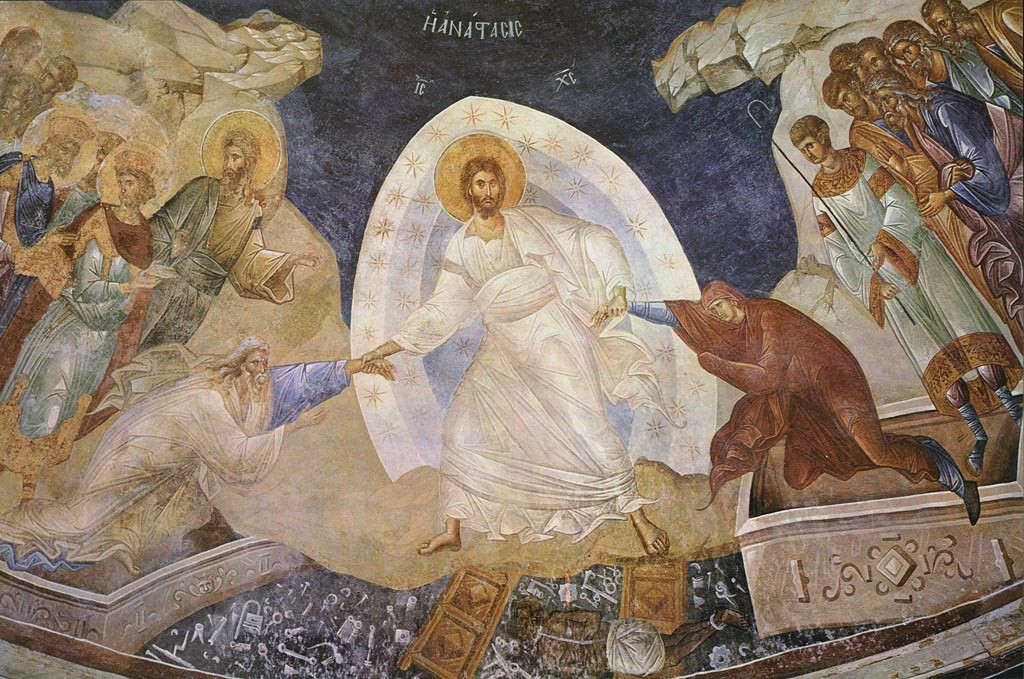
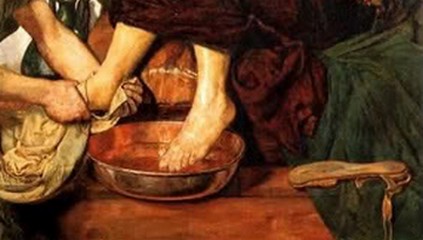
Obviously, there is quite a bit more to the “Farewell Discourse” or “High Priestly Prayer” of which today’s gospel lesson is a part, but in the end (I believe) the central petition of Jesus’ last prayer is one for the unity of the church and for God the Father’s protection of that unity.

Perhaps 60 or 70 years had passed since Jesus’ death, resurrection, and ascension when the author or authors of the Fourth Gospel put the finishing touches on this manuscript. Bible historians believe this gospel was written in Roman Asia (what is now Turkey), perhaps in the city of Ephesus, almost 1,100 miles from Jerusalem by land (over 600 miles by sea), sometime between 90 and 100 A.D.

They wrote not from personal experience and witness, but from oral tradition crossing decades of theological development and a great distance of cultural difference. There were many things that they had heard that Jesus had said, and a great deal that they needed Jesus to have said, and when they reached almost the end of their story, they had him say a lot of it in this Farewell Discourse.

Guided (we believe) by the Holy Spirit, the authors of this gospel portray Jesus offering this lengthy prayer to the Father, a prayer which might also be thought of as his last theological instruction to his inner circle, those who came to be called “The Apostles.” At its core is his wish that they stick together, “that they may be one, as we are one,” and that they continue his ministry by teaching the Truth he had sought to teach them.

The Episcopal Church takes this call to unity and ministry seriously, understanding it as a call not to uniformity but to harmony. In 2009, the 76th General Convention of the Episcopal Church declared that a “Biblically-based respect for the diversity of understandings that authentic, truth-seeking human beings have is essential for communal reasoning and faithful living. The revelation of God in Christ calls us therefore to participate in our relationship with God and one another in a manner that is at once faithful, loving, lively, and reasonable. This understanding continues to call Episcopalians to find our way as one body through various conflicts. It is not a unity of opinion or a sameness of vision that holds us together. Rather, it is the belief that we are called to walk together in Jesus’ path of reconciliation not only through our love for the other, but also through our respect for the legitimacy of the reasoning of the other. Respect for reason empowers us to meet God’s unfolding world as active participants in the building of the Kingdom and to greet God’s diverse people with appropriate welcome and gracious hospitality.” (Interreligious Relation Statement – Final Text)

Last Sunday, fifteen members of our congregation, joined by two others from St. Patrick in Brunswick, knelt before Bishop William Persell and, in some manner, reaffirmed the covenant made at their baptism. One was already a confirmed Episcopalian; two were teenagers who’d grown up in this parish. The others came to us from a variety of backgrounds, some actively Christian in other traditions, some not. Whatever their background, however, those fifteen persons apparently found here at St. Paul’s Parish that “appropriate welcome and gracious hospitality,” that unity in ministry to which the High Priestly Prayer compels us.

In his prayer, Jesus refers to his disciples (all of them, not just the Apostles) as “those whom [the Father] gave me from the world.” (v. 6) Earlier during their dinner conversation, he had reminded his followers, “You did not choose me but I chose you.” (Jn 15:16a) We tend to think otherwise of our membership in this or any church; we like to believe that we are autonomous, that we are here by our own decision, and our confirmation service certainly encourages our thinking in that direction.

In that liturgy, the Bishop asks the candidates, “Do you renew your commitment to Jesus Christ?” and they answer, “I do, and with God’s grace I will follow him as my Savior and Lord.” (BCP 1979, page 415) We tend to focus on only the first two words of that response, “I do.” But Jesus’ words at the Last Supper compel us to surrender our autonomy and hear clearly the rest of the answer: “I do … with God’s grace ….”

“I do … with God’s grace ….”

Let’s consider the case of Matthias chosen as replacement Apostle in our reading from the Book of Acts. Peter, having heard Christ’s prayer that the unity of the church might be preserved, knew that Jesus’ plan of a leadership group of twelve followers had to be reconstituted; the unity for which Jesus had prayed had been broken and needed to be restored. “One of these [who have been with us from the beginning] must become a witness with us to [the Lord’s] resurrection.” (Acts 1:21) Peter was well aware that Jesus’ mission had been to restore Israel and that this inner circle was key to that mission; he probably recalled that Jesus had told them that they would “sit on twelve thrones, judging the twelve tribes of Israel” (Mt 19:28), something that could not happen if there were only eleven of them. To restore the embryonic church to its original unity, a replacement apostle was needed.

Two candidates meeting the community’s qualifications are put forward, Matthias and another named Justus, and Matthias is chosen through the casting of lots. It might seem that this is all just a game of chance, but that is not so. Consider what has happened here: the action is taken by the apostles as a group; before casting the lots, the group has studied the Scriptures, prayed together, and discussed what they were about to do. The decision was not that of the leadership only; it clearly was one concurred in by the entire congregation present (about one-hundred and twenty we are told). And one scholar has suggested that there may have been some sort of group affirmation after the lots were cast, as is implied by the words, “and he was added to the eleven apostles.” (v. 26)

The election of Matthias to serve as replacement for Judas gives us a paradigm for our own decision making. The first step, obviously, is the recognition that we are at a decision point: Judas is gone, something must be done. The second is recourse to Scripture. The early followers of Jesus had only the Hebrew Scriptures to which to turn; we have, in addition, the New Testament in which we are taught that there are two great commandments ~ Love God: Love your neighbor.

Every decision we make must honor these; there may be lesser rules within Holy Writ which provide guidance, but in the end, in making our decisions, we must follow these commandments above all else.

Once we have considered the guidance of Scripture, we must pray. My grandfather, the Methodist Sunday school teacher, taught me that the purpose of prayer is not to get what we want, but to make us into instruments for God to do what God wants: he was fond of saying that the Lord taught us to pray, “Thy will be done,” not “Thy will be changed.” The followers of Jesus in that upper room, faced with the monumental task of appointing a new apostle, prayed. So should we. This has been the church’s tradition from the very beginning.

Now, let’s be honest ~ the answer to prayer is often vague and often confusing. I know very few people who have ever received specific directions for their lives and, to be truthful, I view those who claim to have done so with great suspicion. Most of us will never know for certain which is the right choice; I suspect that even those in the upper room that day wondered, when all was said and done, whether Matthias was a better choice than Justus. But they chose, and we choose.

We do not do so blindly, however. As the confirmation response says, we choose “with God’s grace.” We read Scripture; we pray in accordance with church tradition; and we seek the guidance of others, reasoning together, testing our thoughts and our beliefs about prayer’s answers against those of trusted companions. Then we decide. Perhaps the choice to be made is clear; perhaps it is not so clear, but at least one choice seems better or wiser than others; or perhaps, like that first congregation, we come to a point where there are two or more choices that seem equally good and the best we can do is flip a coin and trust God. However we make the decision, we say, “I do … with the grace of God” and trust that that grace will sustain us in the decisions we make.

Sometimes, perhaps most times, our decisions will be wrong; they will be sinful. But Martin Luther once advised his friend Philipp Melanchthon, “Be a sinner, and let your sins be strong (sin boldly), but let your trust in Christ be stronger, and rejoice in Christ who is the victor over sin, death, and the world.” (Letter 99, Paragraph 13) Having studied Scripture, having prayed, having sought the counsel of others, we make our decisions boldly, trusting in the grace of God.

In our individual choices, we may not (indeed, we will not) reach the same decisions, but valuing this process of decision-making we are able to respect our differences of opinion, belief, practice, and action. In our corporate decision-making, by this process, we are able to reach consensus all can accept, as the disciples did in numbering Matthias one of the Twelve. In the end, “we know that all things work together for good for those who love God” (Rom 8:28), even our wrong choices and bad decisions.

Every ten years or so the bishops of the Anglican Communion, including the bishops of the Episcopal Church, gather with the Archbishop of Canterbury in what is called “The Lambeth Conference.” In 1930, Archbishop William Temple preached at the opening of the seventh Lambeth Conference, assuring his colleagues:

While we deliberate, God reigns;
When we decide wisely, God reigns;
When we decide foolishly, God reigns;
When we serve God in humble loyalty, God reigns;
When we serve God self-assertively, God reigns;
When we rebel and seek to withhold our service, God reigns —
the Alpha and the Omega, which is, and which was, and which is to come, the Almighty.

We decide however we decide . . . but Almighty God will always reign!

I do not know why each of those seventeen people last week knelt before the bishop and affirmed their commitment to Christ in the context of the Anglican tradition and in the community of the Episcopal Church. I know why I did (lo, those many years ago): because I found in the Episcopal Church not a uniformity of belief and practice, not a church which claims to know (and thus to dictate) how all of life’s choices and decisions are to be made, but rather a unity of mission, a community of harmony, a church which offers “appropriate welcome and gracious hospitality,” where Christians are encouraged to explore and make life’s decisions in the same way the embryonic Christian community elected Matthias: through reliance on Scripture, prayerful tradition, and reasoned reflection. Perhaps that is also why our newest confirmed members have chosen to join us.

Or, rather, why Jesus chose them, why the Father has given them to Jesus in the context of this community, why we welcome them and join with Christ praying for them and for ourselves as he prayed for his first followers: “May we be one, as he and the Father are one.” Amen.

====================

A request to my readers: I’m trying to build the readership of this blog and I’d very much appreciate your help in doing so. If you find something here that is of value, please share it with others. If you are on Facebook, “like” the posts on your page so others can see them. If you are following me on Twitter, please “retweet” the notices of these meditations. If you have a blog of your own, please include mine in your links (a favor I will gladly reciprocate). Many thanks!

====================

Father Funston is the rector of St. Paul’s Episcopal Church, Medina, Ohio.

Thomas the Realist: Sermon for Easter 2 – 12 April 2015

====================

A sermon offered on the Second Sunday of Easter, April 12, 2015, to the people of St. Paul’s Episcopal Church, Medina, Ohio, where Fr. Funston is rector.

(The lessons for the day are Acts 4:32-35; Psalm 133; 1 John 1:1-2:2; and John 20:19-31. These lessons can be read at The Lectionary Page.)

====================

I assume that you are all familiar with Leonardo da Vinci’s famous mural of The Last Supper in the refectory of the Convent of Santa Maria delle Grazie, Milan. Nearly all of us have seen reproductions of it; it is said to be one of the most reproduced (and most parodied or satirized) paintings in human history. I have been privileged to see it in person twice in my life: once when I was a 16-year-old student studying in Florence and again in the summer of 2000 when I chaperoned the Kansas City Youth Symphony on a concert tour of northern Italy.

Each time I have looked at that painting, either the original or reproductions, I have found myself drawn more to da Vinci’s depiction of the disciples than to his Jesus. We know from Leonardo’s notebooks who each of the figures is meant to be. Thomas, who figures prominently in today’s Gospel lesson, figures prominently in the painting, as well. He is the first figure on Jesus’ left, right next to Jesus, looking intently at Jesus (we see him only in profile) with his right index finger pointing in Jesus’ face!

Has anyone ever done that to you? Gotten in your face making a point, raising their finger in emphasis? [Gesturing with index finger pointed upward] You know that this is a serious person. They know the way the world is; they have a very definite view of reality; and they are intent and making sure you see and understand their viewpoint. In The Last Supper, Thomas is only the first person on Jesus’ left because he leaning over St. James the Greater to make his point. He is a serious person with a definite view of reality.

That’s why I never call St. Thomas “Doubting Thomas.” This was not, in the upper room, and never in any other Gospel story, a man filled with doubt. This man is serious, sure of himself, and sure of his world. He is, in a word, a realist, a pragmatist, not a doubter.

Although Thomas is listed among the Twelve in all of the Gospels, we only encounter him as a speaker in John’s Gospel, and our first view of him is in the discussion leading up to the raising of Lazarus. We are told that the disciples (perhaps it was even Thomas) tried to dissuade Jesus from returning to Bethany in Judea, where Lazarus and his sisters lived, because they believed his life would be in danger: they remind Jesus that the Judeans “were just now trying to stone you, and are you going there again?” (Jn 11:8) Jesus, however, will not be turned away, so Thomas says to his fellow disciples, “Let us also go, that we may die with him.” (Jn 11:16) This man is a serious realist.

He is so realistic, so down-to-earth, that he doesn’t understand metaphor. When, in his farewell discourse, Jesus says . . .

In my Father’s house there are many dwelling places. If it were not so, would I have told you that I go to prepare a place for you? And if I go and prepare a place for you, I will come again and will take you to myself, so that where I am, there you may be also. And you know the way to the place where I am going.

. . . Thomas’s very pragmatic reply is, “Lord, we do not know where you are going. How can we know the way?” (Jn 14:2-5)

So we should not be surprised, and we should not call Thomas a “doubter” when he demands proof of Jesus’ resurrection. Would any of us have been any different? And, let’s be honest, none of the other disciples were themselves any different. None of them believed it either. In his Gospel, Luke is very clear about that: “Mary Magdalene, Joanna, Mary the mother of James, and the other women with them who told . . . the apostles. But [their] words seemed to them an idle tale, and they did not believe them.” (Lk 24:10-11; emphasis added)

I’m fairly certain that when Thomas said, “Unless I see the mark of the nails in his hands, and put my finger in the mark of the nails and my hand in his side, I will not believe,” (Jn 20:25) he never really expected to have the chance. Such a thing simply wouldn’t fit into the real world he understood. He wasn’t a doubter; he was a realist.

So, I think, Thomas has gotten a bad rap because of this story and the story has gotten a resultingly bad interpretation. This is not a story about changing someone’s mind; it’s a story about changing someone’s life!

Confronted by the reality of the risen Jesus, Thomas the realist is confounded by what reality really is; his perception of reality and thus his life is what is changed. When Jesus rises to his challenge and invites him to “put your finger here and see my hands; reach out your hand and put it in my side,” (Jn 20:27) he is not belittling Thomas, but he is positing the possibility that Thomas’s reality was too little. Thomas’s vision of reality is too small, too limited; his life is too circumscribed. His worldview is defined too much by evidence and too little by trust. When Jesus calls him to believe, he is calling on him to accept the evidence of an intellectual proposition; he is inviting him to live into a whole new world of trust. This is not a story about changing someone’s mind; it’s a story about changing someone’s life!

In 1961, an English priest named J.B. Phillips published a short book entitled Your God Is Too Small. In it he challenged many prevailing notions of God, many of which we still have with us today. He called these the “unreal gods” and gave them names such as “the Resident Policeman,” the “Parental Hangover,” and the “Grand Old Man.” These unreal gods, he said, were the gods of what he called “the modern outlook, which regards the whole of life as a closed system.” That “modern outlook” is precisely the point of view that Thomas had before meeting the risen Jesus! It is a too-small vision of reality in which it is unthinkable that anything could happen outside of what Phillips called “the whole huge cause-and-effect process,” that view of the world supported by physical evidence of the sort Thomas initially wanted.

But Thomas’s life and point of view, and that of all the apostles, were radically altered by their experience of Christ’s resurrection. Phillips wrote:

We may . . . point out the great difference that has come to exist between the Christianity of the early days and that of today. To us it has become a performance, a keeping of rules, while to the men of those days it was, plainly, an invasion of their lives by a new quality of life altogether. The difference is due surely to the fact that we are so very slow (even though we realize our impotence) to discard the closed-system idea. *** With the closed-system sooner or later you have to say: “You can’t change human nature.” Ideals fail for very spiritual poverty, and cynicism and despair take their place. But the fact of Christ’s coming is itself a shattering denial of the closed-system idea which dominates our thinking. And what else is His continual advice to “have faith in God” but a call to refuse, despite all appearances, to be taken in by the closed-system type of thinking? “Ask and ye shall receive, seek and ye shall find, knock and it shall be opened unto you”—what are these famous words but an invitation to reach out for the Permanent and the [truly] Real? (Your God Is Too Small, online PDF, The Common Life, pp. 88-89)

The story of Thomas is a story for all of us because we too easily fall into that closed-system worldview with its rules and its limitations. The story of Thomas reminds us of a grander vision. A vision defined not by limitation but by possibility, governed not by scarcity but by abundance, ruled not by remembered offenses but set free by forgiveness and reconciliation.

This is the vision shared by “the men of those days” (as Phillips called them), the members of the earliest Christian community described by Luke in the Book of Acts, that community of believers “who . . . were of one heart and soul, and no one claimed private ownership of any possessions, but everything they owned was held in common.” They had this shared vision because “the apostles gave their testimony to the resurrection of the Lord Jesus.” In other words, Mary Magdalene and the other women told their story of the empty tomb and of meeting Jesus in the garden; Cleopas and his companion told their story of meeting Jesus along the road to Emmaus; Thomas and the others told their story of meeting Jesus in the upper room.

The result was that peoples’ lives were changed. They lived in a way radically different than they had before, radically different from those around them: “There was not a needy person among them, for as many as owned lands or houses sold them and brought the proceeds of what was sold. They laid it at the apostles’ feet, and it was distributed to each as any had need.”

“From each according to his ability; to each according to his need” is not an economic model developed by Karl Marx; it is a religious model lived by the followers of Jesus Christ whose lives have been radically altered by their encounter with the Risen Lord. “Oh, how good and pleasant it is, when brethren live together in unity!” (Ps 133:1)

We live in different times. The total sharing of resources practice by Christ’s first followers no longer seems practical to us. We say to ourselves, “It just won’t work in our circumstances.” And we call ourselves realists and pragmatists. We hang onto that closed-system model and say [gesturing with index finger pointed upward]: “You can’t change human nature.”

But Jesus appeared to Thomas and said, “Put your finger here and see my hands. Reach out your hand and put it in my side. Do not doubt but believe.” (Jn 20:27) And proved that he can change human nature. Are we willing to let him change ours?

====================

A request to my readers: I’m trying to build the readership of this blog and I’d very much appreciate your help in doing so. If you find something here that is of value, please share it with others. If you are on Facebook, “like” the posts on your page so others can see them. If you are following me on Twitter, please “retweet” the notices of these meditations. If you have a blog of your own, please include mine in your links (a favor I will gladly reciprocate). Many thanks!

====================

Father Funston is the rector of St. Paul’s Episcopal Church, Medina, Ohio.

Enter Into Resurrection: Sermon for Easter Sunday 2015

====================

A sermon offered on Resurrection Sunday, April 5, 2015, to the people of St. Paul’s Episcopal Church, Medina, Ohio, where Fr. Funston is rector.

(The lessons for the day are Isaiah 25:6-9; Psalm 118:1-2, 14-24; 1 Corinthians 15:1-11 and Mark 16:1-8. These lessons can be read at The Lectionary Page.)

====================

Anastasis Icon at Chora

I love poetry. There is something about the way poets describe the world that simply cannot be found in other forms of literature. Poets encourage us not to understand the world, but to experience it; not to be concerned with facts, but to comprehend Truth.

Recently, I’ve been introduced to the world of a Guatemalan woman named Julia Esquivel. Esquivel lived through the Guatemalan civil war which lasted from the 1960s into the 1990s and during which hundreds of thousands of people died in terror sanctioned by the Guatemalan government. Many of these simply “disappeared;” they were the “Desaparecidos,” taken away from their families and never seen again. Many families in Guatemala will never know what happened to their loved one; few of those responsible for the tragedies have stood trial and most never will. Darkness and evil often seem to entomb goodness and light. Into this hopelessness Esquivel’s poetry speaks a word of hope:

There is something here within us
which doesn’t let us sleep, which doesn’t let us rest,
which doesn’t stop pounding deep inside,
it is the silent, warm weeping
of Indian women without their husbands,
it is the sad gaze of the children
fixed there beyond memory,
in the very pupil of our eyes
which during sleep, though closed, keep watch
with each contraction of the heart
in every awakening . . . .

What keeps us from sleeping
is that they have threatened us with resurrection!
Because at each nightfall,
though exhausted from the endless inventory
of killings since 1954,
yet we continue to love life,
and do not accept their death!

. . . . because in this marathon of Hope,
there are always others to relieve us
in bearing the courage necessary
to arrive at the goal which lies beyond death. . . .

Accompany us then on this vigil
and you will know what it is to dream!
You will then know how marvelous it is
to live threatened with resurrection!
To dream awake,
to keep watch asleep
to live while dying
and to already know oneself resurrected!
(From Threatened With Resurrection: Prayers and Poems from an Exiled Guatemalan, September 1982)

Isn’t that wonderful? To “know how marvelous it is to live threatened by resurrection!”

We, unfortunately, live in a world in which other things are threatened — in which the sorts of things that happened in Guatemala (and in many Latin American countries) in the late 20th Century continue to happen in many places. Human cruelty to other humans often astounds us; human indifference to the suffering of other humans amazes us. We live in a world where laws are passed to make it easy for privileged majorities to discriminate against minorities, to abuse those who are unusual, to despoil the lives those who are different, to bury the poor in their poverty, to entomb the stranger in hopelessness, to start wars in distant countries, to trouble us so that “there is something here within us which doesn’t let us sleep, which doesn’t let us rest, which doesn’t stop pounding deep inside.”

Today, we celebrate the Resurrection of Jesus Christ, the One who “exhausted from the endless inventory of killings . . . continue[d] to love life, and [did] not accept . . . death,” the One in whose death and resurrection we acknowledge that, yes indeed, we are “threatened with” resurrection, the One in whom we “already know [ourselves] resurrected.”

I mentioned in our Parish Newsletter for April that one of my favorite contemporary American poets is Kentucky farmer Wendell Berry, and one my favorites among his poems is Manifesto: The Mad Farmer Liberation Front:

Love the quick profit, the annual raise,
vacation with pay. Want more
of everything ready-made. Be afraid
to know your neighbors and to die.
And you will have a window in your head.
Not even your future will be a mystery
any more. Your mind will be punched in a card
and shut away in a little drawer.
When they want you to buy something
they will call you. When they want you
to die for profit they will let you know.

So, friends, every day do something
that won’t compute. Love the Lord.
Love the world. Work for nothing.
Take all that you have and be poor.
Love someone who does not deserve it.
Denounce the government and embrace
the flag. Hope to live in that free
republic for which it stands.
Give your approval to all you cannot
understand. Praise ignorance, for what man
has not encountered he has not destroyed.

Ask the questions that have no answers.
Invest in the millennium. Plant sequoias.
Say that your main crop is the forest
that you did not plant,
that you will not live to harvest.
Say that the leaves are harvested
when they have rotted into the mold.
Call that profit. Prophesy such returns.

Put your faith in the two inches of humus
that will build under the trees
every thousand years.
Listen to carrion – put your ear
close, and hear the faint chattering
of the songs that are to come.
Expect the end of the world. Laugh.
Laughter is immeasurable. Be joyful
though you have considered all the facts.
So long as women do not go cheap
for power, please women more than men.
Ask yourself: Will this satisfy
a woman satisfied to bear a child?
Will this disturb the sleep
of a woman near to giving birth?

Go with your love to the fields.
Lie down in the shade. Rest your head
in her lap. Swear allegiance
to what is nighest your thoughts.
As soon as the generals and the politicos
can predict the motions of your mind,
lose it. Leave it as a sign
to mark the false trail, the way
you didn’t go. Be like the fox
who makes more tracks than necessary,
some in the wrong direction.
Practice resurrection.
(From The Mad Farmer Poems, January 2014)

Esquivel reminds us, in the face of a world of cruelty and death, that we are “threatened with resurrection” and that we should “already know [ourselves] resurrected;” Berry encourages us embrace that “threat” as a promise, to “expect the end of the world [and] laugh,” not merely to know ourselves resurrected, but to act upon that knowledge and “practice resurrection.”

That’s not easy to do in this world, no matter how simple Wendell Berry makes it sound. Sometimes the biggest barrier we face . . . is ourselves. The late Israeli poet Yehuda Amichai writes about this in his short verse The Place Where We Are Right:

From the place where we are right
Flowers will never grow
In the spring.

The place where we are right
Is hard and trampled
Like a yard.

But doubts and loves
Dig up the world
Like a mole, a plow.
And a whisper will be heard in the place
Where the ruined
House once stood.
(From The Selected Poetry Of Yehuda Amichai, Newly Revised and Expanded, October, 1996)

Every single human being on earth is convinced that he or she is right; that’s the nature of human beings and always has been. Judas was sure he was right; the chief priests and the scribes were sure that they were right; Pilate, the Imperial governor, was sure that he was right; the Roman soldiers were sure that they were right. We are always sure that we are right and, thus, we become the ones who pass the laws that make it easy to discriminate, to abuse, to despoil, to crucify, and to entomb beneath that hard and trampled place where we are right, where “there is something here within us which doesn’t let us sleep, which doesn’t let us rest, which doesn’t stop pounding deep inside.”

Yesterday, in our meditations for Holy Saturday, I shared with those assembled here that my favorite artistic depiction of Christ’s Resurrection is an Orthodox icon in which Jesus stands within the arch of his tomb ready to come out. Beneath his feet are the gates of Hell, broken and fallen into the form of a cross, and o either side of him are two other tombs, broken open. From them Christ is pulling two figures, a man and a woman representing Adam and Eve. They seem almost reluctant to leave their graves, but Jesus grasps them by their wrists and seems to strain to lift them. Behind them are ranged the prophets and patriarchs of Israel, the righteous dead awaiting resurrection. This liberation of those who were already dead is known as the “Harrowing of Hell,” which is the title of poet Denise Levertov’s contemplation of this icon:

Down through the tomb’s inward arch
He has shouldered out into Limbo
to gather them, dazed, from dreamless slumber:
the merciful dead, the prophets,
the innocents just His own age and those
unnumbered others waiting here
unaware, in an endless void He is ending
now, stooping to tug at their hands,
to pull them from their sarcophagi,
dazzled, almost unwilling. Didmas,
neighbor in death, Golgotha dust
still streaked on the dried sweat of his body
no one had washed and anointed, is here,
for sequence is not known in Limbo;
the promise, given from cross to cross
at noon, arches beyond sunset and dawn.
All these He will swiftly lead
to the Paradise road: they are safe.
That done, there must take place that struggle
no human presumes to picture:
living, dying, descending to rescue the just
from shadow, were lesser travails
than this: to break
through earth and stone of the faithless world
back to the cold sepulchre, tearstained
stifling shroud; to break from them
back into breath and heartbeat, and walk
the world again, closed into days and weeks again,
wounds of His anguish open, and Spirit
streaming through every cell of flesh
so that if mortal sight could bear
to perceive it, it would be seen
His mortal flesh was lit from within, now,
and aching for home. He must return,
first, in Divine patience, and know
hunger again, and give
to humble friends the joy
of giving Him food – fish and a honeycomb.
(From A Door in the Hive, October 1989)

Levertov, I think, is probably right when she suggests that the work of freeing those trapped in Hell was, for Christ, easier than “break[ing] through [the] earth and stone of the faithless world;” breaking through where privileged majorities to discriminate against minorities, abuse those who are unusual, despoil the lives those who are different, bury the poor in their poverty, entomb the stranger in hopelessness, and start wars in distant countries; breaking through the hard and trampled place where we insist that we are right . . . but break through he does for he is the love that digs up the world so that whispers are again heard where the ruined houses of our lives once stood.

Do you doubt that? Do you have difficulty feeling that promise of resurrection? Do you not feel threatened with resurrection in your own life? Do you not know yourself already resurrected?

At the vigil service each year, in place of a sermon of my own, I follow the ancient tradition of the Orthodox church and read for those present an oration or homily from one of the early doctors of the church; today I read selections from St. Gregory Nazianzan’s Second Easter Oration. In part of that great speech, St. Gregory offers advice on how one can enter personally into the Resurrection; if one cannot comprehend the whole of the story, focus on that part which most resonates with you. This is what he wrote:

If you are a Simon of Cyrene, take up the Cross and follow.
If you are crucified with Him as a robber, acknowledge God as a penitent robber.
If even He was numbered among the transgressors for you and your sin, do you become law-abiding for His sake. Worship Him Who was hanged for you, even if you yourself are hanging; make some gain even from your wickedness; purchase salvation by your death; enter with Jesus into Paradise, so that you may learn from what you have fallen.
Contemplate the glories that are there; let the murderer die outside with his blasphemies; and if you be a Joseph of Arimathæa, beg the Body from him that crucified Him, make your own that which cleanses the world.
If you be a Nicodemus, the worshiper of God by night, bury Him with spices.
If you be a Mary, or another Mary, or a Salome, or a Joanna, weep in the early morning. Be first to see the stone taken away, and perhaps you will see the Angels and Jesus Himself.
Say something; hear His Voice. If He say to you, Touch Me not, stand afar off; reverence the Word, but grieve not; for He knows those to whom He appears first.
Keep the feast of the Resurrection; come to the aid of Eve who was first to fall, of Her who first embraced the Christ, and made Him known to the disciples.
Be a Peter or a John; hasten to the Sepulchre, running together, running against one another, vying in the noble race. And even if you be beaten in speed, win the victory of zeal; not Looking into the tomb, but Going in.
And if, like a Thomas, you were left out when the disciples were assembled to whom Christ shows Himself, when you do see Him be not faithless; and if you do not believe, then believe those who tell you; and if you cannot believe them either, then have confidence in the print of the nails.
If He descended into Hell, descend with Him. Learn to know the mysteries of Christ there also, what is the providential purpose of the twofold descent, to save all [humankind] absolutely by His manifestation.
(From Oration 45, Nicene and Post-Nicene Fathers, Second Series, Volume 7, February 1996)

Become a part of the story in whatever way you can. If you cannot now comprehend the whole, grab hold of that fraction that resonates for you, but do not strive to understand, do not strive to be right, do not trample hard a place where flowers will never grow; instead, enter into the narrative, simply experience the truth, put your faith in two inches of spiritual humus where you may plant things you may not live to harvest. Remember that Christ is the love Who digs up the world, Who breaks through faithless earth and stone, expect the end of the world and laugh:
Accompany us then on this vigil
and you will know what it is to dream!
You will then know how marvelous it is
to live threatened with resurrection!
To dream awake,
to keep watch asleep
to live while dying
and to already know [your]self resurrected!

Christ is Risen! We are risen! Alleluia!

(Note: The illustration above is widely agreed to be the most striking exemplar of the traditional Byzantine Anastasis icon. It is the fresco in the apse of the arekklesion or funerary chapel, of the Monastery of Chora at Istanbul.)

====================

A request to my readers: I’m trying to build the readership of this blog and I’d very much appreciate your help in doing so. If you find something here that is of value, please share it with others. If you are on Facebook, “like” the posts on your page so others can see them. If you are following me on Twitter, please “retweet” the notices of these meditations. If you have a blog of your own, please include mine in your links (a favor I will gladly reciprocate). Many thanks!

====================

Father Funston is the rector of St. Paul’s Episcopal Church, Medina, Ohio.

Washing Away RFRA: Sermon for Maundy Thursday – 2 April 2015

====================

A sermon offered on Maundy Thursday, April 2, 2015, to the people of St. Paul’s Episcopal Church, Medina, Ohio, where Fr. Funston is rector.

(The lessons for the day are Exodus 12:1-14; Psalm 116:1,10-17; 1 Corinthians 11:23-26, and John 13:1-17,31b-35 [all of Ch. 13 was read]. These lessons can be read at The Lectionary Page.)

====================

Foot WashingEvery year on Maundy Thursday in the Episcopal Church we do this thing: we gather for Eucharist and we hear these lessons – the story of the Passover from the Book of Exodus, St. Paul’s retelling of the institution narrative of the Eucharist, and St. John’s story of the Last Supper in which he focuses not on the meal but on Jesus’ act of humility and service during the meal (probably quite early in the evening) of washing the feet of the others present.

In many parishes the liturgy of this evening will include a formal washing of the feet of selected participants by the presiding priest and others. You may have seen pictures or video of the Pope doing so in the Vatican’s celebration of this feast. We’ve broadened that practice to allow any who wish to follow Jesus’ example to do so during the Agape Feast. There are foot washing stations in the Parish Hall for that purpose.

Why did Jesus wash his disciples’ feet? Tradition (as I just mentioned) tells us that it was to display and model humility and servanthood. In First Century Palestine, sandals were the most common form of footwear. Walking the dusty desert roads made one’s feet filthy; it was imperative that that be washed before a communal meal. In those days, people didn’t sit on chairs to eat at a table. Instead, they reclined at low tables; feet were very much in evidence. When Jesus rose from the table and began to wash the others’ feet, he was doing the work of the lowliest of servants. The disciples must have been stunned by this act of self-effacement and condescension. The humility expressed by this action with towel and basin foreshadowed Jesus’ ultimate act of humility on the cross.

Although the Lectionary only requires that we read certain verses of Chapter 13 of John’s Gospel, I
chose to read the entire chapter because I think tonight we need to remember exactly whose feet Jesus washed. When we read only that he washed “the disciples’ feet” we can gloss over and forget that John makes it very plain that among that group were two who, to our modern minds, clearly did not deserve the honor: Judas, who would betray him, and Peter, who would deny him. And John also makes it very clear that Jesus knew that both of them would do what they ultimately did.

I think it is important that we note that in particular this year, this Holy Week because for the past several days we have all heard a great deal about something called the Religious Freedom Restoration Act, something that was passed 25 years ago by the federal government and versions of which have been adopted in several states, most recently next door to us to the west in the State of Indiana. The law recently passed in Indiana, though it bears the same name as the federal act, is not the same as the federal law. During the past 25 years various state and federal courts have interpreted and to some extent limited the application of the federal or similar state laws, and so later-enacted versions have tried to answer and overcome those judicial limitations, Indiana’s (and now a nearly-identical act in Arkansas) being the broadest.

The impetus for these laws, of course, is the growing legal acceptance of marriage equality, the movement to allow same-sex couples to contract civil marriage in the same way as opposite-sex couples. Indeed, Professor Garrett Epps, who teaches Constitutional Law at the University of Baltimore, has said of the Indiana law that it is clear that its purpose is

. . . to be used as a means of excluding gays and same-sex couples from accessing employment, housing, and public accommodations on the same terms as other people. True, there is no actual language that says, All businesses wishing to discriminate in employment, housing, and public accommodations on the basis of sexual orientation, please check this “religious objection” box. But, as Henry David Thoreau once wrote, “Some circumstantial evidence is very strong, as when you find a trout in the milk.” (What Makes Indiana’s Religious-Freedom Law Different?, The Atlantic, March 30, 2015)

And the Rev. Franklin Graham, the son and heir of the Dr. Billy Graham, specifically extolled the Indiana act as “a religious freedom bill that would protect [Christian] business owners who want to decline to provide services for same-sex marriages.” (Facebook posting, March 25, 2015, 10:39 am)

And that is why I think it important that we specifically name Judas and Peter as being among those before whom Jesus knelt in abject humility and washed their feet. Presumably those ‘Christians (about whom Mr. Graham spoke) [want] to live out their faith’ and follow Jesus Christ by refusing to serve those whose actions they find offensive. The problem with that is that Jesus didn’t refuse to serve those whose actions were not only offensive to him; their actions were downright fatal to him! He didn’t refuse to serve them; he knelt in humility and washed their feet!

In answer to Mr. Graham, another Baptist preacher, the Rev. Russ Dean, co-pastor of Park Road Baptist Church in Charlotte, NC, wrote these words in Baptist News Global:

Mr. Graham opposes same-sex marriage. Maybe he also thinks women should stay home with their kids, and not work outside the home. Some Christians believe this, too. Maybe Indiana should also defend an employer’s right to decline employing young mothers? Whose religious views will we defend? Whose won’t we defend? And where will it stop?

Religious freedom is one of the principles that defines the genius of America – but only a secular state can actually defend that principle for all of its citizens. Otherwise, we might have Indiana defending conservative Christian views and another state defending liberal Christian views; one state defending Sharia law and another writing the codes of Leviticus into the law books in favor of a Jewish majority.

What this means, of course, is that some Christian business owners may have to break the law to defend their religious convictions. (Some Christian business owners did just that when Jim Crow was the law of the land.) But when Christians, or adherents of any religion, go into business, the secular law of the land rules. I have no doubt that in the coming months gay marriage will be the law of the entire land, so some Christian business owners will have a decision to make: uphold the law, or defend their understanding of one religious conviction — and suffer the consequence of breaking that law.

But let the government keep its hands out of religion. When the day comes that Christians have no other way to motivate religious conviction than through legislation, secular government will be the least of our worries. (Why do so many Christians think we need government to prop up Jesus?, Baptist News Global, April 1, 2015)

My purpose tonight is not to debate the merits or demerits of marriage equality; like the Rev. Mr. Dean, I believe that in the not-too-distant future same-sex marriages will be legal throughout the country, but whether that is or is not the case is irrelevant at the moment. What is relevant is how we as followers of Jesus Christ relate to and interact with those who are different from us in whatever way and for whatever reason, so different that, in fact, we find them or their actions offensive. What is relevant is this: do we respond to them with arrogance and condescension, enacting laws that some have gone so far as to call “a license to discriminate,” or do we embrace them in humility and love, kneeling down to wash their feet? Do we try to motivate religious conviction by enacting secular legislation or do we do so the way Jesus did, by example?

“Do you know what I have done to you?” Jesus asked Judas and Peter. “If I . . . have washed your feet, you also ought to wash one another’s feet. . . . If you know these things, you are blessed if you do them.” Judas failed utterly and committed suicide when he realized it; Peter failed, as well, but was forgiven and eventually taught the church “that God shows no partiality” and that “everyone who believes in [Jesus] receives forgiveness of sins through his name.” (Acts 10:34,43)

We call this day “Maundy Thursday” from an old English word meaning “commandment” because, after demonstrating what it means by washing their feet, Jesus admonished the Twelve, and through them admonishes us: “I give you a new commandment, that you love one another. Just as I have loved you, you also should love one another. By this everyone will know that you are my disciples, if you have love for one another.”

May the world know that we are his disciples because, in everything we do, we do not stand in arrogance and condescension, but rather we kneel in humility and love before others, even those who differ greatly from us, even those who offend us.

Steve Garnaas-Holmes, United Methodist pastor and poet, recently published this poetic prayer with which I will close:

Lord, what was it like to wash Judas’ feet,
on your knees, with such tender kindness?
An act of love, not irony.

What is it like to so humbly serve me,
to kneel at the feet of my failure and betrayals,
to welcome and wash and soothe me
as if I am your master?
Pure love, without demand.

Give me this love, this gentle humility,
to wash the feet of those who oppose me,
to treat them with tender kindness,
to seek always to be closer to you,
on your knees below us all,
serving in perfect love.
(Found at the poet’s Unfolding Light blog)

Amen.

====================

A request to my readers: I’m trying to build the readership of this blog and I’d very much appreciate your help in doing so. If you find something here that is of value, please share it with others. If you are on Facebook, “like” the posts on your page so others can see them. If you are following me on Twitter, please “retweet” the notices of these meditations. If you have a blog of your own, please include mine in your links (a favor I will gladly reciprocate). Many thanks!

====================

Father Funston is the rector of St. Paul’s Episcopal Church, Medina, Ohio.

« Older posts Newer posts »