Occasional thoughts of an Anglican Episcopal priest

Category: Sermons (Page 38 of 40)

Social Justice Ministry – Sermon for Lent 3B – March 11, 2012

Revised Common Lectionary for the Third Sunday in Lent, Year B: Exodus 20:1-17; Psalm 19; 1 Corinthians 1:18-25; and John 2:13-22

The third of the questions asked by a parishioner that I would like to tackle is “What does ‘social justice’ mean in the Episcopal Church?” Social justice generally refers to the idea of creating a society or institution that is based on the principles of equality and solidarity, that understands and values human rights, and that “strive[s] for justice and peace among all people, and respect[s] the dignity of every human being.” (The Book of Common Prayer, 1979, page 305)

In the Episcopal Church, we believe that our Christian faith has both a personal (or individual) dimension and a corporate (or social) dimension; we believe our call to the Christian life has both a contemplative (or prayerful) dimension and a public (or active) dimension. We refer to this as a “cruciform” (or cross-shaped) understanding of the faith, for as St. Paul said, “We proclaim Christ crucified.” In the one dimension, the cross of Christ has a vertical member which symbolizes our personal, individual, contemplative, and prayerful relationship with our God and creator. But the cross also has a horizontal member illustrating the corporate, social, public, and active ministry to which we are all called. A lovely prayer mission in the Daily Office of Morning Prayer recalls this horizontal dimension as we pray to our Savior:

Lord Jesus Christ, you stretched out your arms of love on the hard wood of the cross that everyone might come within the reach of your saving embrace: So clothe us in your Spirit that we, reaching forth our hands in love, may bring those who do not know you to the knowledge and love of you; for the honor of your Name. Amen.

And today’s Gospel lesson, Jesus cleansing the Temple, exemplifies the active, social justice ministry to which he calls his church. Throughout his ministry on earth, the Son of God did not simply call individuals to be good persons: he insisted that the systems and institutions of society were to be reformed so that they would reflect the values inherent in the Law of Moses (from which come the Ten Commandments we read in today’s lesson from the Hebrew Scriptures) and the word of God spoken through the Prophets.

Jesus began his public ministry by reading these words from the Prophet Isaiah:

The Spirit of the Lord is upon me, because he has anointed me to bring good news to the poor. He has sent me to proclaim release to the captives and recovery of sight to the blind, to let the oppressed go free, to proclaim the year of the Lord’s favor. (Luke 4:18-19)

To bring good news to the poor, to release captives, to let the oppressed go free … these words herald and describe systemic and institutional changes in society, not simply a change for some individuals but for all of God’s children.

Jesus’ ministry and the Christian call to social justice are informed by the word of God spoken through Moses who ordered the Hebrews:

You shall not abuse any widow or orphan. If you do abuse them, when they cry out to me, I will surely heed their cry. (Exodus 22:22-23)

Jesus recognized and we recognize that widows and orphans have been and are still abused in many places around the world, and as the people of God we must heed their cries and reform the systems and institutions which permit, and often even inflict, that abuse. This is Christian social justice.

Jesus’ ministry and the Christian call to social justice are informed by the word of God spoken to the leaders of God’s people:

You shall take no bribe, for a bribe blinds the officials, and subverts the cause of those who are in the right. You shall not oppress a resident alien; you know the heart of an alien, for you were aliens in the land of Egypt. (Exodus 23:8-9)

Jesus knew and we know that the leaders of nations do take bribes (and “kickbacks” and “earmarks” and “political contributions”), that political influence is peddled in many ways, that resident aliens are oppressed in this and many countries, and that the causes of those in the right are often subverted. As the people of God, we must stand for changes in power structures to prevent these abuses. This is Christian social justice.

The Christian call to social justice is informed by Jesus’ own words promised to those who are faithful:

I was hungry and you gave me food, I was thirsty and you gave me something to drink, I was a stranger and you welcomed me, I was naked and you gave me clothing, I was sick and you took care of me, I was in prison and you visited me. (Matthew 25:35-36)

We see in these words a call not only to feed those who are now hungry, but to prevent others from going without food. We are called not only to give drink to those who are now parched, but to prevent others from becoming thirsty. We are called not only to cover those who are now unclothed, but to prevent others from becoming naked. We know all too well that despite Christ’s mother’s song, the powerful have not yet been brought down from their thrones; the lowly have not yet been lifted up; the hungry have not yet been filled with good things; and the rich have yet to be sent away empty. We, the people of God, are called to accomplish these things. This is Christian social justice.

Our catechism (beginning on page 845 of The Book of Common Prayer) informs us that the mission of the church “is to restore all people to unity with God and each other” and that the church “pursues its mission as it prays and worships, proclaims the Gospel, and promotes justice, peace, and love.” Furthermore, “The church carries out its mission through the ministry of all its members.” You will recall from the baptismal covenant that our ministry, individually and collectively, is to “seek and serve Christ in all persons, loving [our] neighbor as [our]self” and to “strive for justice and peace among all people, … respect[ing] the dignity of every human being.” (BCP, page 305) This is Christian social justice.

For nearly the past half-century, the Episcopal Church, together with our brothers and sisters throughout the Anglican Communion, has recommended that all our members and parishes measure themselves from time to time against certain core Christian priorities, which are called the Five Marks of Mission:

  1. To proclaim the good news of the Kingdom of God;
  2. To teach, baptize and nurture new believers;
  3. To respond to human need by loving service;
  4. To seek to transform the unjust structures of society; and
  5. To strive to safe-guard the integrity of creation and to sustain and renew the life of the earth.

In pursuit of the last two of those “marks” (which summarize social justice ministry), the Episcopal Church in 2006 committed itself to work with others in the Anglican Communion, with other churches and religious bodies in ecumenical and interfaith cooperation, with secular non-governmental organizations, and with our government and those of other nations to accomplish as quickly as possible eight “Millenium Development Goals” set out by the United Nations:

  1. Eradicate extreme poverty and hunger
  2. Achieve universal primary education
  3. Promote gender equality and empower women
  4. Reduce child mortality rates
  5. Improve maternal health
  6. Combat HIV/AIDS, malaria, and other diseases
  7. Ensure environmental sustainability
  8. Develop a global partnership for development

In pursuit of the gospel mandate, the Episcopal Church has dedicated itself to these goals. This is Christian social justice.

The Anglican Marks of Mission and the Episcopal Church’s commitment to the UN’s Millennium Development Goals are our church’s way of putting into positive action the last seven of the Ten Commandments. We understand these to form a sort of basic contract listing some fairly fundamental expectations of God with regard to social justice in the global human community. Ultimately, Jesus would summarize them in the two great commandments, “You shall love the Lord your God with all your heart, and with all your soul, and with all your mind, and with all your strength …. You shall love your neighbor as yourself.” (Mark 12:30-31) In today’s epistle lesson, St. Paul reminds us that this contract is beyond the wisdom of the world, and that it is our responsibility to fulfill these divine expectations without sacrificing the spirit of the Law which, as foolish as it may sound to the wise of this world, is to build up the whole human community. This is the goal of Christian social justice.

In Jesus’ time, the religious, political, and social institutions had forgotten this. In place of the fair and equitable financial system anticipated in the laws set out in Exodus and Leviticus, Jesus found the bankers sitting in the Temple courtyard taking advantage of the poor, exchanging Roman drachmas for temple sheckles at outrageous conversion rates and pocketing unacceptably high profits. He exercised an active social justice ministry and threw them out. Instead of priests and Levites aiding the people in their relationship to God, he found the sellers of sacrificial animals preying on their sorrows, cheapening their thanksgivings, and profiting from their earnest effort to be faithful. He exercised an active social justice ministry and drove them away.

Jesus cleansing the Temple exemplifies the active, social justice ministry to which God calls the church. Throughout his ministry on earth, the Son of God did not simply call individuals to be good persons: he insisted that the systems and institutions of society were to be reformed so that they would reflect the values inherent in the Law and the word of God. Because of human frailty, because of human greed, because of human failure, the systems and institutions of society are always in need of reform and, thus, the church is always called to an active ministry of social justice.

Let us pray:

Almighty God, who created us in your image: Grant us grace fearlessly to contend against evil and to make no peace with oppression; and, that we may reverently use our freedom, help us to employ it in the maintenance of justice in our communities and among the nations, to the glory of your holy Name; through Jesus Christ our Lord, who lives and reigns with you and the Holy Spirit, one God, now and for ever. Amen. (BCP, page 246)

Balancing the Details & the Bigger Picture – Sermon for Lent 2B

Revised Common Lectionary for the Second Sunday in Lent, Year B: Genesis 17:1-7, 15-16; Psalm 22:22-30; Romans 4:13-25; and Mark 8:31-38

This is the second Sunday on which I will answer some of the questions put to me by members of the congregation. We had several detailed questions asked about the liturgy so I deal with those as a group today.

One question was, “Why are different colors used throughout the church year and what do they mean?” We use colors in our worship because color is expressive and reflective of mood and meaning. William Temple, former Archbishop of Canterbury whom I quoted last week, is frequently quoted as having said, “Christianity is the most materialistic religion in the world.” What he means, of course, is that Christians acknowledge that God made the world of matter, the world of things, and that the world of matter is essentially good, as God pronounced it in the creation story in Genesis 1. “All things bright and beautiful…The Lord God made them all” the children’s hymn declares. Since God made them and declared them good, we are to receive all that God has made with thanksgiving. We are to enjoy it all for as long as we have breath. Part of that enjoyment is using and appreciating the many colors of the rainbow in our worship.

At the present time, the most commonly found color sequence used in churches of all denominations is that of the Roman Catholic Church, with white, red, green, and purple as the principal colors. Lutherans and Anglicans often add blue to this list, and some congregations make use of scarlet or “blood red” during Holy Week. Blue is used in the Advent as symbolic of hope. White is used at Christmas and Easter, at other Feasts of the Lord, and on the feasts of saints who were not martyred as symbolic of light, joy and purity; sometimes gold is used as an alternative to white. Red is used at Pentecost to symbolize the flames of the Holy Spirit and on the feasts of martyrs to symbolize the blood they shed for their faith. Purple is used in Lent as symbolic of mourning and repentance. Purple may also be used in Holy Week, or scarlet or the blood red Lenten array, a reminder of Christ’s sacrifice on the cross, may be used. The “neutral color” used during the Sundays of Ordinary Time following the Epiphany and following Pentecost is green, which symbolizes growth. This general color scheme has been followed in most English churches since the 16th Century and, thus, in most Episcopal parishes since the founding of our province of Anglicanism after the Revolutionary War.

Another parishioner asked why I raise my hands at certain points, or bow at others, or genuflect, or make the sign of the cross; in other words, why do we Episcopalians, and in particular the clergy, make so much use of our bodies in worship? My mother, who was reared in a tradition where one entered the church and sat down and didn’t move until the service was over, often asked this question. Rather than answer with regard to each specific movement, and there are detailed reasons for each, let me answer in general that we worship with our bodies, not just with our minds or our hearts. Just as Jesus was God “embodied” in human flesh, so we are both spirit and flesh. The guiding principle behind all ritual gestures and movements is the idea of the incarnation. In the incarnation we believe that God took a human body in Jesus of Nazareth and lived a human life among us in that body, so what we do with our bodies is important.

The old rule in the Episcopal Church used to be “Stand to sing, sit to listen, kneel to pray.” But liturgical scholars tell us that until the late Middle Ages and even into the Reformation, people stood to pray, often raising their hands to heaven. So now The Book of Common Prayer (1979) generally lists standing before kneeling as the preferred option for prayer. Standing, it has been said, is more a corporate posture; kneeling, a private one.

The most specific question I got was from someone who drew a picture (of a host with a wedge-shaped piece broken out) and asked, “Why do you hold up the Host like this?” This is an ancient tradition in the church going back into the early Middle Ages, if not to the very origins of the eucharistic liturgy. In our eucharist, the large host is broken (the breaking of the bread symbolizes the death of Jesus) and what is called the “fraction anthem” is said, usually “Christ our Passover is sacrificed for us.” After the People’s response, as all present are invited to receive Communion, the Bread and the Chalice are displayed, the two halves of the Host rejoined symbolizing the Resurrection; they are shown by the missing “wedge” to have been broken as a memorial of Christ’s wounds shown to St. Thomas to prove that our Lord had been crucified and raised from the dead.

None of these things, in and of itself, is terribly important. Whether the presiding clergy wears green or blue or some other color really doesn’t matter. Whether he or she bows or not at a particular moment or makes the sign of the cross at a specific time really doesn’t matter. Whether we chant a part of the service or not really doesn’t matter. How the presider invites the People to receive the Sacrament really doesn’t matter. At least, taken individually they don’t really matter … but taken as a whole they are very important … the whole is greater than the some of its parts, and if we change or abandon any of the parts, we should do so carefully and with understanding of what we are doing.

A friend of mine recently told me about a problem she has with her sister-in-law. “When my sister-in-law cooks,” she said, “she likes to substitute ingredients for those in the recipe. One time I gave her the recipe for a chicken-and-walnut dish that her husband, my brother, likes, and she served it one night when I was over. In place of walnuts, she had used raw peanuts. And for chicken, she had substituted beef. In fact, every major ingredient had been replaced. ‘This is terrible!’ my brother said after one bite. My sister-in-law glared at me across the table and said, ‘Don’t blame me! It’s your sister’s recipe!’”

Replacing even one ingredient in a recipe can have significant effect on the whole dish. As the Hindu philosopher Sivananda once said,

A mountain is composed of tiny grains of earth. The ocean is made up of tiny drops of water. Even so, life is but an endless series of little details, actions, speeches, and thoughts. And the consequences whether good or bad of even the least of them are far-reaching.

Details are not simply picky details; they are important. The award-winning furniture designer Charles Eames once remarked, “The details are details. They make the product. It will in the end be the details that give a product its life.”

Doing liturgical worship is like following a recipe. Liturgy invites participants to worship God holistically, with body, mind, and spirit. Sometimes worship is reduced to the intellect, but God invites us to worship more fully. Participants in liturgical worship with all its colors, gestures and movement are more than an audience, more than mere spectators; they are celebrants. While our intellects may be engaged by a sermon, our bodies usually are not, but in liturgical worship, our bodies and senses are fully engaged. Our bodies participate along with our minds and spirits through physical acts of bowing and genuflecting, crossing ourselves, rising and coming forward to receive Communion. Like the individual ingredients in a recipe, none of these elements alone is terribly important; working together, they combine into something of great beauty.

The senses are engaged through visual means in art, candles, colors, symbols, and ritual gestures, through the smell and smoke of incense, through the hearing and singing of music and bells, through taste and touch of Communion and the Sacraments. All of these invite us to lift up our hearts, minds, and bodies to God in praise, adoration, and worship. A part of worshiping God liturgically includes our obedience to St. Paul’s mandate to “offer yourselves as living sacrifices, holy and pleasing to the Lord” (Romans 12:1). When we worship God in a liturgical setting, we are honor this admonition; we see and take part in the bigger picture. In this way, liturgy is symbolic of everyday life; not content to be mere audience, simply spectators, liturgical worshipers are participants and celebrants.

Which brings me to today’s story from the Gospel according Mark. Jesus has taken Peter, James, and John up the Holy Mountain and they have seen him transfigured. As they proceed from there to Jerusalem, he has asked them who people think he is and, more pointedly, who they think he is; Peter has exclaimed, “You are the Messiah, the Son of the Living God!” (Matthew 16:16; Mark 8:29) Now, continuing their journey, he is teaching them what that means, giving them the big picture, as it were, but Peter gets hung up on the details and protests. “Peter took him aside and began to rebuke him,” but Jesus (perhaps anticipating the modern notion that “the Devil is in the details”) replies, “Get behind me, Satan.” He will not let Peter’s temptation to focus on and amend a detail derail the bigger plan. “You are setting your mind on human things (the minor details), not on divine things (the big picture).” (Mark 8:32-33)

Jesus then calls all the disciples and others in the crowd to join them and says, “If any want to become my followers, let them deny themselves and take up their cross and follow me.” (Mark 8:34) What, he asks them, will if profit anyone to gain the world (mere details) at the cost of their life (the big picture). Australian theologian Bill Loader says of this story:

These verses have caused considerable confusion in Christian spirituality. Who is doing what? Which self am I denying? With which self am I doing the denying? Is it a matter of not doing what I want to do – for a while, perhaps during Lent – only then to return to myself? Is it saying I need to hate myself or, at least, constantly put myself down – or, if I want to make a good impression, keep doing so when others are listening. It is little wonder that many people have been confused by the rules of the game. (First Thoughts on Year B Gospel Passages from the Lectionary)

People get confused because we are all often like Peter, focusing on details and failing to see the big picture. And yet, if we look only at the larger vision paying no attention to its parts, we can fail to reach the goal. Major league catcher Rick Dempsey, who played for a lot of teams but mostly for the Baltimore Orioles, once said that good baseball players can’t think about the big questions like winning the World Series or winning a long string of games. He said that a good catcher has to break the game down to its smallest parts: one game, one inning, one pitch at a time. “If you’ll play it one pitch at a time, you’ll eventually look up and see that you won the game.” (Story related by Kyle Childress in Following Jesus One Step at a Time)

So it’s something of a balancing act – details balanced with the big picture – seeing the larger vision without losing track of each step necessary to get there. It’s like doing liturgy – we pay appropriate attention to the parts while taking part in the whole, neither focusing too closely on the details nor forgetting about them. And this is the way to make sense of what Jesus says to the crowd in this Gospel lesson.

Jesus calls each of us to take up our cross and follow him; he doesn’t in any way offer to carry our cross for us. Now, please be aware that Jesus is not saying simply, “Deal with the annoying details of your personal life.” Those burdens of our everyday lives are not our “crosses” – if anything they are those thorns in the flesh of which St. Paul complained in the Second Letter to the Corinthians (2 Cor. 12:7). Listen again to Christ’s full statement: “If any want to become my followers, let them deny themselves and take up their cross and follow me.” It’s not about the little details of our own lives; it is about our service to others. Just as Jesus took up his cross and struggled and suffered for the benefit of others, taking up our cross is about working for the benefit of others.

If Jesus took away our struggles and hard work and suffering on behalf of those around us, he would be taking away the meaning and purpose of our lives, as mysterious and inscrutable as it may all be to us most of the time. He does not call us to take up his cross, but to take up our own, and Jesus’ cross does not take away our crosses. That wasn’t and isn’t what he is about, for that would leave us with nothing meaningful to do.

By calling us into the hard work of a life of purpose, sacrifice, and love for others, Jesus gives us back our lives; he redeems the details of our lives in the context of his larger vision. He saves us from meaningless days and years of having nothing to do but deal with our own petty details. He opens us up to see the needs of the world around us and to respond to them saying, “I’ll do something, because if I don’t no one else will.” He gives us back hard lives that are not merely about our small selves, but about God’s bigger picture.

In our Epistle lesson today (Romans 4:13-25), St. Paul reminds the Roman church and us that we are called to faith in this larger vision, to “being fully convinced that God [is] able to do what [God has] promised.” The great Disciples of Christ preacher Fred Craddock says that St. Paul’s retelling of the story of Abraham “reminds us that God is both the subject and the object of faith. As the subject of faith, God initiates faith. …. And the one who believes is responding to and trusting in the God who calls and [who] promises.” Thus, he says, the example of Abraham provides us a roadmap for the Lenten journey:

For the one who believes in the God who gives life to the dead, the Lenten journey is … a revisiting of one’s own experience. [This] makes the traveler through Lent a pilgrim. Without this faith one is simply a tourist. (Craddock, Lenten Roadmap, The Christian Century, March 8, 2003, p. 18.)

Living the Christian faith is a balancing act – details balanced with the big picture – seeing the larger vision without losing track of each step necessary to get there. In liturgical worship, it calls you to be not merely an audience, but celebrants. In the Lenten journey and throughout life, it calls you to be not merely tourists, but pilgrims; not merely spectators, but participants. So take up your cross and follow Jesus into God’s bigger picture. Amen.

“Why Do Bad Things Happen to Good People?” – Sermon for Lent 1B

I solicited from you, the members of St. Paul’s worshiping community, your questions about religion, the Christian Faith, the Anglican Tradition, the Episcopal Church, or St. Paul’s Parish as the fodder for a series of Lenten sermons. As I expected, I got some easy to answer questions like, “Why do we use colored vestments?” (which I’ll deal with in a later sermon), but I also got some really tough ones, like the one which I hope to discuss today. I use the term discuss advisedly because it is not a question that I can answer in the course of one short sermon. In fact, it’s not a question I’m sure can actually be answered! It is this, “Why do bad things happen to good people?”

That, succinctly stated, is the issue behind what theologians and philosophers call the “logical problem of evil”. It arises from three core beliefs of Judaism and Christianity and one undeniable observed fact. The three core propositions are found in religion’s fundamental understanding of the attributes of God: all-powerful (omnipotent), all-knowing (ominiscient), and all-loving (omnibenevolent). The undeniable observed fact is that there is bad stuff in the world that causes human suffering, both moral evil (murder, corruption, sexual exploitation, greed, etc.) and disordered nature (earthquakes, hurricanes, pathogens, cancer, etc.)

The logical problem of evil is this: An all-powerful (omnipotent) God could prevent evil from existing in the world. An all-knowing (omniscient) God would know that there was evil in the world. An all-loving (omnibenevolent) God ought to wish to prevent evil from existing in the world. Since there is evil in the world these propositions cannot all be true; therefore, argues the skeptical philosopher, either the Christian God does not exist, or God must lack at least one of these fundamental attributes. God may be all-powerful and all-knowing, but cannot be all-benevolent; or God may be all-good and all-knowing, but cannot be all-powerful; and so forth. This problem, or some variation of it including non-Christian versions, has been debated by philosophers since at least the time of Epicurus in the Fourth Century BC. So, as I said, I don’t think I’m going to adequately solve the conundrum of evil in the span of a short sermon, but I do want to acknowledge its seriousness and suggest an avenue of understanding.

The parishioner who asked question explained that it is one that gets asked of him when he tries to evangelize others, to discuss faith or church with his friends or co-workers, or to invite them to join him at church. So I want to thank and praise him for that effort, and to acknowledge that it is fear of being unable to answer this question that keeps so many others from undertaking the work of an evangelist themselves. “What if someone asks me a question (like this one) that I can’t answer?” is the stumbling block that stops so many of us from talking about church with our unchurched friends and neighbors. So kudos to the person who asked this question.

I suppose I could have let that stumbling block stop me from undertaking this sort of Lenten sermon series. “What if someone asks me a question (like this one) that I can’t answer?” is something that I considered. And sure enough, someone did … because I have to tell you all, very honestly, I cannot answer this question! I do not know why bad stuff happens to good people. But I do know that most people who ask that question are not asking it out of hostility to religion! I do know that most people who ask that question are not asking it to be argumentative or contrary. They are not, by asking it, rejecting the idea of God. The theologian William Temple, who was Archbishop of Canterbury at the end of the Second World War, once said, “This problem is not the creation of an alien criticism, but arises out of the heart of religious faith itself.” It is a fundamentally religious question, so while I cannot give you an answer, I can suggest a Christian response.

The first part of that response, I would suggest, is to acknowledge that bad stuff happens to everyone. I think we might all agree that being driven into the barren desert to wander for forty days with no food or water is a bad thing … but it is what happened to Jesus immediately after his baptism. (Today’s gospel lesson, Mark 1:9-15.) I think we might all agree that being condemned by your own family members and neighbors as a lunatic, and being threatened, by them, with being thrown off a cliff is a bad thing … but that is what happened to Jesus immediately after he preached in his home town. (Mark 3:21; Luke 4:29) I think we might all agree that being unjustly condemned as a political rebel and condemned to a painful death is a bad thing … but that is what happened to Jesus. So, yes, bad things can and do happen to good people, but God in Christ is there in that wilderness of pain and suffering with us. He’s been there before; he knows what it’s like and he supports and sustains us as we go through it.

One reason these bad things happen is that God, the all-knowing, all-loving, all-powerful God, made his creation free. Human beings have been given freedom of will, and the natural world has been made free, as well, precisely because of God’s love for his creatures. Although it is possible for an omnipotent God to create a world in which creatures are not free, a loving God would not do so. Our loving God has so created a world that all his creatures have the opportunity to genuinely act in freedom, and moral beings such as humans have the opportunity to make genuinely free decisions among all the various options available to them. Sometimes, exercising freedom poorly, we make choices that result in suffering. Sometimes, acting freely, nature causes harm.

That an omnipotent God could have prevented such suffering and harm, we must admit, but God has given up some of God’s power, has limited his own power, in order for his creatures to possess the power for freedom. This is partly the witness of our reading from the Hebrew Scriptures today in which God makes covenant with Noah, giving up the power to destroy the earth again by flood and placing the rainbow in the sky as a reminder of that self-limitation. God imposes this self-limitation because God lovingly desires others with whom to relate, others to be God’s partners in creation. God’s loving nature is such that God desires his creatures to express freedom, even when the expression of creaturely freedom occasionally results in something bad, when creaturely freedom takes us into the wilderness of pain and suffering.

Another element of both the Jewish and the Christian response to bad things happening to good people is that, unlike God, we are not all-knowing. What seems to be a bad thing, or what seems to be a good thing, is not always clear to us. There is a rabbinic story which illustrates this:

There once was a farmer who owned a horse. And one day the horse ran away. All the people in the town came to console him because of the loss. “Oh, I don’t know,” said the farmer, “maybe it’s a bad thing and maybe it’s not.”

A few days later, the horse returned to the farm accompanied by twenty other horses. (Apparently he had found some wild horses and made friends!) All the townspeople came to congratulate him: “Now you have a stable full of horses!” “Oh, I don’t know,” said the farmer, “maybe it’s a good thing and maybe it’s not.”

A few days later, the farmer’s son was out riding one of the new horses. The horse got wild and threw him off, breaking the son’s leg. So all the people in town came to console the farmer because of the accident. “Oh, I don’t know,” said the farmer, “maybe it’s a bad thing and maybe it’s not.”

A few days later, the government declared war and instituted a draft of all able-bodied young men. They came to the town and carted off hundreds of young men, except for the farmer’s son who had a broken leg. “Now I know,” said the farmer, “that it was a good thing my horse ran away.”

The point of this story is obvious. Life is a series of events, and it’s hard to know what’s good and what’s bad, to know exactly how something fits into the story of one’s life. The rabbis say that that is one reason the Torah commands respect for the elderly – because through the course of life experience they have begun to see how the pieces, the good and the bad, fall into place in the puzzle of life.

Why do bad things happen to good people? I can say, “Because creation is free.” I can say, “There’s no purely bad thing because good can come of everything.” In the end, I have to admit that these are only partial and incomplete responses; they are not really answers to the question. But in the end, also, I know beyond any doubt that whatever life may bring me, good or bad, God is with me in the good and the bad of life; this, among other things, is what the story Jesus’ forty days in the desert means. This is what the whole story of the life, death, and resurrection of Jesus the Messiah means. As theologian Jurgen Moltmann writes:

God showed himself in the man whose last words were: “My God, why have you forsaken me?” God emptied himself in the pain of love and died voluntarily a death of desperation. …. In the suffering and dying of Jesus, God bridged the distance between us, so that no one can any longer say: “See – God doesn’t care!” (The Language of Liberation, Baarn 1972, p.32)

Concentration camp survivor Ellie Weisel tells this story of his experience at Auschwitz:

One day when we came back from work, we saw three gallows rearing up in the assembly place, three black crows. Roll call. SS all around us, machine guns trained: the traditional ceremony. Three victims in chains – and one of them, the little servant, the sad-eyed angel.

The SS seemed more preoccupied, more disturbed than usual. To hang a young boy in front of thousands of spectators was no light matter. The head of the camp read the verdict. All eyes were on the child. He was lividly pale, almost calm, biting his lips. The gallows threw its shadow over him.

This time the Lagerkapo refused to act as executioner. Three SS replaced him.

The three victims mounted together onto the chairs.

The three necks were placed at the same moment within the nooses.

“Long live liberty!” cried the two adults.

But the child was silent.

“Where is God? Where is He?” someone behind me asked.

At a sign from the head of the camp, the three chairs tipped over.

Total silence throughout the camp. On the horizon, the sun was setting.

“Bare your heads!” yelled the head of the camp. His voice was raucous. We were weeping.

“Cover your heads!”

Then the march past began. The two adults were no longer alive. Their tongues hung swollen, blue-tinged. But the third rope was still moving; being so light, the child was still alive…

For more than half an hour he stayed there, struggling between life and death, dying in slow agony under our eyes. And we had to look him full in the face. He was still alive when I passed in front of him. His tongue was red, his eyes were not yet glazed.

Behind me, I heard the same man asking:

“Where is God now?”

And I heard a voice within me answer him:

“Where is He? Here He is – He is hanging here on this gallows…” (Jon Pahl, Shopping Malls and Other Sacred Spaces: Putting God in Place, p. 36, quoting Wiesel, Night)

Why do bad things happen to good people? I don’t know. I can’t answer that question. But I know that when, in the middle of those bad things, in the very midst the pain and suffering, we cry out “Where is God now?” he is there in the wilderness with us.

Let us pray:

Lord, we do not know what any day may bring forth, whether good or ill, but make us ready, we pray, for whatever it may be. If we are to stand up, help us to stand bravely. If we are to sit still, help us to sit quietly. If we are to lie low, help us to do it patiently. And if we are to do nothing, let us do it gallantly. Make these words more than words, and give us the Spirit of Jesus that we may keep your covenant and your testimonies and walk in your paths of love and faithfulness. Amen.

The Story of Naaman of Syria

On Sunday, February 12, 2012, the reading from the Hebrew Scriptures for Christian churches which use the Revised Common Lectionary (the Episcopal Church being one of them) was the story of Naaman, a general from the country of Aram (modern day Syria). Naaman is a leper who comes to Israel and is cured when, following instructions of Elisha the prophet, he bathes in the River Jordan. Here is how the story is related in the first half of the fifth chapter of the Second Book of Kings:

Engebrechtsz, Cornelis 1468-1533.-"The prophet Elijah cures the Syrian commander Naaman of leprosy in the river Jordan", c.1520.-Centre panel of a winged altar piece. On oak, 59 x 38cm.Naaman, commander of the army of the king of Aram, was a great man and in high favor with his master, because by him the LORD had given victory to Aram. The man, though a mighty warrior, suffered from leprosy. Now the Arameans on one of their raids had taken a young girl captive from the land of Israel, and she served Naaman’s wife. She said to her mistress, “If only my lord were with the prophet who is in Samaria! He would cure him of his leprosy.” So Naaman went in and told his lord just what the girl from the land of Israel had said. And the king of Aram said, “Go then, and I will send along a letter to the king of Israel.”

He went, taking with him ten talents of silver, six thousand shekels of gold, and ten sets of garments. He brought the letter to the king of Israel, which read, “When this letter reaches you, know that I have sent to you my servant Naaman, that you may cure him of his leprosy.” When the king of Israel read the letter, he tore his clothes and said, “Am I God, to give death or life, that this man sends word to me to cure a man of his leprosy? Just look and see how he is trying to pick a quarrel with me.”

But when Elisha the man of God heard that the king of Israel had torn his clothes, he sent a message to the king, “Why have you torn your clothes? Let him come to me, that he may learn that there is a prophet in Israel.” So Naaman came with his horses and chariots, and halted at the entrance of Elisha’s house. Elisha sent a messenger to him, saying, “Go, wash in the Jordan seven times, and your flesh shall be restored and you shall be clean.” But Naaman became angry and went away, saying, “I thought that for me he would surely come out, and stand and call on the name of the LORD his God, and would wave his hand over the spot, and cure the leprosy! Are not Abana and Pharpar, the rivers of Damascus, better than all the waters of Israel? Could I not wash in them, and be clean?” He turned and went away in a rage. But his servants approached and said to him, “Father, if the prophet had commanded you to do something difficult, would you not have done it? How much more, when all he said to you was, `Wash, and be clean’?” So he went down and immersed himself seven times in the Jordan, according to the word of the man of God; his flesh was restored like the flesh of a young boy, and he was clean. (2 Kings 5:1-14 [NRSV])

That’s where the RCL leaves the story, with Naaman cleansed by the mighty power of God. Great story! Wonderful story! A miracle healing that proves the power of God. It fits well with the gospel lesson appointed for the day from Mark’s Gospel:

A leper came to Jesus begging him, and kneeling he said to him, “If you choose, you can make me clean.” Moved with pity, Jesus stretched out his hand and touched him, and said to him, “I do choose. Be made clean!” Immediately the leprosy left him, and he was made clean. After sternly warning him he sent him away at once, saying to him, “See that you say nothing to anyone; but go, show yourself to the priest, and offer for your cleansing what Moses commanded, as a testimony to them.” But he went out and began to proclaim it freely, and to spread the word, so that Jesus could no longer go into a town openly, but stayed out in the country; and people came to him from every quarter. (Mark 1:40-45 [NRSV])

Another wonderful story of the healing power of God.

But … I’m troubled by the fact that the reading from the Hebrew Scriptures ends where it does. As the story continues in the rest of 2 Kings 5, we find that Naaman, inspired by his healing, has become a follower of Yahweh. Here’s the rest of Naaman’s interaction with Elisha in 2 Kings 5:

Then he returned to the man of God, he and all his company; he came and stood before him and said, “Now I know that there is no God in all the earth except in Israel; please accept a present from your servant.” But he said, “As the Lord lives, whom I serve, I will accept nothing!” He urged him to accept, but he refused. Then Naaman said, “If not, please let two mule-loads of earth be given to your servant; for your servant will no longer offer burnt offering or sacrifice to any god except the Lord. But may the Lord pardon your servant on one count: when my master goes into the house of Rimmon to worship there, leaning on my arm, and I bow down in the house of Rimmon, when I do bow down in the house of Rimmon, may the Lord pardon your servant on this one count.” He said to him, “Go in peace.” (2 Kings 5:15-19a [NRSV])

Naaman is presented with the moral and religious dilemma of doing something his king will demand (joining him in worship of Rimmon) which he knows is abhorrent to his new allegiance, Yahweh. He basically asks Elisha if God will forgive this, to which Elisha merely responds, “Go in peace.” I assume that means not to worry, that Yahweh is a forgiving god and will not find fault in Naaman, but one must admit that it is ambiguous. This is a dilemma that we face on a daily basis – demands of employers, schools, sports teams, friends, governments, family, etc. which are at odds with the dictates of religion. – The reading as it stands leaves us with Naaman fully cleansed by God, but the rest of the fifth chapter of 2 Kings leaves us with a very different Naaman, a Naaman troubled by the conflict between the requirements of faith and the demands of the world.

Now what I find fascinating is not the first similarity between Naaman and the unnamed leper in Mark’s story, i.e., that they are cured, but rather the second similarity, that they are both confronted with religious proscriptions! Naaman somehow knows that he is not to worship other gods; someone somewhere at sometime has told him of Yahweh’s first commandment to his people, “I am the Lord your God, who brought you out of the land of Egypt, out of the house of slavery; you shall have no other gods before me. You shall not make for yourself an idol, whether in the form of anything that is in heaven above, or that is on the earth beneath, or that is in the water under the earth. You shall not bow down to them or worship them.” (Exodus 20:2-5a [NRSV]) Naaman knows that his king will demand that he do something which will violate this command and he wants to be assured that in breaking it he will not be punished (perhaps by loss of his cure?). The leper in the gospel story also knows of a command; he’s given one point-blank by Jesus, “See that you say nothing to anyone…” (Mark 1:44 [NRSV]) But he goes right out and breaks it! “He went out and began to proclaim it freely, and to spread the word, so that Jesus could no longer go into a town openly, but stayed out in the country; and people came to him from every quarter.” (Mark 1:45)

Two responses to religious proscription. What are we to make of these? How are we to form some sort of understanding of our response to the demands of faith, the demands of religion when scripture gives us two such widely varying examples … and, in truth, there are three. We’ve not yet finished the fifth chapter of the Second Book of Kings, for the story of Elisha and Naaman is not finished until Elisha’s servant Gehazi is dealt with. What an interesting contrast there is between the servants of Naaman, who are not followers of Yahweh, and Gehazi, who allegedly is!

The chapter concludes with this vignette:

But when Naaman had gone from him a short distance, Gehazi, the servant of Elisha the man of God, thought, “My master has let that Aramean Naaman off too lightly by not accepting from him what he offered. As the Lord lives, I will run after him and get something out of him.” So Gehazi went after Naaman. When Naaman saw someone running after him, he jumped down from the chariot to meet him and said, “Is everything all right?” He replied, “Yes, but my master has sent me to say, ‘Two members of a company of prophets have just come to me from the hill country of Ephraim; please give them a talent of silver and two changes of clothing.'” Naaman said, “Please accept two talents.” He urged him, and tied up two talents of silver in two bags, with two changes of clothing, and gave them to two of his servants, who carried them in front of Gehazi. When he came to the citadel, he took the bags from them, and stored them inside; he dismissed the men, and they left. He went in and stood before his master; and Elisha said to him, “Where have you been, Gehazi?” He answered, “Your servant has not gone anywhere at all.” But he said to him, “Did I not go with you in spirit when someone left his chariot to meet you? Is this a time to accept money and to accept clothing, olive orchards and vineyards, sheep and oxen, and male and female slaves? Therefore the leprosy of Naaman shall cling to you, and to your descendants forever.” So he left his presence leprous, as white as snow. (2 Kings 19b-27 [NRSV])

So we have three responses to the demands of religion when set at odds with the demands of the world:

  • Naaman’s response which is to seek forgiveness (even before being placed in the position of disobeying the religious command);
  • The leper’s response which is to freely and openly disobey the command (here in obedience to a perhaps over-riding sense of duty to spread the Good News);
  • Gehazi’s response to furtively disobey (and then lie when caught).

So what are we to do? What are we to make of these? How are we to form some sort of understanding of how we are to make religious decisions, ethical decisions when scripture gives us such widely varying examples? Well, clearly, we are not to do what Gehazi the servant did, but that still leaves us with little guidance.

The truth is that Scripture is not a rule book and does not give us clear guidance; we have to use our minds or, as our Anglican theological convention would put it, we have to turn to tradition (the discernment of the church throughout the ages) and reason (our own rational faculties informed by experience and inspired by the guidance of the Holy Spirit).

A framework for ethical or religious decision-making might include these steps. First, recognize whether it is an ethical issue: Is it a situation in which your decision could be damaging to some individual (including yourself) or to some group? Is it a decision which involves a choice between a good and bad alternative, or between two goods or maybe even between two bads? Is it an issue about more than what is legal or what is most efficient? Is it a question about balancing the demands of religion against the demands of the world?

Second, get the facts. What are the relevant facts of the case? What do you not known? Is there more to learn about the situation? Do you know enough to make a decision? What individuals and groups have an important stake in the outcome? Should they be consulted? Are some concerns more important? Why? What are your options for action? Have you identified creative options?

The third step is to evaluate your options by considering them in light of one or more of the following questions which represent the five different philosophical approaches to ethical decision-making:

  • The utilitarian approach asks which the outcome will provide the most good or do the least harm, or, to put it differently, which option will produces the greatest balance of good over harm.
  • According to a second approach, the most ethical action is the one that best protects the moral rights of those affected, so the question to ask is, “Which option best respects the rights of all who have a stake?”
  • The third approach, based on the philosophy of Aristotle and other Greek, argues that all equals should be treated equally, or at least fairly based on some defensible standard. So the evaluative question is, “Which action will treat those involved equally or proportionately?”
  • Greek philosophers also contrived the notion that life in community is a good unto itself and our actions should contribute to that life, so the “common good” approach asks which option would best serve the community as a whole, not just some of its members?
  • The fifth method of making an ethical or religious decision has been called “the virtue approach”. According to this approach, the ethical decision is the one which will accomplish the highest potential of our character and accord with the classic virtues: truth, beauty, honesty, courage, compassion, generosity, tolerance, love, fidelity, integrity, fairness, self-control, and prudence. The evaluative question is, “Which option leads me to act as the sort of person I want to be?”

It is this fifth method of making a decision that most accords with our faith. But Christian morality is more than a commitment to some general, universal good, and it is about more than making decisions. The virtues are God-given qualities which we learn in the community of faith; they are the fruits of the Spirit given to the church. These virtues do not come about simply by making right decisions. They are learned skills developed in the process of character formation, in the process of learning to live in accordance with God’s will. It is the cultivation and exercise of these virtues within the community of faith that makes one a moral person; it is more than mere decision-making.

To be a follower of Yahweh and, specifically for us, to be a Christian is not principally about making ethical decisions; it is not about deciding to obey certain commandments or rules. It is about becoming a disciple, someone for whom the center of creation is the Creator. Our decisions will then reflect who we really are. The basic moral or ethical question for a follower of Yahweh, for a Christian is not, “What am I to do?” but “Who am I to be?” It is what theologian and ethicist Stanley Hauerwas calls “narrative ethics” as opposed to “decisionist ethics”. It is, he says, about entering into God’s story. As another theologian has said, it is about giving up being the star of one’s life’s story and allowing God to take center stage. God has invited us into God’s story, but God is always the star of that story. By learning to be his disciples, by finding our life in God’s narrative, we find our way into the moral life; we find that the decisions become less important because doing the right thing simply becomes a natural thing, part of the narrative. This is why Jesus, when challenged about the priority of the commandments, was able to say that there are only two important ones: Love God and love your neighbor. Enter into this narrative of love and everything else falls into place.

Deciding and doing are important, but the first ethic question for a follower of Yahweh is not “What ought we to do?” It is “What ought we to be?” And this brings us back to the two lepers in today’s lessons. The leper whom Jesus healed acted on the wrong question. Instead of entering into Jesus’ story and carrying forward the narrative Jesus was living out, he decided to do what called attention to himself, to remain the star of his story, to tell his own self-centered narrative of healing and, as a result, “Jesus could no longer go into a town openly.”

Naaman, on the other hand, entered into the story of the God of Israel and, becoming part of that story, recognized his need to conform to it. He moved from a self-centered narrative of which he was the star and entered into God’s narrative, the story which would create in him the character God would call him to be, and so the prophet bids him, “Go in peace.”

Stories of miracle cures are wonderful! They prove the mighty power of God. But the last half of the fifth chapter of 2 Kings is much more challenging than the first and much more instructive as we struggle to live into our parts in God’s story!

Sermon for Epiphany 4B: The Truth Speaks

Well, here we are, all ready to hear what it is the preacher said. Mark has told us that this preacher taught with authority and not like other teachers the people may have heard, so we have taken our bulletins and used them to mark our place in the Prayer Book; we have settled comfortably into our pews; we are ready to hear the wisdom this Jesus had to offer.

Mark has told us that Jesus “taught as one having authority, and not as the scribes.” At first this may seem to us a bit strange; we ask, “Don’t the scribes have authority? Aren’t they the scholars of the law? Licensed by the priests in the temple to teach the people? Don’t they have authority to speak for the religious establishment? What does Mark mean by this distinction between Jesus as one with ‘authority’ and the scribes as something else?”

It helps, I think, to look briefly as the Greek word Mark uses, the word translated as “authority.” It is exousian. This is a compound word made up of the prefix ex, which means “out of” or “from”, and the word ousian which, among other things, means “being” or “substance”. This compound word (Strong’s Lexicon tells us) refers to “the ability or strength with which one is endued.” In other words, this is not delegated authority, such as the scribes possessed; Jesus’ authority comes from the core of his being – it comes from Who he is!

So Mark has us all prepared to listen: this Jesus really knows his stuff – he teaches with authority – we’d best pay attention to what he said!

And then Mark doesn’t tell us! He changes the subject and tells us about this crazy, demon-possessed interrupter.

Mark is very cagey; this author knows exactly what he is doing. He knows all too well that when a writer reports what someone else has said, the focus of the reader’s attention shifts away from the speaker to the words which were spoken. We human beings almost immediately cease to pay attention to the speaker and, instead, to try to parse out the meaning of the words spoken, to lock them down and bind them up, to cast the words (especially the words of someone like Jesus) in stone or to interpret them into a rule that we can apply for all time.

Some of you know that I’m a fan of the now-disbanded English comedy group Monty Python’s Flying Circus. They make this very point in their movie Life of Brian. For those of you who don’t know the movie, it’s the life story of another baby born in another stable laid in another manger, a baby named “Brian” who grows up sort of just a step behind Jesus. At one point in the movie, Brian is at the edge of the crowd at the Sermon on the Mount; he is so far away from Jesus that those around him can hardly hear what Jesus is saying. When Jesus says, “Blessed are the peacemakers,” someone asks what he said and a discussion ensues:

Man #1: I think it was “Blessed are the cheesemakers.”
Woman: Ahh, what’s so special about the cheesemakers?
Man #2: Well, obviously, this is not meant to be taken literally. It refers to any manufacturers of dairy products.

Mark knows that exactly this would happen if he were to report what Jesus said in the synagogue in Capernaum that long-ago sabbath. He knows that if he were to tell us whatever it was that Jesus taught to that congregation, whatever it may have been that Jesus said to the demon-possessed man or to the demon, we would tie it up in a hard-bound book and preserve it and make it last and eventually twist it around someway so that it became both more and less than what it originally was, so that it became more important than the Person who said it. But the important thing, the true thing, the Truth is not what was said but Who said it; not the message, but the Messenger; not the proposition, but the Person. Mark wants us to focus on the Word, not his words.

I pretty regularly read a blog by a Presbyterian pastor named Mark Sandlin. His blog is called The God Article. Recently he published this graphic:

Mark the evangelist doesn’t tell us what Jesus said because he knows that someone (probably a lot of us) knowing what Jesus said would claim to know “the truth”, try to force someone else to follow that “truth”, and thereby demonstrate that we really hadn’t found the Truth at all!

And that’s really what Paul is writing to the Corinthians about in today’s epistle reading. At first reading it seems to be about dietary rules. After all, Paul is answering the question, “Is it OK to eat meat which has been sacrificed to pagan gods?”

Here’s the deal … the Corinthian church was in an uproar, just going crazy because some people were doing just that. Corinth was a crossroads city, a major commercial center. People from all over the known world, people with all sorts of religions, gathered there. Some of those religions involved (as Judaism did in the Jerusalem temple) the sacrifice of animals on the altars of their idols. The clergy who conducted those sacrifices supported themselves by later selling the meat from those sacrificed animals. Some in the Corinthian church believed that the meat was “tainted” spiritually by having been so used and that eating it “tainted” the soul of the consumer; other church members thought that was nonsense – they knew better! they knew “the truth”! And they were going to act on that “truth”, on that knowledge and, in a sense, force the rest of the church to go along with them. But “knowledge puffs up,” as Paul put it so bluntly; it does not build up (love does that).

So let me ask you this … Well, first let me ask you something else?

What’s the opposite of black? (The congregation suggests “white”.) Is it? What about charcoal grey, or pearl grey, or chartreuse, or puce….? What’s the opposite of up? (The congregation suggests “down”.) Well…. what about diagonal? or sideways? or circular?

So what I was going to ask is this … What’s the opposite of truth? (Someone in the congregation suggests “lies”.) That’s what we think, isn’t it? That the opposite of truth is falsehood? But what these bits of Scripture today show us is that the opposite of truth is craziness!

While I was preparing for today I read a sermon on this gospel passage by the dean of the cathedral in Atlanta, Georgia, the Very Rev. Samuel Candler. In that sermon, Dean Candler wrote:

I have served five churches in my ordained life, and it never fails. In every place I have ever ministered, just when things are beginning to go right, the crazies show up. Just when I am having a delightful conversation, some crazy person interrupts. Just when the committee has reached a spectacular decision, the crazy one jumps up to speak. Just when it looks like the entire congregation is happy, the crazies show up angry and upset.

It’s the same way in other institutions besides churches. We ask ourselves, “How in the world did that crazy person get into this group?” We even find usually reasonable people suddenly acting crazy. It happens in our families. We ask our lover, “Where did that crazy comment come from?” (Day 1 Sermon: January 29, 2006)

Whenever the Truth begins to really hold sway, the craziness comes. That’s what happened in Corinth, all that craziness around what to eat and whether it’s OK to eat something. That’s what the lesson from Deuteronomy warns about. What God said to Moses there can be paraphrased, “I’ll be sending someone to speak truth, but in the meantime a lot of other people will show up talking crazy! They’ll claim to represent other gods, or they’ll claim to represent me but say things I couldn’t possibly have anything to do with; they’ll just be talking crazy!” And that’s what happened in the Capernaum synagogue that sabbath. Truth began to hold sway, and craziness walked in and interrupted.

We all have craziness in our lives. As Dean Candler said, it happens all the time. Some craziness is easy to identify: addiction to drugs or alcohol, medical problems, worries about money. Some isn’t so easy to peg: an over-weaning attachment to the past perhaps, or an excessive concern about the future, or an over-acquisitiveness of money and possessions. Whatever … there are all sorts of idols to which we can become attached, all sorts of craziness that can infect our lives. If Mark had told us what Jesus said to the demon-possessed man, someone might try to tell us that that is the answer to our craziness … which, of course, it wouldn’t be: it was the answer to his craziness, not to ours. But someone would try to tell us that if we just believe what Jesus taught or said that day in the synagogue ….

There was a Lutheran seminary professor named Gerhard Frost who died in 1988. Dr. Frost, in addition to being a theologian, was also a poet. I thought of his work and one poem in particular as I contemplated today’s lessons. The poem is entitled Loose-Leaf:

When your options are either
to revise your beliefs
or to reject a person,
look again.

Any formula for living
that is too cramped
for the human situation
cries for rethinking.

Hardcover catechisms
are a contradiction
to our loose-leaf lives.

(Gerhard E. Frost, Seasons of a Lifetime, p. 57, Augsburg Fortress: Minneapolis 1987)

That’s the genius of Mark, that “hardcover catechisms are a contradiction to our loose-leaf lives.” If Mark had written down what Jesus taught that congregation or what Jesus said to the demon-possessed man or to the demon, human beings would have tightly bound those words; they would have become “hardcover catechisms”. They would have become a message more important than the Messenger; the what would have overshadowed the Who; the proposition of belief would have obscured the Person before us. But as Paul wrote to the Corinthians, it is not knowledge that overcomes craziness; it is Love – Love in the Person of Jesus Christ who is the Truth. In a way never meant by those who usually say it, it’s not what you know, it’s Who you know!

We live loose-leaf lives into which craziness comes in all sorts of ways. Open the binder of your loose-leaf life and make room for Truth. We may not know what Truth spoke to the craziness in the synagogue, but we can be sure that Truth will always speak to the craziness in our lives. Open the binder of your loose-leaf life and let Truth speak to you. Amen.

Change Is Inevitable: Annual Parish Meeting Sermon 2012

Texts: 1 Samuel 3:1-10(11-20)
Psalm 139:1-5, 12-17
1 Corinthians 6:12-20
St. John 1:43-51

Sequence Hymn: I Have Decided to Follow Jesus

I spend a portion of each day in private prayer. Sometimes that happens at home in the early morning hours before Evelyn rises. Sometimes it happens late at night after she has gone to bed. Sometimes it happens in during the day when I am here in the church building. On those occasions I often come into this space, which some of you know is a very different place in the quiet of a weekday afternoon when it is empty. It is at those times that I come here alone to pray and often I find myself contemplating the stained glass windows.

Window of Hannah, Samuel, and Eli

Window of Hannah, Samuel, and Eli

This one, for example, depicts the two characters in today’s story from the Hebrew Scriptures. What is depicted in the window comes a little earlier in the story of Eli and Samuel; this is their first meeting, when Hannah (Samuel’s mother) hands him over to Eli to be dedicated as a server in God’s temple. I think the story we heard today happens just a few days after the event depicted in our window. Both are parts of a story of change.

Eli was an hereditary priest and a professional prophet at the shrine of the Lord at Shiloh. The priesthood in ancient Judaism was a family affair belonging to the descendants of Moses’ brother Aaron. Eli is one of these as are, obviously, his sons. But in the time of Eli’s priesthood, God decides it is time for things to change. Not because of anything Eli has done, in particular, but because of what his sons Hophni and Phinehas are doing.

The Jewish religion at the time was one which practiced animal sacrifice. Devotees, those wishing to obtain the Lord’s favor and those wishing to atone for sins, would bring animals from their flocks and herds to the shrine and Eli and his sons would sacrifice them on their behalf. The choicest cuts of meat were to be burned on the altar to God; the priests and their families were permitted to feed themselves, and those in need, with the less good parts. The inedible bits were also to be burnt so that nothing of the consecrated animal could be desecrated.

Eli’s sons, however, were not following the rules – they were taking the best parts of the meat for themselves – and although Eli was not doing so, he was not preventing his sons from doing so. God was not pleased, and God decided it was time for a change.

We are told right at the beginning of this story that “the word of the LORD was rare in those days” and that “visions were not widespread.” As if to underscore this point, the author tells us that Eli’s “eyesight had begun to grow dim so that he could not see.” But then Eli does “see” perfectly well what is happening when Samuel, hearing the voice of God in the nighttime, comes running to him: Eli knows very well what God is up to. God is making a change.

In the lesson from John’s Gospel we heard the story of the calling of Phillip and, through Philip, the calling of Nathanael (who is elsewhere identified as Bartholomew, son of Talemai). Nathanael is initially not terribly taken with Philip’s new-found messiah, “Can anything good come out of Nazareth?” he asks, but he soon changes his tune. After what seems to us, I’m sure, a brief and rather puzzling conversation, Nathanael exclaims, “Rabbi, you are the Son of God! You are the King of Israel!” Jesus seems to be amused by this, but in his answer makes a statement that some would probably find very disconcerting: “You will see greater things than these,” he tells Nathanael the reluctant disciple, “Very truly, I tell you, you will see heaven opened and the angels of God ascending and descending upon the Son of Man.” In a word, Jesus promises Nathanael nothing less than significant and constant change.

The past two or three years for St. Paul’s Parish have been a time of change. The vestry of three years ago was approached by the owners of the two properties to the east of the church and asked if we would like to buy them. With what I believe to have been forward thinking wisdom, the vestry did so. I know that not everyone agrees with that decision; there are some who seem to agree with the feelings of a mythical late 19th Century Duke of Cambridge who is reputed to have said, “Any change, at any time, for any reason, is to be deplored.” Perhaps there are some who look back to and would hope to return to the church heydays of the 1950s. But as the hymn we just sang says, “No turning back, no turning back!” It’s not the 1950s any longer and never will be again. And the day of single-purpose church buildings is gone. That vestry three years ago knew that, eventually, this building would need to expand beyond the needs of the then-current congregation.

The vestry of two years ago in 2010 began a process of “visioning”. Seeing that we are approaching the end of the congregation’s second century of existence and looking forward to beginning a third century of ministering in Christ’s Name to the people and community of Medina, Ohio, that vestry on retreat with the Rev. Brian Suntken, rector of Christ Church, Hudson, developed action plans for changes in programs and in administrative practices, including setting in motion the process which culminated in the Parish Vision Statement. That process included inviting several members of congregation to gather for an all day retreat in July 2010 and to participate in follow up sessions leading to adoption of a statement which clearly lays out mission: “Our reason for being is to set hearts on fire for Jesus Christ.” It describes our vision of a parish which is dedicated to “advancing the Kingdom of God through vibrant and exciting liturgy and worship, social justice ministries, promotion of the arts, and support of education.” This mission and vision have been articulated in our Sunday prayers ever since.

This understand of our mission and vision are quite a bit more dynamic than the parish’s previous mission statement, a statement which said merely that we would welcome those who came to join us and which know one could remember ever having actually been adopted by the congregation! At some point in the past, it simply appeared on the bulletin. Nonetheless, there were some who expressed unhappiness with the change. After all, “Any change, at any time, for any reason, is to be deplored.”

Living into that mission and vision, the leadership of the parish realized that this building complex, as lovely and as loved as it is, needed to be changed and over the past six months the vestry and a committee appointed by them, the Inviting the Future Committee, have sought to make the case and solicit your support, including your financial support, for that change. We have listened carefully to your feedback, as we hope you have listened with equal care to reasons for this effort.

The change at Shiloh could not have been easy for Eli. He nonetheless embraced it: he said, “It is the LORD; let him do what seems good to him.” By no stretch of the imagination does your parish leadership pretend to be God. But like Eli we believe that change is inevitable, that change is constant, and that when embraced in the right spirit change can be positive and productive. It is our hope and prayer that the changes we are seeing at St. Paul’s Parish will be positive and productive.

As much as some of us might wish there were no changes being made, the truth is that change is inevitable and it is always in one direction. Time moves forward into the future; it never stands still and it certainly never runs backward to the past. “No turning back, no turning back!” Times change. Fashions changes. Prices change. Technology changes. People change. Change happens. It’s part of life — a biologist would say that change is life; for a living entity — and rest assured, the church IS a living entity — for a living entity to cease to change is to die.

As I said before, the day of the single-purpose church buildings is gone. All around us we see the evidence of that and we see what happens to communities who have tried to hang on to that model. I have been in the Diocese of Ohio for 8-1/2 years and during that time we have declared fifteen parishes extinct; as our convention delegates know, we declared three parishes extinct this year! I have served on the board of trustees of the diocese for nearly three years and in that time we have sold five church buildings at bargain basement prices. I do not want to see that happen at St. Paul’s, Medina, and I’m sure no one here does either!

And so today, here at St. Paul’s Church, we are going through, as in fact we always have, a time of change. If most of us could have our way, even those of us most involved in these changes, we would have to admit that we would be most comfortable if things would just stay the way they have always seemed to have been. We have been comfortable with the way things were. We have felt secure with the way things have been. But change, no matter how much it may be deplored, is inevitable and irreversible. “No turning back, no turning back!” The question is not if change will happen; it is how it will happen. Change is inevitable, but we have a choice to either be proactive, manage change, and make it positive and productive, or to be reactive, have no say in it, and suffer from it.

The early 20th Century philosopher of change, Henri Louis Bergson, suggested the illustration of a summer day.

We are stretched on the grass, [he said] we look around us — everything is at rest — there is absolute immobility — no change. But the grass is growing, the leaves of the trees are developing or decaying — we ourselves are growing older all the time. That which seems at rest, simplicity itself, is but a composite of our ageing with the changes which takes place in the grass, in the leaves, in all that is around us. [The Nature of the Soul, four lectures delivered at the University of London, October, 1911, lecture 2]

Change happens everywhere and at all times. Everything is changing. Nothing in this world ever stays the same.

The annual journal which will be given to you at the business session this morning includes spreadsheets reporting changes in parish statistics, the budget and performance financial statements for the past year, the budget for the coming year, and the changes in our financial position from the beginning of 2011 to its end. Yes, there are deficits and yes, those deficits are large. We had not quite $60,000 less in the bank on December 31 than we did the preceding January 1. About 29% of that decrease was planned in the budget for last year; we knew we would have to spend from savings as we have done for many years. About 8% of that decrease is a result of market forces; our investments are simply worth less now than they were before. The remaining 53% was spent on the Inviting the Future process and will be paid back to our operating savings out of the proceeds of the capital campaign. Some will, I know, view that deficit simply as a loss (and certainly those market value changes are that for the parish as I know they have been for all of us who have investments), but I would encourage you to view most of it as an investment in the future, an investment I believe will pay dividends of growth and vitality.

Our anticipated pledged income for the coming year is nearly identical to that which was pledged in 2011, around $220,000. But keep in mind that in addition to that, our membership has also pledged gifts to the Inviting the Future Capital Campaign which now exceed $300,000 over the next five years. That, I believe, demonstrates great commitment to the future of St. Paul’s and the directions we are moving.

Our parish statistics already show in 2011 that we are beginning to grow. Although you will see that our average Sunday attendance appears to be smaller than in 2010 by about 5%, I would ask you to remember that we held three services each Sunday in 2010 and only two each Sunday during most of 2011; in truth our Sunday morning attendance has increased on average. Our Easter Sunday attendance was slightly higher and our Christmas attendance was larger by nearly 14%. Private eucharists, which are primarily our lay eucharistic visits, increased by 72%.

In our registered membership (which I hasten to admit is a far different thing from active membership) we experienced a net increase in 2011 of about 3%. That’s not huge, I admit, but it is growth. There were six confirmations in 2011 compared to four the year before, and there were ten baptisms compared to only three in 2010. Three of those baptisms were of adults. If you took part in studying one of the Unbinding Series books (either Unbinding the Gospel or Unbinding Your Heart) you may recall that the author’s definition of an exceptionally vibrant parish was one in which there were at least five adult baptisms. With three in one year, I suggest to you, that we are moving in the direction of great vibrancy. All of these figures show change that is positive and productive.

“Do you believe because I told you that I saw you under the fig tree?” Jesus asked Nathanael in our Gospel lesson this morning. Then he told him, “You will see greater things than these.” These words of promise are only spoken to and meant only for Nathanael; the “you” in this declaration is the Greek singular. But the final verse brings to completion the invitation and promise of the first words of Jesus in the Gospel of John. Those first words are a question not only to Jesus’ first followers, but to every reader or hearer of the Gospel of John: “What are you looking for?”

Now, after his private conversation with Nathanael, Jesus opens the discourse to include all those around them, and you and me and all readers of this Gospel: regardless of what we may have come looking for, “Very truly, I tell you [plural], you [plural] will see heaven opened and the angels of God ascending and descending upon the Son of Man.” Jesus is recalling to us Jacob’s vision of a ladder stretching from earth to Heaven on which a constant parade of angels climbed up and down. The Jewish Biblical philosopher Philo said the angels in Jacob’s vision represent the continually changing affairs of men. The 4th Century Christian saint, Gregory Nazianzan, believed the angels of Christ’s promise are meant to signify that we will all take steps towards improvement and excellence, that we are always changing, always moving forward following Jesus. Regardless of what we may have come looking for, what we have found and will continue to find is change, change in the world around us and change in ourselves. “No turning back!”

This is the promise of the Gospel of John for all! This is the promise of Christ for all! This is the promise of God for God’s people here at St. Paul’s Parish. Change, inevitable change, positive and productive change, leading to improvement and excellence, advancing the kingdom of God, and setting hearts on fire for Jesus Christ.

Let us pray:

O God of unchangeable power and eternal light: Look favorably on St. Paul’s Parish and on your whole Church, that wonderful and sacred mystery; by the effectual working of your providence, carry out your plan of salvation; let the whole world see and know that all things are constantly changing, that things which were being cast down are being raised up, that things which had grown old are being made new, and that all things are being brought to their perfection by him through whom all things were made, your Son Jesus Christ our Lord; who lives and reigns with you, in the unity of the Holy Spirit, one God, for ever and ever. Amen. (Adapted from a prayer in the Episcopal Ordination service, BCP 1979, page 528)

Celebration of Ministries: A Sermon

Jennifer Spreng Leider recently became Rector of St. Paul’s Parish in Oregon, Ohio. At the Celebration of New Ministry (her “installation”) her recently-born son was also baptised. I was asked to preach the sermon. The readings (all taken from the NRSV) were Jeremiah 17:7-8, Ephesians 4:7,11-16, and John 3:1-8. In addition, the 23rd Psalm, King James Version, was recited. This is the sermon I preached.

“Blessed are those who trust in the Lord…. They shall be like a tree planted by water.” In the Name of the Father and of the Son and of the Holy Spirit. Amen.

It is a joy and an honor and a humbling experienced to be asked by Jennifer to once again preach at a milestone in her life, this celebration of “new ministry” which also just happens to be the baptism of her and Steve’s son Ian. Although the gospel is one of the baptismal selections, neither our lesson from the Hebrew Scriptures nor our epistle are from the usual options for either the new ministry or baptism. They are selections peculiar to Jennifer, so I shall particular attention to those.

The first is from the 17th chapter of the Prophet Jeremiah. Jeremiah 17 is one of those oddball chapters we find throughout the Bible in various books where good short statements of wisdom have been collected and just lumped together. The bit we heard (verses 7 and 8 ) was half of one of these bits of wisdom, half of a sort of compare-and-contrast statement given by God to the prophet. We heard the good half, the blessing half. To fully appreciate Jeremiah’s message though, we need to hear the whole thing including the curse pronounced in verses 5 and 6. I also think we need to hear it in a translation a little closer to the original Hebrew. I love the New Revised Standard Version of the Scriptures, but there are times when its laudable effort to be gender neutral and inclusive obscures the original meaning and this is one of them. Although the NRSV translation is in the spirit of the original text, it hides a point the prophet makes about the individual within community, a point that is lost in the NRSV’s plural rendering.

So here is Judaica Press’s translation The Complete Jewish Bible, with a couple emendations of my own:

Jer. 17:5-6 Thus says the Lord: Cursed is the warrior* who trusts in the merely human** and makes flesh his arm, and whose heart turns away from the Lord. He shall be like a lone bush in the plain, and will not see when good comes, and will dwell on parched land in the desert, on salt-sodden soil that is not habitable.

Jer. 17:7-8 Blessed is the warrior* who trusts in the Lord; the Lord shall be his trust. For he shall be like a tree transplanted*** by the water, by a rivulet where it spreads its roots: it will not see when heat comes, and its leaves shall be green. In the year of drought will not be anxious, neither shall it cease from bearing fruit.

* Heb. geber = warrior or strong man
** Heb. adam = man or human, humankind
*** Heb. shathal = transplanted

The first word whose translation I changed is geber. It really is unfortunate that most English translations use the word “man” for the Hebrew geber in this and other verses, confusing it with adam (human being), and that the NRSV completely loses it by using the plural pronoun “those”. We really need to know and appreciate when a biblical author choses to use the singular noun geber. Its root is the verb “to prevail”; a person described as geber is a mighty warrior, a person of great strength, someone who can be expected to prevail in times of difficulty. The writer of the book of Job used the word fifteen times to distinguish the character of the geber from ordinary human beings. The prophet Zechariah goes so far as to use the word to describe God. The lesson is clear: all men and women are adam; only a few are geber.

Jeremiah then makes a distinction between those warriors who try to prevail relying on merely human strength, and those who achieve victory through dependence on God. The former he says “shall be like a lone bush in the plain”, while the latter “shall be like a tree transplanted by the water.” The word here is shathal which is usually translated as “planted”, but actually has more the sense of “transplanted”, a sense of intentionality. These aren’t trees that just ended up near the stream because the wind blew their seeds there! These are trees intentionally transplanted with planning and purpose by the farmer who cares for them and expects to see them flourish and produce fruit, transplanted into a grove or an orchard which receives the blessing of water and nourishment. These trees have been purposefully planted, with and among others, “beside the still waters.”

Unlike those who depend only on human strength, who end up alone in a parched and barren salt-sodden desert, these gebarim, these people of spiritual strength who rely upon God, are placed by God into a community, into a place where they receive the sustenance required for growth and productivity. A few verses later, Jeremiah will clearly identify God as “the source of [these] living waters” (v. 13) that are always flowing and always fresh. The point of the prophet’s image of the tree, transplanted into the grove by the river, is not simply about blessing, it is about the individual within community: it is that the blessing of the righteous is not received in solitude — it is received in the context of community.

This is the same point St. Paul makes in that portion of his letter to the church in Ephesus that we heard read this evening:

[E]ach of us was given grace according to the measure of Christ’s gift. The gifts he gave were that some would be apostles, some prophets, some evangelists, some pastors and teachers, to equip the saints for the work of ministry, for building up the body of Christ, until all of us come to the unity of the faith and of the knowledge of the Son of God, to maturity, to the measure of the full stature of Christ. (Eph. 4: 7,11-13)

The gifts we receive are not ours alone; they are for the benefit of the community, for “all of us.” The blessings we receive are not received in solitude — they are received in the context of community “to equip [all of us] for the work of ministry,” which brings us the reason for this evening’s gathering — to celebrate new ministries, Jennifer’s as rector of this parish and, perhaps more importantly, Ian’s as a new member of the body of Christ — to celebrate the transplanting of these gebarim into this grove called St. Paul’s by the water of the River Maumee.

There are several members of St. Paul’s Parish of Medina here this evening and I assure you that I know well and good that they are not here because I am preaching; most of them had no idea I would be doing so. They are here because although it has been over two years since Jennifer was temporarily transplanted into our community, she is still important to and loved by our congregation. That so many of us have driven over 100 miles to be here is testament to her, to her gifts for ordained ministry, and to the fruits of her ministry among us. On behalf of these Medinans (and many others who could not be here but love Jennifer no less), I have some requests to make of the members of St. Paul’s, Oregon:

First of all, encourage Jennifer to focus on three priorities: preaching God’s word, celebrating God’s Sacraments, and spending time in prayer. There are many, many other things that a parish priest can and will do, but these three are central to any clergy person’s ministry. All of those other things can and, in many cases, should be done by others in your community. If Jennifer preaches the word to you clearly and fully, lovingly presides at God’s Table in an inviting and welcoming manner, and centers herself in daily conversation with God, then do not begrudge her if other things are occasionally passed over.
As part of that encouragement, give her time. If you do encourage her in this way, you must do this. Most people do not realize how much time it takes to write a sermon. Most of us have written a term paper somewhere along the way; preparing a sermon is like writing a new term paper each week. It can easily consume 10-15 hours per week. If you want Jennifer to preach well, you must give her this time to prepare. Similarly, you must give her time for liturgical planning and, most importantly, time for the important work of prayer.

Many people are willing to say their clergy should put in this kind of time, but the only way Jennifer can have this time is if other demands are relaxed. You must not expect her to make every pastoral visit, oversee every parish activity, make every administrative decision. Each member of the church is given grace according to the measure of Christ’s gift and each member must work properly promoting the body’s growth. We must reclaim the shared ministry of the whole people of God, and members of the parish must join with your rector in providing pastoral care to other members, in overseeing the activities of the congregation, and in administrative governance.

Jennifer, this obligation of the congregation means that you must answer it with a similar commitment. If you would be the geber described by Jeremiah, if you would be that transplanted, never-anxious, fruit-bearing tree, you must take the time your congregation gives you and focus on these three presbyteral priorities — preaching, sacramental celebration, and prayer — most especially on the third: spend time in conversation with God every day. The budget can wait — your treasurer can do that for you; making sure the church register is accurate can wait — perhaps your altar guild can handle that; someone else can make that pastoral visit … but no one else can listen to God for you. You must spend you own time in prayer.

Members of St. Paul’s, the second request I have is that you support her with your prayers. In his treatise The Power of the Pulpit: Thoughts Addressed to Christian Ministers and Those Who Hear Them, the early 19th Century American preacher Gardiner Spring wrote these words:

[H]ow unspeakably precious the thought to all who labor in this great work, whether in youthful, or riper years, that they are … habitually remembered in the prayers of the churches! Let the thought sink deep into the heart of every church, that their minister will be very much such a minister as their prayers may make him. If nothing short of Omnipotent grace can make a Christian, nothing less than this can make a faithful and successful minister of the Gospel!

We might express this thought differently today, but Gardiner’s point remains valid. Your prayers, even more than her own, are the wellspring from which flows the water of God’s grace on which Jennifer’s ministry as a priest so much depends. If you wish her ministry to bear good fruit, do not forget to pray for her, and let her know you are doing so!

Thirdly, good people of Oregon, respect her, listen to her, and most importantly love her (and Steve and Ian, too). The writer of the letter to the Hebrews admonished church members, “Obey your leaders and submit to them, for they are keeping watch over your souls and will give an account.” (Heb. 13:17a) Standing alone, that admonition seems more than a little bit authoritarian! But that’s only the first half of the admonition; it continues, “Let them do this with joy and not with sighing — for that would be harmful to you.” (Heb. 13:17b) Support Jennifer with your respect and your love, listen to her with an attentive ear, so that her ministry may be to her a source of joy. Be like the church of the Bereans described in the book of Acts who “welcomed the message [brought by Paul, Silas and Timothy] very eagerly.” The Bereans are described Luke, the author of Acts, as “noble minded” and “receptive.” Nothing gives a clergy person greater joy than working with noble minded folk who are receptive to the Word of God! And if this ministry bears the fruit of joy for her, it will bear the fruit of blessing for you.

So, Jennifer, I have a couple of additional admonitions for you … first, Grasshopper, right here and now, rid yourself of the notion that you are in charge or that the success of your pastorate is on your shoulders alone. You are not and it is not. God is in charge and God will nurture the fruit of success. You may be the priest, the rector of this congregation, but you are not its only minister, nor its only leader. You are to work with the vestry and program leaders who are your colleagues and co-leaders. Additionally, you must avail yourself of the fellowship of your clergy colleagues outside the parish — your mission-area clericus within our denomination, and your local ministerial alliance in ecumenical fellowship. Be open to constructive criticism and suggestions from within the congregation and from colleagues outside of it, and you will find your burden much lighter.

Second, settle it in your mind this instant that there are very few emergencies in the pastorate. Sure, there may be some things that need correction, but ask yourself, “Do these things need to be addressed right now this minute?” The answer is usually “No.” Remember Paul’s admonition to Timothy:

The Lord’s servant must not be quarrelsome but kindly to everyone, an apt teacher, patient, correcting opponents with gentleness. God may perhaps grant that they will repent and come to know the truth. (2 Tim. 2:24-25)

Lastly, Grasshopper … If you haven’t already, find both a mentor and a spiritual director. Become friends with both a fellow clergy person and a soul friend, lay or ordained, whose opinions and counsel you trust and value. Ask them to be your counselors and commit to them that you will listen carefully to what they say, even though you may not always do what they suggest — that decision is your own. But do spend time with them on a regular basis for prayer and feedback.
Well, I’ve rambled on a lot about Jennifer’s pastorate and I’ve yet to say a word about Ian’s baptism! So I shall wrap this up quickly with just a brief observation.

Jesus said to Nicodemus that one may not enter the kingdom of God without being born again and Nicodemus asked how this could be possible, “Can one enter a second time into the mother’s womb and be born?” This is such a wonderfully Jewish question!

The Talmud, the tractate called Niddah, teaches that before each of us is born, while we are still in our mother’s womb, “A lamp shines over our heads with which we learn the entire Torah and see from one end of the universe to the other.” The light is held by an angel, teaches us who we are, what is expected of us, what gifts God will give us, what our purpose and our mission is. In sum, we learn the entire blueprint of our lives. We are equipped with everything we need to be gebarim, ready to prevail through the spirit of God, ready to produce the fruits of ministry.

And then … just as we are about to be born, the angel presses a finger against our mouths and says, “Shhhh….” (that’s why this little dent in our upper lips). The angel’s finger pressed against on our mouths puts us into a state of spiritual amnesia; we forget everything we have learned. After we are born, when we try to learn God’s Will, when we try to discern our gifts and our ministry, it is difficult. It seems faintly familiar and it is good and sweet, but it is only with tremendous effort, within and with the help of the community of faith, that even the tiniest ray of light begins to penetrate our minds, to illuminate our spirits. We spend the rest of our lives, taught by our faith community, learning to remember a tiny portion of the way of God that we learned in the womb.

Baptism is our entry into the Christian community of faith; it is the church’s sacramental recognition that this young geber has been planted by God in this grove or orchard to bear fruit. Baptism is the fundamental sacrament of ministry; the water of baptism assures that this young tree, transplanted here by God, “shall not fear when heat comes, and [his] leaves shall stay green; in the year of drought [he will] not [be] anxious, and [he will] not cease to bear fruit.” In baptism tonight Ian will be initiated and incorporated into the body of Christ, as we all have been, graced with gifts which he, with this community’s aid, will discern — or perhaps he will remember from the teaching he received in his mother’s womb.

Jesus said, “No one can enter the reign of God without being born of water and Spirit.” Baptism is at the heart of this gospel and at the core of the church’s mission. Since the Apostolic Age, baptism by water and baptism of the Holy Spirit have been connected. Water is administered in the name of the triune God; the Holy Spirit is invoked by anointing with oil and with the laying on of hands in the presence of the congregation.

When we baptize Ian tonight we say what we understand about ourselves as individuals and as community: that we are not lone bushes in the salt-sodden desert; that he and his mother and all of us are gebarim, mighty trees transplanted into this orchard to bear fruit, to use our gifts for the building up of the Body of Christ.

Tonight we celebrate ministry — Jennifer’s as rector in this parish — but more fundamentally, Ian’s and all of our ministry as children of God and members of the church. As baptized people of God, we respond with praise and thanksgiving to the nourishing waters of baptism, praying that God’s will be done in Ian’s life and in ours so that we shall not from bearing fruit. Amen.

Christmas Sermon 2011: Frosty the Snowman and Jesus the Christ

As many of you know, I have a tradition of keeping my eye open, while doing my Christmas shopping, for some object to use as a physical illustration for this annual event, this sermon on the Nativity of Our Lord and Savior Jesus Christ. Over the years, these illustrative objects have included a pair of Christmas stockings, a Christmas banner with the greeting misspelled, and a stuffed frog wearing a Santa hat. Finding and using the annual “focus object” has become a source of great fun for me and I hope for the congregations who’ve been subjected to my preaching.

Frosty the Snowman Plush ToyOver the past ten days or so I have been required almost every day to visit one of our larger local grocery stores, one which has a center section devoted to seasonal merchandise. On each visit as I walked through that section, one item on a top shelf kept catching my attention, but each time I declined to buy it. Every day I would go away and wonder why I was attracted to that particular thing, and those contemplations made their way into my notes for this homily.
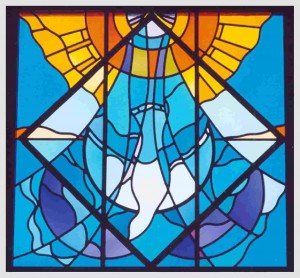
Finally, yesterday I went to the store and bought it – meet Frosty the Snowman.

Continue reading

Baptismal Sermon for Advent 1: Tear Open the Heavens and Come Down!

What would you do if the world were to end tomorrow? That’s a good question to be thinking about as we consider our lesson from Mark’s Gospel; that’s a good question to be thinking about as we contemplate baptizing these two boys today. In today’s Gospel reading, Jesus is warning his disciples about the end of time, and the picture he paints is not pretty:

the sun will be darkened,
and the moon will not give its light,
and the stars will be falling from heaven,
and the powers in the heavens will be shaken.

It’s pretty vivid, to say the least; the stuff of fantasy novels or Hollywood films. This vivid imagery had a powerful effect on Jesus’ first audience, who were Jews familiar with the compelling visions of their prophets, or on the first generation of Christians who expected Jesus to return at any moment, but that’s not really the case with us, is it? Do we really think it still makes sense, let alone actually predicts what’s going to happen? 2,000 years of no return have deadened its power for us!

Of course, predictions of the end still do attract considerable attention, much of it derisive and ridiculing, although there are also true believers. Witness the tremendous attention and preparation given after Harold Camping predicted – and heavily promoted! – that Jesus would return on May 21, and then when that failed, on October 21 of this past year. A little more than a decade ago it was Y2K; a generation ago it was Hal Lindsey and The Late, Great Planet Earth; and next year I’m sure there will be all sorts of attention paid to the ancient Mayan calendar’s apparent suggestion that the world ends on December 21, 2012. Speculation about the end of the world runs rampant. And that’s part of the problem. So many have predicted the end of the world and Jesus’ return to great fanfare and failure that they are almost a laughingstock.

But we are Bible-believing Christians who weekly stand up in church and say, “We believe in one Lord, Jesus Christ, [who] will come again in glory to judge the living and the dead, and his kingdom will have no end.” So when Jesus looks back to and echoes the Prophet Isaiah, and tells his followers that he will come again and how it will be, we should take it seriously!

Especially, we should take it seriously on a day when we take two infant boys and pray over them, when we douse them with water and invoke the power of God’s Holy Spirit to deliver them, open them, fill them, teach them, and send them out into the world in God’s Name, when we make them a part of the People of God, members in the Body of Christ, and participants in the Royal Priesthood of all believers. Our prayers may not seem quite so vivid, quite so fantastic, but we are doing in the lives of these children nothing less than what Isaiah did in the lives of the Hebrew People when, on their behalf, he cried out to God, “Tear open the heavens and come down!”

We should take it seriously! But it often seems that, left to our own devices, we really don’t. We don’t mind approaching God on our own terms, but we often act as if we don’t really want God getting too close. As a colleague of mine puts it, “Like a cagey, skittish cat, we approach God … a little. Slowly. With constant suspicion. And at the slightest movement we scurry in the opposite direction.”

People want to be close to God. Or, at the very least we want to want to be close to God. We want to think of ourselves as “spiritual” people and we want others to think of us that way. And we want to be safe and comfortable while we do that. But along comes Isaiah who prays for heavens to be torn open, for mountains to quake, for nations to tremble … along comes Jesus who tells us to be alert for darkening skies, for falling stars, for shaking heavens. Our general stance of skittishness, of cautious approach, of wary-curiosity is vanquished by Advent’s opening cry to God to “tear open the heavens and come down” and by our baptismal prayer that God will deliver, open, fill, teach, and send not only these children, but all of us, out into the world to do the work he has given us to do. Advent and baptism are meant to kindle in these children and in us the insatiable desire for God to come and, I say again, we should take it seriously! As Christian write Annie Dillard says,

Does anyone have the foggiest idea of what sort of power we so blithely invoke? Or, as I suspect, does no one believe a word of it? The churches are children playing on the floor with their chemistry sets, mixing up a batch of TNT to kill a Sunday morning. It is madness to wear ladies’ straw hats and velvet hats to church; we should all be wearing crash helmets. Ushers should issue life preservers and signal flares; they should lash us to our pews.

We should take it seriously, indeed!

This is what St. Paul is saying to Christians in Corinth when he greets them, “Grace to you and peace from God our Father and the Lord Jesus Christ,” and then reminds them:

[Y]ou are not lacking in any spiritual gift as you wait for the revealing of our Lord Jesus Christ. He will also strengthen you to the end, so that you may be blameless on the day of our Lord Jesus Christ. God is faithful; by him you were called into the fellowship of his Son, Jesus Christ our Lord.

Paul’s vision for the church at Corinth is also our vision as we begin a new church year, as we baptize these young boys. Grace has been given to us, the grace of being called into the fellowship of Christ, into the communion of saints. But grace is never appropriated individually, just for oneself; it is always communal in nature, an insertion into community. This is what baptism accomplishes, for we are assured that “all who are baptized into the death of Jesus Christ … live in the power of his resurrection and look for him to come again in glory.”

In the verse just before our reading from the First Letter to the Corinthians begins, Paul addresses the church members as ” those who are sanctified in Christ Jesus, called to be saints.” By these words “sanctified” and “saints”, Paul means that church members set apart from worldly things for a special, divine purpose. In our baptismal liturgy, these children will be told that that “are sealed by the Holy Spirit in Baptism and marked as Christ’s own for ever.”

To be sanctified or made holy, to be marked as God’s own has practical implications; it forms and shapes all aspects of the life of the People of God, the way church members live. Throughout the Old Testament, God desires that Israel be different from the nations around them, that they engage in practices and locate themselves within a narrative that marks that difference. It’s the same in the New Testament, in which the church is called to be different from the culture that surrounds us. In our epistle reading today, Paul particularly notes that the church at Corinth is called not only “out” of the world, but “into” community: they and we were “called into the fellowship of [God’s] son, Jesus Christ our Lord.” Faithfulness is a team sport that requires the unity of the church.

That faithfulness, the work of the spiritual gifts begun in us through our unity in the church, through our fellowship in Christ and with one another, is lived out through an active waiting for Christ to be revealed. This waiting is not our usual catlike skittishness, our cautious approach, our wary-curiosity; this waiting is the praying and thanksgiving, the singing and sharing that transform our speech and our knowledge, our words and our expectations, into conformity with Jesus. The community of faith itself, the one in which we find ourselves, is called to see Christ coming in its very midst, to take the end of time very seriously.

We should take it seriously, and we do. That is why today, as we begin a new church year, as we look for Christ to come again in glory, in joyful obedience to Christ, we bring into his fellowship these children, baptizing them in the Name of the Father, and of the Son, and of the Holy Spirit, crying out to God, “Tear open the heavens and come down” in their lives and into ours. Amen.

« Older posts Newer posts »