====================
This sermon was preached on Sunday, December 23, 2012, at St. Paul’s Episcopal Church, Medina, Ohio, where Fr. Funston is rector.
(Revised Common Lectionary, Advent 4, Year C: Micah 5:2-5a; Psalm 80:1-7; Hebrews 10:5-10; and Luke 1:39-55. These lessons can be read at The Lectionary Page.)
====================
 I want to ask you to read along as I re-read the collect for the day, the particular prayer of the Fourth Sunday in Advent: “Purify our conscience . . . . ” That’s enough, just those three words: “Purify our conscience . . . . ” Don’t you think that’s asking a lot of God? I mean really . . . purify the human conscience, that place in ourselves where we know all the wrongs we have done. Tall order, purifying that! But that’s what the prayer asks and in doing so it draws on the language of the Letter to Hebrews from which our second lesson today is taken.
Our reading came from Chapter 10 of the letter, but what we heard is only small part of a longer section dealing with the efficacy of sacrifice, a section that begins in Chapter 9. There we read these words:
For if the blood of goats and bulls, with the sprinkling of the ashes of a heifer, sanctifies those who have been defiled so that their flesh is purified, how much more will the blood of Christ, who through the eternal Spirit offered himself without blemish to God, purify our conscience from dead works to worship the living God! For this reason he is the mediator of a new covenant . . . . (Heb. 9:13-15a)
But what is the conscience?
The dictionary tells us that the conscience is that “inner sense of what is right or wrong in one’s conduct or motives; the complex of ethical and moral principles that controls or inhibits the actions or thoughts of an individual.” (dictionary.com) Another definition comes from the devotional text My Utmost for His Highest compiled from the lectures of the British Baptist educator Oswald Chambers:
Conscience is that ability within me that attaches itself to the highest standard I know, and then continually reminds me of what that standard demands that I do. It is the eye of the soul which looks out either toward God or toward what we regard as the highest standard. This explains why conscience is different in different people. If I am in the habit of continually holding God’s standard in front of me, my conscience will always direct me to God’s perfect law and indicate what I should do. The question is, will I obey? I have to make an effort to keep my conscience so sensitive that I can live without any offense toward anyone. I should be living in such perfect harmony with God’s Son that the spirit of my mind is being renewed through every circumstance of life, and that I may be able to quickly “prove what is that good and acceptable and perfect will of God” (Romans 12:2 ; also see Ephesians 4:23).
So, then, our conscience is that sense within us which, if it is pure, directs us to do that which God asks of us. But note what our prayer asks of God . . . that the purification of our conscience has to happen everyday: “Purify our conscience, Almighty God, by your daily visitation . . . ” and then the prayer goes on to sound an Advent note ” . . . that your Son Jesus Christ, at his coming, may find in us a mansion prepared for himself.”
I was a great fan of Charles Schultz’s cartoon Peanuts. I recall a Sunday installment in Lucy and Charlie Brown were talking about cruise ships. Lucy was holding forth giving, as she was wont to do, her unflappable opinion: “You know,” she says to Charlie Brown, “there are two kinds of people who go on cruise ships. There are some people who face their deck chairs toward the stern so that they can see where they have been, and there are others who face their deck chairs toward the bow so that they can see where they are going. Now,” she asks Charlie Brown, “on the great cruise ship of your life, how do you face your deck chair?” Charlie Brown thinks for a moment, then says, “I can’t get mine unfolded!”
Focusing our conscience like “the eye of the soul,” as Chambers said, so that it looks outward toward God whom we beseech to purify it daily, is like getting our deck chair unfolded and faced toward the bow of the ship so we can see where we’re going, so that we are prepared for Jesus. I think that’s really what today’s Psalm is all about, too, especially the refrain that is repeated twice in the portion we read and is repeated again in the whole Psalm: “Restore us, O God of hosts; show the light of your countenance, and we shall be saved.” Purify our conscience so that we are prepared for our savior, for Jesus.
The great example of that preparation is the virgin Mary. Her trip to the hill country of Judea about which we heard in today’s Gospel lesson took place almost immediately after the angel Gabriel had visited her to inform her that she would be the mother of the savior. Her willing response to that news, of course, was, “Here am I, the servant of the Lord; let it be with me according to your word.” (Luke 1:38) If we are honest in our prayer that God purify our consciences each day, then we must be willing to follow Mary’s example and accept whatever God wills for us; when God makes God’s daily visitation to us, our response must echo hers, “Let it be with me according to your word.”
The German medieval mystical theologian put it this way: “We are all meant to be mothers of God. What good is it to me if this eternal birth of the divine Son takes place increasingly, but does not take place within myself? And, what good is it to me if Mary is full of grace if I am not also full of grace? What good is it to me for the Creator to give birth to his Son if I do not also give birth to him in my time and my culture? This, then, is the fullness of time: When the Son of Man is begotten in us.”
So it is that we pray today, “Purify our conscience, Almighty God, by your daily visitation,” that we like Mary may be bearers of the Eternal Word. Amen.
 Sort of buried in Jude’s moralizing about false teachers and those who follow them is an Advent message: “Look forward to the mercy of our Lord Jesus Christ that leads to eternal life.” As I’ve been saying pretty consistently throughout the season, here and in my sermons, Advent is not so much about celebrating the birth of Jesus, wherever it was and whenever it was about 2,000 years ago, as it is about getting ready for his return, the parousia as seminary-educated folks like to say.
 The world was supposed to end today. I slept in in hopes it would be gone before I got out of bed . . . but alas, it is still here and there are still laundry to be done and a dog who needs a bath and Christmas meals to be shopped for and sermons to be written.
 The first word of this bit of Isaiah in Hebrew is often translated “Woe” but here in the New Revised Standard Version, it has been rendered “Ah”. The Hebrew is hôy ; it is a negative exclamation pronounced “oy!” Perhaps the “woe” translation is better. However, the construction “woe to you . . . . ” has taken on an oracular connotation to modern ears and that is not what the prophet is saying here. He will later make prediction about these oppressors, but for now he is simply making an indictment.
 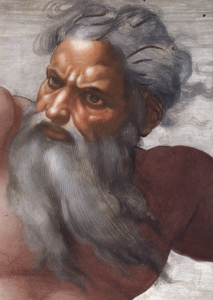 Recently, following the tragedy in Newtown, Connecticut, a bunch of Christian “leaders” (Mike Huckabee, James Dobson, Bryan Fisher, to name a few) have basically said, “God has been taken out of the schools,” or “God has been taken out of our society,” or some variation on this theme. This, they say is, the reason the shooting at Sandy Hook Elementary School took place. Because of God’s supposed absence (voluntary on God’s part, it would seem) the horror took place. They seek to blame those who have “put God out,” but the way they make this argument really places the responsibility on God who apparently made the decision to stay away; either that or they are describing a God who is powerless in the face of some alleged official refusal to “allow God in” because our Constitution prohibits state-prescribed sectarian prayer in the schools.
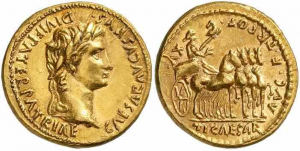 I absolutely adore Handel’s Messiah. As a child in a non-church-going family (except during the summers when I lived with my Methodist grandparents), my introduction to these words from the Prophet Isaiah was through Handel’s music. My step-father, who had sung in high school choirs, would take me with him to community sing-alongs of the oratorio which churches in our area would offer during the Christmas holidays. Even now as I read these lines from Isaiah, I read them to music of Handel!
  We are all, every American, still reeling from and trying to comprehend a tragedy. Twenty First Grade children, most age 6, and six teachers and school administrators were gunned down at an elementary school in Connecticut on Friday. There is not a person in this country, probably not a person in the world, who has not uttered some variation on “Father, if you are willing remove this cup . . . .” in the past 72 hours.
  Did you pay attention to the words of the song we just sang as our sequence hymn? Listen to them again:
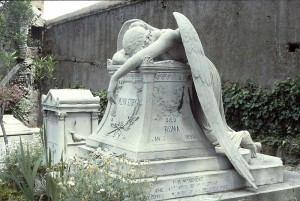 Today is the Third Sunday of Advent; in the tradition of the church it is known as Gaudete Sunday, Latin for “Rejoicing Sunday” so named because of the medieval introit to the Mass, “Gaudete in Domino semper: iterum dico, gaudete”, St. Paul’s words in the Letter to the Philippians, “Rejoice in the Lord always: again I say rejoice.” (4:4) (A reading from that very portion of Paul’s letter is this year’s epistle lesson for the Eucharist today; we will hear and consider those words at church this morning.)
 This is the part of the Maundy Thursday – Good Friday story that breaks my heart! I so identify with Peter; he’s such a bumbling fool on so many occasions and Jesus just keeps on holding him close, knowing that eventually he will pull through. I know that I would have done no better than Peter in those dark hours of Thursday night. I might not even have done as well as he did; I’m not sure I’d have had the courage to follow Jesus into the high priest’s courtyard!

