From the Book of Sirach:
A wise magistrate educates his people,
and the rule of an intelligent person is well ordered.
As the people’s judge is, so are his officials;
as the ruler of the city is, so are all its inhabitants.
An undisciplined king ruins his people,
but a city becomes fit to live in through the understanding of its rulers.
The government of the earth is in the hand of the Lord,
and over it he will raise up the right leader for the time.
Human success is in the hand of the Lord,
and it is he who confers honor upon the lawgiver.
(From the Daily Office Lectionary – Sirach 10:1-5 (NRSV) – July 4, 2013.)
 Independence Day is one of the few secular holidays to have lessons of its own in both the Eucharistic and Daily Office Lectionaries of the Episcopal Church. There is a set of lessons in the regular Daily Office schedule of readings for today, as well, and I am intrigued that the way the calendar falls this year the Gospel for that set is the unjust trial of Jesus. One could meditate for hours on the meaning to be drawn from that juxtaposition.
However, the reading from the apocryphal book The Wisdom of Jesus, Son of Sirach (a book also called “Ecclesiasticus”) has caught my attention because of a recent (and unfortunately repeated) incident at my church. The lines of particular import are: “As the ruler of the city is, so are all its inhabitants;” and “It is [God] who confers honor upon the lawgiver.”
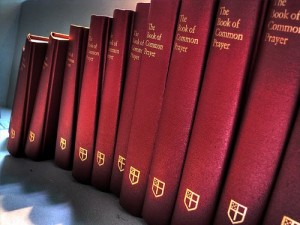
In every form of the Prayers of the People in the American Book of Common Prayer (1979) there is a petition included for our civil leaders. According to the rubric in the service of Holy Communion (page 359 of the BCP), we are bidden to pray for “the Nation and all in authority.” At my church, we do so by name, listing our president, state governor, and city mayor, and conclude with a general petition for other elected legislators, judges, and executive department officials.
At my church, as well, we share leadership of the prayers. A single person reads the major biddings of the various forms, but additional petitions are read by members of the congregation. As worshipers arrive, our ushers and greeters ask if they would like to read a sentence or two of additional intercessions. Most readily agree.
However, from time to time someone will decline to do so and occasionally someone will specifically (and sometimes venomously) refuse to read the petition naming the president. This has only happened since the election of the current incumbent. My heart sinks when I hear these refusals or when I am told about them later. It’s an indication of how poorly I have taught the Christian ethos to this congregation.
“As the ruler of the city is, so are all its inhabitants.” If Jesus ben Sirach is correct, then we should very definitely be praying for our rulers and leaders, for they set the example and the tone for the entire populace. And yet people decline to do so . . . .
My parish is dedicated to St. Paul, the writer of most of the New Testament, and Paul was very clear on the duty Christian folk have with respect to secular authorities and civic leaders. He wrote to the young bishop, Titus of Crete, instructing him to teach his congregation to respect civil rulers:
Remind them to be subject to rulers and authorities, to be obedient, to be ready for every good work, to speak evil of no one, to avoid quarreling, to be gentle, and to show every courtesy to everyone. For we ourselves were once foolish, disobedient, led astray, slaves to various passions and pleasures, passing our days in malice and envy, despicable, hating one another. But when the goodness and loving kindness of God our Savior appeared, he saved us, not because of any works of righteousness that we had done, but according to his mercy, through the water of rebirth and renewal by the Holy Spirit. (Titus 3:1-5)
He wrote to the Romans in a similar vein:
Let every person be subject to the governing authorities; for there is no authority except from God, and those authorities that exist have been instituted by God. Therefore whoever resists authority resists what God has appointed, and those who resist will incur judgment. For rulers are not a terror to good conduct, but to bad. Do you wish to have no fear of the authority? Then do what is good, and you will receive its approval; for it is God’s servant for your good. But if you do what is wrong, you should be afraid, for the authority does not bear the sword in vain! It is the servant of God to execute wrath on the wrongdoer. Therefore one must be subject, not only because of wrath but also because of conscience. For the same reason you also pay taxes, for the authorities are God’s servants, busy with this very thing. (Romans 13:1-6)
And with regard to praying for our secular leadership, he was very clear in his instructions to another young bishop, Timothy of Ephesus:
First of all, then, I urge that supplications, prayers, intercessions, and thanksgivings be made for everyone, for kings and all who are in high positions, so that we may lead a quiet and peaceable life in all godliness and dignity. This is right and is acceptable in the sight of God our Savior, who desires everyone to be saved and to come to the knowledge of the truth. (1 Timothy 2:1-4)
I quite understand disliking secular authorities; I don’t understand disliking one so much that we refuse to follow the clear mandate of Holy Scripture and the tradition of our church! Anyone who has ever had even the shortest political conversation with me knows that, in my opinion, George W. Bush was the worst president in U.S. history. Nonetheless, every day of his eight years in office I prayed for him by name, twice a day. (I even pray for the vice-president by name and during those years that was an even more difficult thing to do!) I prayed for Bill Clinton even though his sexual pecadillo with Monica Lewinsky was more than a little off-putting. I pray for Barack Obama even though I am very disappointed with many aspects of his performance as president.
The point is that my prayers have nothing to do with my personal dislike or approval of any of these politicians. My prayers have nothing to do with them at all! My prayers have everything to do with me and my discipline as a follower of Jesus Christ. I am pretty sure that Jesus had some personal problem with the political authorities of his day, with Caiaphas the High Priest, with Herod the Tetrarch, with Pilate the Roman governor, and yet he prayed for them: “Father, forgive them; for they do not know what they are doing.” (Luke 23:34) As a disciple of Christ, I can do no less than to pray for the civil authorities in power over me!
“As the ruler of the city is, so are all its inhabitants.” If Jesus ben Sirach is correct, and I think he is, our prayer for our leaders is a prayer for ourselves. Any prayer is, in truth, a prayer for ourselves. We do not pray to bring to God’s attention something God has overlooked, nor do we pray to change God’s mind about something, to get God to do what we want. We pray to conform our wills to God’s Will; we pray that we might have what Paul called “the mind of Christ.” (1 Cor. 2:16) We pray that we might be like him who, on the cross, prayed for the civil authorities who hung him there.
On this day especially, let us pray for the Nation and all in authority; let us pray for them by name! For “human success is in the hand of the Lord, and it is he who confers honor upon the lawgiver.”
====================
A request to my readers: I’m trying to build the readership of this blog and I’d very much appreciate your help in doing so. If you find something here that is of value, please share it with others. If you are on Facebook, “like” the posts on your page so others can see them. If you are following me on Twitter, please “retweet” the notices of these meditations. If you have a blog of your own, please include mine in your links (a favor I will gladly reciprocate). Many thanks!
====================
Father Funston is the rector of St. Paul’s Episcopal Church, Medina, Ohio.
 The Book of Acts, the earliest church history, tells us that the followers of Jesus practiced daily prayer: “Day by day, as they spent much time together in the temple, they broke bread at home and ate their food with glad and generous hearts.” (Acts 2:46) Eventually, the Christians were excluded from Jewish worship assemblies, either by their own choice or by action of the authorities, and in an unrelated development, the Temple was destroyed in 70 AD. Where, then, did Christians pray together? Or, for that matter, alone?
 In the assembly of the elders of the people, the chief priests and the scribes, Jesus is asked, “Are you the Messiah?” and in response he gives vent to some very real human frustration.
  This is the first appearance in the Christian story of the man who will become the early church’s greatest evangelist and the author of most of the New Testament. We are told that as he witnessed the martyrdom of the first deacon, “Saul approved of their killing him.” (Acts 8:1)
 This advice not to worry about his donkeys is given by Samuel to Saul when Saul arrives at Ramah. It seems oddly out of place. Saul has been sent by God to Samuel, and God has informed Samuel that the man he will have sent to him is to be king over Israel. So Saul has had his cook set aside a special portion of meat and otherwise prepared to meet and anoint the man who would one day rule the country. Samuel comes to the town where he expects to find the man of God, and this statement is part of their first conversation:
 Are you familiar with those visions of the afterlife in which the dearly departed, clothed in flowing white robes lounge around on fluffy, white cotton clouds playing harps? I have to be honest with you that I cherish a very dear hope that such visions are 100% absolutely wrong! I cannot imagine any existence more boring than an eternity of cloud-floating and harp-playing, and if my ten years of knowing Charlie Stehno have given me a clue of anything about Charlie it is that he would most likely feel the same way. If he has gotten to the Great Hereafter only to find himself fitted out with a flowing white robe and issued a harp to play and cloud to lounge upon, I suspect that he is (as my grandmother would say) “fit to be tied.”
 The Pharisee Gamaliel gave sound advice to the Sanhedrin: “Leave them alone. If their movement is of God, you will not be able to stop it.” It’s advice the church, which benefited from it, has often failed to heed. We ought to follow it more often than we do . . . but there is that other rule the church more frequently follows: “Any change, at any time, for any reason, is to be deplored.” (Often attributed to an otherwise unidentified Victorian-era “Duke of Cambridge.”)
  “Festal shout” . . . the Hebrew is teruwah, a technical term for a liturgical response. (The root word is ruwa which is a verb meaning “to shout an alarm.”) It was probably something along the lines of “Hallelujah!” although it was probably not that particular Hebrew exclamation.
 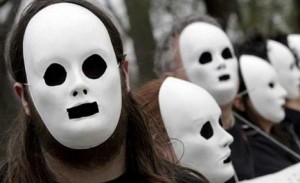 At the beginning of the sermon, following the reading of Gospel lesson, five readers scattered among the congregation, rose and loudly read the following five passages simultaneously:
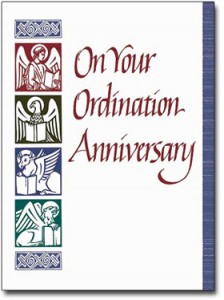 Today is the 22nd anniversary of my ordination as a priest in the Episcopal Church. It is also the 20th anniversary of the death of my older (and only) sibling, Rick.

