 Heavenly Father,
We have come over a way that with tears has been watered.
We have come, treading our path through the blood of the slaughtered,
God of our weary years,
God of our silent tears,
Thou who hast brought us thus far on the way;
Thou who hast by Thy might,
Led us into the light,
Keep us forever in the path, we pray.
Amen.[1]
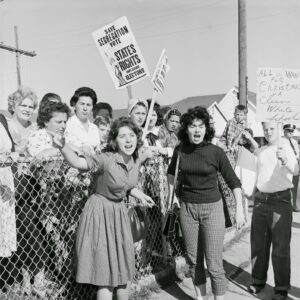
Last week, Evelyn and I were in Topeka, Kansas, visiting our son and his family. On Friday afternoon we were at loose ends while the grandkids were at school and their parents were at work, so we decided to visit the Brown vs. Board of Education National Monument. This memorial is a small museum in what was the segregated, all-black Monroe Elementary School south of Topeka’s downtown. I’m glad we went to see it. It is a remarkable place, and a fascinating if sobering reminder of how bad racism has been in this country and how much further we still have to go to remove that stain from our nation.
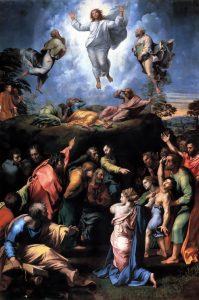 Today, in the normal course of the Lectionary, would have been the 10th Sunday after Pentecost on which, this year, we would have read the lessons known as “Proper 13” in which the gospel lesson is Matthew’s story of the feeding of the 5,000. However, since this is August 6, we don’t follow the normal course. We step away from the Lectionary to celebrate one of the feasts which, in the language of the Prayer Book, “take precedence of a Sunday,”
 When I was a sophomore in college, I lived in a dormitory suite with nine other guys: six bedrooms, two sitting rooms, and a large locker-room style bathroom. About mid-way through the first semester, one of our number, a 3rd-year biochemistry major, suggested that set up a small brewery in one of the sitting rooms. We all read up on how to make beer and thought it was a great idea; so we helped him do it. It takes three to four weeks to make a batch of beer, so over the next few months we made quite a bit of beer.
  When I was 19 years old, my parish priest, Fr. John Donaldson, died of cancer. I was privileged to be the acolyte and crucifer at his requiem and burial. It was a very formal, high-church affair. In all honesty, I remember very little of Fr. John’s funeral. I don’t remember Bishop Bloy’s homily at all, but I do remember the committal at the graveside. You see, it was my first experience of a burial using the liturgy of the Episcopal Church.
 This is an old and familiar story, a comfortable story if you will … the parable of the sower.
 A clergy colleague suggested recently that this Sunday’s epistle reading
 What are we to do with our first lesson today? The story of the testing of Abraham and the binding of Isaac, called the Akedah in Hebrew, “exudes darkness and mystery, and it brings before us a thousand questions, most of which have no answers.”
 Do any of you know the story of Tubby the Cocker Spaniel? Well . . . remember Tubby’s name. We’ll come back to him, but first let’s put today’s gospel lesson in perspective.
 “As Jesus was walking along, he saw a man called Matthew sitting at the tax booth; and he said to him, ‘Follow me.’ And he got up and followed him.”
 “Put things in order, … agree with one another, live in peace.”

