 Again this week as last, our first reading today is from the First Book of Kings and like last week’s, it is a prayer spoken by King Solomon. Last week, it was a private prayer spoken in a dream late at night. Today, it is a public prayer. As long as it was, this reading is just a small part of the dedicatory prayer that Solomon offered when the Temple was finished and consecrated. In it, Solomon asks an important question, “[W]ill God indeed dwell on the earth?”[1] More specifically, Solomon is asking if God will dwell in the Temple, and the wise king immediately answers his own question: “[H]eaven and the highest heaven cannot contain you, much less this house that I have built!”[2]
The building of the Temple in 957 BCE[3] marked a very significant change in the Jewish religion. Well, really, let’s not call it the Jewish religion because it wasn’t that, yet. Let’s just say, “The religion of the people of Israel.” These people were not, though we often imagine them to be, strict monotheists. Even in this prayer, Solomon leaves open the question of whether there might be gods other than their God: “O Lord, God of Israel, there is no God like you in heaven above or on earth beneath.”[4] There might be other gods, lesser gods perhaps, demigods, or even demons, part of a heavenly pantheon of gods, but this God, the God of the People of Israel is greater than any of those others.
 The United States is, at least ostensibly, a very religious country. Nearly two hundred years ago, Alexis de Tocqueville wrote that “there is no country in the world where … religion retains a greater influence over the souls of men than in America; and there can be no greater proof of its utility and its conformity to human nature than that its influence is powerfully felt over the most enlightened and free nation of the earth.”
 There’s a story about a pastor giving a children’s sermon. He decides to use a story about forest animals as his starting point, so he gathers the kids around him and begins by asking them a question. He says, “I’m going to describe someone to you and I want you to tell me who it is. This person prepares for winter by gathering nuts and hiding them in a safe place, like inside a hollow tree. Who might that be?” The kids all have a puzzled look on their faces and no one answers. So, the preacher continues, “Well, this person is kind of short. He has whiskers and a bushy tail, and he scampers along branches jumping from tree to tree.” More puzzled looks until, finally, Johnnie raises his hand. The preacher breathes a sigh of relief, and calls on Johnnie, who says, “I know the answer is supposed to be Jesus, but that sure sounds an awful lot like a squirrel to me.”
 We “boast in our sufferings,” writes Paul to the Romans, “knowing that suffering produces endurance, and endurance produces character, and character produces hope, and hope does not disappoint us….”
 Come Holy Spirit, Comforter, Spirit of Truth,
 This is a special Sunday for me. Friday marked the 28th anniversary of my ordination as a priest in the Episcopal Church. It was on Sunday, June 23, 1991, that I celebrated my first mass. So I am grateful to you and to Fr. George for the privilege of an altar at which to celebrate the Holy Mysteries and a pulpit from which to preach the gospel on this, my anniversary Sunday.
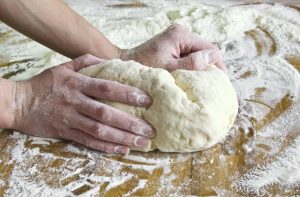
 Five weeks ago we began our month long journey through the world of bread with what Presbyterian scholar Choon-Leon Seow called the “remarkably mundane” story of food for the hungry, the feeding of the 5,000.
 Children, as those of us who have had or who have been children know, grow in their ability to communicate. Vocabularies grow. Grammars develop. They move from simple one- or two-syllable concepts – such as “Mama” or “Dada” or “NO!” – to more complex ideas.
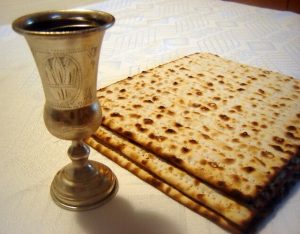 At the end of our gospel lesson this morning, Jesus said to the crowd, “It is my Father who gives you the true bread from heaven. For the bread of God is that which comes down from heaven and gives life to the world.” They said to him, “Sir, give us this bread always.” Jesus answered, “I am the bread of life. Whoever comes to me will never be hungry, and whoever believes in me will never be thirsty.”

