 In 2014, Evie and I were privileged to join a group of other pilgrims from Ohio and Michigan and spend not quite three weeks in Palestine and Israel visiting many of the sites we hear about in the Bible, especially the Christian holy places of the Gospel stories. One of those was a hilly place overlooking the Sea of Galilee called Tabgha. Until 1948, when the Israelis uprooted its residents, a village had been there for centuries; now it is simply an agricultural area and a place of religious pilgrimage.
The name is a corruption of the Greek name of the place, Heptapegon, which means “seven springs;” its Hebrew name is Ein Sheva, which means the same thing. It is venerated by Christians for two reasons; on a bluff overlooking the place is where the feeding of the multitude is believed to have occurred and on the beach is where the Risen Christ is thought to have had a grilled fish breakfast with Peter during which he asked him, three times, “Do you love me?” At each location, there is a shrine and a church: the first is called The Church of the Multiplication; the second is called Mensa Domini (which means “the Lord’s Table”) and also known as The Church of the Primacy of Peter.
A Fourth Century pilgrim from Spain named Egeria reported visiting, in about 380 CE, a shrine where the Church of the Multiplication now stands; in her diary, she tells us that the site had been venerated by the faithful from the time of Christ onward. Shortly after her visit, a new church was built there in which was laid a mosaic floor depicting the loaves and fishes. That floor still exists today and a graphic of that picture of loaves and fishes is on the front of your bulletin.
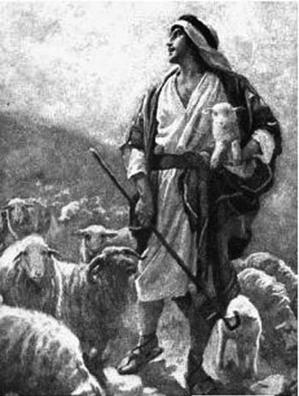 Most of the Bible texts from the Revised Common Lectionary this week present us with the well-worn and comfortable Biblical image of sheep and shepherds. Jeremiah rails against the shepherds of Israel “who destroy and scatter the sheep of [the Lord’s] pasture,”
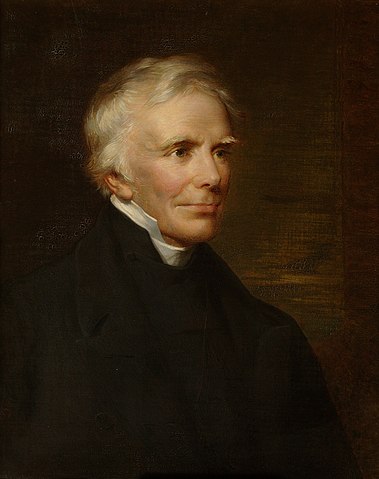 Yesterday, July 14, was the 185th anniversary of the preaching a sermon which is said to have been the beginning of the Catholic revival in the Church of England. The sermon was preached at St. Mary’s Church Oxford by the Rev. John Keble, Provost of Oriel College and Professor of Poetry at Oxford. The sermon marked the opening of the Assize Court, the summer term of the English High Court of Justice. The Assize sermon normally would have addressed matters of law and religion, but in the summer of 1833 the Parliament of the United Kingdom was debating whether to abolish (or in the language of the time “suppress”) some dioceses of the Anglican Church of Ireland which, at the time, was united with the Church of England. It was an entirely financial issue in the eyes of Parliament, but Keble and several of his friends believed this to be an encroachment of the secular establishment upon the religious and an altogether wrong thing, and so it was this portending legislation that Keble addressed in his homily, which he titled National Apostasy. He began with these words:
 In today’s gospel lesson from the sixth chapter of Mark, Jesus has come home to Nazareth immediately after last week’s two stories of healing. Apparently he is there for at least a few days and when the Sabbath comes he does as he has done elsewhere: he goes to the synagogue. In Luke’s version of this story, Jesus is given a scroll from the prophet Isaiah and reads from it:
 Our Old Testament lesson this morning is a very small bit of the Book of Job, that really sort odd bit of Biblical literature that tells the story of a wager between God and Satan. Some scholars believe that it may find its origins in an earlier Babylonian work known as the Poem of the Righteous Sufferer, that the Jews in Exile became familiar with the older Babylonian story and adapted it to their own theology.
 Our kids this week have been “Shipwrecked,” but they’ve also been “rescued by Jesus.”
 For recreational reading these days, I’m into a novel entitled Winter of the Gods.
 The theme for today’s lessons is clear . . . we are almost “hit upside head” with the concept of Sabbath. Our reading from Deuteronomy is the law establishing the mandatory day of rest:
 Some of you may have heard of Brooks’s law, which has to do with the time it takes to complete a software project. It’s similar to the general law of diminishing returns in economics. Professor Fred Brooks of the University of North Carolina first proposed the law in 1975; it holds that “adding manpower to a late software project makes it later.”

