 What does it mean to say “Jesus is Lord”? The question arises because of today’s dialog between Jesus and some of the Pharisees about the relative importance of the Commandments. Jesus responds to a lawyer’s question about the greatest commandment and then follows his response with a question about the lordship of the Messiah, the anticipated “Son of David.”
Jesus very rarely claimed this title for himself and when he did it was generally in the sort of oblique way we see in today’s exchange. He doesn’t come right out and say “I am the Lord,” but he hints at it. Usually, however, it is applied to him by others. In daily usage among First Century Jews, addressing someone as “Lord,” was probably meant as an honorific synonymous with “Rabbi,” “Teacher,” “Master,” and so forth, the way we might use “Doctor,” “Professor,” or address a judge as “Your Honor.”
 Heavenly Father,
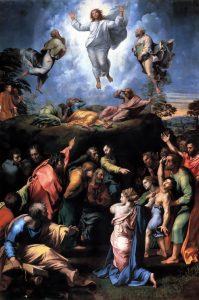 Today, in the normal course of the Lectionary, would have been the 10th Sunday after Pentecost on which, this year, we would have read the lessons known as “Proper 13” in which the gospel lesson is Matthew’s story of the feeding of the 5,000. However, since this is August 6, we don’t follow the normal course. We step away from the Lectionary to celebrate one of the feasts which, in the language of the Prayer Book, “take precedence of a Sunday,”
 When I was 19 years old, my parish priest, Fr. John Donaldson, died of cancer. I was privileged to be the acolyte and crucifer at his requiem and burial. It was a very formal, high-church affair. In all honesty, I remember very little of Fr. John’s funeral. I don’t remember Bishop Bloy’s homily at all, but I do remember the committal at the graveside. You see, it was my first experience of a burial using the liturgy of the Episcopal Church.
 What are we to do with our first lesson today? The story of the testing of Abraham and the binding of Isaac, called the Akedah in Hebrew, “exudes darkness and mystery, and it brings before us a thousand questions, most of which have no answers.”
 Do any of you know the story of Tubby the Cocker Spaniel? Well . . . remember Tubby’s name. We’ll come back to him, but first let’s put today’s gospel lesson in perspective.
 “Put things in order, … agree with one another, live in peace.”
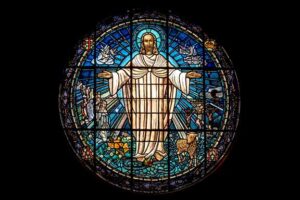 It’s the last Sunday of the Christian year, sort of a New Year’s Eve for the church. We call it “the Feast of Christ the King” and we celebrate it by remembering his enthronement. Each year on Christ the King Sunday we read some part of the crucifixion story. As Pope Francis reminded the faithful in his Palm Sunday homily a few years ago, “It is precisely here that his kingship shines forth in godly fashion: his royal throne is the wood of the Cross!”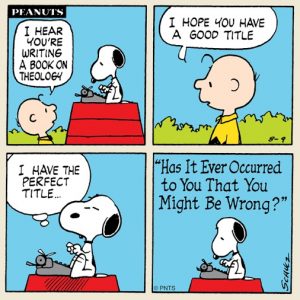
 There is an old tradition in the church: on Trinity Sunday, rectors do their best to get someone else to preach. If they have a curate or associate priest, he or she gets the pulpit on that day. If not, they try to invite some old retired priest to fill in (as Rachel has done today). No one really wants to preach on Trinity Sunday, the only day of the Christian year given to the celebration or commemoration of a theological doctrine, mostly because theology is dull, dry, and boring to most people and partly because this particular theological doctrine is one most of us get wrong no matter how much we try to do otherwise.

