 When I was a sophomore in college, I lived in a dormitory suite with nine other guys: six bedrooms, two sitting rooms, and a large locker-room style bathroom. About mid-way through the first semester, one of our number, a 3rd-year biochemistry major, suggested that set up a small brewery in one of the sitting rooms. We all read up on how to make beer and thought it was a great idea; so we helped him do it. It takes three to four weeks to make a batch of beer, so over the next few months we made quite a bit of beer.
Then, late in the spring semester, one of our roommates had a chance to get some yeast from a famous California champagne producer, so we thought we’d use it in our beer. We thought we’d be super-cool making beer with champagne yeast and our beer would be magnificent; we weren’t and it wasn’t. In fact, it was downright awful.
It turns out that not all yeasts are the same!
 When I was 19 years old, my parish priest, Fr. John Donaldson, died of cancer. I was privileged to be the acolyte and crucifer at his requiem and burial. It was a very formal, high-church affair. In all honesty, I remember very little of Fr. John’s funeral. I don’t remember Bishop Bloy’s homily at all, but I do remember the committal at the graveside. You see, it was my first experience of a burial using the liturgy of the Episcopal Church.
 This is an old and familiar story, a comfortable story if you will … the parable of the sower.
 A clergy colleague suggested recently that this Sunday’s epistle reading
 What are we to do with our first lesson today? The story of the testing of Abraham and the binding of Isaac, called the Akedah in Hebrew, “exudes darkness and mystery, and it brings before us a thousand questions, most of which have no answers.”
 Do any of you know the story of Tubby the Cocker Spaniel? Well . . . remember Tubby’s name. We’ll come back to him, but first let’s put today’s gospel lesson in perspective.
 “As Jesus was walking along, he saw a man called Matthew sitting at the tax booth; and he said to him, ‘Follow me.’ And he got up and followed him.”
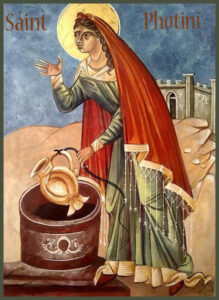 We “boast in our sufferings,” writes Paul to the Romans, “knowing that suffering produces endurance, and endurance produces character, and character produces hope, and hope does not disappoint us….”
 There is an old tradition in the church: on Trinity Sunday, rectors do their best to get someone else to preach. If they have a curate or associate priest, he or she gets the pulpit on that day. If not, they try to invite some old retired priest to fill in (as Rachel has done today). No one really wants to preach on Trinity Sunday, the only day of the Christian year given to the celebration or commemoration of a theological doctrine, mostly because theology is dull, dry, and boring to most people and partly because this particular theological doctrine is one most of us get wrong no matter how much we try to do otherwise.
  Come Holy Spirit, Comforter, Spirit of Truth,

