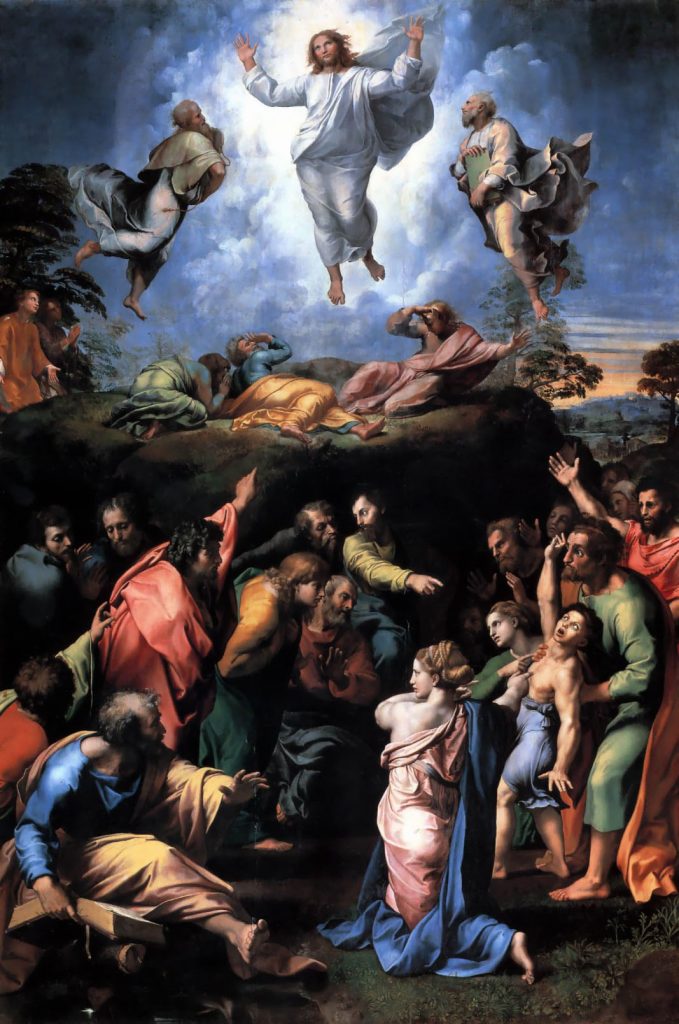
 Preachers often focus on Peter’s unthinking outburst offering to make three dwellings for Jesus, Elijah, and Moses on the mountain of the Transfiguration. Such booths would concretize his all-to-human desire to experience continually the radiance of God. Life, however, is not like that; it’s not all mountaintop highs. Life is full of ups and downs, both high mountaintops and low valleys.
My favorite artistic depiction of the Transfiguration is that by the High Renaissance painter Raphael. The top of Raphael’s painting portrays the glory and radiance described by the Evangelists Mark, Matthew, and Luke on the mountaintop, while the bottom shows what’s happening down below, what our lectionary reading leaves out. If we read further in Mark’s Gospel we find (as Paul Harvey might have said) the rest of the story:

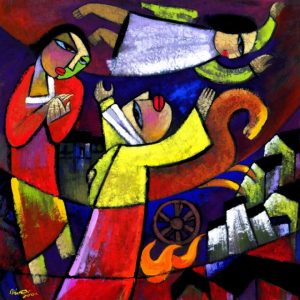 “The Lord your God will raise up for you a prophet like me from among your own people; you shall heed such a prophet.”
 Introductory Comment:
 Christmas is now done. It ended Friday on Twelfth Night. I am sure than none of you, good Anglican traditionalists that we all are, put away any of your decorations before then, but have by now put them all away.
  In Nigerian writer Chinua Achebe’s novel of post-colonial political intrigue in Africa, Anthills of the Savannah (1987), one of the characters (echoing Karl Marx’s famous aphorism about religion) opines:
 A lawyer asked Jesus a question to test him. “Teacher, which commandment in the law is the greatest?” He said to him, “’You shall love the Lord your God with all your heart, and with all your soul, and with all your mind.’ This is the greatest and first commandment. And a second is like it: ‘You shall love your neighbor as yourself.’ On these two commandments hang all the law and the prophets.”
 As I pondered our scriptures for today I was struck by how different, how utterly foreign, one might most accurately use the word “alien,” the social landscape of the bible is from our own. We, children of a post-Enlightenment Constitution which makes a clear delineation, almost a compartmentalization, between the civic and the religious, simply cannot quickly envision the extent to which those areas of human existence were entangled and intertwined for those who wrote and whose lives are described in both the Old and New Testaments. I tried to think of an easy metaphor to help illustrate the difference between our worldview and that of either the ancient wandering Hebrews represented by Moses in the lesson from Exodus or of the first Century Palestinians and Romans characterized by Jesus, the temple authorities, and Paul.
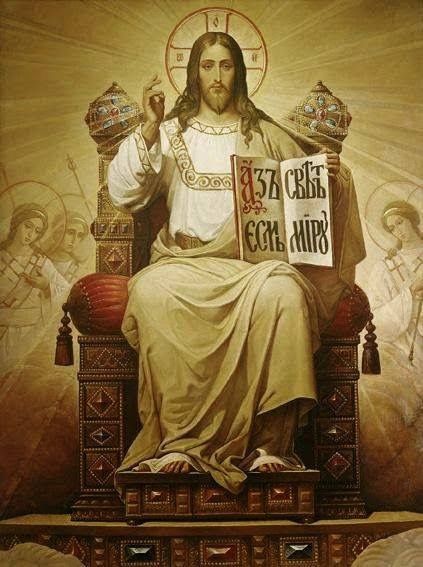
 “The kingdom of heaven may be compared to a king . . . .”

