====================
A homily offered by the Rev. Dr. C. Eric Funston on the Thirteenth Sunday after Pentecost, August 14, 2016, to the people of St. Paul’s Episcopal Church, Medina, Ohio, where Fr. Funston is rector.
(The lessons for the day are Proper 15C of the Revised Common Lectionary: Jeremiah 23:23-29; Psalm 82; Hebrews 11:29-12:2; St. Luke 12:49-56. These lessons may be found at The Lectionary Page.)
====================
 In philosophy and theology there is an exercise named by the Greek word deiknumi. The word simply translated means “occurrence” or “evidence,” but in philosophy it refers to a “thought experiment,” a sort of meditation or exploration of a hypothesis about what might happen if certain facts are true or certain situations experienced. It’s particularly useful if those situations cannot be replicated in a laboratory or if the facts are in the past or future and cannot be presently experienced. St. Paul uses the word only once in his epistles: in the last verse of chapter 12 of the First Letter to the Corinthians, he uses the verbal form when he admonishes his readers to “strive for the greater gifts. And I will show you [deiknuo, ‘I will give you evidence of’] a still more excellent way.” It is the introduction to his famous treatise on agape, divine love, a thought experiment (if you will) about the best expression, the “still more excellent” expression of the greatest of the virtues.
Today I would like to do a thought experiment with you, actually three short experiments, in which I will ask you to envision some interpersonal interactions to test the hypothesis of Jesus that his message, which he claimed was the message of God recorded in the Law and the Prophets, would bring division.
So make yourselves comfortable and, if it helps, close your eyes and envision yourself a 16-year-old high school student completing your secondary education at a church-affiliated institution which includes the study of religion in its curriculum. You have just completed a course in which you studied the creation myths of Genesis, the notion that all of humankind is descended from a single pair of proto-parents, Adam and Eve, or later from one family, that of Noah, after all other people were wiped out by a universal flood. Your class has explored what this means in a world divided by nations and cultures, into races and ethnic groups, and you have come to believe that all human beings are related one to another and to be treated with equal dignity and respect. Suppose also that you come from a family with some of its roots deep in the antebellum South and that your grandmother, a proud inheritor of those origins, employs an African-American maid whom she regularly refers to as her “house nigger.” Imagine that you start a conversation with Grammy about your new biblically based understanding of race relations . . . .
Now let’s have you imagine yourself a few years older, your early twenties. You are working your way through college or graduate school in the housekeeping department of a Southern California hospital and many of your coworkers are Mexican-American. So, too, is the pastor of your church which is culturally diverse and makes an effort to model its life and ministry on Jesus’ acceptance of the Syro-Phoenician woman who came seeking healing for her daughter, the Samaritan woman with whom he talked at Jacob’s well, the Roman centurion who asked that his servant be healed, Levi the outcast tax collector, and the woman sinner who anointed his feet in the home of Simon the Pharisee. At work, your supervisor who, like you, is of northern European ancestry, often talks with you about the other housekeepers and janitors calling them “wet backs” and “spics.” You confront her about that language and ask her not to use it when conversing with you . . . .
Finally, you are in your late thirties, a practicing attorney, a partner in a prestigious law firm. You are also a vestry member and a Sunday School teacher in your church. You’ve just spent several weeks studying the biblical concepts of debt and ownership in your adult Sunday School class. Coincidentally, your law firm is considering taking on a potentially very lucrative book of business from a pay-day lender. You attend a meeting with several of your partners and representatives of potential client. As you listen to the lender’s representative talk of interest rates and profit margins and enforcement of loan contracts, you remember the words of Deuteronomy: “You shall not charge interest on loans . . . , interest on money, interest on provisions, interest on anything that is lent.” (Dt 23:19) You hear, too, Jesus saying, “Do not store up for yourselves treasures on earth, where moth and rust consume and where thieves break in and steal.” (Mt 6:19) After the potential client leaves, you tell your partners that you can’t vote in favor of taking on the pay-day loan business . . . .
Well . . . I’m sure you can play out the rest of those scenarios for yourselves, that you can see that the “thought experiment” suggests that Jesus’ hypothesis that the message of biblical faith brings dissent is correct. But, indeed, Jesus was not stating a hypothesis; he was making a bald-faced assertion of fact.
Jesus said that he came to bring not peace, but division: “From now on five in one household will be divided, three against two and two against three; they will be divided.” This makes us uncomfortable, I know; it’s not what we want to hear from Jesus, but division “is a part of the biblical tradition and [it] is not foreign to Christian tradition. . . . Sadly, religious divisions are . . . seen within the church today, which is divided along racial, political, class, and denominational lines. * * * [W]e might say that Christianity offers the prospect of unity, [but] this reality cannot be forced upon a free people. As a result there will inevitably be division in churches and even families.” (Richard A. Davis, The Politics of Unity, Division, and Discernment) It has ever been so.
The prophet Jeremiah is sometimes called the “weeping” prophet because of the way his message was rejected by the people and his many laments about that rejection, such as we hear in today’s lesson when, speaking for God, he cries, “How long?” The people of Israel, particularly the leaders of the people, during Jeremiah’s time did not want to hear messages that recalled them to the Law of Moses. They wanted to hear (as one commentator, Alphonetta Wines, put it) “feel good” sermons; they wanted to hear that they were the chosen race, the People of God, the one’s favored by the Almighty who would never let anything bad happen to them. Ms. Wines writes:
Much like people today who only want to hear “feel good” sermons, people of his day preferred false hopes presented by false prophets dreaming about a short road to peace. While even in the worst of circumstances God’s word includes a word of hope and restoration, the word spoken by these “dreamers” was no word from God. God does sometimes communicate through dreams, but this is not one of those times. No more than wishful thinking, these pipedreams gave people false hopes and an unrealistic view of what lay ahead. (Alphonetta Wines, Working Preacher Commentary)
Jeremiah dissents! “Am I a God near by, says the Lord, and not a God far off?” he asks on God’s behalf, “Who can hide in secret places so that I cannot see them?” His question reminds the people that their relationship with God is not one-way; it’s not all just God doing for them. This is a covenant relationship with obligations on both sides; their faith in Yahweh should be a belief upon which they stake their lives and, thus, should determine how they live their lives. If that covenant obligation was not met, not only would God not extend God’s protection, God would instead exact punishment. Jeremiah’s dissent from these “feel good” pronouncements was not a welcome message; it caused division.
Our reading from the Letter to the Hebrews follows on last week’s lesson in which the writer defined faith as “the assurance of things hoped for, the conviction of things not seen.” He has gone on to recount stories of Abel, Enoch, Noah, Abraham and his family, and Moses as examples of ancestors who held such faith; today he adds many others all of whom “were commended for their faith, [even though they] did not receive what was promised.” They all “trusted God even if they could not fully imagine what God’s promises would entail.” (Amy Peeler, Working Preacher Commentary) For the author of Hebrews, as for Jeremiah, “faith comprises not only mental assent, but indicates that belief upon which you stake your life, this life and the next.” (Ibid.) In other words, faith and belief have behavioral consequences! The covenant is not one-way! There are obligations! And when you start practicing the faith, as did the heroes described by the author of Hebrews, there is division as promised by Jesus. It is inevitable.
John Wesley, the Anglican priest responsible for the birth of the Methodist movement and eventually the Methodist Church, insisted that inward holiness must lead to outward holiness, that a heart transformed by faith must be evidenced in a life transformed. Our discipleship is dependent on, formed by, and flows out of our Christian character. It is evidenced both by works of piety, that is to say corporate worship and private devotion, and works of mercy which embody our love for our neighbor. Such works of piety and mercy are the means through which the Holy Spirit empowers our growth; they are means of grace. And it is to the purifying fire of grace that Jesus calls us.
Jesus called his first hearers hypocrites because they could interpret the weather, but could not read the signs of the “present time,” the needs of the society around them for the works to which their covenant with God obligated them. “Jesus demands attention to one’s time and place. For this reason, there is something deeply incarnational and worldly about Jesus’ expectation of his listeners. This is not looking to the sky for God, but analyzing [and responding to] the here and now.” (Davis)
And when one does so, division happens:
The division of which Jesus speaks is a result of the purifying fire he bears. The kingdom of God he proclaims represents a new order governed not by might but by forgiveness (hence the import of forgiveness in the Lord’s prayer, 11:4), not by fear but by courage (“be not afraid” in 1:13, 30, 2:10, 5:11, 8:50, 12:4, 7, 32,), and not by power but by humility (see Mary’s song, 1:46-55). Yet those invested in the present order; those lured by the temptations of wealth, status, and power; and those who rule now will resist this coming kingdom for it spells an end to what they know and love (or at least have grown accustomed to). Hence Jesus – though coming to establish a rule of peace – brings division, even to the most intimate and honored of relationships, that among family. (David Lose, Working Preacher Commentary)
Our expectation of the peace, harmony, and unity notwithstanding, we must understand that division will happen.
When it does, we must have faith to see that God is “at work in all realities, and that division is not the problem.” Instead of our own naive expectations, instead of our wishful thinking, our pipedreams, and our false hopes, we should hear Jesus’ talk about division which points “to a broken reality for Christianity no matter how hard we work toward unity. Perhaps this is Jesus’ point: that human togetherness is not what the gospel is about. Rather, the gospel preached into the life of an individual person will do its work, and we are left to trust that it is God at work, and resist our attempts to control the outcome.” (Erick J. Thompson, Working Preacher Commentary)
We must “lay aside every weight and the sin that clings so closely,” including our fear of and our concern about division, and “run with perseverance the race that is set before us,” remembering our covenant obligations, our works of piety and our works of mercy.
As you might have guessed, the three deiknumoi, the “thought experiments” with which we began are drawn from my own life experience. Each of them did, as you might also have guessed, cause some division and conflict. But in each of them, also, the division was eventually overcome. My grandmother and I reconciled and she came to (and was one of the oldest people to attend) Evelyn’s and my wedding. My supervisor and I continued to work together and became good friends, and she stopped calling Mexican-Americans by derogatory terms (at least at work). And, after some loud and heated discussion, my partners eventually agreed with me and we did not take on the pay-day lender’s work. Yes, trying to live according the principles of our faith, living up to the obligation to offer not only works of piety in the church but also works of mercy in the world, can (and Jesus tells us in today’s gospel lesson that it will) bring division. But division can be – and the gospel’s promise is that it will be – overcome by love. Remember what St. Paul wrote in his deiknumi in the First Letter to the Corinthians:
Love is patient; love is kind; love is not envious or boastful or arrogant or rude. It does not insist on its own way; it is not irritable or resentful; it does not rejoice in wrongdoing, but rejoices in the truth. It bears all things, believes all things, hopes all things, endures all things. Love never ends. (1 Cor. 13:4-8a)
Amen.
====================
A request to my readers: I’m trying to build the readership of this blog and I’d very much appreciate your help in doing so. If you find something here that is of value, please share it with others. If you are on Facebook, “like” the posts on your page so others can see them. If you are following me on Twitter, please “retweet” the notices of these meditations. If you have a blog of your own, please include mine in your links (a favor I will gladly reciprocate). Many thanks!
====================
Father Funston is the rector of St. Paul’s Episcopal Church, Medina, Ohio.
 God’s response to Abraham’s challenge is to take Abraham outside and show him the stars and ask him, “Has it ever occurred to you that you might be wrong?” Well, God doesn’t, actually . . . but that’s what it boils down to. God’s response to Abraham is, “Thank again!”
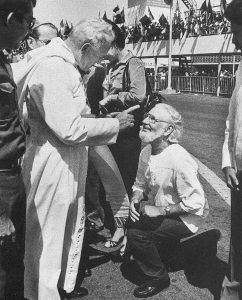 When Pope John Paul II scolded Fr. Cardenal upon the his arrival in Nicaragua, it was because Cardenal had collaborated with the Marxist Sandinistas and, after the Sandinista victory in 1979, he became their government’s Minister of Culture. His brother, Fr. Fernando Cardenal S.J. also worked with the Sandinista government in the Ministry of Education, directing a successful literacy campaign. There were a handful of other priests working in the government, as well.
  We know that if there are tribal circles on that foundational paper, they are more like the circles on a Venn diagram, not only touching but overlapping. That was true of the ancient Hebrews; their tribalism might demand ethnic purity, but they never achieved it; the Old Testament demonstrates that, again and again! Modern ideological tribalism is no different. Ideologies, religious beliefs, political opinions differ in many ways, but in many others they share much in common; they overlap. People’s lives and opinions overlap, but ideological tribalism encourages us to hear only the differing opinions and blinds us to our similar lives.
 Some translations of the Bible like to add to it. They insert explanatory headings and titles into the teachings of the authors of scripture or before the parables or important elements in Jesus’ life and teachings. The New International Version, for example, adds the title “The Parable of the Rich Fool” to our gospel text for today. It breaks up our reading from Ecclesiastes with three such headings: “Everything Is Meaningless,” “Wisdom Is Meaningless,” and “Toil Is Meaningless.” If you have a bible like that, take those titles and subheadings with a very large grain of salt because they are simply not accurate!
 When I was practicing law and serving as the chief legal officer of the Episcopal Diocese of Nevada, there was a church member (of another congregation than mine) who always greeted me with a lawyer story. “What’s the difference between a lawyer and ….? ” “There was a lawyer who went to heaven ….” I think I’ve heard all the lawyer jokes, and I considered starting with one this morning. If I had had more than a passing acquaintance with Jim McKee, I might have done so. But I didn’t know Jim, so I won’t do that. Instead, I’ll begin with some poetry.
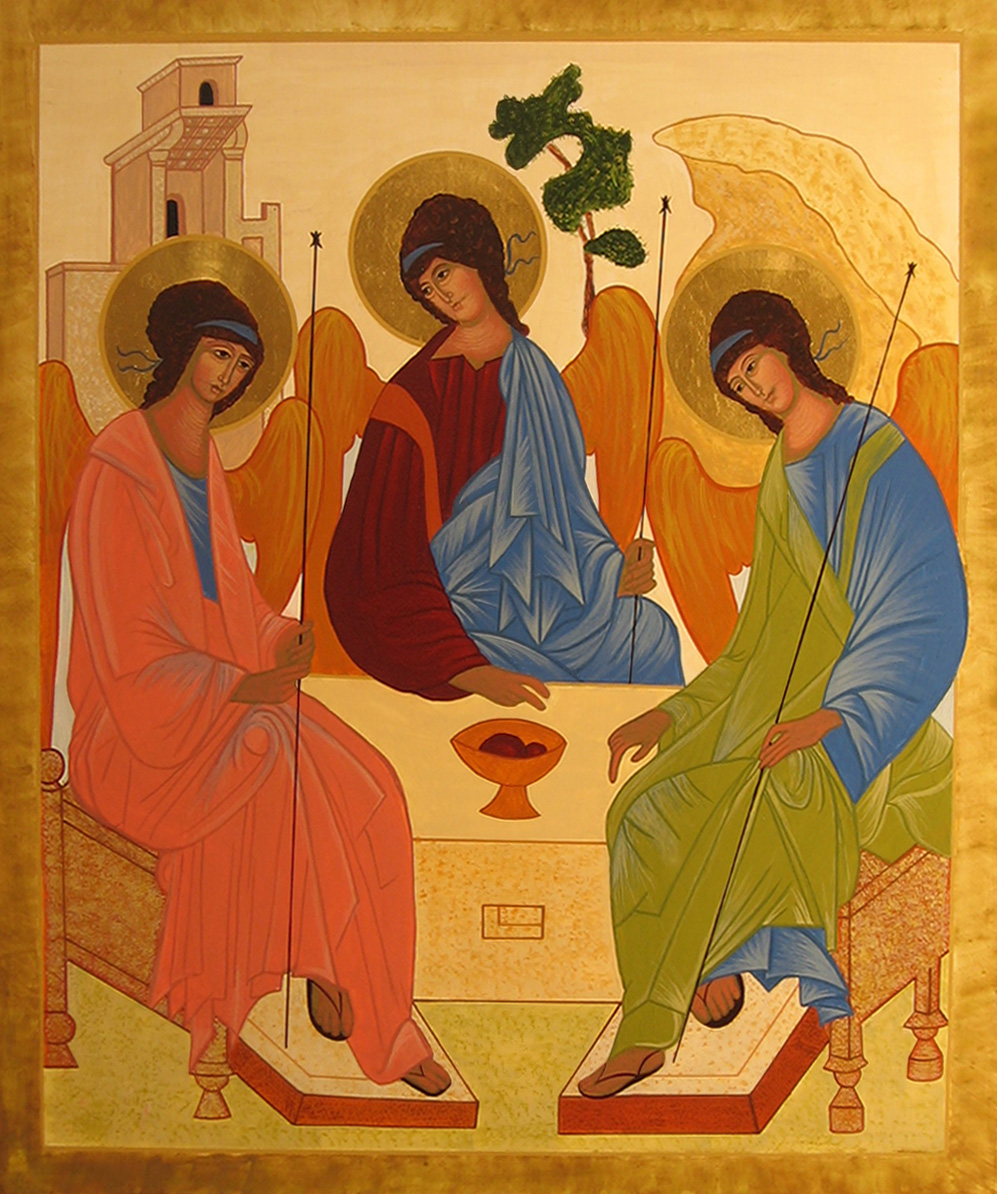 St. Paul’s Parish hosted the weekly “ice cream social” that accompanied the Community Band Concerts on Friday evening on the Town Square during summer. We’ve done this before although not for a few years (we tried for three years running to be host, but each Friday we were assigned during those years there was a thunderstorm and the event was rained out).
  Sometime during the summer of 1969 (for the life of me, I can’t recall exactly when) and again in August of 1973, I was privileged to walk along the Promenade des Anglais on the Mediterranean waterfront of Nice. I was very young (or so I now consider myself to have been) and, on that second occasion, very much in love (or so I then considered myself) with a young French woman named Josienne. We quickly lost touch when that summer and my time as a student at the Sorbonne came to an end, but I have always fondly remembered her. Nice was her home town and, I suspect, is probably her home now. And I wonder, now, where she was on the evening of Bastille Day 2016. I pray she was not on the Promenade.
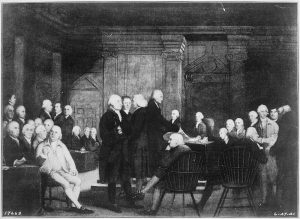 Last Monday, we celebrated our country’s 240th birthday in a way that is quite different from other celebrations of what we might call “national identity days” around the world.
 As many of you know, this past week was a harrowing one for my wife and for me; specifically, Wednesday was one of those days you would rather not have to live through. In the afternoon, I was told by a urologist that I probably have prostate cancer, and later that night Evelyn nearly died from pulmonary embolism. She is OK now – I will be leaving right after this service to bring her home from the hospital – and my diagnosis will be either confirmed or proven wrong by a biopsy in about a month.
  The week of the summer solstice was an interesting one in the Funston household.

