====================
A “Rector’s Reflection” offered by the Rev. Dr. C. Eric Funston in the August 2016 issue of “The Epistle,” the newsletter of St. Paul’s Episcopal Church, Medina, Ohio, where Fr. Funston is rector.
====================
 Sometime during the summer of 1969 (for the life of me, I can’t recall exactly when) and again in August of 1973, I was privileged to walk along the Promenade des Anglais on the Mediterranean waterfront of Nice. I was very young (or so I now consider myself to have been) and, on that second occasion, very much in love (or so I then considered myself) with a young French woman named Josienne. We quickly lost touch when that summer and my time as a student at the Sorbonne came to an end, but I have always fondly remembered her. Nice was her home town and, I suspect, is probably her home now. And I wonder, now, where she was on the evening of Bastille Day 2016. I pray she was not on the Promenade.
Political and religious violence is difficult to understand. One may understand having strong, even vehement, political opinions and beliefs, but the need some have to act out of their political or religious beliefs in ways that are harmful, often fatal, to others may seem unfathomable. We have seen a number of these incidents since the turning of the century. The new millennium began with the horrendous tragedy of September 11, 2001, and has continued with bombings, mass shootings, and multiple casualty events such as happened in Nice. And one need not even mention kidnappings and murders of hostages . . . and wars which seem never to end. What makes violence, especially lethal violence, so attractive?
Many theorists of religion have posited something called “the myth of redemptive violence.” Scholars who have written about this myth include Joseph Campbell, Rene Girard, and Carl Jung. Seminary professor Walter Wink wrote a short essay about “redemptive violence” in 1999 in which he wrote:
The belief that violence ”saves” is so successful because it doesn’t seem to be mythic in the least. Violence simply appears to be the nature of things. It’s what works. It seems inevitable, the last and, often, the first resort in conflicts. If a god is what you turn to when all else fails, violence certainly functions as a god. What people overlook, then, is the religious character of violence. It demands from its devotees an absolute obedience-unto-death.
This Myth of Redemptive Violence is the real myth of the modern world. It, and not Judaism or Christianity or Islam, is the dominant religion in our society today. When my children were small, we let them log an unconscionable amount of television, and I became fascinated with the mythic structure of cartoons. This was in the 1960s, when the ”death of God” theologians were being feted on talk shows, and secular humanity’s tolerance for religious myth and mystery were touted as having been exhausted. I began to examine the structure of cartoons, and found the same pattern repeated endlessly: an indestructible hero is doggedly opposed to an irreformable and equally indestructible villain. Nothing can kill the hero, though for the first three quarters of the comic strip or TV show he (rarely she) suffers grievously and appears hopelessly doomed, until miraculously, the hero breaks free, vanquishes the villain, and restores order until the next episode. Nothing finally destroys the villain or prevents his or her reappearance, whether the villain is soundly trounced, jailed, drowned, or shot into outer space.
* * *
The myth of redemptive violence is the simplest, laziest, most exciting, uncomplicated, irrational, and primitive depiction of evil the world has even known. Furthermore, its orientation toward evil is one into which virtually all modern children (boys especially) are socialised in the process of maturation. Children select this mythic structure because they have already been led, by culturally reinforced cues and role models, to resonate with its simplistic view of reality. Its presence everywhere is not the result of a conspiracy of Babylonian priests secretly buying up the mass media with Iraqi oil money, but a function of values endlessly reinforced by the Domination System. By making violence pleasurable, fascinating, and entertaining, the Powers are able to delude people into compliance with a system that is cheating them of their very lives. (Walter Wink, The Myth of Redemptive Violence, in The Bible in TransMission, Bible Society of the UK, Spring 1999)
As I contemplate the tragedy of Nice (and Baghdad and Istanbul and Dakha and Orlando and . . . the list goes on) and the pervasiveness of violence seen as a “solution,” the Medina Town Square is filled with teens and millennials (20-somethings and 30-somethings) staring at their smartphones chasing down cartoon monsters. Pokémon Go is an “augmented reality” game in which players capture, battle, and train virtual creatures, called Pokémons, which appear (through the game’s use of the GPS and camera on the player’s smartphone) superimposed upon the real world image on the player’s phone’s screen.
I’m not about to suggest that the violence done to Pokémons in Uptown Park is in any way like the slaughter of Bastille Day revelers or of Pulse nightclub patrons, nor that the players of Pokémon Go are equivalent to the Orlando shooter, the Baghdad bomber, or the Nice truck driver. Nonetheless, the coincident vision of people fighting and capturing “augmented reality” cartoon characters with other people fighting and killing human beings in “real reality” bothers me; the game augments my reality! Wink’s analysis of cartoons as reinforcing a “simplistic view of reality” thus promoting the myth of redemptive violence seems particularly applicable to the Pokémon Go phenomenon.
Maybe I’m over-reacting to the recent mass casualty attacks, particularly to what happened in Nice because of my fond memories of Josienne and the city itself, but maybe not. Jesus told us to “turn the other cheek” (Mt 5:39) and “put down [our] sword[s]” (Mt 26:52). I’m troubled by games that teach our children a different and contradictory lesson. My hope is that users and parents of users will play the game responsibly and always remember that it is a game, not real life; my hope is that the real life lessons of the Gospel will prevail in their lives.
I believe that video games and their progeny (like this new craze) are fine as far as they go, this one actually better than its predecessors since it gets people up and outside, actually getting some exercise as they walk to and through the parks and public spaces (including churches) that the game populates with its characters. Still, I think users and parents of users should be aware of the potential power and consequences of such games (and not just the danger of walking off a cliff, as two players did in Southern California)!
I am sure that you are as troubled by political and religious violence as I am. I hope that my struggles to articulate misgivings and concerns, to work through the attendant theologies, and to express the hope that is always present are helpful to you; it helps me to write them out.
====================
A request to my readers: I’m trying to build the readership of this blog and I’d very much appreciate your help in doing so. If you find something here that is of value, please share it with others. If you are on Facebook, “like” the posts on your page so others can see them. If you are following me on Twitter, please “retweet” the notices of these meditations. If you have a blog of your own, please include mine in your links (a favor I will gladly reciprocate). Many thanks!
====================
Father Funston is the rector of St. Paul’s Episcopal Church, Medina, Ohio.
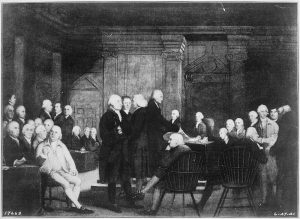 Last Monday, we celebrated our country’s 240th birthday in a way that is quite different from other celebrations of what we might call “national identity days” around the world.
 As many of you know, this past week was a harrowing one for my wife and for me; specifically, Wednesday was one of those days you would rather not have to live through. In the afternoon, I was told by a urologist that I probably have prostate cancer, and later that night Evelyn nearly died from pulmonary embolism. She is OK now – I will be leaving right after this service to bring her home from the hospital – and my diagnosis will be either confirmed or proven wrong by a biopsy in about a month.
  The week of the summer solstice was an interesting one in the Funston household.
 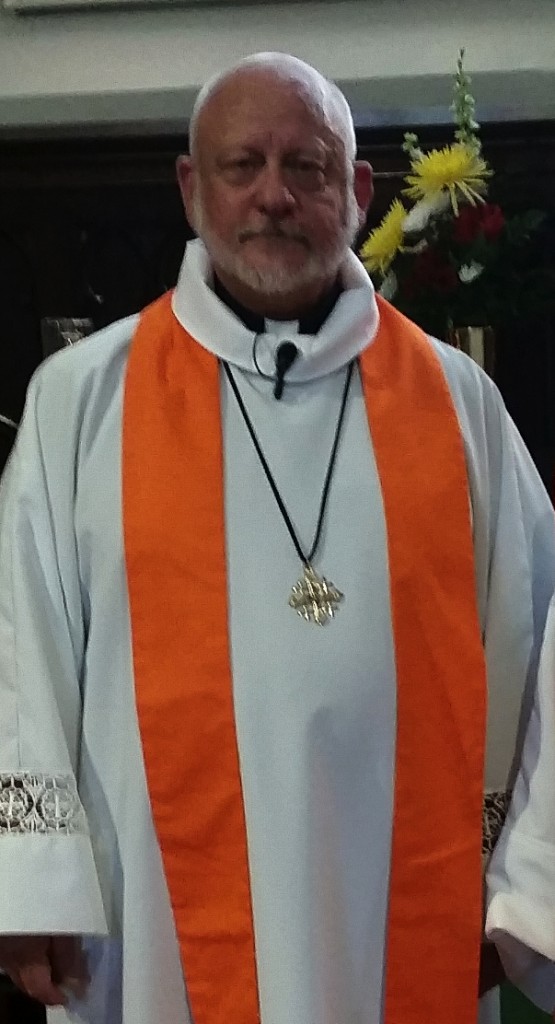 Twenty-four years and 363 days ago I was made a priest; some what more than a year more than that, I have been a deacon. I have been in parish ministry for more than 26 years and on Tuesday I will celebrate the 25th anniversary of my ordination to the Sacred Prebyterate.
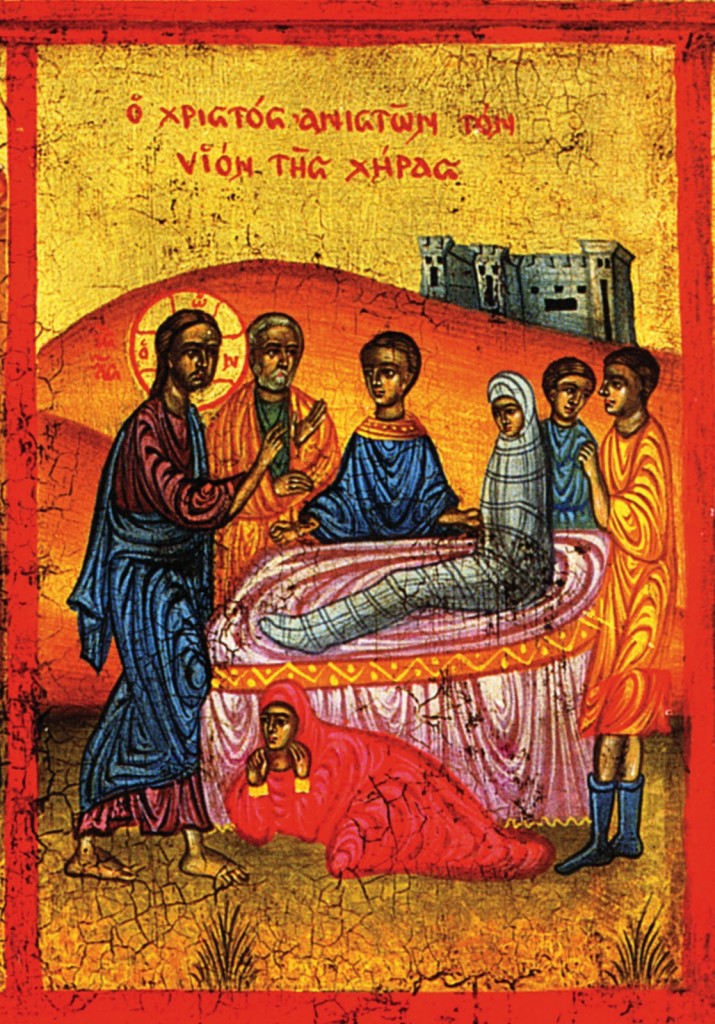 I am convinced that there is no grief quite so profound as that of a mother whose child has died. I know that fathers in the same situation feel a nearly as intense sorrow at the death of their sons or daughters, but having spent time with grieving parents, I am convinced that the grief of a mother faced with the loss of her child is the deepest sadness in human experience.
 The year that I was born was the worst of the mid-20th Century polio epidemic; about 55,000 Americans contracted the disease that year and more than 3,100 died, mostly children. As a society, we decided that that much illness and death was simply unacceptable, and an all-out effort was underway to put an end to it. Within just a few years, Jonas Salk and his team developed the vaccine which ended the epidemic; a few years later, the Sabin oral vaccine was developed and polio has been just about eradicated throughout the world. (Graphic from
  On January 21, 2013, Hadiya Pendleton, a 15-year-old high school student from the south side of Chicago, marched with her school’s band in President Obama’s second inaugural parade. One week later, Hadiya was shot and killed. She was shot in the back while standing with friends inside Harsh Park in Kenwood, Chicago, after taking her final exams. She was not the intended victim; the perpetrator, a gang member, had mistaken her group of friends for a rival gang.
  Why are we here? Well, for a wedding, of course. But, more specifically, you may be wondering why an old Episcopal priest from Ohio is here in an 18th Century Puritan meeting house trying to do 21st Century Anglo-Catholic ritual. The short answer is that Chris asked me to. Chris was my music director at St Paul’s Church in Medina, Ohio, when he was a student at Oberlin (which his mother reminded me yesterday was just a few weeks ago), and we’ve been friends ever since.
  Dr. Robert Waldinger is the current director of the Harvard Study of Adult Development which is something called “a longitudinal cohort study” in which the same individuals are observed over a long study period. It is the longest running study of this kind in history. For 75 years researchers have tracked the lives of 724 men from all walks of life.
 There’s a lady who’s sure

