That Which We Have Heard & Known

Occasional thoughts of an Anglican Episcopal priest

Page 122 of 130

Medicine for Society’s Ills: Sermon for the 8th Annual Medina County Red Mass

I’d like to share with you two vignettes from the life of Eric Funston and, I promise you, I will tie these in with the readings from Scripture that we have just heard, readings which the Common of Saints bids us read when we celebrate the life and ministry of St. Luke the Physician. The first vignette is the most recent.

The River Sligachan, Isle of Skye, Scotland

The River Sligachan, Isle of Skye, Scotland

A few weeks ago, my wife Evelyn and I had the opportunity to spend time together touring Scotland and, as part of that trip, we spent time in the Inner Hebrides, particularly visiting the Holy Island of Iona and the Isle of Skye. Our trip to Iona started in the port town of Oban, where we caught the ferry to the island of Mull. The Oban ferry takes you to the town of Craignure where you disembark and then drive (if you are daring) or take a bus for the hour-and-half, 37 miles to the village of Fionnphort where you board another ferry for the short voyage to the Holy Island. We opted to take the bus and so we were both able to enjoy scenery along the road, which (by the way) is a single-track two-way highway with wide places every few miles to permit traffic to pass in each direction. For much of the length of this highway one follows the River Lussa, which is a wide and, when we were there, very active and swift-flowing river. The River Lussa flows through the Lussa Glen (“glen” is the Scots word for a valley) on either side of which are very high, very steep hills; as someone who comes originally from the intermountain west I would call them mountains, but they are certainly bigger than any hill or mountain I’ve seen in Ohio! The source of the River Lussa, and all the rivers on the Isle of Mull, is the dew that collects and the rain that falls on these hills.

The same is true on the Isle of Skye which we visited a few days later. We stayed there in the town of Portree, the unofficial capital of Skye, and drove to visit other parts of the island, including a drive to the village of Talisker, home of the whisky of the same name. On the way we drove along the River Sligachan, which for nearly its entire length that day was white water, a rushing torrent of foam! As on Mull, the source of the river is merely the dew and rain falling on the high hills around it.

What was most fascinating for us was watching the water come down the hillsides to feed these rivers. You could see, through the mist and rain, its beginnings in small streams high on the hillsides, streams which then joined with others, and then others until they formed beautiful, dazzling waterfalls. We’ve been places in the world where they have made tourist attractions of the local waterfall … there are dozens, if not hundreds, of waterfalls feeding the rivers of Mull and Skye that would be many of those tourist-attraction waterfalls to shame. To be honest, after the first twenty minutes or so of the drive from Craignure to Fionnphort, or the drive from Portree to Talisker, I was sort of suffering waterfall fatigue: “Oh, yeah, another waterfall … great…” And all these waterfalls feeding these rushing, gushing, foaming, frothing rivers making their way to the sea.

Second vignette … about twenty-five years ago I was a litigator specializing in medical malpractice and medical product liability defense. I was also one of the five managing shareholders of the largest law firm in the state of Nevada: twenty-two shareholders, twenty-eight associates, and a whole slew of support staff. We owned our own 60,000-square-foot, four-story office building, on the third floor of which was our law library, the largest private law library in the state. Adjacent to the law library we had a large conference room which we called “The War Room”. When someone was in trial, it became our command headquarters; it was where we began our day before heading to the courthouse and it was where we ended our day debriefing what had happened in the trial. It was also where we kept the office liquor cabinet.

Often, when I was in a trial, after the client would leave, after the associates and the paralegals would go home, I would pour myself a drink, go into the library, and just sit there and look around at all those law books – this was in the days before Lexis/Nexis and Westlaw and computer-assisted legal research, when you had to know the key-number system and the index to ALR – I’d sit there and just feel the presence of all that law! … the Pacific Reporters, the Federal Reporters, the USCA, the Nevada Statutes, the Restatement of the Law, Corpus Juris and ALR, those odd tax publications by CCH and BNA, the specialty law journals to which we subscribed … all that massive flood of legal wisdom. Just sit there in amazement at the accumulated wisdom of the American legal system. Maybe some of it would soak into me by osmosis….

So who is this Luke we are commemorating this evening and why are we doing so at a service whose avowed purpose is to seek God’s guidance for those who sit on the Bench and those who appear at the Bar?

Well, to answer the second question first, St. Luke’s feast day was yesterday so it just seemed appropriate to recognize that and use the lessons assigned his feast today. Who he was is the only Gentile writer whose words appear in the New Testament, a Greco-Syrian physician from the city of Antioch who accompanied St. Paul in his later travels, perhaps was even with him in his imprisonment and at the time of Paul’s martyrdom (as our odd little reading from Paul’s Second Letter to Timothy suggests – “Only Luke is [still] with me”). Luke is generally acknowledged to be the author of both the Gospel which bears his name and the Book of Acts. Because he was a physician, the Common of Saints bids us read the portion of the Book of Ecclesiasticus, also called Sirach or Ben Sira, that we heard this evening, and it is to that Scripture that I would like to turn now.

The author of this text, Yeshua ben Sira, sings the praises of physicians, as we heard, and then goes on to praise others who contribute to society, the farmers and the artisans, the smith and the potter, but he does so with this interesting introduction: “The wisdom of the scribe depends on the opportunity of leisure; only the one who has little business can become wise.” Acknowledging that society depends on these tradesmen and craftspeople, he nonetheless says, “They do not sit in the judge’s seat, nor do they understand the decisions of the courts.” Although “they maintain the fabric of the world, and their concern is for the exercise of their trade,” the need to set hand to plow or to potter’s wheel, to spend their hours “on business” makes it impossible for them to “become wise”. “How different, says Ben Sira, “the one who devotes himself to the study of the law….”

That famous Ohioan William Howard Taft, Secretary of War, President, Chief Justice of the United States Supreme Court, once said, “I love judges, and I love courts. They are my ideals, that typify on earth what we shall meet hereafter under a just God.”

Ben Sira seems to have been of a similar mind. He believe that God would direct the counsel and decision-making of judges: “If the great Lord is willing, he will be filled with the spirit of understanding; he will pour forth words of wisdom …. He will show the wisdom of what he has learned …. Many will praise his understanding …. Nations will speak of his wisdom, and the congregation will proclaim his praise.”

So Ben Sira begins praising those who study and practice medicine and ends praising those who study and practice the law; as physicians and surgeons are to the individual, so lawyers and judges are to the community. As the former heal the ills of the body, the latter deal with the ills of society. Perhaps this is why Luke the Physician, who in his Gospel relates several individual healing miracles of Jesus, tells of the beginning of Jesus’ ministry not in terms of medical or physical healing, but in terms of social healing. Jesus, he writes, took the scroll of the Prophet Isaiah, and proclaimed in the synagogue that he had been anointed to bring good news to the poor, to proclaim release to the captives and freedom to the oppressed, to right the social wrongs usually addressed by the law and by the courts.

Ben Sira wrote that physicians and pharmacists extract medicines out of the earth, and that from God in this way health spreads over all the earth. I want to suggest to you that societal health promoted by the rule of law is much the same. Remember the dew and the rain falling on the high hills of the Scottish highlands and islands, coming down into a thousand thousand little streams and rivulets, joining into larger streams and cataracts, combining into great waterfalls, and eventually great rushing wild rivers. The law is formed in the same way, from a thousand thousand sources … from agreements between friends, from contracts among businesses, from proverbs and maxims by which we govern our lives, from the words of rulers, the founders of nations, legislative bodies, legal scholars, and yes, even judges in the courts. From a thousand thousand sources, the rules of society combining and interacting and joining together to form that great wild rushing river of law!

That is what I would marvel at on those late nights sitting along surrounded by the statute books, the case reports, the legal encyclopedias and law journals. Our library was like a great reservoir in which all of that wisdom, all of that great rushing river of law was gathered and stored, waiting someone to extract from it just the right rule, just the right canon, the right decision to solve this particular issue. Ben Sira wrote that the physician and the pharmacist extract medicine out of the earth, and that is what lawyers and judges do, extract from that great flood of law the solutions to many of society’s problems, the legal medicines to cure society’s ills.

The humorist Ambrose Bierce defined a lawsuit as “a machine which you go into as a pig and come out as a sausage.” I prefer to think of the work of our judges and courts in a different way – using a different metaphor.

Not all of the water that runs down the hills of Scotland flows into those rivers and out to the sea. A good deal of it soaks into the earth, filters down through the soil and then through lime stone and eventually forms aquifers that accumulate on the top of the granite which is the bedrock of Scotland; it flows in underground streams to emerge in various places as beautifully clear spring water. And then the Scots do this wondrous thing … they mix it with malted barley in the process of extraction, fermentation, and distillation that produces whisky. (Whisky gets its name, by the way, from the Gaelic uisce beatha, the “water of life”.)

It seems to me that rather than Bierce’s sausage grander, this is a better metaphor for what our courts do. It’s the lawyers’ job to bring before the judge, from that great reservoir of all that law from all its sources, the particular canons, statutes, maxims, and rules that he or she thinks best apply to the facts of the case. Lawyers do this by bringing motions, settling proposed jury instructions, filing briefs in the trial court or on appeal, and making oral arguments before the courts. Judges then have the task to take what the lawyers present and, if you will, mix it around with the facts of the case, sort of let it ferment and then distill out of all that the resolution, the answer that best provides justice and equity, that treats this particular wound on the body of society.

I know its fashionable for some politicians to decry and criticize “activist judges”, and to suggest that judges should only apply the law not make it, but that betrays a fundamental misunderstanding of the role of our courts. If that were all judges were supposed to do, we could program computers to take care of our lawsuits and criminal prosecutions – and dystopian fiction and B-grade science-fiction movies are filled with stories predicting (accurately, I think) what the horrible result of that would be – a sausage grinder, indeed! We do well to remember the words of the great jurist Oliver Wendell Holmes, Jr.: “The law embodies the story of a nation’s development through many centuries, and it cannot be dealt with as if it contained only the axioms and corollaries of a book of mathematics.” The work of the court is like “painting a picture, not doing a sum.”

No! Judges are supposed to be activists! Courts and judges have always made law; in fact, courts and judges were making laws before there were legislatures to do so! And even now, because practically every case brought to court is unique unto itself, as the rules and maxims, the statutes and precedents are presented and applied to it, each case creates a little bit of new law, sometimes in unanticipated ways.

Just as the water that flows down the Scottish hillsides, even if it happens by some accident to mix with a some grain, doesn’t become whisky, the “water of life”, unless a master distiller sets his or her hand to it, his or her skill and knowledge and wisdom, so all those rules and maxims and statutes in all the law books don’t solve society’s problems, don’t treat society’s ills, unless a learned judge applies his or her skill and knowledge and wisdom.

Let us pray that, in the words of Ben Sira, that the great Lord will fill the judges of our courts with the spirit of understanding; that they will pour forth words of wisdom. Let us pray that the Lord will direct their counsel and knowledge, that they will have the leisure to become wise, and they will show the wisdom of what they have learned, so that the poor in our community will receive good news, the captives will be released, and all shall be freed from oppression.

In the Name of the Father, and of the Son, and of the Holy Spirit. Amen!
Give Back to Caesar…. Give to God: A Sermon for Proper 24A

Once again we are in the 22nd Chapter of Matthew which we began last week with Jesus telling that strange parable of the wedding banquet, but to truly understand what is going on here we have to go back to Chapter 21.

At the beginning of Chapter 21, Jesus tells two disciples to go to Bethphage and untie the foal of a donkey which he needs to ride into the city of Jerusalem. When I tell you that, you should immediately realize that this story takes place on or shortly after Palm Sunday; in fact, today’s confrontation takes place on the Monday after Palm Sunday. Jesus rode into the city in triumph and was haled as a king, as the One who comes in the Name of the Lord. He had gone to the Temple and driven out the sellers of sacrificial animals and the money-changers. After that, he returned to Bethany and spent the night, probably in the home of his friends Mary and Martha. The next day he went back to the Temple and began teaching in parables, during which he is confronted by various power groups – the Pharisees, the Sadducees, the Herodians, and probably others.

In this conversation, Matthew tells us that Jesus’ antagonists are the Pharisees and the Herodians. That’s important information because any sort of cooperative action between those two groups was darn near impossible. Matthew is saying something here like, “Harry Reid and John Boehner went together to ask Jesus this question.” It’s like saying that a Tea Partier and a participant in Occupy Wall Street took a united stand on something.

Pharisees, of course, were the Jewish sticklers for the Law. They insisted that righteousness required adherence to every little “jot and tittle” of the Mosaic rules. Herodians on the other hand weren’t Jews at all! They were Idumeans who had come to rule in Jerusalem with their king, Herod, as puppets under the Romans; they didn’t give one wit for the Law. But here they are confronting Jesus together because both felt threatened by him.

They come and ask what sounds like a simple question: Under the Jewish Law is it permissible, for a Jew, to pay taxes to the Romans? They’re trying to trap Jesus – if he says “Yes” he’ll lose the support of religious Jews and his movement will fizzle; if he says “No” he’ll be liable to arrest and prosecution by the Romans as political troublemaker and his movement will lose its leader and fizzle. They win in either case.

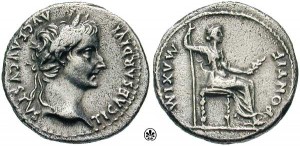
Jesus, however, is not going to fall for the trap. He asks to see one of the coins that would be used to pay the tax. Doing so, he traps them and points out how ridiculous their alliance is. The Pharisees, under the Law, could not possibly have possessed the coin in question and would never have brought one into the Temple precincts. Under the Jewish Law it was absolutely forbidden to bring into the Temple anything bearing an image, especially something bearing a religious image, an idol of a foreign religion. On one side, the coin in question, a denarius, would have had an image of Caesar and the words, Augustus Tiberius Caesar Divi Augusti Filius – “Augustus Tiberius, Emperor, son of the Divine Augustus”; on the other side, Caesar’s title Pontifex Maximus– “High Priest”. In other words, the coin was a religious object; it proclaimed the creed of the emperor-worship cult which was part of the Roman civic religion. The Herodians, client rulers of the Romans, would have had no problem with the coin, but it would have been anathema to the Pharisees. By asking for the coin, and getting a Herodian to produce one, Jesus was demonstrating to everyone who utterly ridiculous this alliance between the two parties was.

Jesus’ answer to the question, though, is what truly exposes the hypocrisy of their partnership: “Give [back] therefore to the emperor the things that are the emperor’s, and to God the things that are God’s” (Matt. 22:21). (Our New Revised Standard Version of the text says to “give” to the emperor – the word “render” is more familiar to many of us from the King James Version – but the Greek verb is apodidomi, which means to “give back”, to “return” or to “repay”.)

Jesus’ answer is tricky; it gets to the very heart of the matter and points out how very different these two parties are. The Herodians would be perfectly happy with Jesus’ reply; they would be satisfied with an answer that seems to suggest that we owe equal allegiance to the governing authorities and to God, that the political realm and the religious realm place separate but equal demands upon us and that we are obliged to obey both. There are plenty of modern American folks who would agree with them, too.

To the Pharisees, on the other hand, “The earth is the Lord’s and all that is in it, the world and all who dwell therein.” (Ps. 24:1 They would that morning have said in their daily prayers, “It is our duty to praise the Master of all, to ascribe greatness to the Molder of primeval creation” (the Aleinu); thus, they would have prayed that God’s Name be “exalted and sanctified in the world that he created” (the Kaddish). If, as these prayers suggest, all things belong to God, then what can possibly be left over to return to the emperor? Both the Pharisee and the Herodians are left wondering what Jesus really means. Whose side (if any) he is really on?

Of course, the answer to that question is that Jesus is on neither side of that division. Jesus is on God’s side.

But we, like the Pharisees and the Herodians, are left here wondering, what does this answer mean for us? How are we to understand and live out Jesus’ answer?

By answering, “Repay to Caesar what belongs to Caesar,” Jesus is not unambiguously saying, “Go ahead, pay your taxes!” Rather, by placing the emperor and God in parallel, Jesus also makes parallel their images. They give him the denarius and he gives it right back to them with this question, “Whose head is this, and whose title?” And, of course, they answer, “Caesar’s.” “OK, fine,” says Jesus, “it must be his. Give it back to him.” The second half of the answer, “and [give] to God what belongs to God,” is comprehensive and includes all areas of life. Having pointed out whose likeness is on the coin, Jesus answer demands that we then ask ourselves and answer the further question, “What – or (better) who – bears God’s image?”

After this confrontation, the 22nd Chapter of Matthew contains two more challenges to Jesus. The Sadducees, after the Pharisees and the Herodians walk away, present their rather silly hypthetical about the imaginary woman who married seven brothers in succession and ask, “Whose wife will she be in the afterlife?” (in which the Sadducees, by the way, don’t even believe). Then the kicker … a lawyer asks him, “Teacher, which commandment is the greatest?” Jesus, as we will hear in next week’s Gospel lesson, is that loving God with one’s whole heart, mind and soul is the first and greatest commandment, and the second, loving one’s neighbor as oneself, is just as important. Humans, not coins, bear God’s true image, and no edict of Caesar, no tax imposed or law declared by the secular government, can absolve Jesus’ followers from the mandate to love God and to see and serve God in our neighbor.

To what seemed like a trick question Jesus responded, “Give to Caesar what is Caesar’s, and to God what is God’s.” On that ancient denarius that was given to Jesus was an image of Caesar, merely money was owed to him, whereas every human being bears the image of God, implying that each of us, and all of us together, “render to God,” the Master of all and the Molder of creation, our selves, our entire selves wholly and without reservation.

Let us pray:

Almighty and eternal God, so draw our hearts to you, so guide our minds, so fill our imaginations, so control our wills, that we may be wholly yours, utterly dedicated to you; and then use us, we pray, according to your will, and always to your glory and the welfare of your people; through our Lord and Savior Jesus Christ. Amen.

Where’s the Groom? – A Sermon for Proper 23A

Today in the lessons from Scripture we’ve heard two stories – one that the Book of Exodus gives us as a true story from the history of our ancestors in the faith of Yahweh, the other a parable told by Jesus to instruct the followers of that faith.

The historical tale tells us that when Moses went up Mt. Sinai to receive the Tablets with the Ten Best Ways (as Mother Kay referred to the Ten Commandments last week), the people left down at the base camp got a little anxious and decided they needed some sort of focus object for their worship, an idol (in other words). So they appealed to Moses’ brother Aaron to “make us a god”.

Now they hadn’t yet heard the Law that God had given to Moses, the Law in which God had said, “You shall not make for yourself an idol, whether in the form of anything that is in heaven above, or that is on the earth beneath, or that is in the water under the earth,” the Law in which God specifically commanded, “You shall not make gods of silver alongside me, nor shall you make for yourselves gods of gold.” They hadn’t yet heard it, but they broke it in ignorance because that is exactly what Aaron and these Hebrews did!

Aaron took their golden jewelry, melted it down, and cast it into the form of a Golden Calf, and then the people “offered burnt offerings and brought sacrifices of well-being,” they “sat down to eat and drink, and rose up to revel.” In other words, they threw a party.

The parable is also about a party. Jesus tells his audience that the kingdom of heaven is like a wedding reception hosted by a king for his son. Those who were initially invited made light of the occasions and killed the messengers who brought their invitations, so the king sent his army to wipe them out. That, as you remember is what God had threatened to do with the revelers back at Mt. Sinai. As we might expect, that story in Exodus tells us that God got mighty angry about the Golden Calf and threatened to wipe out the Hebrews whom he had just saved from the Egyptians and start over. If not for Moses’ pleas on their behalf, that’s what God would have done.

The king in Jesus’ parable doesn’t exercise the same restraint, however. “His troops destroyed those murderers, and burned their city.” Then the king sends his servants out into the highways and byways to bring in whomever they can find to fill the banqueting hall so there can be a party. They “gathered all whom they found, both good and bad; so the wedding hall was filled with guests.”

Now if the parable ended there, we could all breathe a sigh of relief. Two stories of God’s mercy and compassion. In the historical tale, God relented and “changed his mind about the disaster that he planned to bring on his people.” In the parable, the king, who clearly represents God, (although he justly condemns the murderers) eventually extends welcome to all sorts and conditions of human beings, the good and the bad. Everybody is welcome; nobody is excluded. We like this! It makes us feel good; it’s warm and fuzzy.

Unfortunately for those good feelings, however, the parable doesn’t stay with that warm and fuzzy ending. Jesus adds a post-script: “When the king came in to see the guests, he noticed a man there who was not wearing a wedding robe, and he said to him, ‘Friend, how did you get in here without a wedding robe?’ And he was speechless. Then the king said to the attendants, ‘Bind him hand and foot, and throw him into the outer darkness, where there will be weeping and gnashing of teeth.'” Not so warm and fuzzy anymore…. In fact, we’re confused!

There is a tradition of exegesis going back centuries that argues that it was an ancient wedding tradition that the groom’s father would host the nuptial feast and provide everything necessary: the food, the wine, the place, the decorations, and the festal garments for the guests. Unlike today’s weddings, you wouldn’t have to rent your own tuxedo or buy your party dress; the host would supply it for you. Thus, the guests from the streets, including the one who eventually gets thrown out, would have had the opportunity to dress appropriately as they arrived. This one fellow, however, failed to honor his host’s generosity by failing to put on the proffered garment. Apparently, it was St. Augustine, the early Fifth Century bishop of Hippo, who first made this assertion, but modern scholars have failed to turn up any historical evidence to support it.

Another typical interpretation of this parable and the unhappy guest’s failure to put on a wedding garment it is analogous to putting on righteousness, to our obligation to change our life to one of penitent joyfulness as Susan Pendleton Jones, director of special programs at Duke Divinity School, argues in her fairly standard exegesis of this parable:

Jesus is issuing the invitation for all to join him as God’s guests in a banquet feast called the kingdom of heaven.

Life in the kingdom is a party where God is the host and all of us have received a royal invitation. Yet some of us come unprepared, as a second parable reminds us. One guest is improperly dressed, and is thrown out of the banquet – quite a contrast to the inclusive tone of the previous parable. To wear a wedding garment is to know the significance of the occasion, to allow God’s gracious invitation to change our lives, and to live accordingly. The dinner guest has received a gift from the king – the invitation to a joyous, elaborate feast – to which he has not responded appropriately. When we receive a gift such as salvation or forgiveness, we are called to lives of penitent joyfulness.

All are invited to feast at the table, but not every response is acceptable. We are called to repent in preparation or the party, not because we have to but because we know we are entering into the presence of a gracious, forgiving God. We will be left out if we think that God’s love carries with it no desire for response from us. Though we are often tempted to play the host, these parables together confirm that we need God to be the host – not only for the grace-filled invitation to the banquet, but also for the expectation of holy living that God presumes of those in attendance. Grace is amazing, but so God’s desire for our response. (Party Time, The Christian Century, Sept. 22-29, l999, p. 897)

All of that is certainly valid commentary and there is much for us to think about there, but let me stretch our understanding here just a little by taking a different approach, one suggested by the Reformer John Calvin. It seems to me that there’s someone left out of this parable … Where’s the bridal couple? More specifically, where’s the groom? I think we have to hear and understand this parable through the lens of Scripture, not through the lens of a questionable assertion about historical wedding practices, and I think we can’t escape the verse from the Book of Revelation that tells us, “Blessed are those who are invited to the marriage supper of the Lamb.” (Rev. 19:9) We know who the groom is, but we still have to ask, in the context of the parable, where is the groom?

In the lesson from Paul’s letter to the church in Philippi today, the apostle asks his readers “stand firm in the Lord” and to “be of the same mind in the Lord.” In other letters, he expresses this same thought in a different way – in the letter to the Romans he admonished his readers to “put on the Lord Jesus Christ;” in the letter to the Ephesians, he encouraged his readers to clothe themselves with the likeness of God; and in his letter to the Galatians, he reminds all Christians that when “you were baptized into Christ [you] clothed yourselves with Christ.” John Calvin asserted that when we seek to understand this parable and meaning of putting on the wedding garment, we should look to these verses for guidance. If we do, we find that the unhappy thrown-out guest isn’t us at all! We are already clothed in our wedding garment.

We who are baptized have already clothed ourselves with Christ; we have already put on the likeness of the Lamb of God who is the groom at this wedding. So again I ask, when the one guest is tossed “into the outer darkness, where there will be weeping and gnashing of teeth,” where is the groom?
Well, we know the answer.

Open your Prayer Books, if you would please, to page 53. At the bottom of the page is the beginning of the Apostle’s Creed; I chose to look at this Rite I version because it’s rather more graphic and direct than the modern translation. Look at the last line on page 53. In the Apostle’s Creed we assert about Jesus Christ that “He descended into hell.” Perhaps you’ve just glossed over that statement in the Creed. Perhaps you’ve never had a satisfactory explanation of what Jesus was doing in hell between his death and resurrection.

Our faith teaches us that before he was raised from the dead, Jesus went to the place of the dead to retrieve those who had not heard the Gospel and to break open the iron bars of the gates of hell. In Peter’s first letter we are told that Jesus “was put to death in the flesh, but made alive in the spirit, in which also he went and made a proclamation to the spirits in prison, who in former times did not obey,” (1 Pet. 3:18-20) and that “the gospel was proclaimed even to the dead, so that, though they had been judged in the flesh as everyone is judged, they might live in the spirit as God does.” (1 Pet. 4:6)

A few years ago it was fashionable in some circles to ask “What would Jesus do?” That’s what I’m getting at asking where is the groom in the parable. The Creed and the First Letter of Peter tell where Jesus the Groom is in this parable. They tell us what he would do, what he was doing! He went to get the ones cast into outer darkness and bring them into the kingdom, to the wedding banquet with him. And that is where we, who are already clothed in Christ through baptism, are called to go as well.

I don’t know, to be honest, whether this is a “right” interpretation of this parable, or any better an interpretation of it than the more traditional exegesis of Ms. Jones from Duke or the host-provides-the-garment story from Bishop Augustine. It has been said parables work best when we stop working so hard to interpret them and instead allow them to interpret us. That’s true also of the historical stories of the Bible, stories like today’s tale of the Golden Calf.
These stories challenge us to take our clothing in Christ seriously. They encourage us not to understood ourselves as saved and going to heaven, as the guests wearing the proper tuxedo at the wedding feast, but rather, clothed in Christ, putting on the likeness of the Groom, to stand in the place of the Groom, to plead like Moses on behalf of the other, to be the one who goes into the outer darkness to retrieve and to protect the other. Isn’t that where the Groom is? Isn’t that what Jesus did and what Jesus would do? Isn’t that what we who have been clothed with Christ in our baptism should do? Then and only then can we, in the words of the Psalm, see the prosperity of God’s elect and be glad with the gladness of God’s people, only then will we glory in God’s inheritance.

Let us pray:

O God of all the nations of the earth: Remember the multitudes who have been created in your image but have not known the redeeming work of our Savior Jesus Christ, especially those who are our neighbors and friends, or the members of our own families; and grant that we, having clothed ourselves in Christ, by our prayers and our labors may bring them to know and worship you as you have been revealed in your Son; who lives and reigns with you and the Holy Spirit, one God, for ever and ever. Amen.

Last Full Day in Scotland (29 September 2011)

Today was our last full day in Scotland and also my birthday. Evie and I spent it enjoying a bus tour of a small section of the Scottish Borders. We went first to Scott’s View, a place where Sir Walter Scott is said to have spent a lot of time in contemplation seeking inspiration for this novels. We then traveled on to Melrose Abbey (which I had visited once before), making an unscheduled stop along the way in the village of Stow where we saw the “bridge to heaven”. After Melrose Abbey we went to a “garden center” called Dobbie’s for lunch – I know that sounds weird, but I’ll have more to write about that (and a lot of other things) later on. After lunch we went to Rosslyn Chapel which was made famous (or infamous) by Dan Browne in The DaVinci Code. And then it was back to Edinburgh. It was a Grey Line Tour and our bus driver and guide was Allen Fee (not sure about the spelling of his names) – if you have a chance to take the tour with Allen, he’s great!

It’s been a good day. I’ll have photos and a lot of comments about our Scottish adventure in future blog entries.

When next I write, it will be from the States!

Scotland: Loch Ness to Aberdeen – photolinks

This morning (27 September 2011) we are on our way from Aberdeen to Edinburgh through Stirling where we will spend the afternoon.

No time to write any commentary, but I have uploaded all photos to date and here are the links to the albums not yet shared here:

Urquhart Castle, Loch Ness

City of Inverness

Culloden Moor Battlefield

Highland Cows at Culloden

St. Andrew’s Cathedral, Inverness

Cardhu Distillery

King’s College, Old Aberdeen

St. Machar’s Cathedral, Old Aberdeen

City Centre, Aberdeen (including Provost Skene’s House)

Ballater, Royal Deeside, Aberdeenshire

…. More later!

Scotland: Fort William, Kyle of Lochalsh, and the Isle of Skye (21 September 2011)

After our all too brief time in Oban and on Mull and Iona, we traveled north to the Isle of Skye. A lunch stop along the way was at Fort William where we visited the local Scottish Episcopal Church (St. Andrew’s).

St. Andrew's Episcopal Church, Fort William, Scotland

St. Andrew's Episcopal Church, Fort William, Scotland

We were fascinated by the church’s baptistry and the tiles around the altar, which depicted various biblical tales. Our photos of the church are here.

Along the A87 roadway from Fort William to the Isle of Skye, we encountered this lay-by where many people have built small stone cairns. We have tried to find out what this is all about … but alas, no luck.

Small Cairns along side A87 Highway in Scotland

Small Cairns along side A87 Highway in Scotland

In any event, these small piles of stacked stones are fascinating. Here are the pictures.

Just before crossing over to the Isle of Skye (on a bridge, which some argue renders Skye no longer an island but now a headland), one passes through Kyle of Lochalsh where Eilean Donan Castle is located. We stopped and toured the castle – unfortunately, one cannot take photographs inside the castle. (This is true of many Scottish castles.)

Eilean Donan Castle, Scotland

Eilean Donan Castle, Scotland

Our photos of the outside (and some parts of the interior were photos are allowed) are here.

Arriving at our B&B, we checked in and then wandered down into the village of Portree to have an excellent dinner at a local pub called “The Isles”. The next morning our B&B host (Bob) asked what our plans were, and we asked his advice. He recommended that we go north to Uig and, on the way, visit what he called “the Faerie Glen” – an area of miniature trees, miniature hills, and a small loch. It is unsigned, so he gave us directions – one takes a single-track road through someone’s farm yard, around a bend with “crash barricades” and then (said Bob) “You’ll know when you’re there.” And, indeed, we did.

The Faerie Glen, Isle of Skye

The Faerie Glen, Isle of Skye

It is a very lovely, very strange little place … and apparently it is unique; so far as Bob knows, there is no other place like it on the whole of Skye. Here are our photographs of the Glen.

After visiting the Glen we drove into the village and visited the Uig Brewery and the Uig Pottery. Unfortunately, the brewery offers neither tours nor samples… but the pottery is wide open to public view and makes exquisite hand-thrown, hand-painted porcelains. We bought a fruit bowl!

Castle Dunvegan, Isle of Skye, Scotland

Castle Dunvegan, Isle of Skye, Scotland

And then we drove back south turning west before reaching Portree and visited Dunvegan Castle and Gardens. Again, interior photos were not allowed. Here are our photos of the exterior and the grounds. I’m sure these gardens are exquisite in the spring!

Next on our route around the Isle of Skye was our first visit to a whisky distillery – Talisker. This was a real take-you-through-the-plant tour – not an “experience” such as Jemison’s in Midleton, Co. Cork, Ireland. Our guide, Pat, was really good and explained the process of whisky making very well. And, of course, we got a taste and Evie discovered she likes smokey Scotch whisky (she’d already discovered – back in Glasgow – that she likes Drambuie, a sweet liquor made from Scotch). Here are the photos of Talisker. Unfortunately, none of them are of the interior of the distillery. Pat explained that digital photography and cell phones are not allowed in the distillery because such devices can set off explosions in the alcohol-drenched atmosphere of the plant! So no photos and cell phones have to be turned off. (The same thing was required at another distillery we later toured.)

Talisker Distillery, Isle of Skye, Scotland

Talisker Distillery, Isle of Skye, Scotland

Once we were done at Talisker, it was time to go on back to Portree. The landscape of Skye is dramatic and it was a very picturesque drive. Unfortunately, my camera just doesn’t do landscapes very well (or maybe its the photographer), so we have no photos of the Skye countryside. We wandered around Portree for a while, visiting souvenir shops (but not buying anything) and eventually having dinner at the Bistro in the Bosville Hotel. Then it was back to the B&B and to bed.

The next day we left for Inverness – and that will be in another blog entry.

Scotland: Glasgow, Loch Lomond, Mull & Iona – More Photos and a Few Comments

Glasgow, 18 September 2011 … so far this was our least favorite place in Scotland, but we had our best church experience here and found the best restaurant so far, go figure. We took a City Sightseeing Bus Tour of the city – but didn’t see anything we wanted to photograph! The city is old, tired, and dirty. I’m sure Glaswegians are proud of their city – the people at St. Mary’s Cathedral certainly seemed to be (and they were very friendly and chatty – and we met old friend AKMA [theologian AKM Adam] who is now teaching at Glasgow) – but the city doesn’t show it.

Our B&B was passable, not great. But great indeed was having lunch with our friend Elizabeth’s brother Stephen, his wife Ruth, and their two sons. Also very good was that restaurant called “The Landesdown” on Landesdown Crescent.

We went to two church services at St. Mary’s Cathedral – a Choral Eucharist on Sunday morning and Choral Evensong that evening. Both were wonderful services and at both we were made to feel very welcome!

Cathedral Church of St. Mary the Virgina, Glasgow, Scotland

Cathedral Church of St. Mary the Virgina, Glasgow, Scotland

We did take some pictures of the cathedral and of one storefront. See our Glasgow pictures here.

Leaving Glasgow, we drove to Loch Lomond going first to Balloch and Loch Lomond Shores, where the Loch Lomond Aquarium is located. We didn’t visit the aquarium, but did take a couple of photos of the Maid of the Loch paddle steamer at Balloch Pier. We drove up the west side of the loch to the village of Luss where we took a cruise of the loch islands to Balmaha and back. It was a very overcast, rainy, and windy day – as the photos reflect. After the cruise we visited the village church (a parish of the Kirk).

A Tree in the Misty Rain of Loch Lomond

A Tree in the Misty Rain of Loch Lomond

You can see our Loch Lomond and Luss photos here.

Then it was on to Oban. We hadn’t originally planned to stay in Oban; we had planned to stay on the Holy Island of Iona … but we had to change those plans and in a hurry find a B&B in Oban. We were very fortunate to find a good B&B within walking distance of Oban’s town center and the pier. Leaving the car at the B&B we walked to the town and booked the Three Isles Tour which would have given us time on Mull, Staffa, and Iona. However, the next morning at the ferry terminal it was announced that the tour was cancelled due to weather.

We were devastated! Our opportunity to visit Iona lost! So we went back to the tour booking company (two blocks away) for a refund. Fortunately, we learned there that it was only the Staffa part which was cancelled and we could still go to Mull and Iona. So we rebooked, ran back to the ferry and made our way to the Holy Island.

As we rode the bus the 30 miles or so across Mull from the ferry terminal from Oban to the ferry to Iona, we became more convinced that our decision not to stay on Iona was the correct one – without having seen Mull and its single-track road I would not have wanted to drive it. I would drive it now, but would have been very concerned driving it sight-unseen.

An advantage of taking the bus instead of driving myself was that I could actually see the scenery! We were blown away by the waterfalls that abound on Mull (and also on the Isle of Skye where we went later). These are all fed solely by precipitation – rain and condensation from cloud mist. There is no snow (or very little and none that remains) on these islands, so there’s not a snow-melt source for the streams and waterfalls (as there is in the American Rockies), and yet there are these rushing streams and fabulous waterfalls. In addition, both Mull and Skye have these huge rugged mountains! Nothing like I had imagined them at all.

A Waterfall on Mull

A Waterfall on Mull

Our photos of the trips to, from and across Mull (taken on board ferries and from the bus) can be seen here.

Finally, the Holy Island … although I’m not unhappy about our not spending two nights on the island, someday I would like to spend more time there. It is a sacred place – you can feel the Spirit as you stand on its wind-swept ground. Our visit was all too brief! Our photos of the Abbey, the nunnery ruins, and a few other locations on Iona can be seen here.

Iona Abbey, Holy Island of Iona, Scotland

Iona Abbey, Holy Island of Iona, Scotland

After our stay in Oban, we moved on to the Isle of Skye … and that will take us to another blog entry.

Aberdeen – Nice Town!

We have spent a day walking Aberdeen, nice town – but disappointing in that today is a local holiday and some things are closed (and the Anglican cathedral where Bishop Seabury was consecrated is one of them – bummer!) We are now on our way to Royal Deeside (village of Ballater) for a look-around and probably dinner, then we will return to our Aberdeen digs for the night. Tomorrow, on to Edinburgh for three days and then home.

Running Behind!

I am running behind with blogging about this trip – one of the things we’ve discovered about the west of Scotland (out in the Islands and the Highlands) is “iffy” internet … either the B&B doesn’t even provide it (or some do at an unreasonable cost) or the connection is sporadic. So it has meant not much opportunity to upload photos and blog postings.

Here’s what we’ve done:

We stayed in Oban and visited the Isle of Mull and the Holy Island of Iona. We went from there through Fort William to Portree on the Isle of Skye, with a stop at Eilean Donan Castle. On Skye we visited the Faerie Glen, the village of Uig and a pottery there, then Dunvegan Castle, and finally the Talisker Whisky Distillery.

From Skye we drove to Inverness along the shore of Loch Ness with a stop at Urquhart Castle. We have really enjoyed Inverness. We took a quite bus tour of this small city, then visited Inverness Castle (only the outside because it is a functioning government building closed on Saturdays), St. Andrew’s Episcopal Cathedral (where we will go to church this morning), and the House of Fraser Kilt Makers (Evie won’t let me buy a kilt), where we learned how kilts are made. We also walked along the River Ness and crossed it on “the bouncy bridge”. In the afternoon, we drove to Culloden Moor where the Jacobite Rebellion ended in the last battle fought on British soil and to Cawdor Castle where some sort of food festival was in progress so we didn’t stop and go in.

Today, after church, we will drive through the Cairngorms, visit a couple of castles along the way as well as the Glenfiddich distillery making our way to Aberdeen where we will be for two nights.

There is a lot to write about … but just as when I was driving around Ireland with Caitlin & Jeff and Patrick & Michael, I’m finding very little opportunity to sit down and do the work of writing (to say nothing of the tasks of reviewing, editing and up-loading photographs). So bear with me … the travelog may get written after we return to Ohio, but it will get written.

Scotland: Sweetheart Abbey, New Abbey Corn Mill & Castle Kennedy

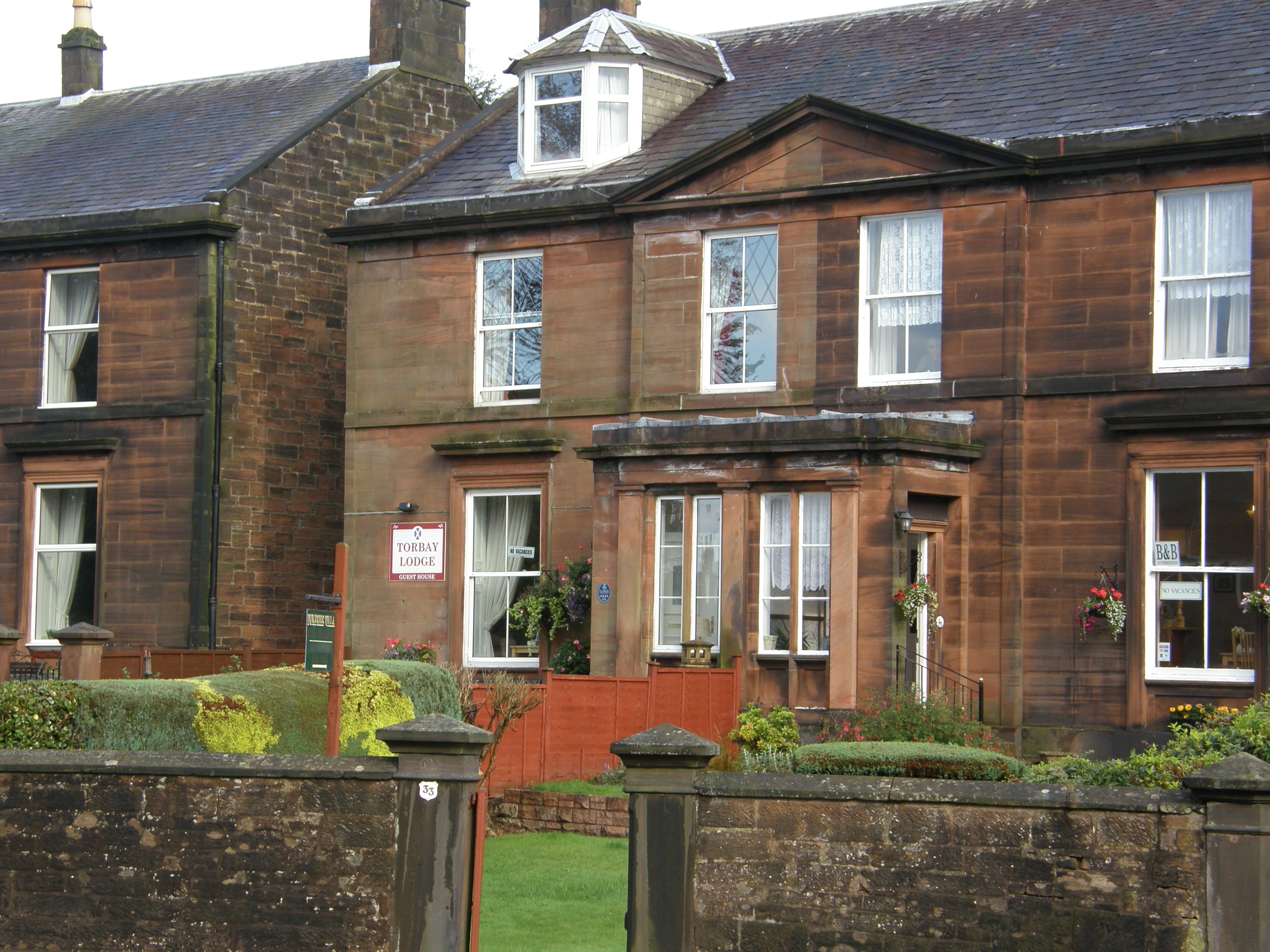
On 17 September, Evie and I arose and enjoyed breakfast in our B&B, the Torbay Lodge Guest House in Dumfries, Scotland.

Torbay Lodge Guest House, Dumfries, Scotland

Torbay Lodge Guest House, Dumfries, Scotland

We walked across the street and visited St. John’s Scottish Episcopal Church – a lovely old building (with a brand new pipe organ).

St. John's Scottish Episcopal Church, Dumfries

St. John's Scottish Episcopal Church, Dumfries

We then hit the road and went to the village of New Abbey, about six miles south of Dumfries. It is the location of Sweetheart Abbey.

Sweetheart Abbey, New Abbey, Scotland

Sweetheart Abbey, New Abbey, Scotland

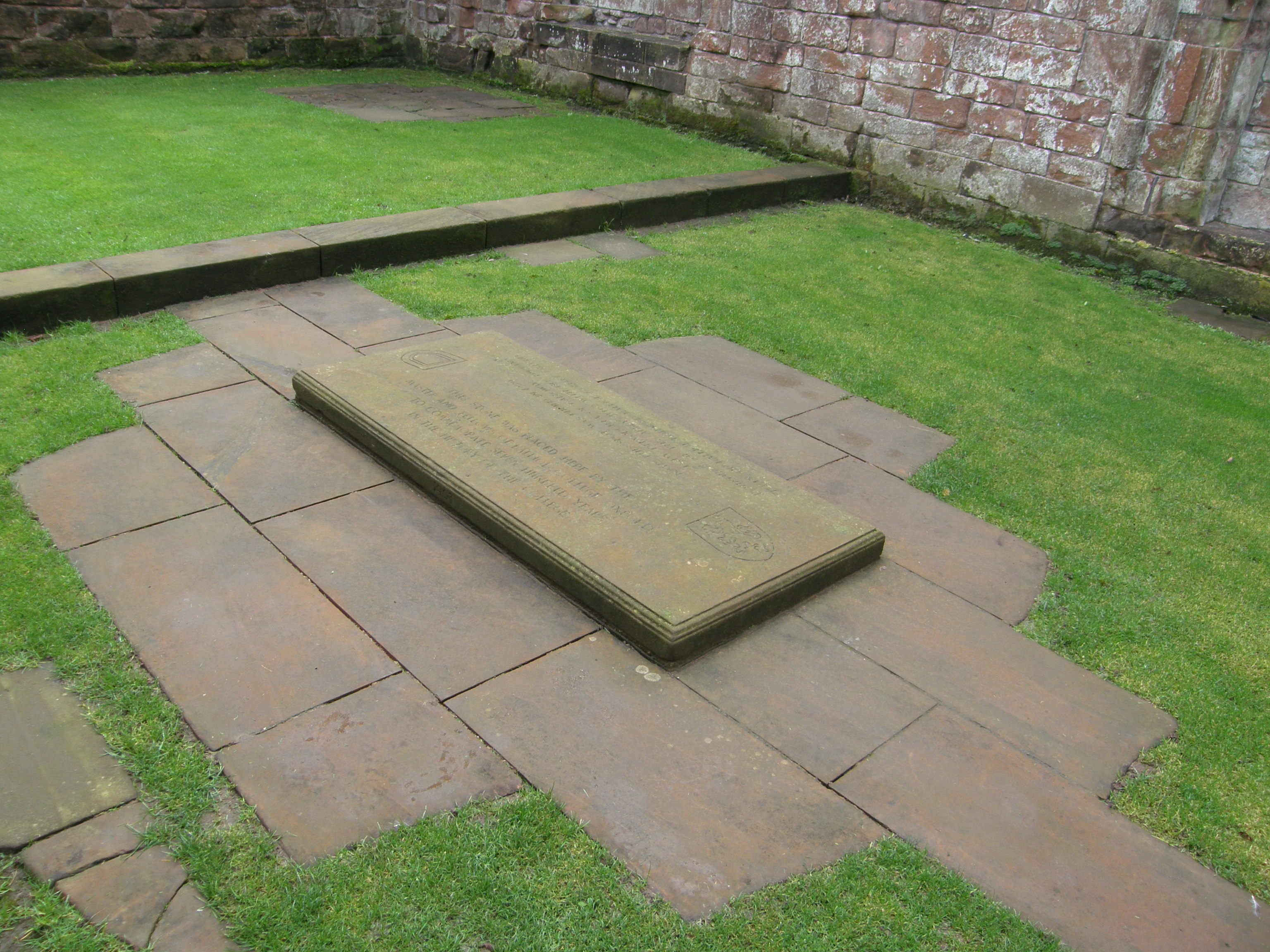
Sweetheart Abbey is a Cistercian monastery, founded in 1275 by Lady Dervorguilla Balliol of Galloway in memory of her husband John de Balliol. Dervorguilla and John founded Balliol College, Oxford. When John died, Devorguilla had his embalmed heart placed in an ivory shrine. This shrine was placed before her at meals, and she would give it’s share of every dish to the poor. She died in Buittle Castle on January 28, 1290, and was buried in front of the altar in the Abbey church with the casket containing John’s heart in her arms. The monks at the Abbey then renamed the Abbey in tribute to her devotion to her husband. Their son, also John, became King of Scotland but his reign was brief and tragic. The Master and Fellows of Balliol College some years ago had a special grave marker installed at the place believed to be her grave.

Marker at Devorguilla Balliol's Grave, Sweetheart Abbey

Marker at Devorguilla Balliol's Grave, Sweetheart Abbey

Here are a couple other photos of the abbey ruins:

Sweetheart Abbey, New Abbey, Scotland

Sweetheart Abbey, New Abbey, Scotland

Sweetheart Abbey, New Abbey, Scotland

Sweetheart Abbey, New Abbey, Scotland

After the abbey, we walked through the small and very charming town of New Abbey to the Corn Mill, the last functioning medieval grain mill in Scotland.

Main Street of New Abbey, Scotland

Main Street of New Abbey, Scotland

The New Abbey Corn Mill

The New Abbey Corn Mill

Next, after deciding that (unfortunately) we didn’t have time to visit Whithorn, the site of the earliest Christian mission in Scotland. It was there that St. Ninian founded his settlement called “Candida Casa” or White House. Instead, we stayed on the main road toward Glasgow and stopped at Castle Kennedy Gardens.

The Ruins of Castle Kennedy

The Ruins of Castle Kennedy

The Ruins of Castle Kennedy

The Ruins of Castle Kennedy

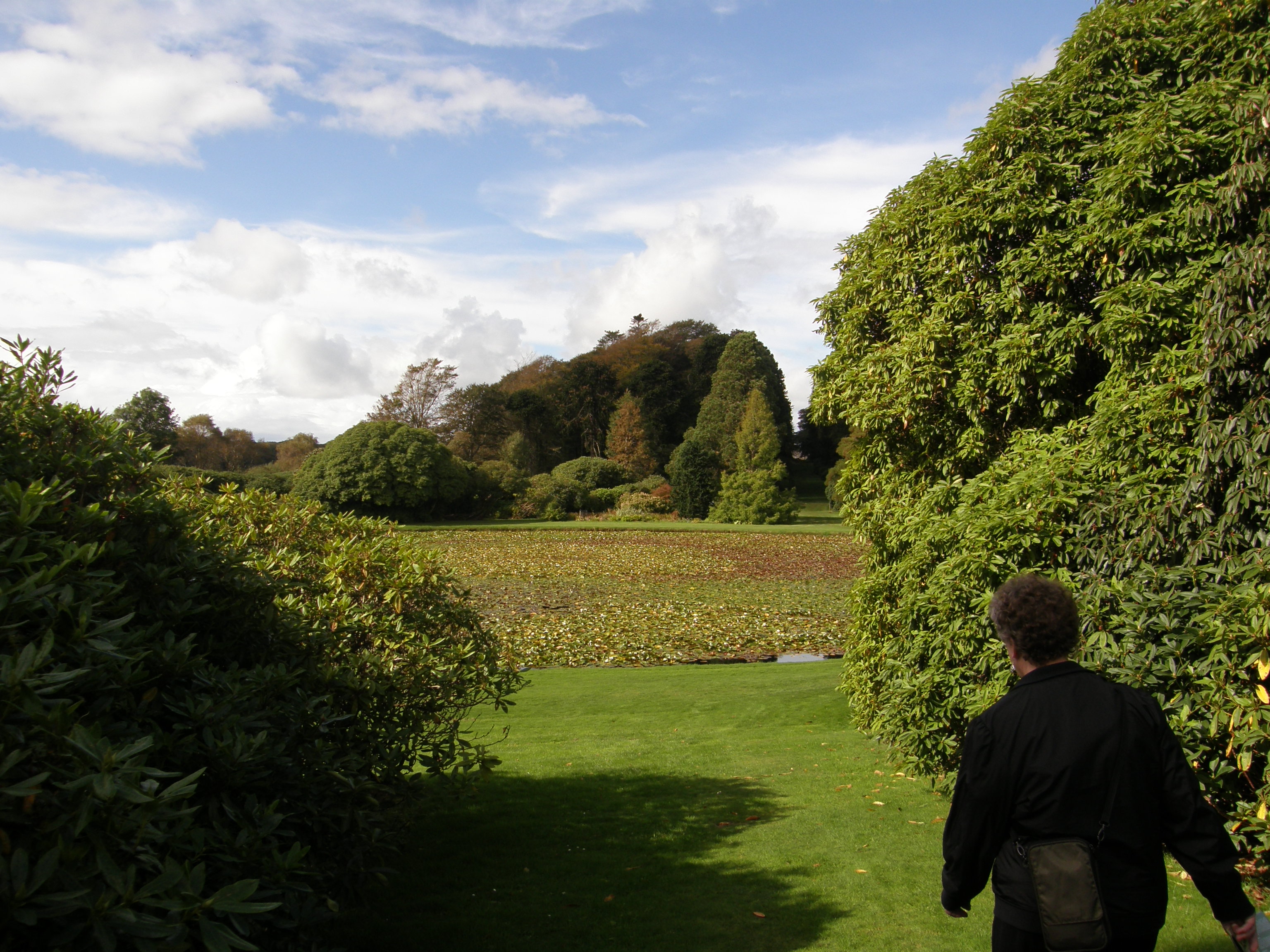
Castle Kennedy Gardens

Castle Kennedy Gardens

Castle Kennedy Gardens

Castle Kennedy Gardens

Castle Kennedy Gardens

Castle Kennedy Gardens

My Facebook albums of photographs taken in these locations can be found here:

Dumfries

Sweetheart Abbey

New Abbey Corn Mill

Castle Kennedy Gardens

We then drove on to Glasgow where we spent two nights; that will be the subject of another blog post.

« Older posts Newer posts »