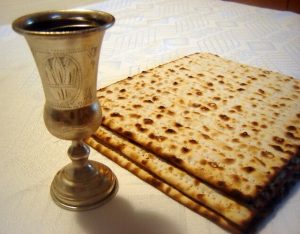
 At the end of our gospel lesson this morning, Jesus said to the crowd, “It is my Father who gives you the true bread from heaven. For the bread of God is that which comes down from heaven and gives life to the world.” They said to him, “Sir, give us this bread always.” Jesus answered, “I am the bread of life. Whoever comes to me will never be hungry, and whoever believes in me will never be thirsty.”[1] This is the beginning of Jesus’ long discourse on bread which takes up nearly the whole of Chapter 6 of the Gospel according to John and of which we will hear parts for all of the month of August.
A few verses further on, Jesus will say again, “I am the living bread that came down from heaven.” And he will add, “Whoever eats of this bread will live for ever; and the bread that I will give for the life of the world is my flesh. . . . Those who eat my flesh and drink my blood have eternal life, and I will raise them up on the last day; for my flesh is true food and my blood is true drink. Those who eat my flesh and drink my blood abide in me, and I in them.”[2]
The Jews, John tells us, disputed among themselves as Jesus was delivering this lengthy dissertation on bread. I think we can understand why! The very idea of consuming human flesh is off-putting, even disgusting, and would have been extremely objectionable to the Jews; no wonder they grumbled and mumbled, complained and disputed. Even as a metaphor, the statement demands a lot from Jesus’ followers!
 In 2014, Evie and I were privileged to join a group of other pilgrims from Ohio and Michigan and spend not quite three weeks in Palestine and Israel visiting many of the sites we hear about in the Bible, especially the Christian holy places of the Gospel stories. One of those was a hilly place overlooking the Sea of Galilee called Tabgha. Until 1948, when the Israelis uprooted its residents, a village had been there for centuries; now it is simply an agricultural area and a place of religious pilgrimage.

