
“Name this child.” That’s what I say to parents of infant baptismal candidates as I take their children from them. The words are not actually written in the baptismal service of The Book of Common Prayer as they are in some other traditions’ liturgies, but there is a rubric that says, “Each candidate is presented by name to the Celebrant . . . .”[1] so asking for the child’s name is a practical way of seeing that done. It’s practical, but it’s also a theological statement.
There is a common religious belief found in nearly all cultures that knowing the name of a thing or a person gives one power over that thing or person. One finds this belief among African and North American indigenous tribes, as well as in ancient Egyptian, Vedic, and Hindu traditions; it is also present in all three of the Abrahamic religions, Judaism, Christianity, and Islam.
The naming we do at baptism echoes the naming that takes place in Judaism when a male infant is circumcised on the eighth day after his birth. In that service, called the brit milah or bris, the officiating mohel prays, “Our God and God of our fathers, preserve this child for his father and mother, and his name in Israel shall be called ________”[2] and the prayer continues that, by his naming, the infant will be enrolled in the covenant of God with Israel. A similar thing is done when a girl is named in the ceremony called zeved habat or simchat bat, the “gift (or celebration) of the daughter” on the first sabbath following her birth.[3] With the name given at baptism, the church says to its newest member, “This is who you are: washed in the waters of baptism, sealed by the Holy Spirit, and marked as Christ’s own forever,”[4] a brother or sister in the church, a fellow member of the Body of Christ, an adopted child of God the Father.
 When my nephew, who’s now in his mid-40s, was about six years old, he was given a homework assignment that he found frustrating and he just didn’t want to finish it, but his mother made him sit down and do it rather than something else more to his liking. In his frustration, he blurted out, “I hate you!” My late sister-in-law responded calmly, “That’s too bad because I love you.” After a moment of reflection, my nephew amended his angry outburst: “I love you, too,” he said, “but I don’t like you right now.”
 I really don’t like television commercials, and I’m pretty sure I’m not alone in that regard. It’s a common complaint; we all talk about how much we dislike TV advertising. We all subscribe to Amazon Prime, Netflix, Hulu, and other streaming services so we can avoid them. And yet, sometimes a particularly memorable advertisement tag-line will worm it’s way into one’s regular conversation. My step-father had one of those: whenever my mother made anything even slightly piquant he would say, “Mama mia, that’s a spicy meatball,” which some of you may recognize from an old Alka-Seltzer commercial.
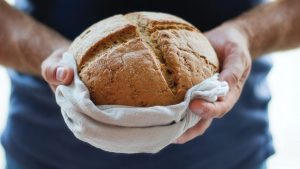 Anthelme Brillat-Savarin , an 18th century French politician once said, “Tell me what kind of food you eat, and I will tell you what you what kind of man are.”
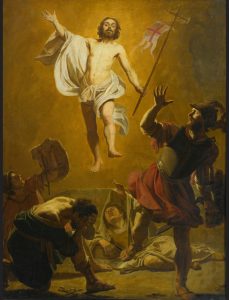 Easter is a joke. Amen.
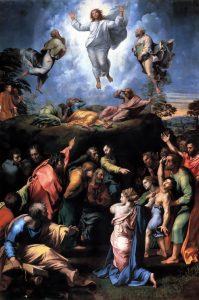 Today, as I write this, is Trinity Sunday 2020, but my imagination this morning is not caught up by the Lectionary gospel lesson of the day, the last mountain-top experience of the Eleven when, just before his Ascension, Jesus gives them the Great Commission.
 Today marks the beginning of the season we call “Lent,” an old English word which refers to the springtime lengthening of the days. What is this season all about, these forty days (not counting Sundays) during which we are to be, in some way, doing what a hymn attributed to St. Gregory the Great says: “Keep[ing] vigil with our heavenly lord in his temptation and his fast?”
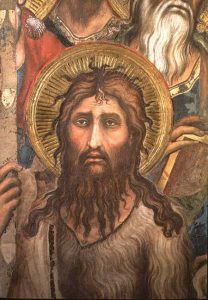 When I was a kid growing up first in southern Nevada and then in southern California, the weeks leading up to Christmas (we weren’t church members so we didn’t call them “Advent”) were always the same. They followed a pattern set by my mother. We bought a tree and decorated it; we set up a model electric train around it. We bought and wrapped packages and put them under the tree, making tunnels for that toy train. We went to the Christmas light shows in nearby parks and drove through the neighborhoods that went all out for cooperative, or sometimes competitive, outdoor displays. My mother would make several batches of bourbon balls (those confections made of crushed vanilla wafers and booze) and give them to friends and co-workers. Christmas Eve we would watch one or more Christmas movies on TV, and early Christmas morning we would open our packages . . . carefully so that my mother could save the wrapping paper. Then all day would be spent cooking and watching TV and playing bridge. After the big Christmas dinner, my step-father and I would do the clean up, my brother and my uncle would watch TV . . . and my mother would sneak off to her room and cry. You see . . . no matter how carefully we prepared, no matter how strictly we adhered to Mom’s pattern, something always went wrong. We never got it right; Christmas never turned out the way my mother wanted it to be.
 While making a presentation at a conference about teaching English as a second language, an expert in the field remarked that one of the difficulties is that there are many instances in English when a double-negative renders positive meaning and this is confusing for non-English speakers. “It’s fortunate,” she said, “there’s no way in English that a double positive can convey negative meaning.”

