 There is an aphorism about preaching that says the preacher “must hold the Bible in one hand and the newspaper in the other.” This is often attributed to the influential Swiss theologian Karl Barth, whom Time Magazine in the 1960s called “the greatest living Protestant theologian.” Truth is, however, that he never really said it. What he actually said, in an interview with Time in 1963, was, “Take your Bible and take your newspaper, and read both. But interpret newspapers from your Bible.”[1] In other words, try to understand events in the world through the lens of Scripture and take guidance from it as you seek to live in this world.
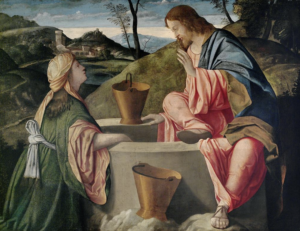
As I followed the news media the past few weeks, two stories stood out for me. One was the witness of the women who are the surivors of Jeffrey Epstein’s human trafficking enterprise. The other was the tale of the US Women’s Ice Hockey team who won the Olympic gold medal but were nonetheless made the butt of a joke by the president. It seemed to me that John’s story of Jesus’ long conversation with the Samaritan woman at Jacob’s well offers us a lens through which to view these news stories. So I started making notes for a sermon along those lines.
 I assume that everyone here has seen A Christmas Story?
 Do you all know what a tort is? Tort … T-O-R-T … no E on the end; I’m not talking about those wonderful little German or Austrian pastries. A tort is a civil wrong that causes harm to another person, resulting in legal liability for the person who commits the wrong. You leave a puddle of milk on the floor of your grocery store knowing it’s there, then someone slips in it and injures themselves: you have committed a tort. You speed through a stop sign, collide with another car, and injure the driver: you’ve not only broken the law, you’ve committed a tort.
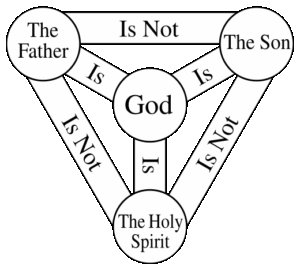 A few weeks ago, as I was looking forward to my annual cover-Rachel’s-vacation gig here at Harcourt Parish, my plan was to preach a sort of two-part sermon on play and playfulness. Seemed like a good summer-time thing to do. Last week, on Pentecost Sunday, I suggested to you that playfulness is a gift of the Holy Spirit, that play is why we were made. Today being Trinity Sunday, I planned to follow-up with a few words about how a metaphor of play and playfulness can help us understand and participate in the relational community which the triune God is.
  Y’all know who John Wesley is, or was, I’m sure. The Anglican priest who founded Methodism? My paternal grandparents were Methodists and they really tried to make me into one but, for some reason, it didn’t stick. To this day when Evelyn and I visit a Methodist church, I will often turn to her as we are leaving and say, “There’s a reason I’m not a Methodist.”
  We have had more than enough of contempt,
 There’s a story about a pastor giving a children’s sermon. He decides to use a story about forest animals as his starting point, so he gathers the kids around him and begins by asking them a question. He says, “I’m going to describe someone to you and I want you to tell me who it is. This person prepares for winter by gathering nuts and hiding them in a safe place, like inside a hollow tree. Who might that be?” The kids all have a puzzled look on their faces and no one answers. So, the preacher continues, “Well, this person is kind of short. He has whiskers and a bushy tail, and he scampers along branches jumping from tree to tree.” More puzzled looks until, finally, Johnnie raises his hand. The preacher breathes a sigh of relief, and calls on Johnnie, who says, “I know the answer is supposed to be Jesus, but that sure sounds an awful lot like a squirrel to me.”
 When I find myself in times of trouble,
 Heavenly Father,
 When I was a sophomore in college, I lived in a dormitory suite with nine other guys: six bedrooms, two sitting rooms, and a large locker-room style bathroom. About mid-way through the first semester, one of our number, a 3rd-year biochemistry major, suggested that set up a small brewery in one of the sitting rooms. We all read up on how to make beer and thought it was a great idea; so we helped him do it. It takes three to four weeks to make a batch of beer, so over the next few months we made quite a bit of beer.

