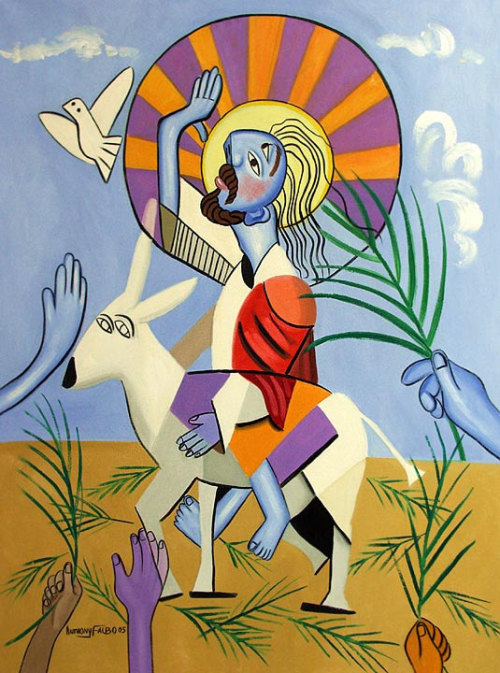
 Today we are commemorating Jesus’ entry into Jerusalem at the beginning of the week that would culminate in his death on the cross of Calvary. Somewhat contrary to common sense, this has come to be called the “triumphal entry.” I don’t know who first applied this term to Jesus making his way from Bethany and Bethphage, through the Kidron Valley, also known as the valley of Jehosophat or the valley of decision, into the holy city. I’ve often thought that whoever it was must surely have been a master of irony, or perhaps of sarcasm, for the procession was anything but a triumph!
Two scholars, Marcus Borg and John Dominic Crossan, have suggested that much more than a fulfillment of the Zecharian prophecy that the messiah, the king would come gently bringing salvation, riding on a donkey’s colt,[1] Jesus’ parade was a mockery of the Roman tradition of military parades, particularly the sort Pontius Pilate might have used to enforce imperial domination.[2]
To appreciate their suggestion, it’s necessary for us to understand the nature of these parades. We have a word in English, triumph, the adjectival form of which we apply to Jesus’ parade, which we use and understand as a synonym to the word victory. But it derives from the name of a particular sort of military parade practiced by the Romans, the triumphus. In Roman tradition, the triumph happened after a victory was won, but only in Rome, only after certain victories and only for certain victors. It has been said that the triumph was “one of the most dazzling examples of the theme of spectacle in Roman culture,” imbued with “theatricality” and designed primarily to persuade its audience of the greatness of the conquering general and of Rome itself.[3]
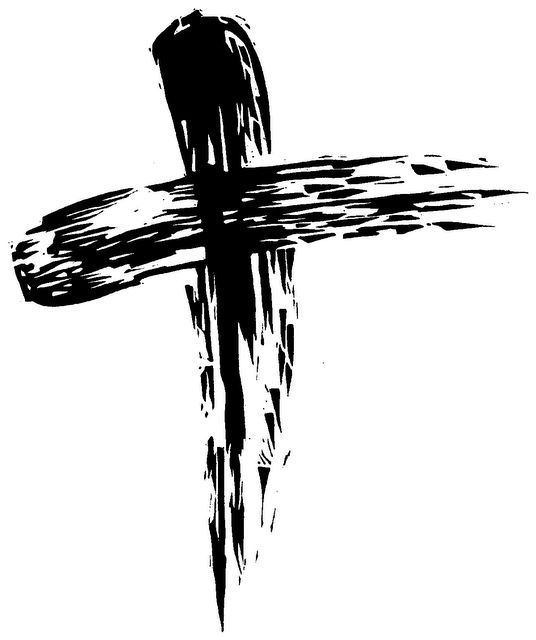 So we once again find ourselves at the beginning of Lent, this Day of Ashes on which we are marked with a sign of death, grief, and penance, and encouraged to enter into a time of fasting, a time of “giving up.” What are you giving up for Lent? We have all heard that question; we have probably asked it of others.
 You all know the truth of the statement, “You can’t take it with you.” What you may not know is that that sentiment is straight out of the New Testament! St. Paul, writing to the young new bishop Timothy, says, “We brought nothing into the world – it is certain that we can take nothing out of it.”
 Why do we do this? Why do we gather when a loved one dies and hold assemblies like this? Most human beings believe that death is not the end of the person who has passed away. Except for the few human beings who really strongly subscribe to an atheist philosophy, and they truly are a minority of our race, everyone on earth belongs to some faith group which teaches that we continue on, whether it is by reincarnation or in the Elysian Fields or the happy hunting grounds, as a guiding ancestral spirit or at rest in the presence of our Lord. So why do we do this?
 “In the beginning was the Word . . . .” The Prologue of John’s Gospel echoes the opening words of the Bibe, “In the beginning God said . . . .” Our God is a god who communicates, who speaks, whose Word creates.
  One of the commentaries I read this week about our gospel lesson was written by a Lutheran serminary professor named Jan Schnell Rippentrop. She noted three things about John the Baptizer’s self-description in the Fourth Gospel:
 Today’s Gradual, Psalm 85, includes what may be my favorite verse in the entire collection of the Psalms: “Mercy and truth have met together; righteousness and peace have kissed each other.” (v. 10)
 In a few minutes, when this sermon comes to an end, we will all stand together as we do every week and recite the Nicene Creed in which we will say that, among other things, we believe that Jesus Christ

