From the Prophet Isaiah:
For a child has been born for us,
a son given to us;
authority rests upon his shoulders;
and he is named
Wonderful Counsellor, Mighty God,
Everlasting Father, Prince of Peace.
His authority shall grow continually,
and there shall be endless peace
for the throne of David and his kingdom.
He will establish and uphold it
with justice and with righteousness
from this time onwards and for evermore.
The zeal of the Lord of hosts will do this.
(From the Daily Office Lectionary – Isaiah 9:6-7 (NRSV) – December 18, 2012.)
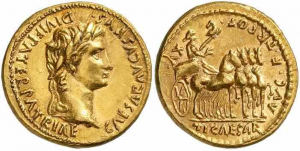 I absolutely adore Handel’s Messiah. As a child in a non-church-going family (except during the summers when I lived with my Methodist grandparents), my introduction to these words from the Prophet Isaiah was through Handel’s music. My step-father, who had sung in high school choirs, would take me with him to community sing-alongs of the oratorio which churches in our area would offer during the Christmas holidays. Even now as I read these lines from Isaiah, I read them to music of Handel!
That’s a mistake. The beautiful notes of the oratorio mask the highly charged political nature of this prophecy and the titles by which the church has named Jesus of Nazareth. Two weeks ago on Sunday morning we read the evangelist Luke’s report of the ministry of John the Baptizer crying out in the wilderness. Luke tells us very specifically that it happened “in the fifteenth year of the reign of Emperor Tiberius, when Pontius Pilate was governor of Judea, and Herod was ruler of Galilee, and his brother Philip ruler of the region of Ituraea and Trachonitis, and Lysanias ruler of Abilene, during the high priesthood of Annas and Caiaphas . . . .” This grounds John in a specific place and time, a political place and time. The Nicene Creed does the same thing when it bids us to affirm as an article of faith that Jesus was “crucified under Pontius Pilate,” that his death took place within a specific political context, the hard and gritty reality of the Roman Empire.
When the first Christians used Isaiah’s prophetic titles as references to Jesus they were not making so much a religious or theological point as a political one. They were making a bold and provocative political declaration about the Roman emperors. The emperors claimed religious titles and expected to be worshiped. Coinage and documents from the reigns of both Augustus, Caesar at the time of Jesus’ birth, and Tiberius, Caesar when he was crucified, proclaim the emperors divine and give them such titles as Prince of Peace, Lord of Lords, King of Kings, Savior, and Son of God. The church’s transfer of these titles to Christ declared that the emperors’ claim was false, as false as the Roman Peace, the Pax Romana for which the emperors claimed credit.
The Pax Romana was, in fact, no peace at all! It was the conquering and occupation of non-Roman territories, as in Judea and Galilee. It was a state of constant warfare on the empire’s borders, as in Gaul and Britain. It was a sham. Giving Isaiah’s prophetic titles to Jesus was the early church’s way of making that clear. Declaring that Jesus would reign “from this time onwards and for evermore” was the church’s way of saying that the emperor would not!
As we prepare for Christmas, Advent’s call to calm reflection is as much a call to examine our politics as to examine our faith. As we prepare to welcome the Prince of Peace, the Lord of lords, the King of kings, Advent calls us to question the princes, the lords, the kings, the political leaders of our own time and place, at all points on the political spectrum, from Right to Left, Republican or Democrat, conservative or liberal. Do we have the courage of the early Christians to stand up to them, to declare that their “peace” is no peace and that their reign will not last?
Handel’s beautiful music can mask the political impact of Isaiah’s words, and all the music of the holiday season can lull us into complacency. But the message of Advent, even of the music of Advent, should remind us that our faith is not a fairy tale. Our faith is grounded in the hard and gritty reality of human politics.
====================
A request to my readers: I’m trying to build the readership of this blog and I’d very much appreciate your help in doing so. If you find something here that is of value, please share it with others. If you are on Facebook, “like” the posts on your page so others can see them. If you are following me on Twitter, please “retweet” the notices of these meditations. If you have a blog of your own, please include mine in your links (a favor I will gladly reciprocate). Many thanks!
====================
Father Funston is the rector of St. Paul’s Episcopal Church, Medina, Ohio.
 This is the part of the Maundy Thursday – Good Friday story that breaks my heart! I so identify with Peter; he’s such a bumbling fool on so many occasions and Jesus just keeps on holding him close, knowing that eventually he will pull through. I know that I would have done no better than Peter in those dark hours of Thursday night. I might not even have done as well as he did; I’m not sure I’d have had the courage to follow Jesus into the high priest’s courtyard!
 In ten days we will begin our celebration of his birth, but the Daily Office lectionary today has us consider his last meal on the night before his death . . . .
 Day before yesterday, I had a pretty good day in my ministry as rector of my parish. An Episcopal Church Women event went very well; we all had fun in what we were doing. I got home in the late afternoon and took care of a couple of personal matters, called my wife about the possibility of a “date night,” and when she said “Yes” I made reservations for dinner. I took the dog for a walk and, after my wife got home from work, we went out to dinner at our favorite local restaurant. When we returned home, I turned on my computer, checked my email, took a look at Facebook . . . and learned that Deb, a long time friend, a singer of great skill, and an occasionally very funny woman had passed away. It more than ruined the day.
 “When those blue snowflakes start falling, that’s when those blue memories start calling,” runs a line from Elvis Presley’s Blue Christmas. While most of us are getting ready for happy family reunions during the holidays, and clergy and liturgical ministers of all sorts are preparing for one of the year’s biggest crowds, we may forget that Christmas can be a time of great sadness for many. Mental health professionals note that the Christmas season may be one when many people avoid church. Millions of Americans suffer from the “holiday blues.” I know this all too well because December 21st is the anniversary of my mother’s death.

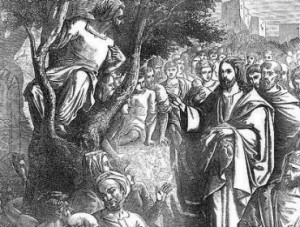 Zacchaeus climbs a tree to see Jesus. So today’s reading got me thinking scattered thoughts about trees. The weeping willow in my childhood backyard. The peach and cherry trees in my grandfather’s garden. The pinion pines of my native Nevada. The eucalyptus trees that were everywhere on my college campus. The huge ornamental pepper tree that shaded the first house my wife and I bought. I close my eyes, think of those trees, and I see my parents, my childhood friends, my college roommates. Trees are filled with meaning and memory; they bear the fruits of remembrance.

