 This is a special Sunday for me. Friday marked the 28th anniversary of my ordination as a priest in the Episcopal Church. It was on Sunday, June 23, 1991, that I celebrated my first mass. So I am grateful to you and to Fr. George for the privilege of an altar at which to celebrate the Holy Mysteries and a pulpit from which to preach the gospel on this, my anniversary Sunday.
Now that I am retired, I am filling part of my time studying Irish. In the world of Irish studies, I am what is known as a foghlaimeoir, which is to say “an Irish learner.” The truth is that I have been a foghlaimeoir for over eleven years, but I have not yet progressed to the level of Gaeilgeoir, that is, “an Irish speaker.” Studying Irish is one of the most difficult things I’ve ever done; it is both fascinating and maddening, and I think that among the reasons for that are the cultural assumptions which underly the language.
 Lenten Journal, Day 26
 Lenten Journal, Day 24
 Lenten Journal, Day 8
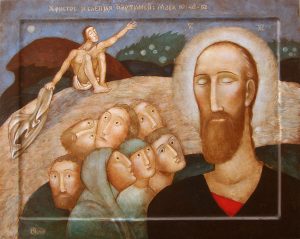 Two weeks ago, Mark told us the story of the rich man who came to Jesus asking “What must I do to inherit eternal life?”
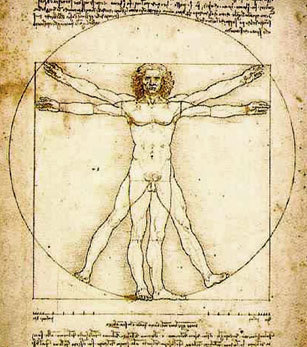 Our gradual this morning asks a question of God about human existence:
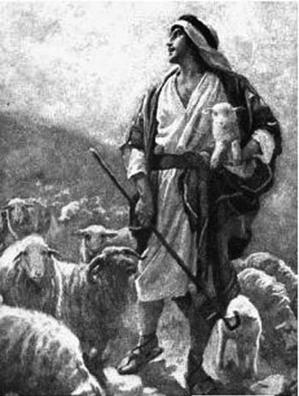 Most of the Bible texts from the Revised Common Lectionary this week present us with the well-worn and comfortable Biblical image of sheep and shepherds. Jeremiah rails against the shepherds of Israel “who destroy and scatter the sheep of [the Lord’s] pasture,”
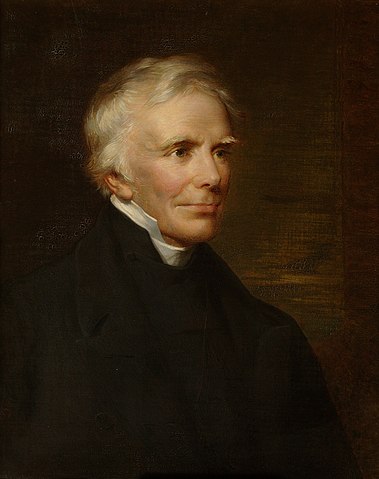 Yesterday, July 14, was the 185th anniversary of the preaching a sermon which is said to have been the beginning of the Catholic revival in the Church of England. The sermon was preached at St. Mary’s Church Oxford by the Rev. John Keble, Provost of Oriel College and Professor of Poetry at Oxford. The sermon marked the opening of the Assize Court, the summer term of the English High Court of Justice. The Assize sermon normally would have addressed matters of law and religion, but in the summer of 1833 the Parliament of the United Kingdom was debating whether to abolish (or in the language of the time “suppress”) some dioceses of the Anglican Church of Ireland which, at the time, was united with the Church of England. It was an entirely financial issue in the eyes of Parliament, but Keble and several of his friends believed this to be an encroachment of the secular establishment upon the religious and an altogether wrong thing, and so it was this portending legislation that Keble addressed in his homily, which he titled National Apostasy. He began with these words:
 Our kids this week have been “Shipwrecked,” but they’ve also been “rescued by Jesus.”

