 Our Old Testament lesson this morning is a very small bit of the Book of Job, that really sort odd bit of Biblical literature that tells the story of a wager between God and Satan. Some scholars believe that it may find its origins in an earlier Babylonian work known as the Poem of the Righteous Sufferer, that the Jews in Exile became familiar with the older Babylonian story and adapted it to their own theology.
Job begins with a scene in the heavenly court where God is in conversation with character called, in Hebrew, ha-satan which is translated into English as Satan. However, this is not the Devil of later Christian mythology, the ruler of Hell portrayed by Milton or Dante or even Walt Disney (in the Night on Bald Mountain sequence in the movie Fantasia). Rather, ha-satan is a sort of heavenly district attorney or prosecutor who goes “to and fro on the earth, and … walking up and down on it,”[1] scoping out sin and iniquity and bringing it to God’s attention for judgment.
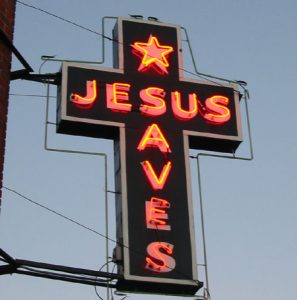 Our kids this week have been “Shipwrecked,” but they’ve also been “rescued by Jesus.”
 For recreational reading these days, I’m into a novel entitled Winter of the Gods.
 The theme for today’s lessons is clear . . . we are almost “hit upside head” with the concept of Sabbath. Our reading from Deuteronomy is the law establishing the mandatory day of rest:
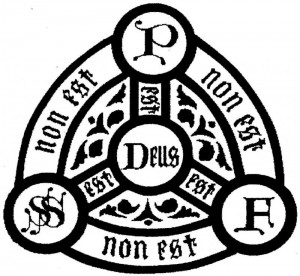 Some of you may have heard of Brooks’s law, which has to do with the time it takes to complete a software project. It’s similar to the general law of diminishing returns in economics. Professor Fred Brooks of the University of North Carolina first proposed the law in 1975; it holds that “adding manpower to a late software project makes it later.”
 What do you suppose it was like in Jerusalem on that Pentecost morning so long ago?
 Our gospel lesson today is from John’s story of the last supper. This is part of a long after-dinner speech that Jesus gives including a section known as the “high priestly prayer.” In it, among other petitions, Jesus asks God the Father to look after his disciples. He prays:
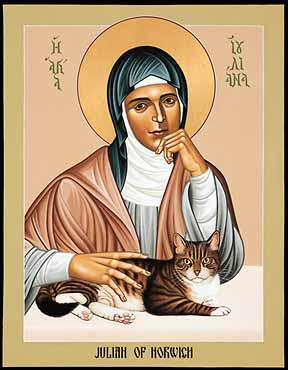 Today we are welcoming Reed C_____ F_____ into the Household of God through the Sacrament of Holy Baptism. We are also commemorating Dame Julian of Norwich, one of the medieval saints of English Christianity. Twenty-eight years ago I was ordained a deacon on Julian’s feast day which is actually on Tuesday, May 8. So the lessons we heard this morning, and the second of the two collect I offered after the Gloria in Excelsis, were from the propers for Dame Julian’s celebration. But I would like to read you also the brief Gospel lesson appointed for the Sixth Sunday of Easter, which is also from John’s Gospel
 In 2011 a young man in New York City named Gabriel went to a party. While there, he drank some of the alcoholic punch being served. Unknown to the young man, the punch had been spiked with a drug called Gamma-Hydroxybutyric Acid, commonly called GHB. Prescribed as Xyrem and also called by a variety of “street names,” it is known as a “date rape” or rave drug. It comes as a liquid or as a white powder that is dissolved in water, juice, or alcohol. In most people it produces euphoria, drowsiness, decreased anxiety, excited behavior, and occasionally hallucinations. For Gabriel, however, who suffered from medication-controlled epilepsy, it caused a seizure. Apparently interacting with his regularly prescribed medication, the GHB he had unknowingly consumed caused a fatal convulsion.
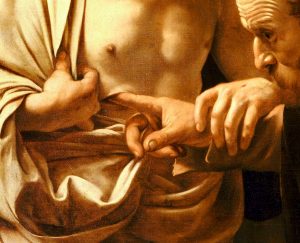 Every year, for as long as any of us can remember, on the Second Sunday of Easter the church has told the story of Thomas, Thomas the Doubter, “Doubting Thomas” who wouldn’t believe that Jesus had risen, the poster child for those who are uncertain. But, believe me, Thomas gets a bad rap! He was no worse a doubter or disbeliever than any of the others, including Peter!

