 Their names were Curtis Adams, Mager Bradley, George Davis, Jr., Thomas Forte, Robert Green, James Leatherwood, Nathaniel Moss, George Motten, William Pritchett, James Stewart, and Due Turner. They came from Alabama, Mississippi, West Virginia, Texas, Arkansas. Thrown together by war, they were members of the 333rd Field Artillery Battalion, a segregated African American unit serving in Belgium during World War II. When the Germans began what came to be known as “the Battle of the Bulge” in December 1944, the 333rd stayed in place to support the withdrawal of the mostly white infantry regiments around them. These eleven men were captured by the Waffen-SS in a forest near the town of Wereth; they were tortured and murdered, and their bodies left unburied. Although the fact and nature of their sacrifice was well documented, it was never officially recognized by the U.S. government until 2017.[1]
Tag: Philosophy (Page 1 of 3)
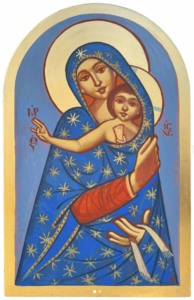 I’m sure you’re all familiar with Howard Thurman’s meditation entitled The Work of Christmas:
When the song of the angels is stilled,
when the star in the sky is gone,
when the kings and princes are home,
when the shepherds are back with their flocks,
the work of Christmas begins:
to find the lost,
to heal the broken,
to feed the hungry,
to release the prisoner,
to rebuild the nations,
to bring peace among the people,
to make music in the heart.[1]
This year I think I would have to suggest that there is one more task to add: to preserve democracy.
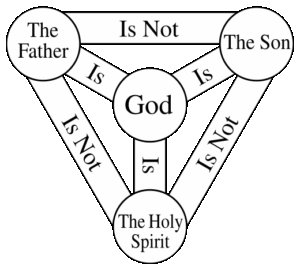 A few weeks ago, as I was looking forward to my annual cover-Rachel’s-vacation gig here at Harcourt Parish, my plan was to preach a sort of two-part sermon on play and playfulness. Seemed like a good summer-time thing to do. Last week, on Pentecost Sunday, I suggested to you that playfulness is a gift of the Holy Spirit, that play is why we were made. Today being Trinity Sunday, I planned to follow-up with a few words about how a metaphor of play and playfulness can help us understand and participate in the relational community which the triune God is.
Then the Immigration and Customs Enforcement doubled down on Mr. Trump’s promises of “mass deportations” across the country, but especially in Southern California and particularly in Los Angeles (where I grew up, by the way). People took to the streets in protest; the administration used that as an excuse to nationalize the California National Guard and met the protesters not only with 2,000 guardsmen but with 700 Marines, as well.
 Y’all know who John Wesley is, or was, I’m sure. The Anglican priest who founded Methodism? My paternal grandparents were Methodists and they really tried to make me into one but, for some reason, it didn’t stick. To this day when Evelyn and I visit a Methodist church, I will often turn to her as we are leaving and say, “There’s a reason I’m not a Methodist.”
Don’t get me wrong! Our church has an ongoing and productive ecumenical dialogue with the United Methodist Church and Methodists are fine people. I just don’t want to be one. There’s a reason I’m not a Methodist. To be honest, though, I wasn’t ever really sure what that reason was, but I was sure there must be one.

“They read from the book, from the law of God, with interpretation. They gave the sense, so that the people understood the reading.”[1] Lord, may we also have grace to understand the readings from Scripture. Amen.
The People of Israel, on their return from exile in Babylon, faced a question which faces many of us today: “What are we to do now?” That is a question which plagues humankind, which we human beings have been asking since time immemorial. With each and every change in our individual and corporate lives we face the same question: What are we to do now?
This was the question which Nehemiah the governor and Ezra the priest sought to help the Jews answer in the event recorded in our reading from the Hebrew Scriptures this morning. (By the way, it wasn’t just those two: the verses left out of the lectionary selection name 26 other people who read from the Bible and “helped the people to understand the law.”[2])
 “They’re eating the dogs, they’re eating the cats.”
That was the headline on the website of Raidió Teilifís Éireann, the national public broadcaster in the Republic of Ireland, on September 11. What the candidate in the U.S. presidential debate the night before had said in full was:
In Springfield, they’re eating the dogs, the people that came in, they’re eating the cats. They’re eating, they’re eating the pets of the people that live there.[1]
As I’m sure you know, in the twelve days since the debate, the people of Springfield, Ohio, have been through hell. They’ve been put under a media microscope; white supremacists have marched through the town; there are have been more than 30 bomb threats against schools and public buildings.
 Here we are at the end of the first period of what the church calls “ordinary time” during this liturgical year, the season of Sundays after the Feast of the Epiphany during which we have heard many gospel stories which reveal or manifest (the meaning of epiphany) something about Jesus. On this Sunday, the Sunday before Lent starts on Ash Wednesday, we always hear some version of the story of Jesus’ Transfiguration, a story so important that it is told in the three Synoptic Gospels, alluded to in John’s Gospel, and mentioned in the Second Letter of Peter.
Six days before, Jesus had had a conversation with the Twelve in which he’d asked them who they thought he was. They had said that other people thought Jesus might be a prophet and that some thought he might even be Elijah returned from Heaven or John the Baptizer returned from the dead. Jesus put them on the spot, though, and asked, “But who do you say I am?”[1] Peter answered, “You are the Messiah.”
 “The kingdom of heaven may be compared to a king . . . .”
This is an ugly parable that Matthew reports in today’s gospel. It is similar to a parable that is related in Luke’s gospel, but Matthew adds details that challenge us deeply, even to the core of our faith, to the center of our being as Christians. When Luke tells the story, the host inviting his neighbors to dinner is not a king; he’s just “someone.”[1] When Luke’s host sends his servant to tell the intended guests that all is ready, they offer only excuses; no one “makes light” of the occasion and no one seizes, mistreats, or kills the slaves as happens in the Matthean version.[2] Luke’s host gets angry, but only Matthew’s king sends an army “destroy the murderers and burn their city.”[3] Both hosts send the slaves back out to invite others from the streets and highways; Luke’s dinner host adds an instruction specifically to invite “the poor, the crippled, the blind, and the lame.”[4] In both stories the banquet hall is filled, but only in Matthew’s story is there the judgment, not mentioned in Luke’s, that the substitute guests include “both good and bad.”[5] And, finally, Matthew’s Jesus adds the detail about the man present without the proper wedding garment who is thrown into the “outer darkness” and that final warning, “Many are called, but few are chosen.”[6]
 Power and authority. These are the subjects of our lessons from Scripture this morning. Later this month they will figure as key concepts in a trial scheduled to begin in Fulton County, Georgia. That trial will focus on an alleged attempt to disrupt, even to stop, what we have come to call “the peaceful transfer of power.” Historian Maureen MacDonald wrote a few years ago:
The swearing-in ceremony allows for the peaceful transfer of power from one President to another. It formally gives the “power of the people” to the person who has been chosen to lead the United States. This oath makes an ordinary citizen a President.[1]
In Paul’s letter to the Philippians, part of which we heard this morning, the apostle writes about the power of Jesus Christ by quoting a liturgical hymn sung in early Christian communities:
At the name of Jesus?every knee should bend,
in heaven and on earth and under the earth,
and every tongue should confess
that Jesus Christ is Lord.[2]
 What are we to do with our first lesson today? The story of the testing of Abraham and the binding of Isaac, called the Akedah in Hebrew, “exudes darkness and mystery, and it brings before us a thousand questions, most of which have no answers.”[1] In the late 1300s an unknown English author penned a short treatise entitled The Cloud of Unknowing basically arguing that such “darkness and mystery,” and the thousands of unanswerable questions they bring, are really fundamental to our relationship with God. “[O]f God Himself can no man think,” he writes, “He may well be loved, but not thought. By love may He be gotten and holden; but by thought never.”[2]
The Spanish mystical poet, St. John of the Cross, made a similar point in his poem known as The Dark Night of the Soul. He wrote in the first verse:
Once in the dark of night,?
Inflamed with love and yearning, I arose?
(O coming of delight!)?
And went, as no one knows,
?When all my house lay long in deep repose….[3]
“In this first stanza,” John himself said, the soul relates the way and manner which it followed “to attain to living the sweet and delectable life of love with God; and it says that this going forth from itself and from all things was a ‘dark night,’ by which . . . is here understood purgative contemplation.”[4] This “purgative contemplation” has been called a darkening of the will, intellect, and senses,[5] or more simply a “remain[ing] silent, …not thinking of anything.”[6]


