 Their names were Curtis Adams, Mager Bradley, George Davis, Jr., Thomas Forte, Robert Green, James Leatherwood, Nathaniel Moss, George Motten, William Pritchett, James Stewart, and Due Turner. They came from Alabama, Mississippi, West Virginia, Texas, Arkansas. Thrown together by war, they were members of the 333rd Field Artillery Battalion, a segregated African American unit serving in Belgium during World War II. When the Germans began what came to be known as “the Battle of the Bulge” in December 1944, the 333rd stayed in place to support the withdrawal of the mostly white infantry regiments around them. These eleven men were captured by the Waffen-SS in a forest near the town of Wereth; they were tortured and murdered, and their bodies left unburied. Although the fact and nature of their sacrifice was well documented, it was never officially recognized by the U.S. government until 2017.[1]
The 442nd Regimental Combat Team fought in Italy and southern France during World War II. Known for its motto “Go for Broke,” it was instrumental in the liberation of Livorno, Italy, on July 19, 1944. Twenty-one of its members were awarded the Medal of Honor. What made the 442nd unique was that it was composed almost entirely of Nisei, second-generation Americans of Japanese ancestry, many of whose parents and families back home were labeled a “public danger” and interred in “relocation camps.”[2] “It is now widely agreed that the internment of the Japanese Americans was not justified and was based solely on racism,”[3] but it was not until 1988 that the United States government officially apologized to the Japanese-American community.
During World War I, members of the Choctaw, Comanche, Hopi, and Cherokee tribes served as communication specialists for the U.S. Army in a role that came to be known as “Code Talkers.” Remembering their service, a Navajo-speaking Marine veteran named Philip Johnston suggested that members of the Navajo nation could fill the same role for the Marines in World War II. Twenty-nine Code Talkers were recruited and became the core of the 382nd Marine Platoon. They developed a code based on their language which was eventually used by about 400 Navajo Code Talkers to aid operations in the Pacific Theater. During the first two days of the Battle of Iwo Jima, six Code Talkers sent and received over 800 messages, all without error. 5th Marine Division signal officer Major Howard Connor later acknowledged, “Were it not for the Navajo, the Marines would never have taken Iwo Jima.” Their contribution to the war effort was classified until 1968, and the Code Talkers recieved no official commendation until the Original 29 received Congressional Medals in 2001. The involvement of all the Code Talkers was not acknowledged until the passage of the Code Talkers Recognition Act in 2008.[4]
More than 2000 years ago on the streets of Jerusalem, as we heard in the reading from Acts, the Apostles, empowered by the Holy Spirit, proclaimed the Good News of Jesus Christ to “Parthians, Medes, Elamites, and residents of Mesopotamia, Judea and Cappadocia, Pontus and Asia, Phrygia and Pamphylia, Egypt and the parts of Libya belonging to Cyrene, and visitors from Rome, both Jews and proselytes, Cretans and Arabs.”[5] It was the day of Pentecost or, in Hebrew, Shavuot, a feast set fifty days after the Passover when the followers of Israel’s monotheist religion gathered to give thanks for the Torah, the Law, the covenant God made with all believers. Peter addressed the crowd as “fellow Jews and all who live in Jerusalem,”[6] but these were folks from all over the known world, an ethnically diverse crowd some of whom were descendants of Abraham and Isaac, and others of whom were Indo-European, African, or Asian converts to the worship of Yahweh. A few years later, Peter would share the Pentecost message with Gentiles at the home of an Italian centurion named Cornelius, saying, “I truly understand that God shows no partiality, but in every people anyone who fears him and practices righteousness is acceptable to him.”[7]
This weekend we observe two overlapping holidays: Pentecost, often called “the birthday of the church,” when we remember that crowd of people from everywhere, and Memorial Day, when (in the words of President Dwight Eisenhower) we “reverently honor those who have fallen in war, and rededicate ourselves through prayer to the cause of peace … each according to his [or her] religious faith.”[8] What these holidays have in common, as these stories reveal, is that they celebrate human diversity.
When the church began, it started among Galilean Jews, but it did not remain a Galilean phenomenon, nor did it stay a sect within the broader context of First Century Israelite monotheism. It burst out of those limited categories to embrace all people everywhere: Judaeans, Parthians, Medes, Elamites, Mesopotamians, Greeks, Romans, Egyptians, Europeans, North Americans, South Americans, Asians, Africans. As our collect for this day says, “the way of eternal life [is opened] to every race and nation.”[9] Nobody is left out.
When the United States has gone to war to combat authoritarianism and tyranny, to defend the freedoms we treasure, it isn’t only white Chrisitan Americans who have done so; black and brown and Asian and indigenous Americans, people of all faiths and those of none, have also fought and bled and died. Nobody is left out. It may have taken us a while to acknowledge that, to admit what our founding documents call the self-evident truth that all people are created equal[10] and that all equally sacrifice for the defense of the nation, but we are finally getting there. Or at least most of us are.
There is abroad in our land, unfortunately, a heresy generally labeled “Christian nationalism,” sometimes more specifically called “White Christian nationalism,” which denies this. It is a notion which “fuses a hierarchical, authoritarian version of Christianity with the nation-state … assert[ing] a universal, God-ordained hierarchy that is both patriarchal and White supremacist.” It “appropriates certain figures of speech, themes, images, characters, [and] elements from Christianity and Christian scriptures to assert, justify, and maintain political power.”[11] The danger of Christian nationalism, according to theologian Amelia Han, is that it turns social fears into sacred boundaries, demanding uniformity, condemning plurality, and promotiing a polemical worldview of division.[12]
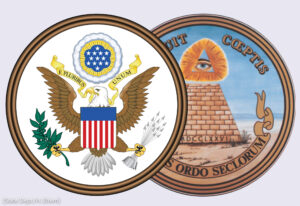
It is an American political heresy because it denies the unity in diversity which is the foundational strength of this nation. “In a nation as diverse as the United States, unity does not mean uniformity. Unity means understanding, respecting and valuing the differences that make us stronger as a collective whole.”[13] Unity in diversity is not merely a noble ideal; it has been our guiding principle since our national motto, E pluribus unum (“Out of many, one”), was approved by an act of Congress in 1782.[14] America’s diversity is the strength of our republic.
Christian nationalism is also a religious heresy because it conflates religious faith with political identity, makes an idol out of the country, and denies the reality of St. Paul’s witness in his letter to the Galatians that “there is no longer Jew or Greek; there is no longer slave or free; there is no longer male and female, for all of you are one in Christ Jesus.”[15] It denies the truth of St. John’s prophetic vision recorded in the Book of Revelation of “a great multitude that no one could count, from every nation, from all tribes and peoples and languages, standing before the throne and before the Lamb, robed in white, with palm branches in their hands.”[16] Christian nationalism violates our faith’s foundational belief that every person of every race and nation is made in the image of God and deserves justice, peace, respect, and dignity.
On this weekend of overlapping holidays, civic and religious, of Memorial Day and the Day of Pentecost, let us dedicate ourselves to combatting the heretical scourge of Christian nationalism. Instead, let us remember and celebrate the wonderful variety of humankind, and the value and strength of unity in diversity which is foundational for both our nation and our faith.
Let us pray:
O God, the creator and preserver of all humankind, we humbly pray for all sorts and conditions of men and women; that it would please you to make your ways known to them, your saving health to all nations. On this Memorial Day weekend, we give you thanks for all those who have laid down their lives in the service of their country; grant them mercy and the light of your presence, that the good work which you have begun in them may be perfected. On this Feast of Pentecost, we pray for your holy Church universal; that it may be so guided and governed by the Holy Spirit, that all who profess and call themselves Christians may be led into the way of truth, and hold the faith in unity of spirit, in the bond of peace, and in righteousness of life. And all this we pray through your Son our Savior Jesus Christ, who lives and reigns with you and the same Spirit, now and for ever. Amen.
====================
This homily was offered by the Rev. Dr. C. Eric Funston on the Feast of Pentecost, May 24, 2026, to the people of St. Mark’s Episccopal Church, Canton, Ohio, where Fr. Funston was guest presider and preacher.
The lessons for the service were Numbers 11:24-30; Psalm 104:25-35,37; Acts 2:1-21; and St. John 20:19-23. These lessons can be read at The Lectionary Page.
The illustration is the Great Seal of the United States of America.
====================
Notes:
Click on footnote numbers to link back to associated text. Unless otherwise indicated, all quotations from Scripture are from the New Revised Version Updated Edition.
[1] Sacrifice: The 333rd Field Artillery at the Battle of the Bulge, The National WWII Museum, August 21, 2020, accessed 20 May 2026
[2] US Army honors Japanese American unit that liberated Tuscany in WWII, The Army Times, July 18, 2024, accessed 20 May 2026
[3] Japanese American Internment During WW2, Students of History, undated, accessed 20 May 2026
[4] Code Talkers, Partnership with Native Americans, undated, accessed 20 May 2026. See also American Indian Code Talkers, The National WWII Museum, undated
[5] Acts 2:9-11
[6] Acts 2:14
[7] Acts 10:34-35
[8] Dwight D. Eisenhower, Proclamation 3016 – Prayer for Peace, Memorial Day, 1953, The American Presidency Project, May 21, 1953, accessed 20 May 2026
[9] Collect for the Day of Pentecost: Whitsunday, The Book of Common Prayer 1979, p. 227
[10] The Declaration of Independence
[11] Mary Juzwik, et al., White Christian Nationalism, Biblical Proof Texting, and Literacy Curriculum and Instruction, Reading Research Quarterly 60:1 (January 2025)
[12] Amelia Han, Ethnicity & Belonging in Christian Nationalist Era: A Cosmopolitan View, Women in Theology, October 30, 2025, accessed 22 May 2026
[13] Bianca Talarico, Why DEI is key to our nation’s unity, The Hawk Newspaper, February 5, 2025, accessed 21 May 2026
[14] Original Design of the Great Seal of the United States (1782), National Archives, October 23, 2023, accessed 22 May 2026
[15] Galatians 3:28
[16] Revelation 7:9


Leave a Reply