 On the third day there was a wedding in Cana of Galilee, and the mother of Jesus was there. Jesus and his disciples had also been invited to the wedding. – John 2:1-2
I know that the natural inclination of preachers during the season of ordinary Sundays after Epiphany is to focus on the gospel stories of “manifestation” and we certainly have one this week, the miracle of water-into-wine at the wedding in Cana of Galilee. The story is ripe with focus possibilities: the miracle itself, the presence of the Holy Spirit as the activating force of Jesus’ power (suggested strongly this year by the lectionary pairing of this gospel tale with Paul’s listing of spiritual gifts in 1 Corinthians 12), the always popular look at the relationship between Mary and her son, Jesus’ attitude toward his public ministry at this time.
What is seldom preached on this Sunday is the context of the story: a wedding! So I think I might go there this week if I were preaching. The lesson from the Hebrew Scriptures positively invites us to do so; marriage is Isaiah’s metaphor (as it is other prophets’) for the relationship between God and Israel:
For as a young man marries a young woman,
so shall your builder marry you,
and as the bridegroom rejoices over the bride,
so shall your God rejoice over you.[1]
I’ve been thinking a good deal recently about the nature of the marital estate. I recently had major orthopedic surgery (a total knee replacement) and find myself absolutely unable to attend to many of the everyday activities of life, some of them quite mundane, some quite intimate and personal. I am dependent upon my spouse to whom I have been married now for nearly 40 years. As she attended to one of my needs the other day, I quipped, “Ah yes, I remember well that part of the service where we promised to do this for each other” (which, of course, we hadn’t). We make formal promises in weddings to love and honor, to cherish and comfort, to faithfully keep one another “in sickness and health,”[2] but we don’t get into the nitty-gritty details. Perhaps we’ve been counseled in advance of the wedding as to what these vows mean and what that nitty grit might be, but no pre-marital instruction can cover everything.
My father-in-law probably didn’t realize in 1947 that those promises would commit him 50 years later to caring for an invalid wife suffering from Alzheimer’s disease for the last eight years of their marriage, feeding her, bathing her, wiping her bottom, and all while she tried to fight him off because she didn’t know him. Those vows long before the onset of my mother-in-law’s disease had become water under the bridge, replaced by the fine, strong wine of human love and commitment. And though she hasn’t (I hope) had quite the same level of difficulty to handle, my in-law’s daughter follows in her father’s footsteps taking care of her temporarily invalided husband.
So . . . if I were preaching this week, I’d consider that context, a wedding. Weddings become marriages, brides become wives, grooms become husbands; those are transmutations, transformations, and differences as profound as water become wine. That alchemy of marriage manifests the Lord in our midst everyday.
====================
Notes:
Click on footnote numbers to link back to associated text.
[1] Isaiah 62:5
[2] The Celebration and Blessing of a Marriage, The Book of Common Prayer 1979, page 424
 “Take off the garment of your sorrow and affliction, O Jerusalem, and put on forever the beauty of the glory from God.”
 Christology is one of those odd words of the Christian tradition that one doesn’t hear much in church but which one hears a lot in academic circles. Christology is defined as “the field of study within Christian theology which is primarily concerned with the ontology and person of Jesus as recorded in the canonical Gospels and the epistles of the New Testament.”
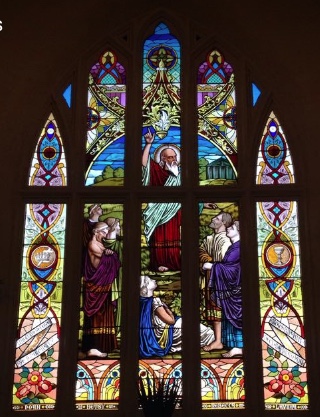 Fifteen years ago when I came to Medina for the first time in my life to meet the people of St. Paul’s Parish and, with them, make the mutual determination whether our life-paths were to converge, Earl and Hildegarde picked Evie and me up at the Cleveland airport. They first took us to Yours Truly Restaurant where we had a bite of lunch and then they brought us here, so that we could see the church.
 Last week we began our parish’s annual fund campaign with the theme “Transforming Generosity.” You should have received your pledge card for 2019 together with a letter about the nature of stewardship and generosity. There was an article in the newsletter similar to that letter, and early in the week you received an email (if you receive email) which is repeated on an insert in your bulletin this morning. Your parish leadership team has asked and will continue to encourage you to do two things that may seem contradictory: first, to make your financial commitment for 2019 earlier than usual, and second, to take your time in doing so. Our hope is that you will submit your estimates of giving on or before the first Sunday in November, but that you will give real prayerful and careful consideration to how your financial support of your church reflects your relationship with God. Stewardship, as that letter said, is not a matter of fund raising; stewardship is a matter of spiritual health. The “Transforming Generosity” theme hopes to inspire you to be a faithful steward and so to give as an expression of your relationship with God.
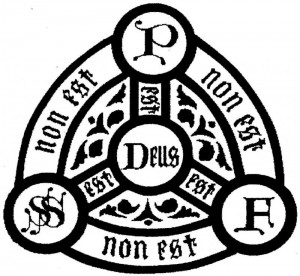 Some of you may have heard of Brooks’s law, which has to do with the time it takes to complete a software project. It’s similar to the general law of diminishing returns in economics. Professor Fred Brooks of the University of North Carolina first proposed the law in 1975; it holds that “adding manpower to a late software project makes it later.”
 What do you suppose it was like in Jerusalem on that Pentecost morning so long ago?
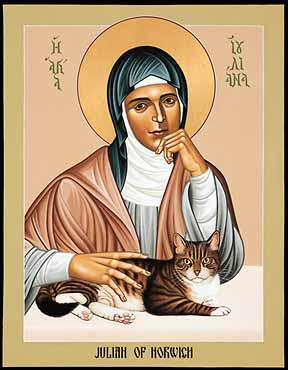 Today we are welcoming Reed C_____ F_____ into the Household of God through the Sacrament of Holy Baptism. We are also commemorating Dame Julian of Norwich, one of the medieval saints of English Christianity. Twenty-eight years ago I was ordained a deacon on Julian’s feast day which is actually on Tuesday, May 8. So the lessons we heard this morning, and the second of the two collect I offered after the Gloria in Excelsis, were from the propers for Dame Julian’s celebration. But I would like to read you also the brief Gospel lesson appointed for the Sixth Sunday of Easter, which is also from John’s Gospel
 In 2011 a young man in New York City named Gabriel went to a party. While there, he drank some of the alcoholic punch being served. Unknown to the young man, the punch had been spiked with a drug called Gamma-Hydroxybutyric Acid, commonly called GHB. Prescribed as Xyrem and also called by a variety of “street names,” it is known as a “date rape” or rave drug. It comes as a liquid or as a white powder that is dissolved in water, juice, or alcohol. In most people it produces euphoria, drowsiness, decreased anxiety, excited behavior, and occasionally hallucinations. For Gabriel, however, who suffered from medication-controlled epilepsy, it caused a seizure. Apparently interacting with his regularly prescribed medication, the GHB he had unknowingly consumed caused a fatal convulsion.
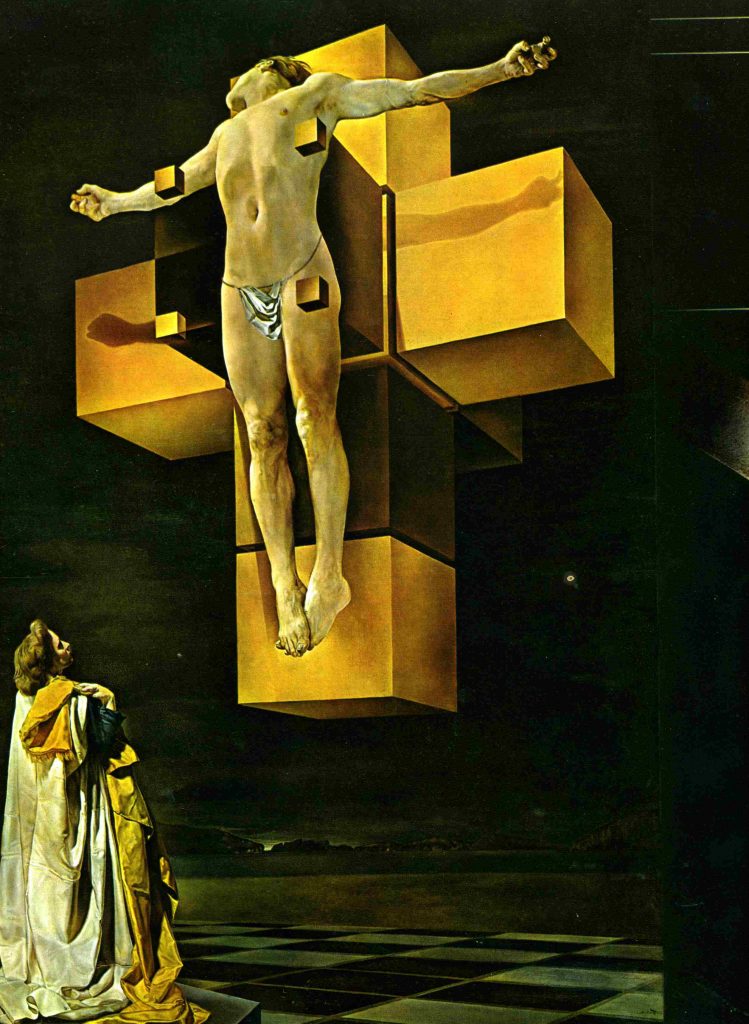 Sometimes I find myself at a loss for words. It doesn’t happen often, but once in a while I simply don’t know what to say about a person or an event or a spiritual feeling. On Good Friday, is one of the times when this happens. I don’t know what I want to say about Jesus or his crucifixion or the salvation we enjoy because of his death and resurrection.

